
A small kitchen does not have to mean limited design possibilities. The right tiles can add color, texture, pattern, and light while helping your kitchen feel polished and intentional.
When choosing tiles for small kitchen ideas, think about more than appearance. Tile size, color, finish, grout color, and placement can all influence how busy or open the room feels.
A simple glossy backsplash may help brighten a darker kitchen, while a bold patterned floor can create a memorable focal point. The key is choosing a design that suits both your style and the amount of visual detail your kitchen can comfortably handle.
Here are 16 creative tile ideas to inspire your small kitchen makeover
How to Choose Tiles for a Small Kitchen
Before choosing a pattern, consider these simple design principles:
- Use light-reflective finishes carefully: Glossy tiles can help bounce light around a kitchen, especially on a backsplash.
- Consider visual scale: Large patterns may work beautifully in a small kitchen when the rest of the room is simple, while tiny, busy patterns can sometimes feel overwhelming.
- Think about grout: A grout color that closely matches the tile creates a quieter look, while contrasting grout highlights the pattern.
- Choose a focal point: If your floor has a bold pattern, a simpler backsplash may create better balance.
- Select tile for its intended use: Wall, floor, and wet-area tiles can have different performance requirements.
1. Classic Subway Tiles
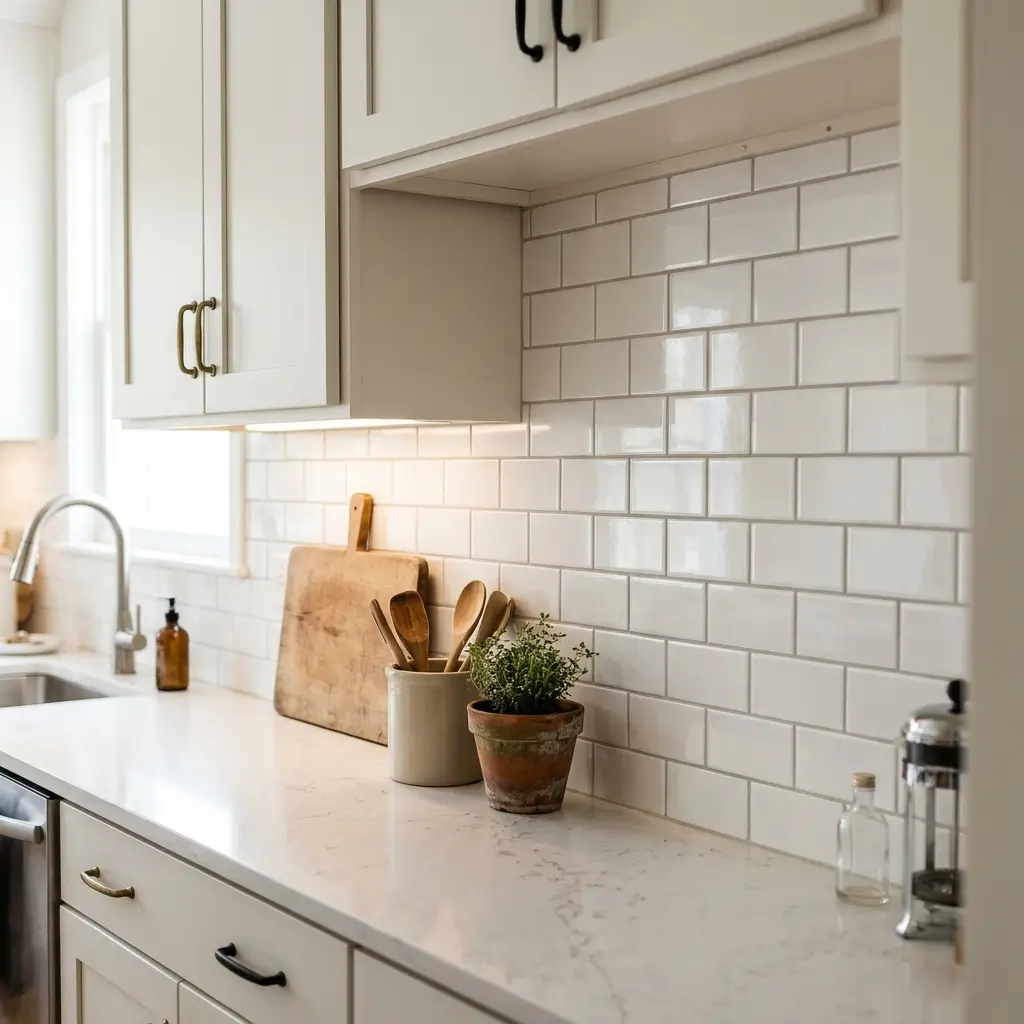
Subway tiles are a timeless choice for small kitchens because their clean rectangular shape works with many decorating styles.
A white or light-colored subway tile backsplash can create a bright, uncluttered background behind cabinets and countertops. For a more interesting look, try laying the tiles vertically, in a stacked pattern, or with a subtle contrasting grout.
Best for: Bright, classic, modern, or farmhouse-inspired kitchens.

2. Bold Geometric Patterns

Geometric tiles can turn a simple backsplash or floor into the main feature of your kitchen. Triangles, diamonds, and other repeating shapes add structure and personality.
In a compact kitchen, consider using a bold geometric design on one surface rather than covering every wall. This allows the pattern to stand out without competing with cabinets, appliances, and other finishes.
Best for: Creating a strong focal point in a simple kitchen.
3. Chevron Design
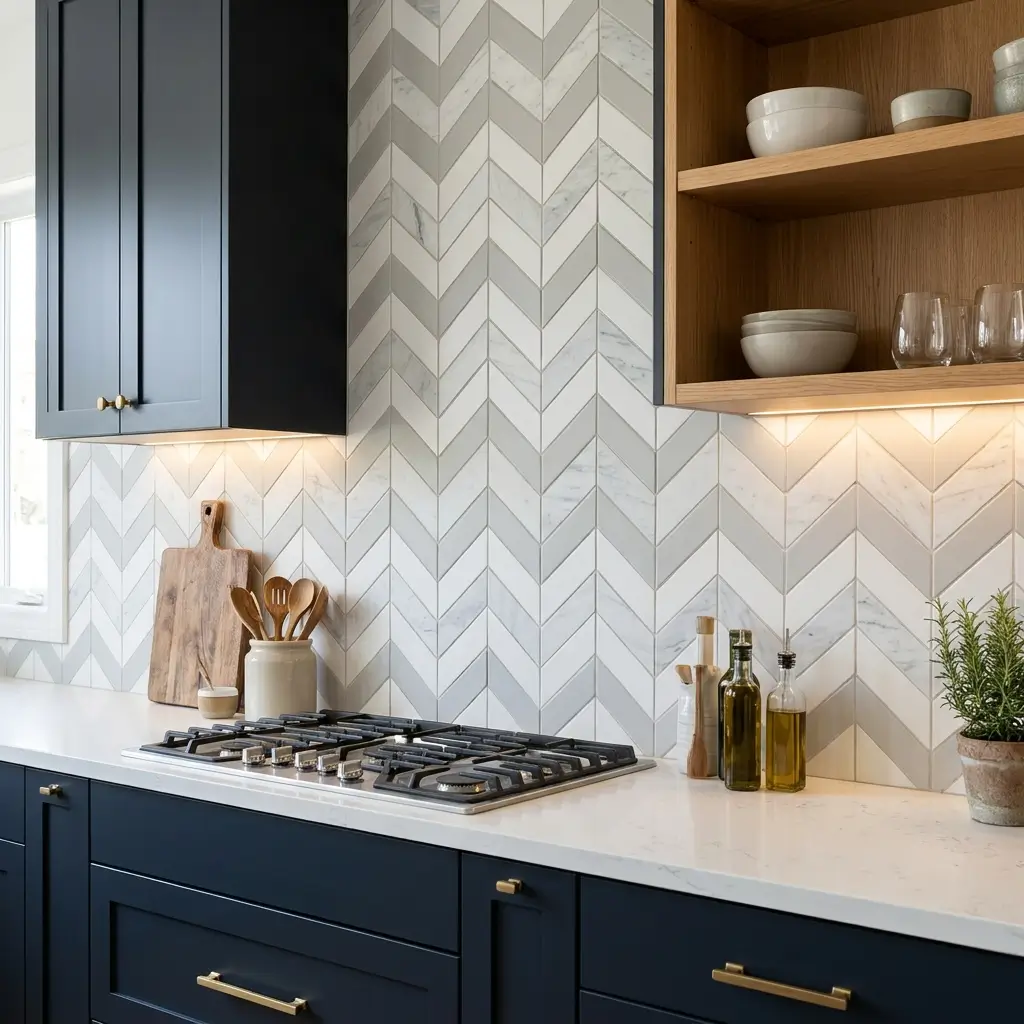
Chevron tiles create a distinctive zigzag pattern that adds movement to a kitchen.
A vertical or upward-running pattern can encourage the eye to travel across the wall, making the backsplash feel more dynamic. Choose a single color for a subtle effect or use contrasting shades for a bolder statement.
Because precise alignment is important, chevron installations may require more planning and cutting than a standard straight tile layout.
Best for: Adding movement and visual interest to a feature wall or backsplash.
4. Herringbone Style

Herringbone is a classic pattern that gives ordinary rectangular tiles a more decorative appearance. The arrangement creates texture without requiring a bright color or elaborate print.
A herringbone backsplash works particularly well when you want a detailed design but still prefer a neutral kitchen. Use white, gray, beige, or soft green tiles for a timeless look.
Best for: Kitchens that need subtle pattern and texture.
5. Mosaic Magic

Mosaic tiles offer plenty of creative possibilities because they are available in a wide range of colors, shapes, and materials.
They can add texture to a backsplash or create a decorative accent behind a stove. If you choose a highly detailed mosaic, balance it with simpler cabinets and countertops.
Keep in mind that smaller tiles usually create more grout lines, so consider the maintenance requirements of your chosen grout and tile finish.
Best for: Decorative backsplashes and colorful accent areas.
6. Checkerboard Charm
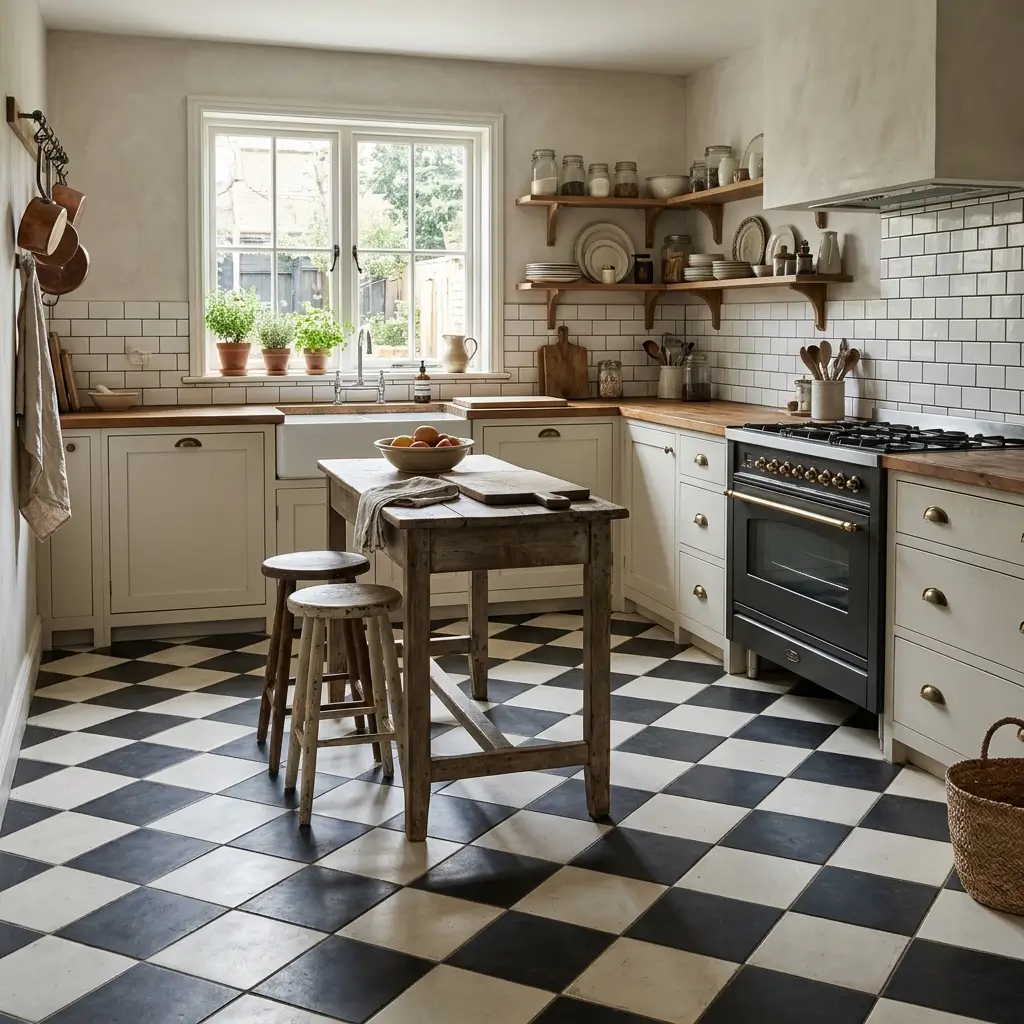
Checkerboard tiles bring a sense of rhythm and contrast to a kitchen. Classic black and white creates a dramatic vintage-inspired look, while cream, gray, or muted colors offer a softer interpretation.
This pattern can work especially well on a floor when the surrounding cabinetry and walls are relatively simple.
Best for: Vintage, traditional, and playful kitchen designs.
7. Hexagon Tiles

Hexagon tiles offer a modern alternative to traditional square or rectangular shapes. They are available in sizes ranging from small mosaics to larger statement tiles.
For a small kitchen, a single-color hexagon tile can add shape without introducing too many competing colors. Alternatively, mixing a few complementary shades can create a custom-looking backsplash.
Best for: Modern kitchens and geometric-inspired designs.
8. Penny Tiles

Penny tiles are small, round tiles that add texture and a playful touch to a kitchen.
They can work well as a backsplash or decorative accent, particularly in retro-inspired spaces. Neutral penny tiles create a subtle textured surface, while colorful versions can introduce personality.
Because of the many grout joints, choose a grout color and maintenance routine that suit the amount of cleaning you are comfortable with.
Best for: Retro, eclectic, and detail-rich kitchen designs.
9. Moroccan Patterns

Moroccan-inspired tiles are known for decorative motifs, geometric shapes, and rich color combinations.
In a small kitchen, these tiles can make a striking backsplash behind the stove or sink. You do not need to cover an entire room with a bold pattern; even a small section can add warmth and character.
Blue and white designs offer a classic look, while earthy or multicolored patterns can create a more relaxed, collected style.
Best for: Adding personality to a neutral or simple kitchen.
10. Brick Style

Brick-style tiles bring texture and warmth without requiring actual exposed brick.
They work well as a backsplash and can complement rustic, industrial, farmhouse, or contemporary interiors. For a softer look, choose light neutral tones. Darker brick-look tiles can create a dramatic feature when balanced with lighter cabinets or countertops.
Best for: Kitchens that need warmth and texture.
11. Patterned Floor Tiles

A patterned floor can become the centerpiece of a small kitchen. Decorative cement-look or porcelain tiles can introduce color and visual interest while allowing the walls and cabinets to remain simple.
Choose a pattern that complements the overall color palette rather than competing with every other element in the room.
For flooring, always select a tile designed and rated for the intended application and follow the manufacturer’s installation recommendations.
Best for: Creating a statement in an otherwise simple kitchen.
12. Marble Effect

Marble-effect tiles offer the elegant appearance of natural stone in a range of materials and price points.
Soft veining can add visual interest without creating the strong contrast of a bold pattern. Light marble-look tiles are particularly useful when you want a clean, airy appearance.
Use them on a backsplash, wall, or floor depending on the product’s specifications.
Best for: Elegant, bright, and contemporary kitchens.
13. Metallic Shine
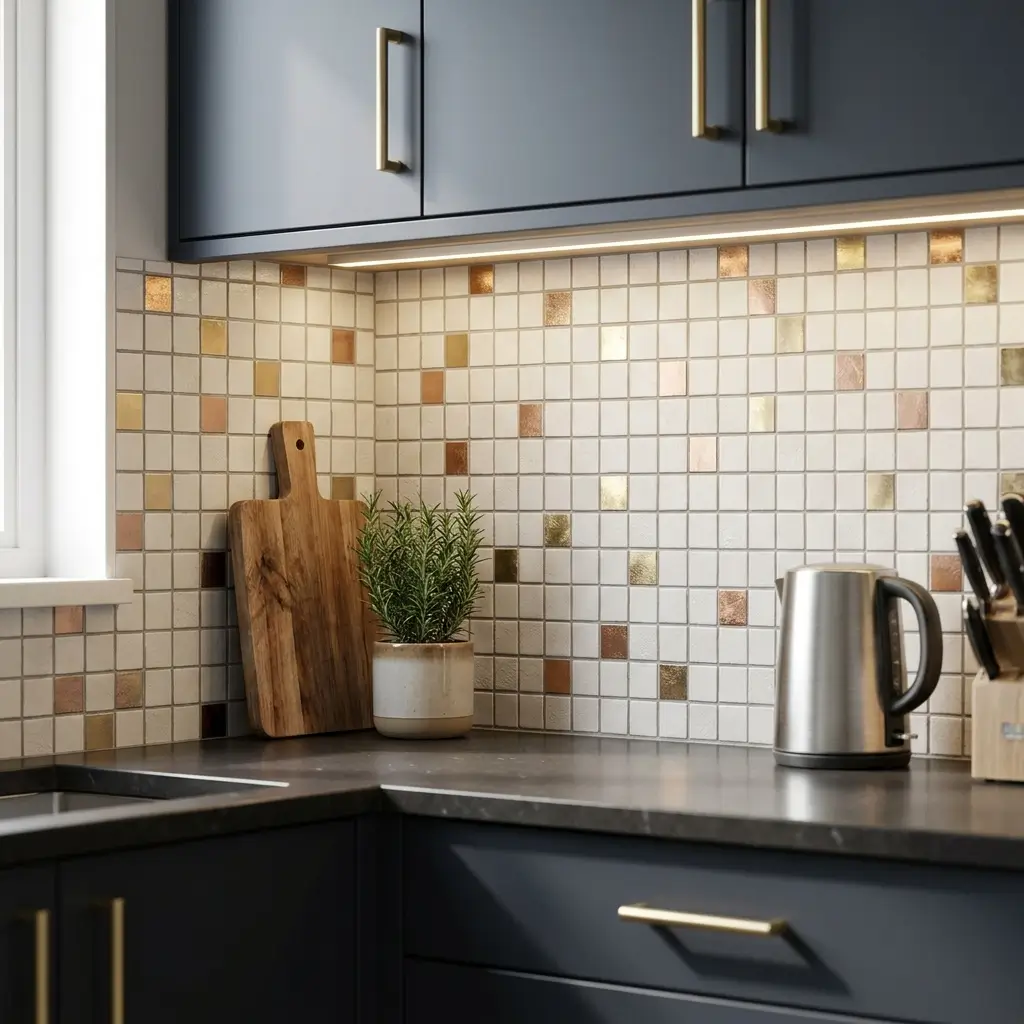
Metallic or reflective accent tiles can add a touch of glamour to a small kitchen.
A few metallic tiles mixed into a backsplash can catch the light and create a decorative focal point. Instead of covering every surface, consider using them as an accent to avoid an overly reflective or busy appearance.
Choose finishes that complement your cabinet hardware and lighting for a more cohesive result.
Best for: Modern and contemporary kitchens that need a subtle touch of shine
14. Wood Look Tiles
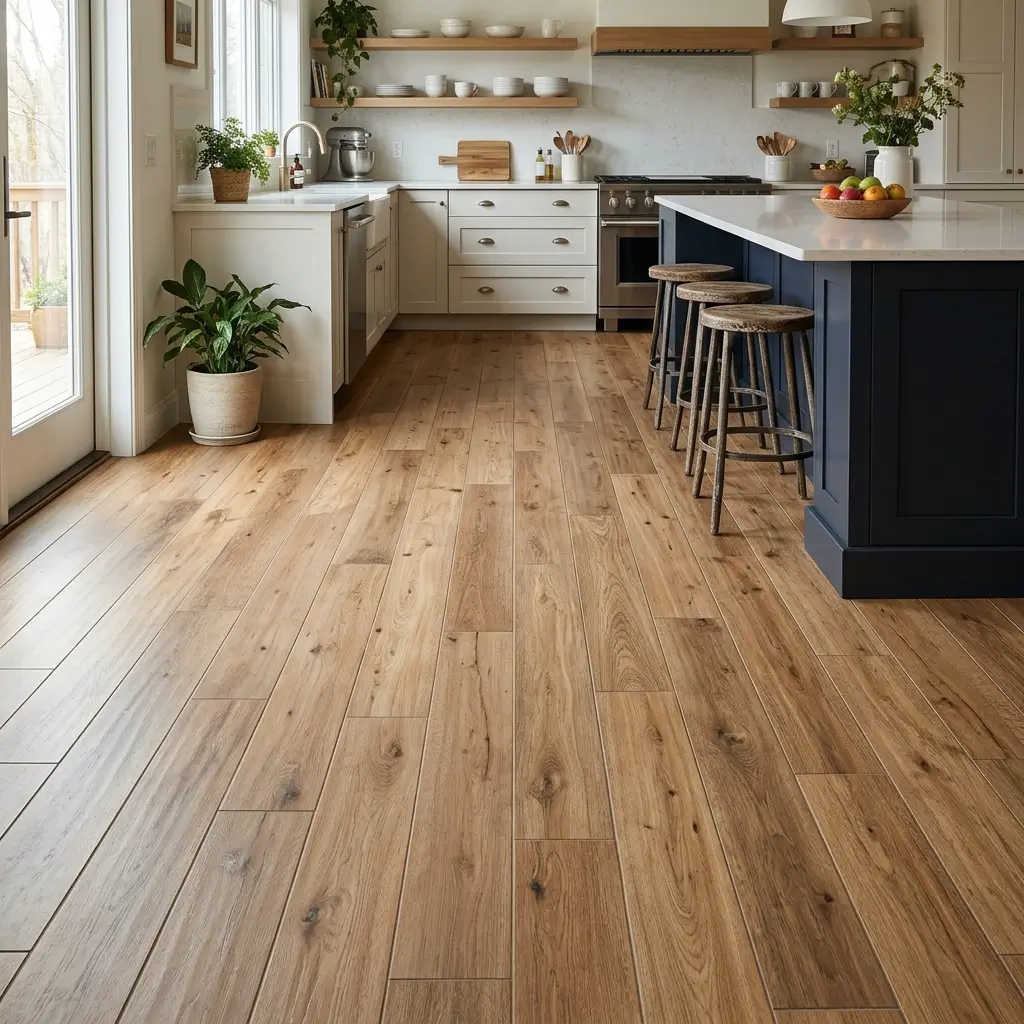
Wood-look tiles combine the appearance of timber with the practical characteristics of tile products designed for kitchen use.
They are available in a variety of tones, from pale oak-inspired finishes to darker rustic styles. Long plank-shaped tiles can create a clean, continuous look when carefully planned.
Before installation, check the manufacturer’s recommendations for the specific product, substrate, and location.
Best for: Adding warmth while maintaining a tile-based floor or wall finish.
15. Fish Scale Tiles

Fish scale, also called scallop tiles, feature soft curved shapes that can make a kitchen feel more decorative and inviting.
These tiles work beautifully as a backsplash, especially in soft blues, greens, white, or other calming shades. Their distinctive shape means the pattern itself provides plenty of interest, so a simple color palette often works best.
Careful layout is important to keep the repeating pattern neat and balanced.
Best for: Soft, elegant, coastal, or playful kitchen styles.
16. Terrazzo Tiles

Terrazzo-look tiles feature a speckled appearance that can introduce several colors without requiring a large, busy pattern.
They can be a good choice when you want personality but also need flexibility when choosing cabinet, wall, or accessory colors. A terrazzo-inspired backsplash can add subtle texture, while a floor can create a more dramatic statement.
Look closely at the dominant colors in the tile before choosing surrounding finishes.
Best for: Modern, playful, and color-conscious kitchen designs.
A Quick Guide to Choosing the Right Tile Style
| If You Want… | Consider… |
|---|---|
| A bright, timeless look | Subway or marble-effect tiles |
| A bold focal point | Geometric or Moroccan-inspired patterns |
| Subtle texture | Herringbone or wood-look tiles |
| A playful, decorative finish | Penny, fish scale, or terrazzo tiles |
| A dramatic floor | Checkerboard or patterned floor tiles |
| A modern geometric look | Hexagon or chevron tiles |
Practical Tips Before Installing Kitchen Tiles
Before ordering tiles, take time to plan the full design.
Measure the area carefully and order according to the product and installation requirements. Review samples in your kitchen under both natural and artificial light, since color and finish can look different throughout the day.
It is also wise to plan the tile layout before installation. The Tile Council of North America recommends careful layout and preparation, and notes that proper substrate conditions, product selection, and installation methods are important to a successful tile project.
For complicated patterns, uneven surfaces, or projects involving significant cutting, consider consulting an experienced tile professional.
Conclusion
The best tiles for a small kitchen depend on the look you want to create and how much visual detail the room can comfortably handle.
For a bright and timeless finish, subway or marble-effect tiles are easy starting points. If you want more personality, Moroccan-inspired patterns, terrazzo, geometric designs, or fish scale tiles can create a memorable focal point.
Rather than trying to make every surface stand out, choose one or two features you love and let the rest of the kitchen support them. With the right balance of pattern, color, and texture, even a compact kitchen can feel stylish, welcoming, and uniquely yours.
Frequently Asked Questions About Tiles for Small Kitchens
What tile color is best for a small kitchen?
Light and neutral colors are popular because they can create a bright, open appearance. However, darker or colorful tiles can also work well when used as an accent or balanced with lighter surrounding surfaces.
Should I use large or small tiles in a small kitchen?
Both can work. Larger tiles may create a cleaner look with fewer visible grout lines, while smaller tiles can add texture and detail. The best choice depends on the pattern, layout, and overall design of the kitchen.
Are patterned tiles too busy for a small kitchen?
Not necessarily. Patterned tiles can look beautiful in a compact kitchen when balanced with simpler cabinets, countertops, or walls. Using a bold pattern on one surface is often enough to create visual interest.
What is the best tile for a kitchen backsplash?
The best choice depends on your style, budget, and maintenance preferences. Ceramic and porcelain tiles are common options, but always check that the specific product is suitable for the intended location.
Does grout color make a difference?
Yes. Matching grout can make a tiled surface appear more continuous, while contrasting grout emphasizes the shape and pattern of individual tiles.
Can I install patterned kitchen tiles myself?
Simple projects may be suitable for experienced DIYers, but complex patterns can require careful measuring, cutting, substrate preparation, and layout. Follow the tile and installation product manufacturers’ instructions, and consider professional help for complicated projects.
Should the kitchen floor and backsplash tiles match?
They do not need to match exactly. Coordinating colors, finishes, or design styles can create a cohesive look while still allowing each surface to have its own character.
