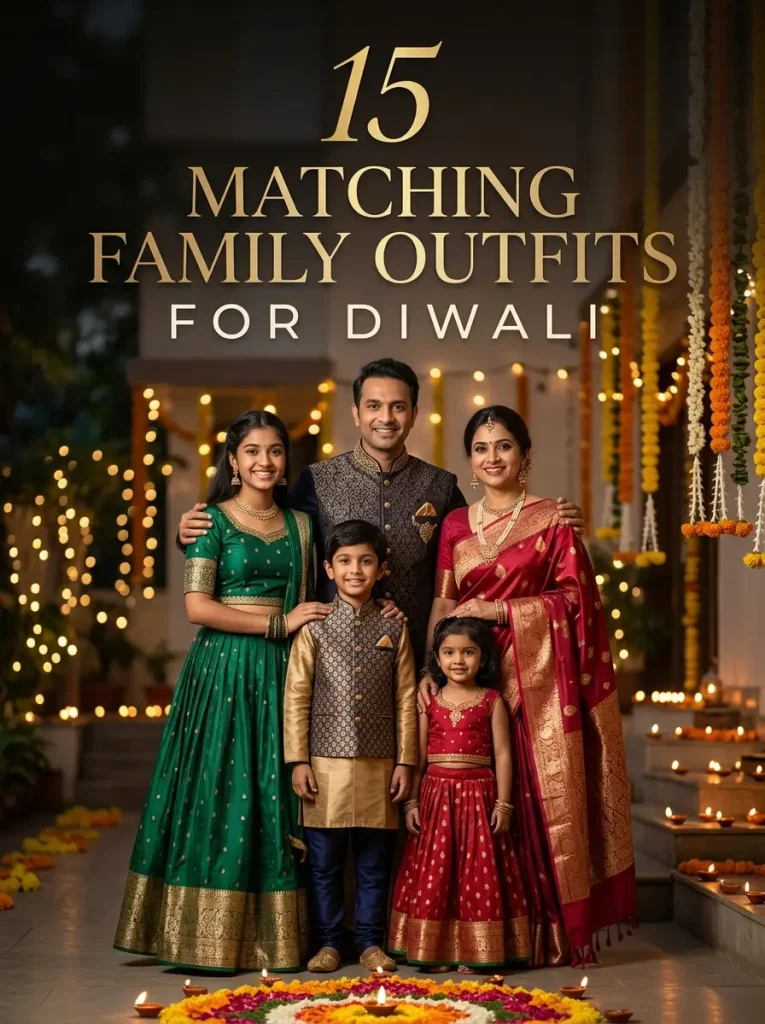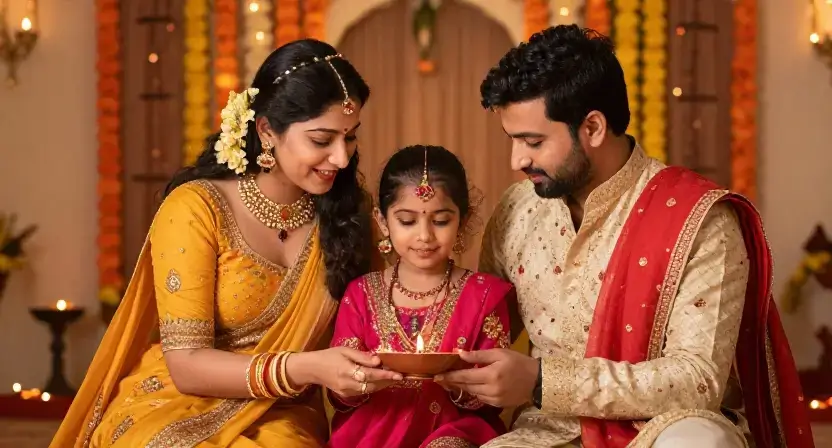
Finding matching family outfits for Diwali celebrations is easier when you choose a shared colour palette, a festive style, and comfortable clothing for everyone.
From elegant sarees and embroidered kurtas to matching mother-daughter lehengas and father-son kurta sets, there are many ways to create a coordinated family look without dressing everyone identically.
The best family outfits combine tradition, personal style, and practicality. Whether you are celebrating at home, attending Diwali puja, visiting relatives, or planning a festive family photoshoot, these 15 matching family outfit ideas will help you put together a beautiful look for the occasion.
1. Maroon and Gold Traditional Family Outfits
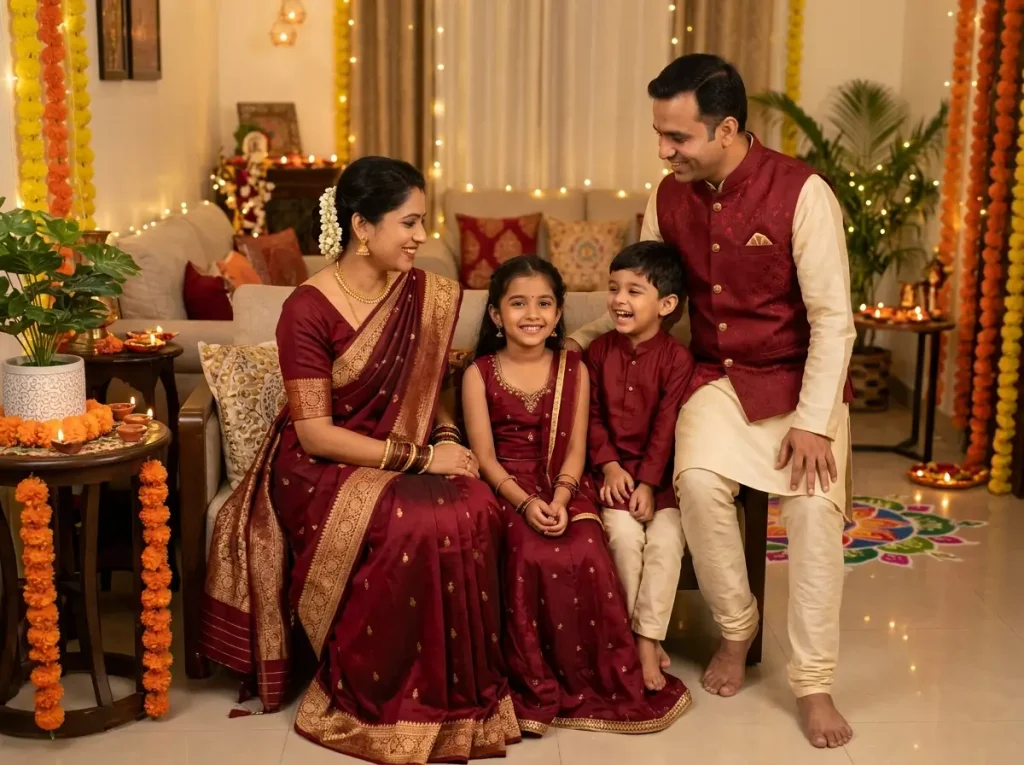
Maroon and gold create a rich, festive combination that works beautifully for traditional Diwali celebrations.
This colour pairing is particularly suitable for evening gatherings, family dinners, and portraits taken against warm decorative lights.
Women can wear maroon sarees, embroidered lehengas, or long ethnic suits with gold detailing. Men can coordinate with maroon kurtas, cream pajama trousers, and gold-accented Nehru jackets. Children can wear simpler maroon outfits with small gold borders.
How to coordinate the family:
- Mother: Maroon saree with a gold border.
- Father: Cream kurta pajama with a maroon Nehru jacket.
- Daughter: Maroon lehenga with subtle gold embroidery.
- Son: Maroon kurta with cream trousers.
The secret is to distribute the colours rather than making every outfit identical. If one person wears a heavily embroidered outfit, let the others choose simpler designs to keep the overall look balanced.

2. Emerald Green and Ivory Ethnic Wear
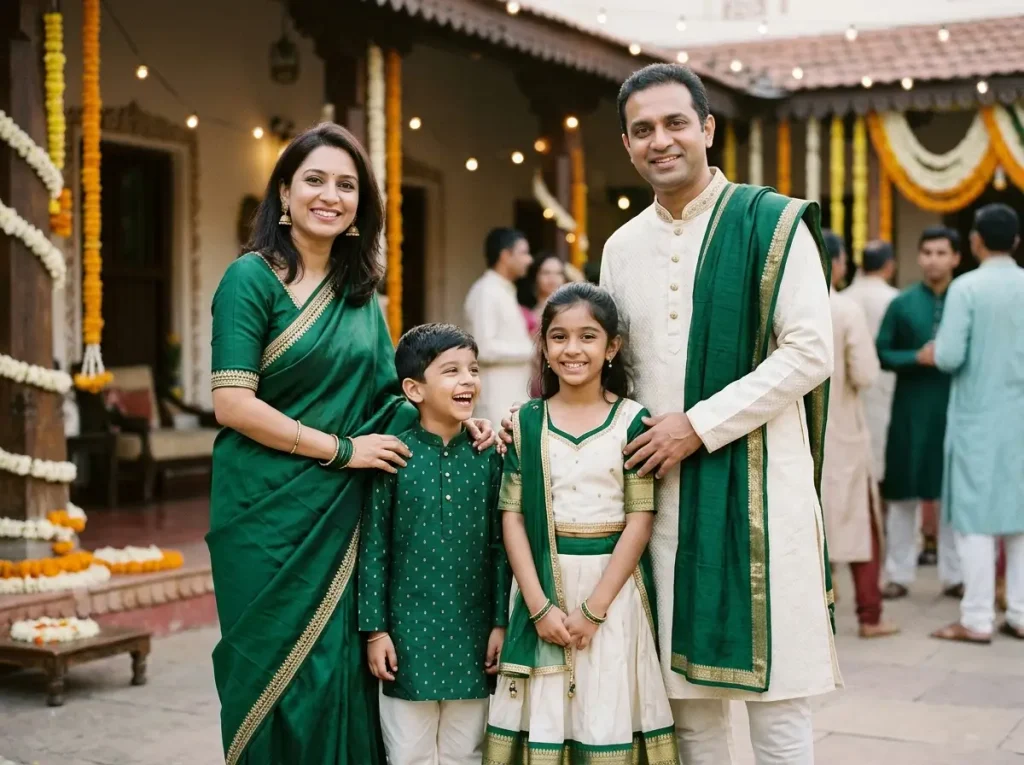
Emerald green and ivory offer an elegant alternative to brighter festive colours. The deep green provides richness, while ivory creates contrast and keeps the outfits looking refined.
For this look, choose an emerald green saree or lehenga for one parent and coordinate the other parent’s outfit with an ivory kurta and green stole. Children can wear green ethnic sets with ivory trousers or ivory outfits featuring green borders.
This combination works well for families who prefer coordinated clothing that can also be worn at weddings, cultural gatherings, and other celebrations.
Styling tip: Choose one consistent accent, such as gold buttons, green embroidery, or matching borders. You do not need the same fabric for every family member.
3. Matching Father-Son Kurta Pajamas
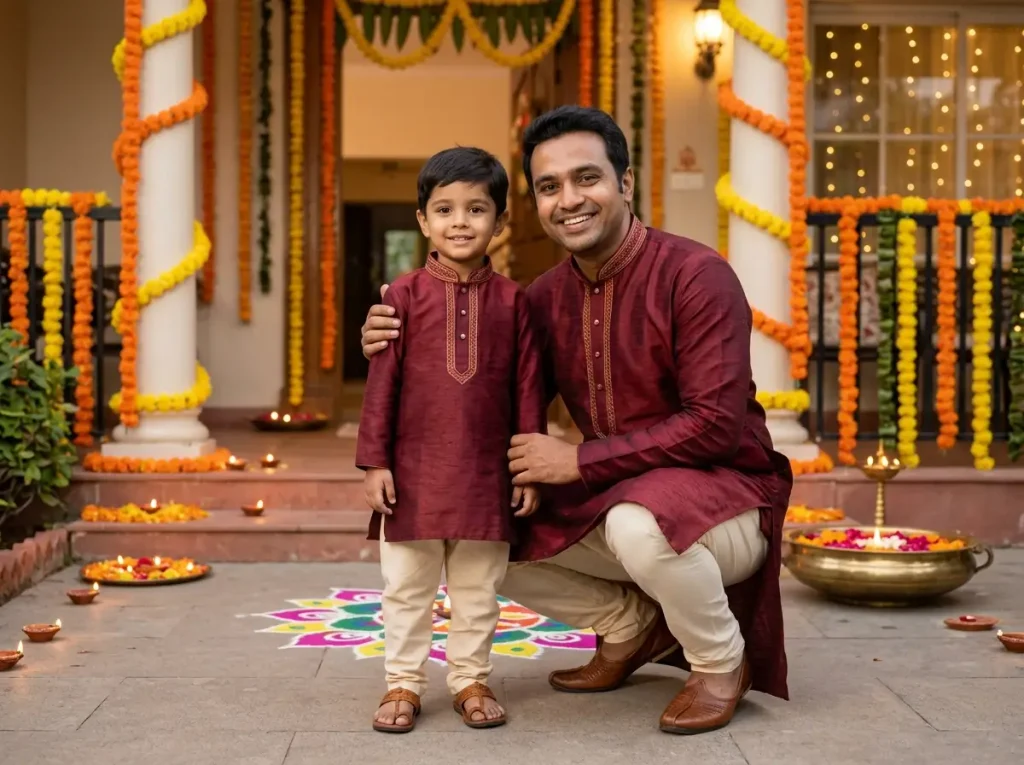
Father-son matching kurta pajamas are an easy way to create a coordinated Diwali look. The outfits can be identical, but choosing the same colour and similar detailing often looks more natural.
Consider navy blue, maroon, mustard, emerald green, or cream. A solid kurta with contrasting buttons, a subtle woven pattern, or a small embroidered collar adds festive character without making the outfit too elaborate.
For a family of four, the mother and daughter can complement the father-son outfits with matching colours in their sarees, dresses, or ethnic sets.
How to style the look:
- Choose similar kurta colours for father and son.
- Coordinate the pajama trousers in cream, white, or beige.
- Add matching embroidered jackets if a more formal appearance is desired.
- Select comfortable footwear suitable for the celebration.
For younger boys, lightweight fabrics and simple closures can make dressing easier.
4. Mother-Daughter Lehenga Sets
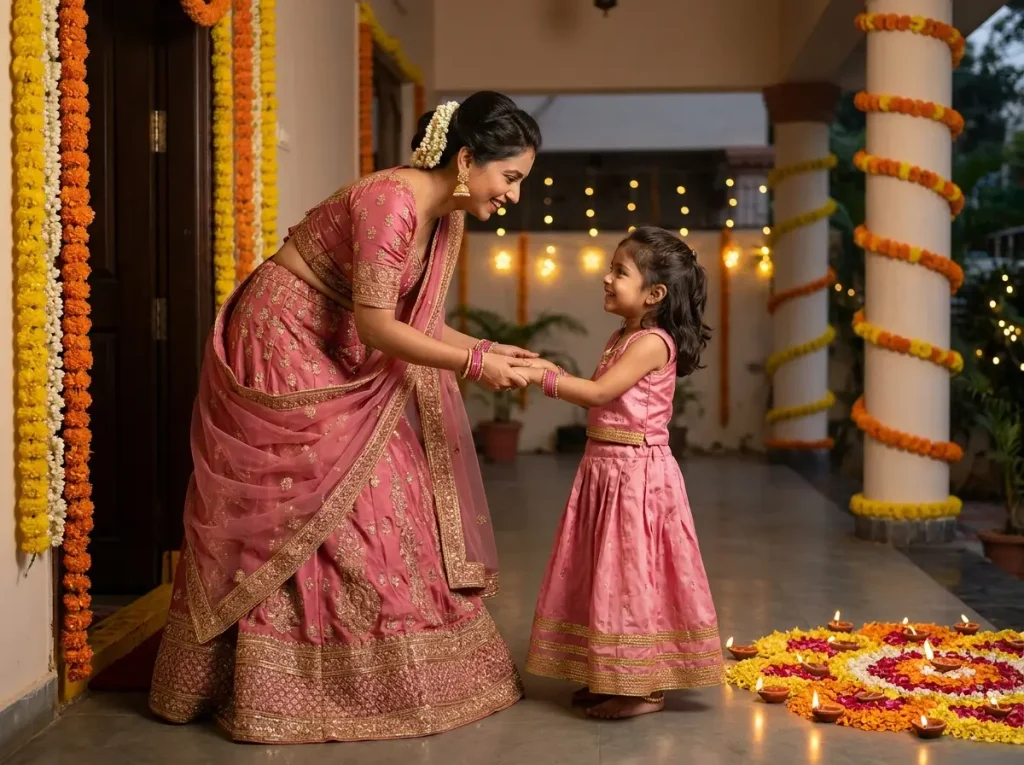
Matching mother-daughter lehengas create a beautiful festive look for family gatherings and Diwali photographs. You can choose identical prints or embroidery, or simply use the same colour palette in different designs.
For example, a mother might wear a flowing emerald lehenga with delicate gold work, while her daughter wears a lighter green lehenga with similar borders. Pink, peach, lavender, and maroon are also attractive options.
The best coordinated outfits allow each person to feel comfortable and appropriately dressed. A lighter lehenga with a manageable skirt length can be more practical for a child than a heavily embellished design.
Styling ideas:
- Match the blouse fabric or embroidery.
- Coordinate the dupattas rather than matching every detail.
- Choose complementary bangles, hair accessories, or small earrings where appropriate.
- Keep children’s jewellery simple and secure.
5. Coordinated Saree and Kurta Outfits
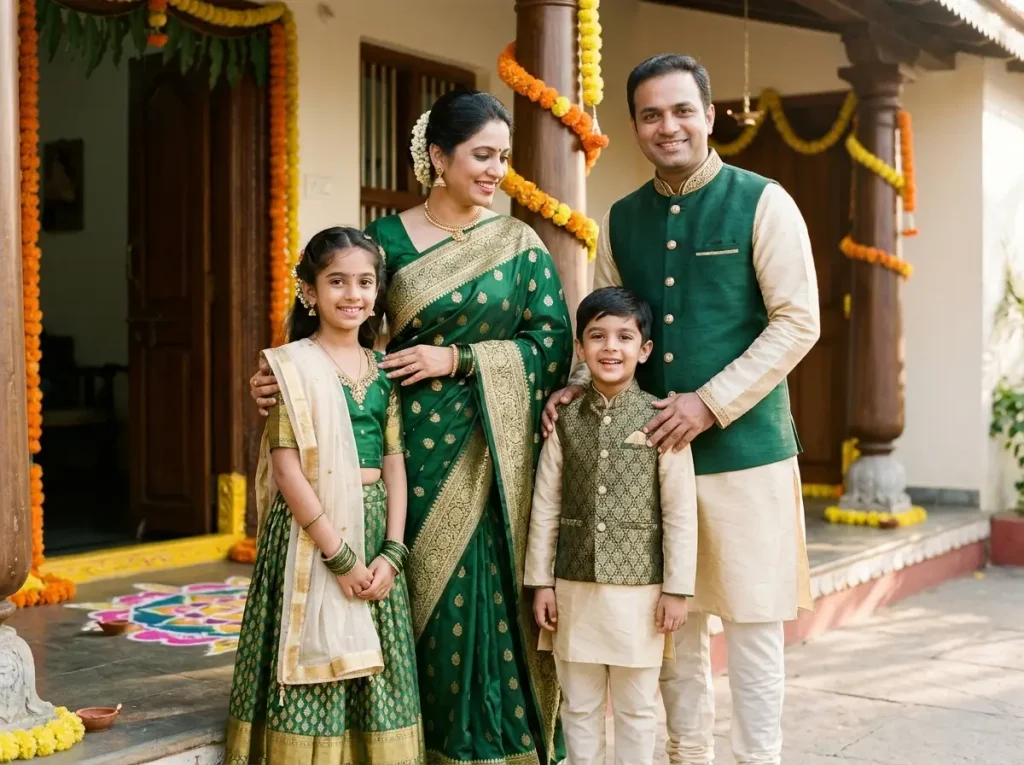
For families who prefer classic Indian clothing, pairing a saree with coordinated kurta sets is a timeless choice.
The mother can wear a festive silk-look or woven saree, while the father chooses a kurta in a matching colour or one of the saree’s accent shades. Children can wear coordinated kurtas, ethnic dresses, or festive sets that repeat the same colour.
A burgundy saree with a cream kurta, a green saree with an ivory outfit, or a mustard saree with maroon accents can create a balanced family look.
This approach is particularly useful when family members already own traditional outfits. You may only need a matching stole, dupatta, or jacket to connect the looks.
6. Royal Blue and Gold Family Looks
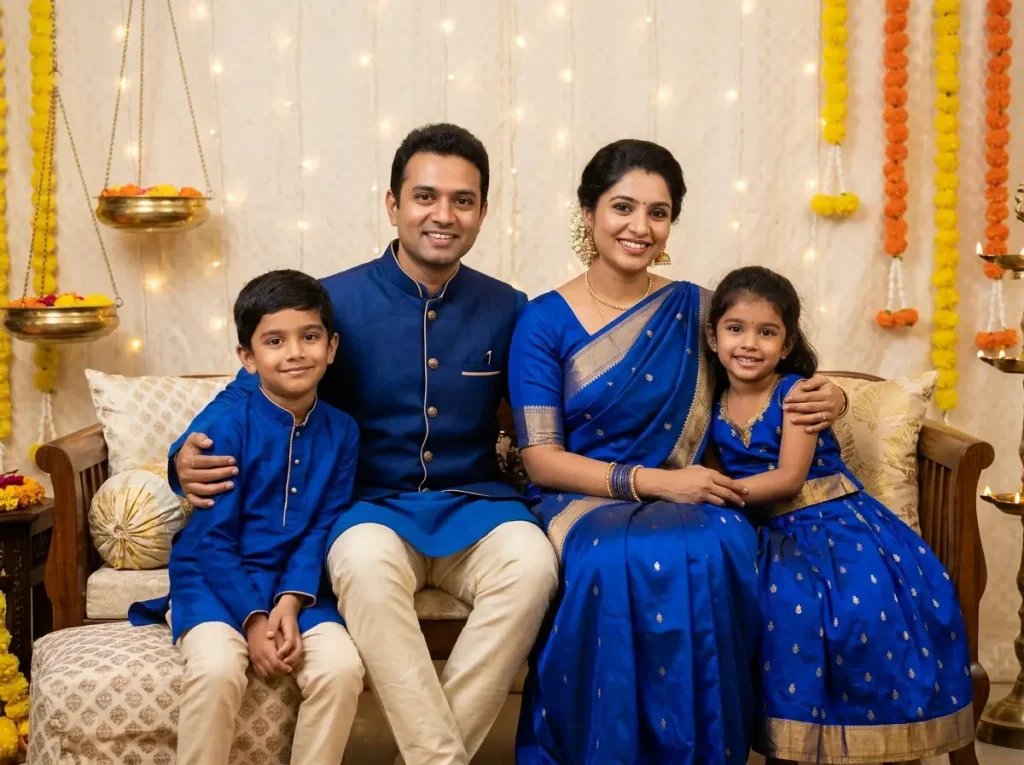
Royal blue and gold are ideal for families who want a bold, polished appearance. The deep blue adds contrast, while gold embroidery, borders, or accessories provide a festive finish.
Women can choose royal blue sarees, lehengas, or embroidered suits. Men can wear blue kurtas with cream trousers and a gold-accented jacket. Children can wear blue ethnic outfits with simple gold details.
For family photos, avoid placing everyone in equally shiny fabrics. Combine one statement outfit with simpler pieces so that the overall picture feels coordinated rather than overwhelming.
Styling tip: Use gold as an accent instead of a dominant colour. This helps the blue remain the visual anchor of the family’s outfits.
7. Mustard Yellow and Cream Festive Wear
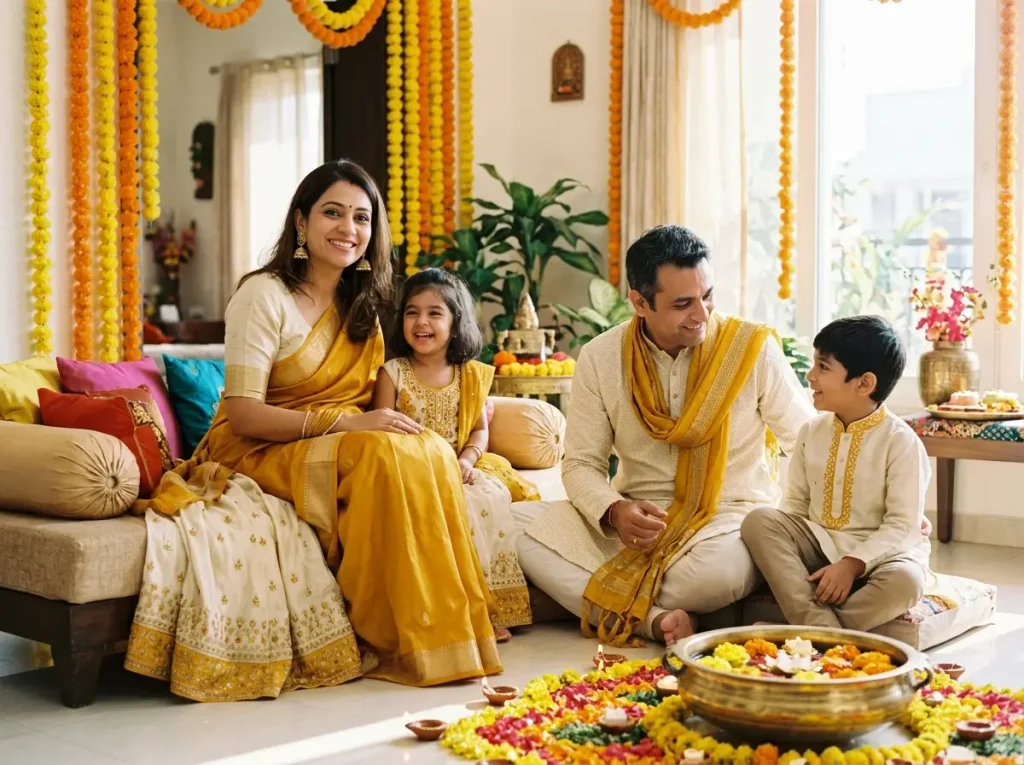
Mustard yellow and cream create a warm, cheerful colour combination that suits daytime Diwali gatherings and family celebrations.
The mother can wear a mustard kurta set or saree, while the father chooses a cream kurta with a mustard stole. Children can wear cream outfits with mustard embroidery or mustard kurtas with neutral trousers.
This combination is particularly helpful when you want coordinated clothing without purchasing an entirely new outfit for every family member.
Ways to make the look work:
- Use mustard as the main colour for one or two people.
- Repeat cream across the remaining outfits.
- Add small gold accessories for a festive touch.
- Choose breathable fabrics for long celebrations.
8. Pink and Ivory Mother-Daughter Outfits
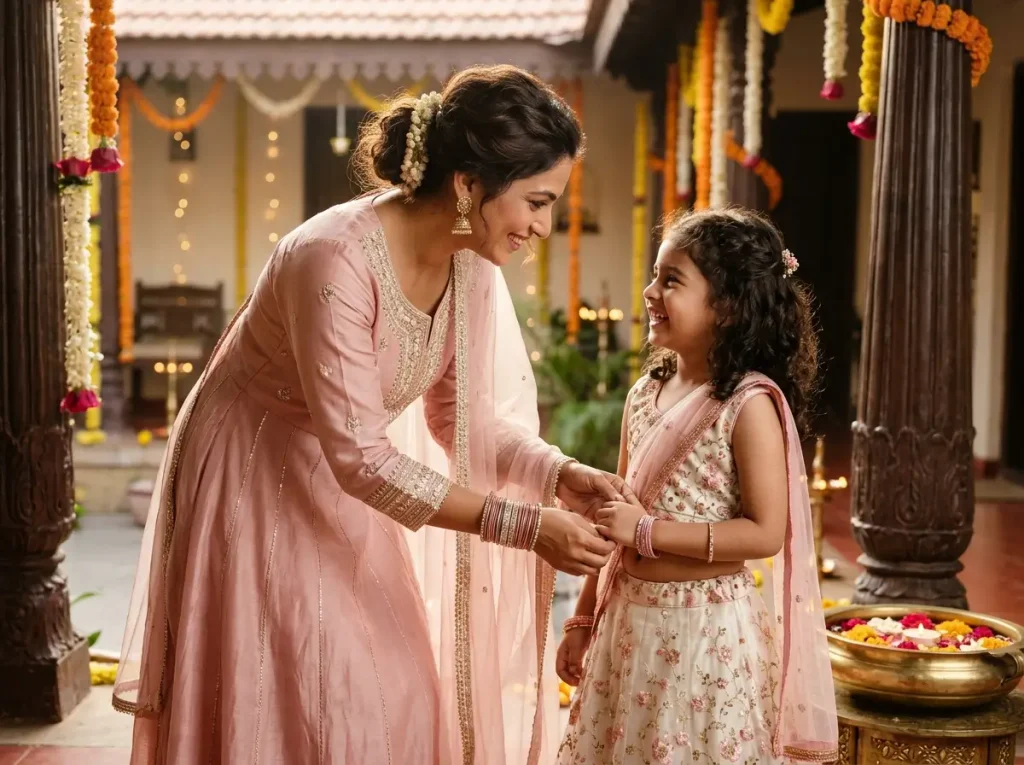
Pink and ivory create a softer, romantic festive look. Blush pink, dusty rose, and deeper rose shades can all work, depending on the style you prefer.
A mother can wear a pink saree or embroidered suit, while her daughter wears an ivory lehenga with pink detailing. Alternatively, both can wear pink outfits in different shades for a coordinated appearance.
This combination also works well when the rest of the family wears cream or ivory kurtas with pink pocket squares, stoles, or other small accents.
Styling tip: If the outfits are already decorated with embroidery, keep jewellery and accessories simple. This makes the overall look feel balanced and comfortable.
9. Matching Family Anarkali and Kurta Sets
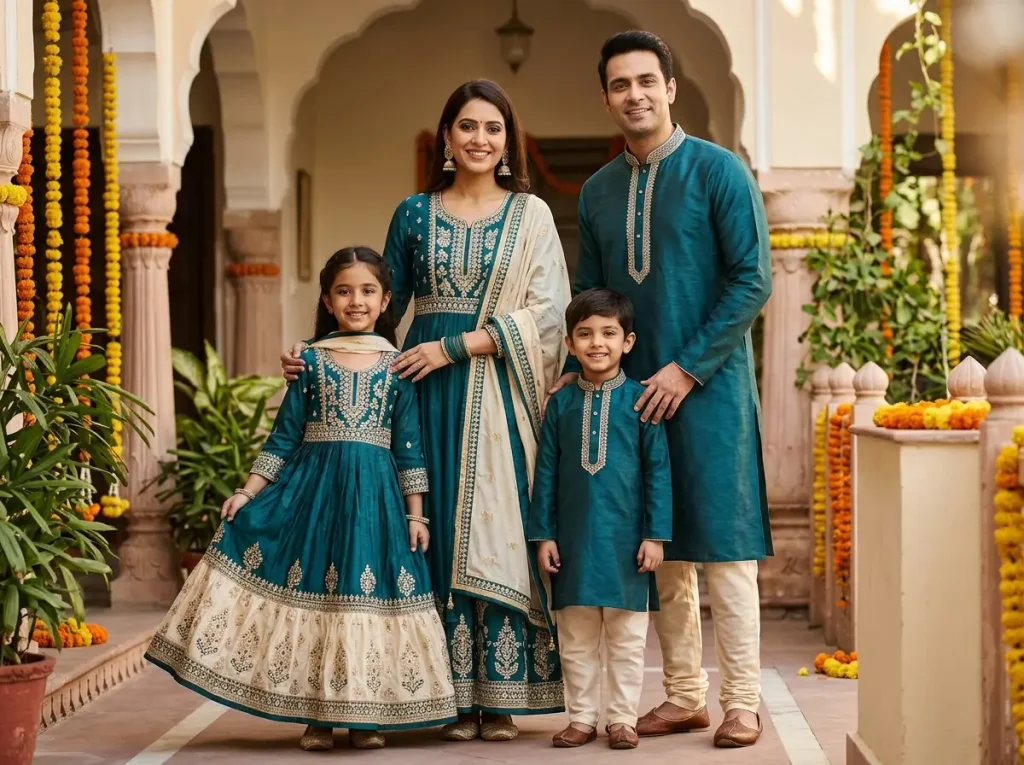
Anarkali suits provide a flowing silhouette that can be coordinated with men’s and children’s kurta sets. This option is ideal for families who want traditional clothing with a little movement and variety.
Choose a shared colour such as teal, burgundy, navy, or plum. The women can wear Anarkali suits in the main shade, while the men and boys wear matching kurtas with neutral trousers.
For a family with several children, using the same accent colour on everyone’s outfit can create a cohesive appearance without requiring identical garments.
What to look for:
- Comfortable sleeves and waistlines.
- Lightweight linings.
- Embroidery that does not irritate the skin.
- Skirt or hem lengths that allow easy movement.
10. Beige and Gold Minimalist Outfits
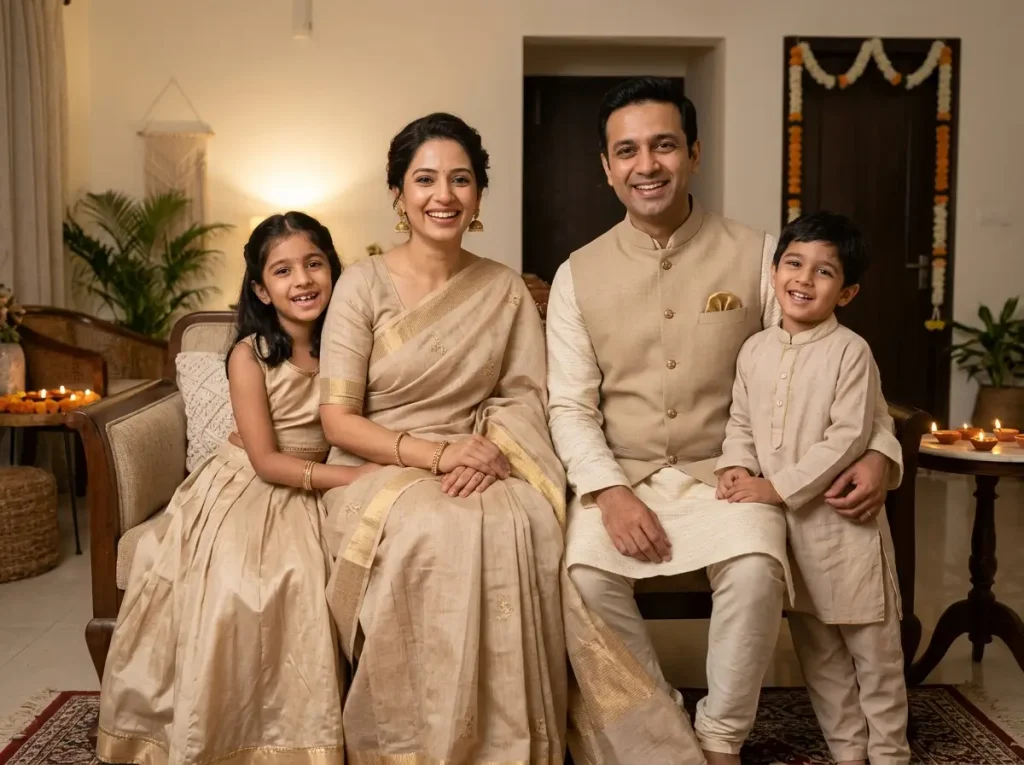
Not every Diwali outfit needs bright colours or elaborate embroidery. Beige and gold offer an understated option for families who prefer simple, elegant clothing.
Choose beige, champagne, sand, or warm cream as the main colour. Add gold through a woven border, subtle embroidery, jewellery, buttons, or a decorative stole.
A beige saree can coordinate with a cream kurta and gold-accented jacket. Children can wear simple beige ethnic sets with minimal detailing.
This palette is also versatile because many of its pieces can be reused for weddings, dinners, and other family occasions.
Styling tip: Mix textures to keep neutral outfits visually interesting. A woven saree, a cotton kurta, and a lightly embroidered jacket can look coordinated without appearing identical.
11. Festive Floral-Print Family Outfits
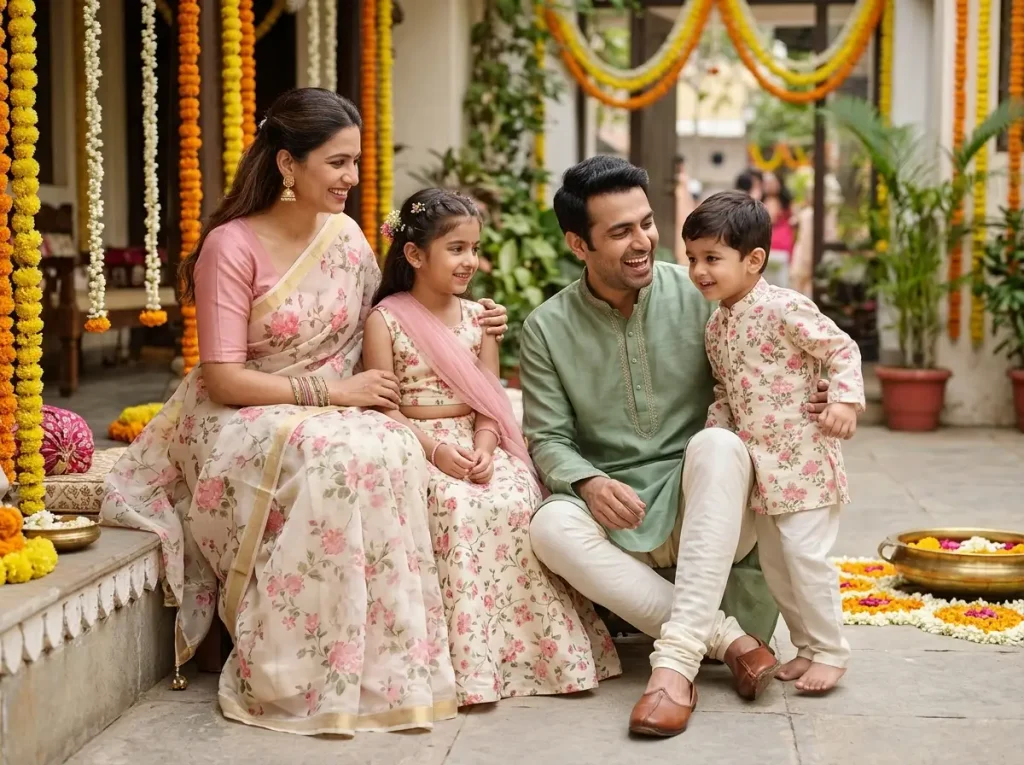
Floral prints offer a lighter alternative to heavily embroidered festive clothing. They work particularly well for daytime celebrations, relaxed family gatherings, and families who prefer contemporary designs.
Choose one floral pattern or a similar colour palette and distribute it across different garments. The mother might wear a floral saree or dress, the father a solid kurta in one of the print’s colours, and the children coordinated floral or solid outfits.
The key is to avoid combining too many competing prints. If one outfit has a large floral pattern, keep the other outfits simpler.
Styling ideas:
- Pair floral prints with solid-coloured kurtas.
- Repeat one shade from the print in the children’s outfits.
- Coordinate accessories rather than matching every pattern.
- Choose breathable fabrics for active children.
12. Contemporary Indo-Western Family Looks
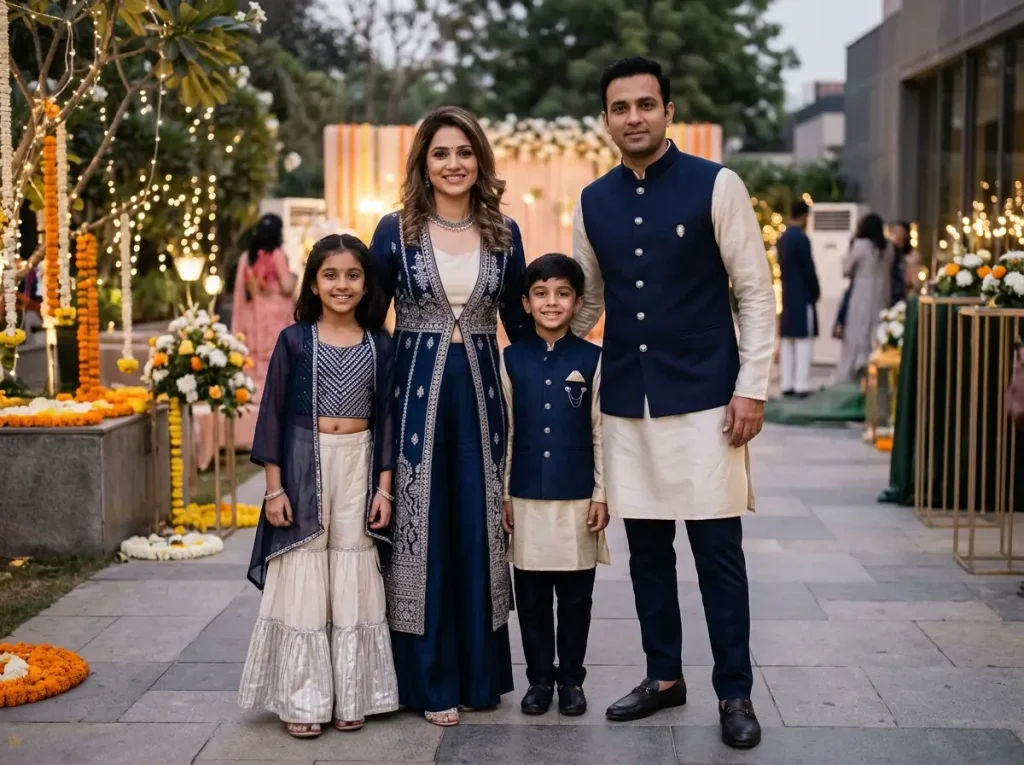
If your family prefers modern styling, Indo-Western outfits can offer a festive alternative to traditional matching sets.
Women can wear ethnic co-ord sets, long embroidered jackets, or fusion dresses. Men can choose a tailored kurta with fitted trousers or a Nehru jacket. Children can wear comfortable ethnic jackets with trousers or modern kurta sets.
To connect the outfits, select a shared palette such as navy and silver, emerald and beige, or maroon and cream.
This style is especially useful for families attending both a traditional celebration and a more contemporary evening gathering.
Styling tip: Keep one recognizably festive element in every outfit, such as embroidery, a traditional silhouette, a woven border, or an ethnic jacket.
13. Coordinated Silk and Brocade Outfits
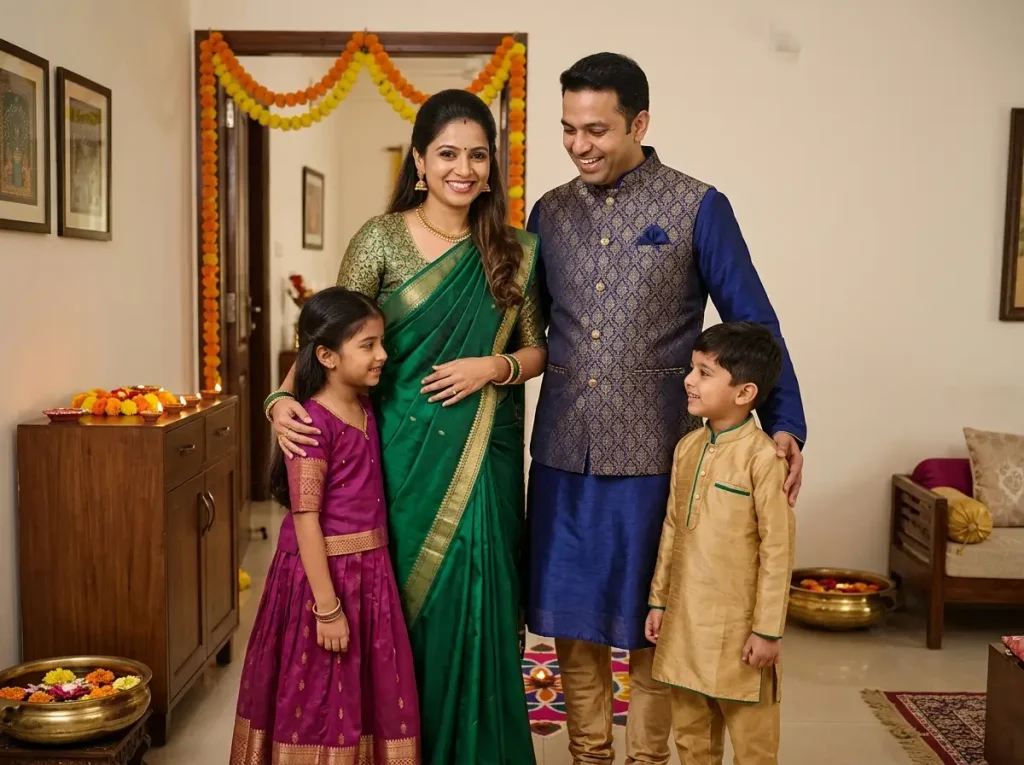
Silk-look fabrics and brocade detailing can give family outfits a more formal finish. This is a suitable option for families attending a special Diwali dinner, hosting guests, or arranging a formal family portrait.
A woman can wear a silk saree or brocade lehenga, while a man chooses a kurta with a coordinating woven jacket. Children can wear simpler outfits that repeat the same colours or border details.
You do not need to use the same fabric across the family. Combining a richly textured adult outfit with lighter, simpler children’s clothing can make the overall look more practical.
Before buying: Check the care label, lining, fabric weight, and fit. Some embellished garments may require special cleaning and can be less comfortable for long periods of wear.
14. Comfortable Matching Outfits for Babies and Toddlers
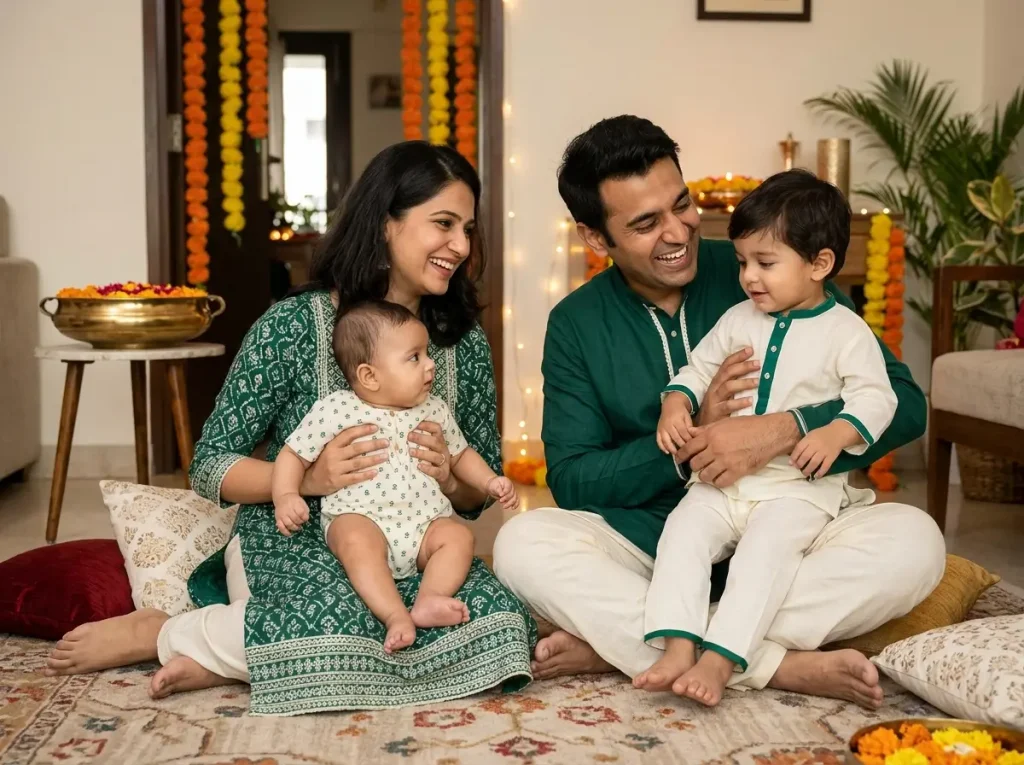
When babies and toddlers are part of the celebration, comfort should come before elaborate styling. Matching family outfits can still look beautiful when children’s garments use the same colours or patterns as the adults’ clothing.
Consider soft cotton kurta sets, simple festive dresses, lightweight ethnic co-ords, or comfortable rompers with traditional-inspired prints.
For example, parents can wear emerald green and ivory outfits while their toddler wears a soft ivory set with green trim. A matching colour is enough to connect the look.
Important comfort considerations:
- Choose breathable fabrics and comfortable seams.
- Avoid restrictive waistbands and scratchy embellishments.
- Check that clothing allows easy movement and diaper changes.
- Avoid loose accessories that could become choking hazards.
- Keep children well away from open flames, diyas, candles, and hot decorative items.
15. Elegant White and Gold Family Outfits
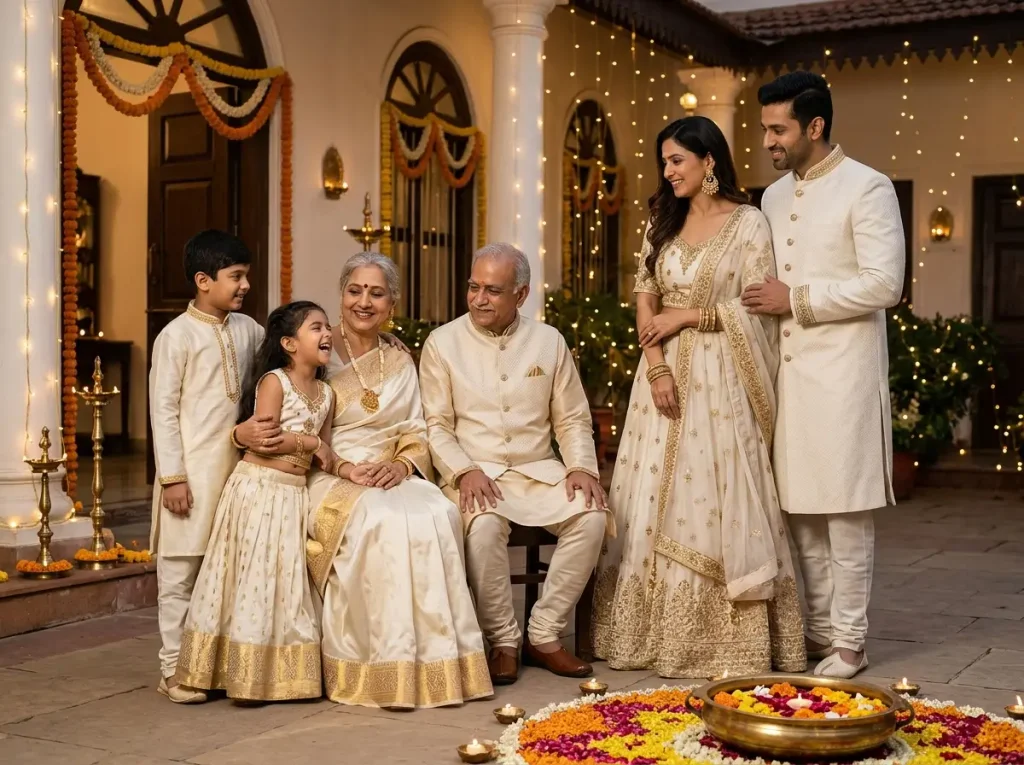
White and gold create a clean, coordinated look that works beautifully for family photographs and elegant festive gatherings.
Women can wear ivory sarees, white ethnic suits, or cream lehengas with gold accents. Men can choose white or cream kurta pajamas, while children wear matching neutral outfits with subtle gold detailing.
This palette is particularly useful when the background includes colourful rangoli, flowers, decorative lamps, or festive lights because the clothing provides visual contrast.
However, consider the setting before choosing white. If children will be playing or eating during the celebration, fabrics that are easy to wash may be more practical than delicate, high-maintenance garments.
Styling tip: Use one consistent gold tone across accessories and embroidery. Mix textures and silhouettes to keep the outfits from looking too uniform.
How to Coordinate Matching Family Outfits for Diwali
Choosing attractive individual outfits is only part of the process. The real challenge is making them work together as a family.
1. Choose a two- or three-colour palette
Start with one main colour, one complementary accent, and an optional neutral.
| Colour combination | Overall look | Suitable styling |
|---|---|---|
| Maroon and gold | Rich and traditional | Sarees, kurtas, embroidered jackets |
| Emerald and ivory | Elegant and balanced | Ethnic suits, kurtas, lehengas |
| Royal blue and gold | Bold and festive | Evening outfits and portraits |
| Mustard and cream | Warm and cheerful | Daytime celebrations |
| Pink and ivory | Soft and graceful | Mother-daughter outfits |
| Beige and gold | Minimal and refined | Understated festive clothing |
2. Match details, not every garment
A coordinated family does not have to wear identical outfits. Repeat one or two elements, such as the same colour, embroidery pattern, border, or accessory.
For example, the mother may wear a green saree, the father a cream kurta with a green stole, and the children ivory outfits with green detailing. The outfits look connected while allowing each person to express an individual style.
3. Consider the celebration
For puja and traditional family gatherings, many people prefer sarees, kurtas, lehengas, and other ethnic clothing. For casual visits or outdoor celebrations, simpler garments and comfortable footwear may be more practical.
Choose clothing that suits your family’s customs and the event rather than following a single dress formula.
4. Prioritize comfort and fit
Try on outfits before the celebration, especially when buying clothing online. Check the sizing chart, garment measurements, fabric information, and return policy.
Children need room to move, while adults should be able to sit comfortably during prayers and family meals. If you are wearing new footwear, try it at home before the event.
5. Coordinate accessories carefully
Gold or silver jewellery, matching dupattas, pocket squares, hair accessories, and footwear can connect separate outfits.
Avoid adding too many decorative elements. When the clothing already includes intricate embroidery or a bold print, simpler accessories usually create a more balanced look.
How to Create Matching Diwali Outfits on a Budget
You do not need to purchase a completely new wardrobe to coordinate your family.
- Start with what you own. Gather clothing in two or three colours before deciding what to buy.
- Buy only the missing pieces. A new stole, dupatta, jacket, or children’s kurta may be enough to complete the palette.
- Choose reusable clothing. Solid-coloured kurtas, simple ethnic suits, and neutral trousers can be worn for other occasions.
- Compare complete costs. Include alterations, delivery, footwear, and accessories when setting your budget.
- Plan for children’s growth. Avoid expensive outfits that may fit for only one short occasion if a simpler alternative will work.
- Shop with enough time. Ordering early allows time to check sizes, make alterations, and exchange unsuitable items.
A useful strategy is to choose the most important outfit first and coordinate everyone else around it. This prevents unnecessary purchases and helps the family achieve a consistent look.
Common Mistakes to Avoid
Even beautiful outfits can look mismatched or become uncomfortable if the planning is rushed.
- Choosing too many colours: Limit the palette to a few complementary shades.
- Making every outfit identical: Vary silhouettes while repeating a colour or detail.
- Ignoring the background: Check how the outfits look against your home’s décor or photoshoot location.
- Overlooking comfort: Avoid scratchy embellishments, tight fits, and difficult footwear.
- Buying without checking measurements: Compare garment measurements with the seller’s sizing guide.
- Leaving shopping until the last minute: Allow time for delivery, tailoring, and exchanges.
- Overspending on accessories: Reuse jewellery, shoes, and other items whenever possible.
Frequently Asked Questions
1. What are the best matching family outfits for Diwali celebrations?
Traditional combinations such as maroon and gold, emerald green and ivory, and royal blue and gold are attractive options. Families can coordinate sarees, kurtas, lehengas, and children’s outfits through shared colours or matching details.
2. How can a family match Diwali outfits without wearing identical clothes?
Choose two or three shared colours and distribute them across different garments. One person can wear the main colour, another can wear a neutral, and the children can wear outfits that repeat a small accent or pattern.
3. What should parents and children wear for Diwali?
Parents may choose sarees, ethnic suits, kurtas, lehengas, or Indo-Western clothing. Children can wear kurta pajama sets, festive dresses, or lightweight ethnic outfits that coordinate with the adults.
4. Which colours are suitable for Diwali family photos?
Maroon and gold, emerald and ivory, royal blue and gold, mustard and cream, and pink and ivory are useful combinations. Consider your background and lighting so that the clothing remains distinct from the décor.
5. Are matching family outfits necessary for Diwali?
No. Coordinated clothing is an optional styling choice. Families can celebrate in their preferred clothing, reuse outfits they already own, or choose a shared colour without purchasing matching sets.
6. How early should I buy matching Diwali outfits?
Start planning several weeks before the celebration when possible. This leaves time to compare clothing, check sizes, arrange alterations, and handle delivery delays. The amount of lead time needed depends on the seller and whether the outfits require custom tailoring.
7. What fabrics are suitable for Diwali family outfits?
Cotton and cotton blends can be comfortable for long gatherings, while silk-look fabrics, brocade, and embroidered materials offer a more formal appearance. Consider the climate, lining, care instructions, and comfort of each wearer before choosing.
8. How can I dress my baby or toddler for Diwali?
Choose comfortable, breathable clothing with easy closures and minimal scratchy embellishments. Keep loose accessories and small detachable decorations away from young children, and keep them at a safe distance from flames and hot lamps.
Conclusion
The best matching family outfits for Diwali celebrations bring together festive colours, personal style, and comfort.
Whether you prefer traditional sarees and kurtas, mother-daughter lehengas, father-son matching sets, or contemporary Indo-Western clothing, a shared colour palette can create a coordinated look without making everyone dress identically.
Start with the outfits your family already owns, choose a few complementary colours, and add only the pieces you genuinely need. With thoughtful planning, your family can enjoy a beautiful festive look that feels natural, comfortable, and memorable.