
A small laundry area does not have to feel crowded or cluttered. With a well-planned single-wall laundry layout, you can combine appliances, storage, drying space, and folding areas along one wall while keeping the rest of the room open.
The key is to make every part of the wall work harder. Vertical storage, compact furniture, hidden organizers, and flexible features can turn even a narrow laundry room or closet into a practical space.
Before choosing your design, measure your appliances and available wall space carefully. Also, follow your appliance manufacturer’s installation instructions and local building requirements, especially when planning cabinetry or enclosures around a dryer.
Here are 15 practical single-wall laundry ideas to help you create a more organized and efficient space.
1. Use a Stackable Washer and Dryer

A stackable washer and dryer is one of the most effective ways to save floor space in a small laundry area. By placing one appliance above the other, you free up room for storage, a utility sink, or a folding station along the same wall.
This setup works particularly well in laundry closets, apartments, and narrow utility rooms.
Before choosing a stackable arrangement, make sure the appliances are designed for stacking and installed according to the manufacturer’s instructions. Leave the required space for connections, servicing, and airflow.
Best for: Small laundry rooms, closets, and compact apartments.
2. Install a Wall-Mounted Drying Rack

A wall-mounted drying rack gives you a dedicated place to air-dry delicate clothing without permanently using valuable floor space.
Choose a fold-down or retractable design that sits flat against the wall when not in use. Installing it near a window or in a well-ventilated area can also make the space more practical for air-drying clothes.
This is an especially useful addition when your laundry room is too small for a freestanding drying rack.
Best for: Delicates, lightweight clothing, and small laundry rooms.
3. Add Overhead Shelving

The wall above your washer and dryer is valuable storage space that is often overlooked. Open shelves can hold detergent, stain removers, extra towels, and other supplies you do not need every day.
Keep frequently used products on lower, easy-to-reach shelves and reserve the highest shelves for backup supplies or seasonal items.
For a cleaner look, use matching baskets or containers to group smaller items together.
Tip: Avoid overloading shelves and secure them properly to suitable wall supports.
4. Hide the Laundry Area With a Sliding Door

If your laundry setup is part of a kitchen, hallway, or multipurpose room, a sliding door can help conceal the appliances when they are not in use.
Unlike a traditional hinged door, a sliding door does not require the same swing space in front of the opening. However, the wall beside the opening needs enough room for the door or track system.
Choose a style that complements the rest of your home. A simple panel door can create a modern look, while a barn-style design can add more character.
5. Add a Pull-Out Ironing Board

A built-in pull-out ironing board is a practical way to include an ironing station without storing a full-size board elsewhere.
It can be installed inside a cabinet or incorporated into a custom laundry unit. When finished, simply fold or slide it away to keep the room clear.
Choose a sturdy product designed for its intended installation, and make sure there is enough space to use it comfortably when extended.
Best for: Homes where ironing is part of the regular laundry routine.
6. Make the Most of Under-Counter Storage

If you have front-loading appliances beneath a continuous countertop, the surrounding lower cabinets can provide valuable storage.
Use drawers, pull-out baskets, or labeled bins to organize cleaning supplies and laundry accessories. Pull-out storage can be particularly helpful in deep cabinets because it prevents items from getting lost at the back.
Consider separating products by purpose, such as:
- Everyday laundry supplies
- Stain treatment products
- Cleaning cloths
- Extra towels or linens
This simple organization system can make a compact laundry wall feel much easier to use.
7. Create a Custom Pegboard Station

A pegboard can turn an empty section of wall into flexible storage. Add hooks, small shelves, and baskets to hold lightweight items such as lint brushes, clothespins, measuring cups, and cleaning tools.
The biggest advantage of a pegboard is that you can rearrange the accessories as your needs change.
For a more polished look, choose a pegboard that matches your cabinetry or paint the surrounding wall in a complementary shade.
Best for: Small supplies that would otherwise clutter countertops or drawers.
8. Choose a Foldable Laundry Basket

Bulky laundry baskets can take up surprising amounts of floor space. A collapsible basket can be folded and stored when it is empty, making it useful in especially compact rooms.
Look for a design that is easy to carry and sturdy enough for your usual laundry load.
If you prefer a more permanent solution, consider narrow hampers that fit beside or beneath cabinetry without blocking the walkway.
9. Keep a Small Lint Bin Nearby

A small bin near the dryer gives you a convenient place to dispose of lint after cleaning the filter. A magnetic container may work with some dryer designs, but check that it does not interfere with the appliance or block vents and controls.
Most importantly, clean the dryer lint filter as recommended by the manufacturer. Lint buildup can restrict airflow and create a fire hazard, so the area around the dryer should also be kept clean and free from unnecessary clutter. U.S. Consumer Product Safety Commission
Dispose of dryer lint according to local waste guidance rather than assuming it is suitable for composting or other household uses.
10. Include a Compact Utility Sink

A utility sink can be useful for hand-washing delicate items, soaking stained clothing, or handling messy household tasks.
In a single-wall layout, consider a narrow or compact sink that fits beside your appliances without taking over the entire work area. A cabinet below the sink can provide additional concealed storage.
Before installation, plan the plumbing carefully and ensure the sink leaves enough practical workspace around your appliances.
Best for: Families, pet owners, and households that regularly hand-wash or soak clothing.
11. Use a Slim Rolling Cart

A narrow rolling cart can fit into an unused gap between cabinetry or appliances. It provides flexible storage and can be moved when you need access to another part of the room.
Use it for supplies you reach for often, such as detergent, dryer sheets, or stain treatments.
A rolling cart is also a good option for renters because it can add storage without requiring permanent cabinetry.
12. Install a Fold-Down Folding Table
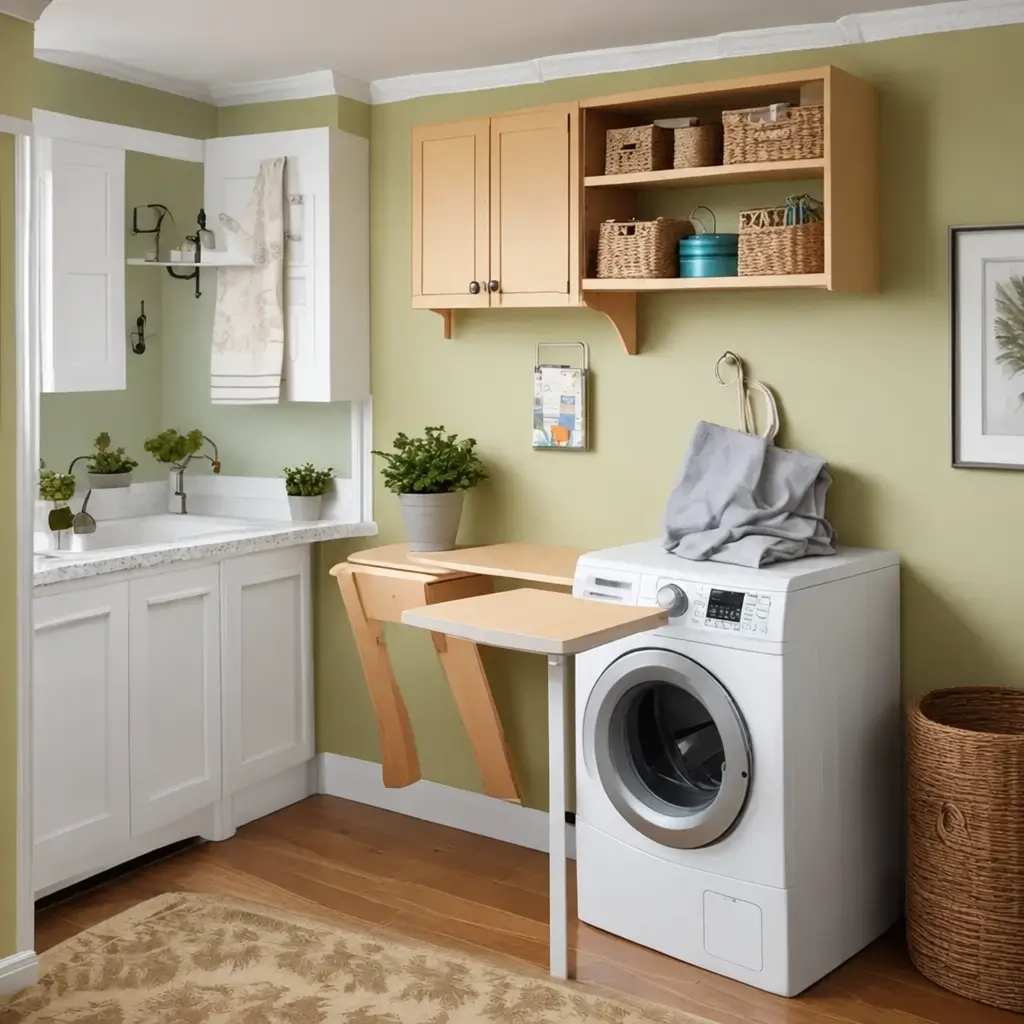
A dedicated folding surface can make laundry easier, but a permanent table may take up too much space in a narrow room.
A wall-mounted fold-down table provides a useful work surface when needed and folds flat against the wall afterward. It can be used for folding clothes, sorting loads, or temporarily holding a laundry basket.
Make sure the wall and hardware are suitable for supporting the table and its expected load.
Best for: Narrow laundry rooms where floor space needs to remain clear.
13. Add Hidden Pull-Out Hampers

Built-in hampers can keep dirty laundry out of sight and prevent baskets from taking up floor space.
A pull-out hamper inside a cabinet works especially well in a custom single-wall laundry design. You can even use separate compartments for lights, darks, or towels if your household sorts laundry before washing.
Choose removable liners or baskets when possible to make carrying laundry easier.
14 Install a Hanging Rod

A hanging rod is a simple addition that can make a laundry wall more functional. Install one beneath an upper cabinet or shelf to create a convenient spot for air-drying shirts or hanging freshly ironed clothes.
This feature works well with a wall-mounted drying rack because each serves a different purpose: the rack provides broader drying space, while the rod keeps garments hanging neatly.
Be sure the rod is securely mounted and positioned where hanging clothes will not interfere with appliance doors or your walkway.
15 Use Decorative Bins for Everyday Organization

Decorative bins can keep open shelves looking tidy while hiding smaller laundry supplies.
Instead of labeling every container with a long list of products, group similar items together. For example, one bin can hold stain treatments, another can store cleaning cloths, and a third can hold spare supplies.
Choose containers that are easy to lift and sized appropriately for the shelf. Uniform bins can also create a calmer, more cohesive look in an open laundry area.
How to Plan a Single-Wall Laundry Layout
Before installing storage or choosing furniture, think about how you move through the laundry process.
A practical layout usually follows this simple order:
| Laundry Need | Space-Saving Solution |
|---|---|
| Washing and drying | Stackable or side-by-side appliances |
| Detergent and supplies | Overhead shelves or cabinets |
| Air-drying clothes | Wall-mounted rack or hanging rod |
| Folding clothes | Countertop or fold-down table |
| Dirty laundry | Pull-out or narrow hamper |
| Small accessories | Pegboard, bins, or a rolling cart |
Try to keep your most frequently used items within easy reach and store occasional-use items higher up or behind cabinet doors.
Also, avoid designing the room so tightly that appliances cannot be serviced or used safely. Dryer installation and ventilation requirements vary by model and location, so always follow the manufacturer’s instructions and applicable local requirements.
Final Thoughts
A well-designed single-wall laundry room proves that a small space can still be highly functional. You do not need every idea on this list to create a better layout.
Often, combining a few smart solutions, such as vertical shelving, a fold-down work surface, hidden hampers, and flexible drying space, is enough to make a noticeable difference.
Start by identifying what creates the most clutter or inconvenience in your current laundry area. Then choose storage and layout solutions that solve those specific problems while keeping the room comfortable and easy to use.
Frequently Asked Questions
What is the best layout for a small single-wall laundry room?
The best layout depends on the available wall length and your appliances. Start with the washer and dryer, then use the remaining wall space for vertical storage, drying features, or a compact folding surface.
Are stackable washers and dryers good for small spaces?
Yes. Stackable appliances can free up floor space for storage or other laundry functions. However, make sure the specific appliances are approved for stacking and installed according to the manufacturer’s instructions.
How can I add storage without making a small laundry room feel crowded?
Use vertical space first. Overhead shelves, cabinets, pegboards, and wall-mounted organizers can provide storage while keeping the floor and countertop areas clearer.
What can I put above a washer and dryer?
Depending on your appliance clearances and installation requirements, the space above can be used for shelves or cabinets to store laundry supplies, towels, and other lightweight household items.
Is a fold-down table worth adding to a laundry room?
A fold-down table can be a useful choice when you need a folding surface but do not have room for a permanent table. It provides workspace when needed and can be folded away afterward.
How do I keep a small laundry area organized?
Give every category of item a designated storage spot. Keep everyday supplies accessible, use bins for smaller products, and regularly remove items that do not belong in the laundry area.
How can I make a single-wall laundry area look more modern?
Choose a simple, coordinated color palette and avoid overcrowding open shelves. Matching storage containers, streamlined hardware, and a combination of concealed and open storage can create a cleaner, more modern appearance.
