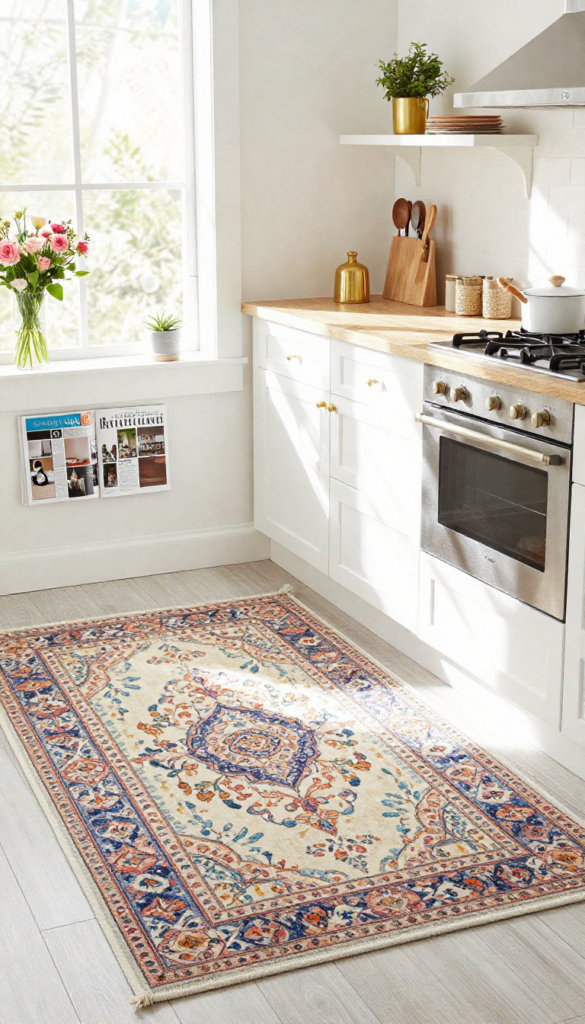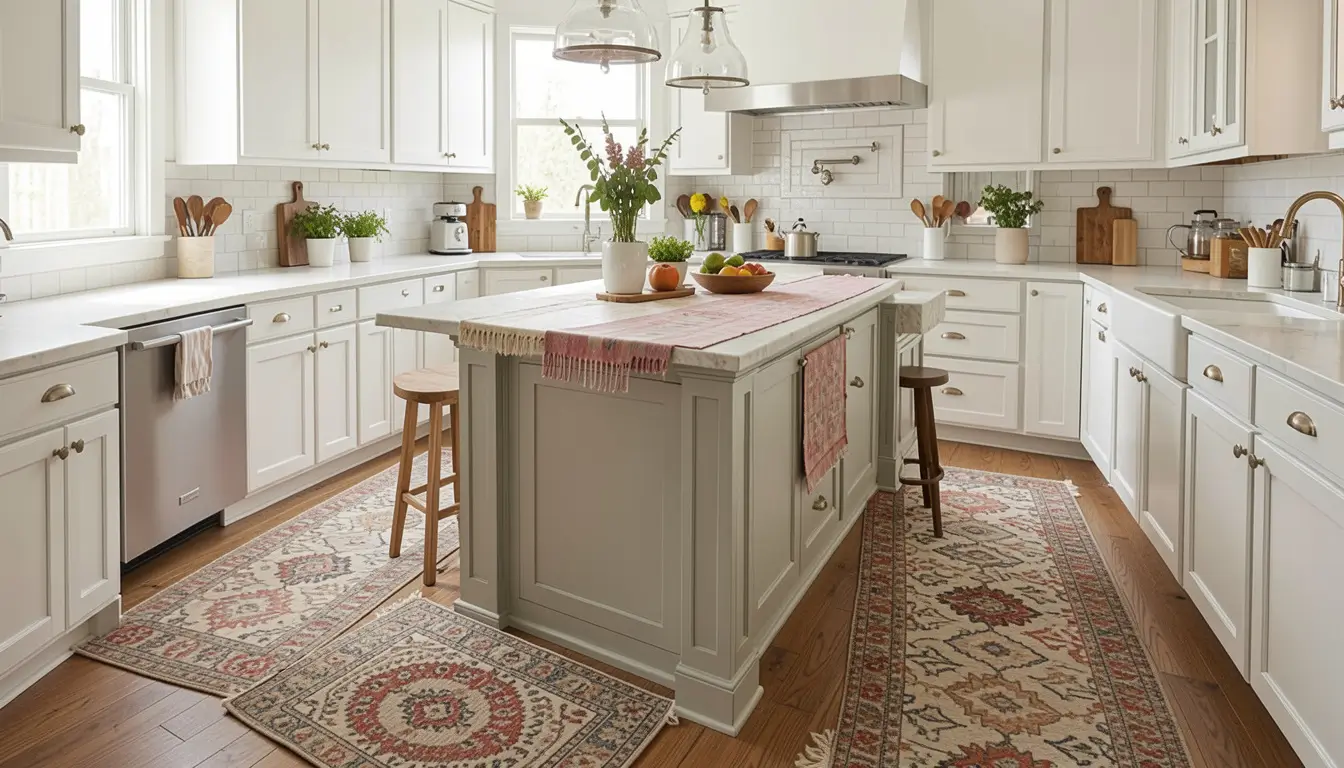
Longing for a kitchen that feels both cozy and show-stopping underfoot? Choosing the perfect kitchen rugs can instantly warm tile or hardwood, define work zones, and add a pop of pattern.
Whether you crave cushioned comfort for long cooking sessions or a washable runner that survives spills, the right rug transforms cluttered floors into a styled, functional backdrop.
This article offers 15 expert tips for choosing the perfect kitchen rugs, packed with quick style rules, size-and-shape guides, material tradeoffs, color-pairing hacks, and budget-friendly shopping spots.
Choosing the right kitchen rug can transform your space. From style to practicality, our expert tips will guide you in finding the perfect rug for your kitchen.
1 Measure Your Space
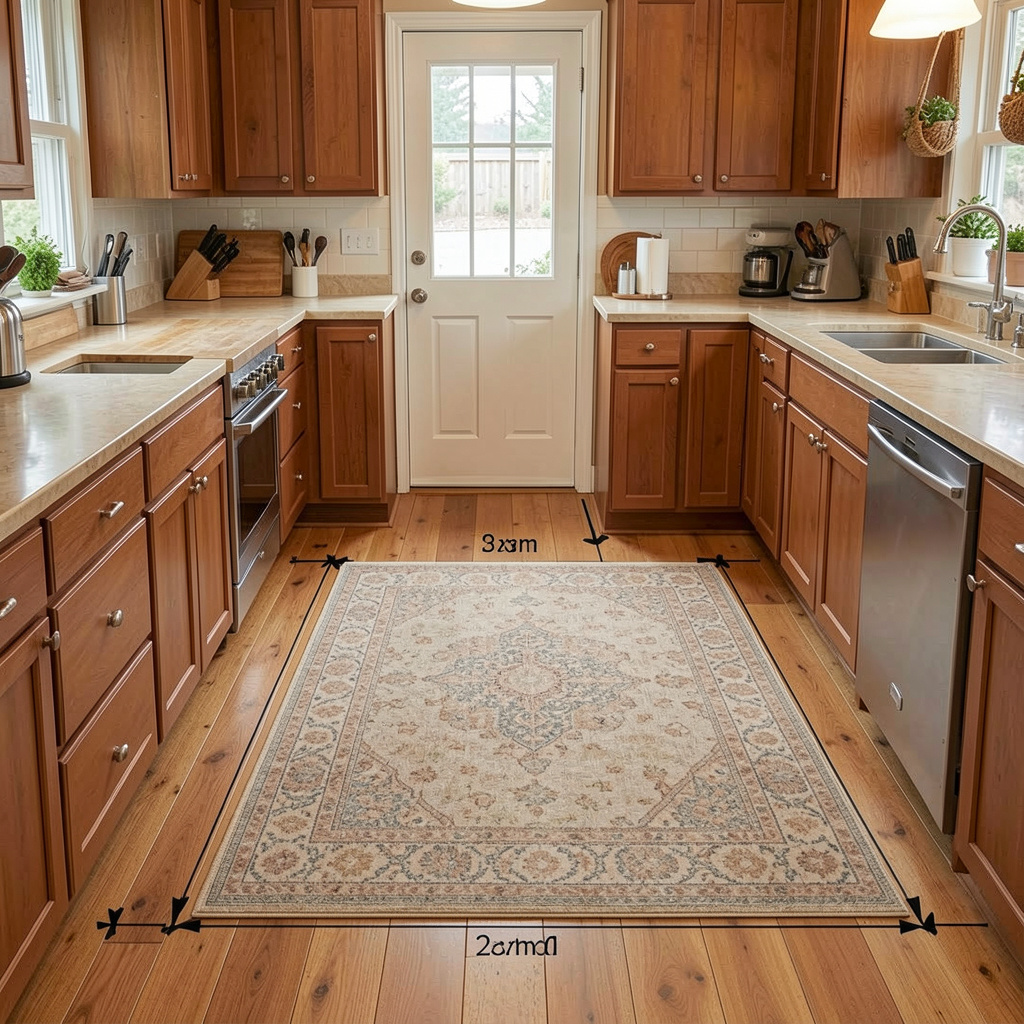
Before buying a kitchen rug, measure your space to make sure it fits well. The right size rug can create a focal point and bring a sense of balance to your room.
Consider the layout of your kitchen when choosing a rug. A long runner might work well in a narrow kitchen, while a larger rug can define a dining area or cooking zone.
Don’t forget to account for door clearance and any furniture that may sit on the rug. This helps ensure that the rug doesn’t become a tripping hazard and fits comfortably within your space.
2 Choose the Right Material
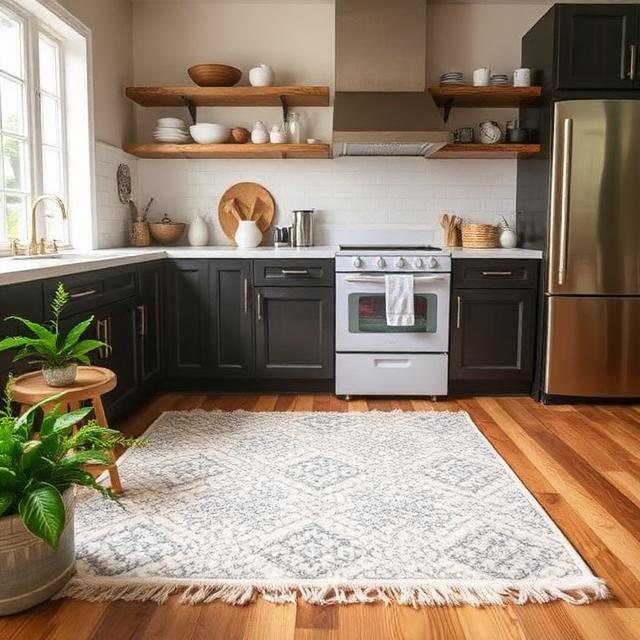
When looking for kitchen rugs, it’s smart to pick materials that are easy to clean. Cotton and synthetic fibers are good choices because they can handle spills and frequent use without much hassle.
Durability is key in a kitchen rug. Synthetic fibers are often more durable than natural ones, making them a great option. They can withstand the busy environment of a kitchen, ensuring your rug lasts longer.
Consider how often you’ll need to clean your kitchen rug. Cotton rugs can be machine-washed, making them a convenient choice for a space where spills are common.
3 Opt for Non-Slip Backing
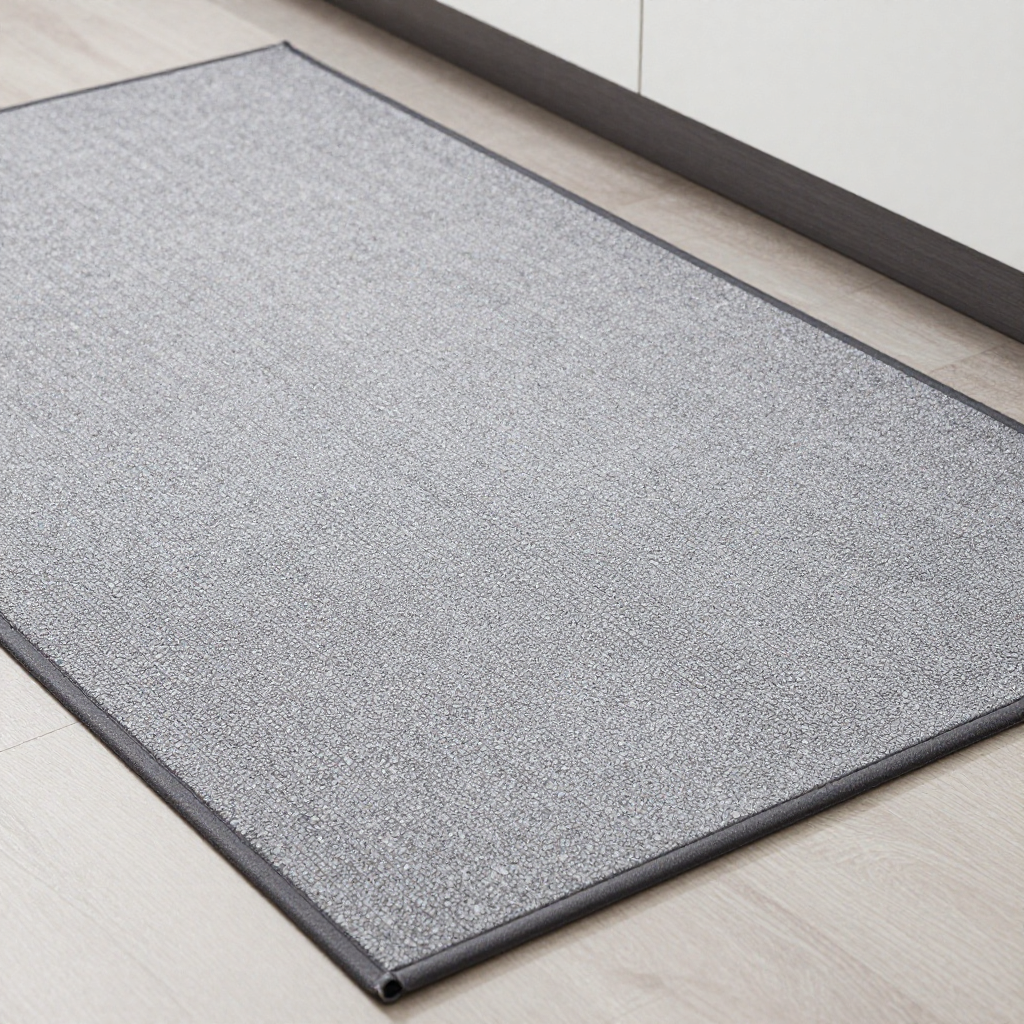
A non-slip backing on your kitchen rug is essential for safety. It helps to prevent slips and falls, especially in a busy area like the kitchen where spills are common.
When choosing kitchen rugs, look for ones with a non-slip backing to keep them securely in place. This will not only enhance safety but also prevent the rug from bunching up, which can be a tripping hazard.
Non-slip backings are usually made from materials like rubber or latex, which provide excellent grip, reducing the risk of accidents in the kitchen, in households with kids or elderly members

4 Consider the Pattern
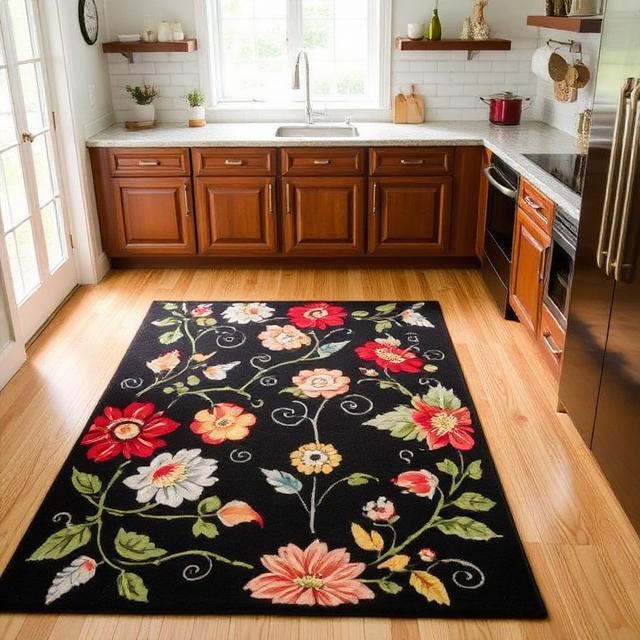
Patterns in kitchen rugs can hide spills and stains, making them practical for busy homes. Choose designs that match your kitchen’s decor, adding both style and function to the space.
Geometric patterns can give your kitchen a modern look, while floral designs can add a touch of warmth. Consider the overall theme of your kitchen when selecting a rug pattern.
Colorful patterns not only brighten up the kitchen but also create a focal point. Pick a pattern that complements your countertops and cabinets to tie the room together.
5 Think About Color
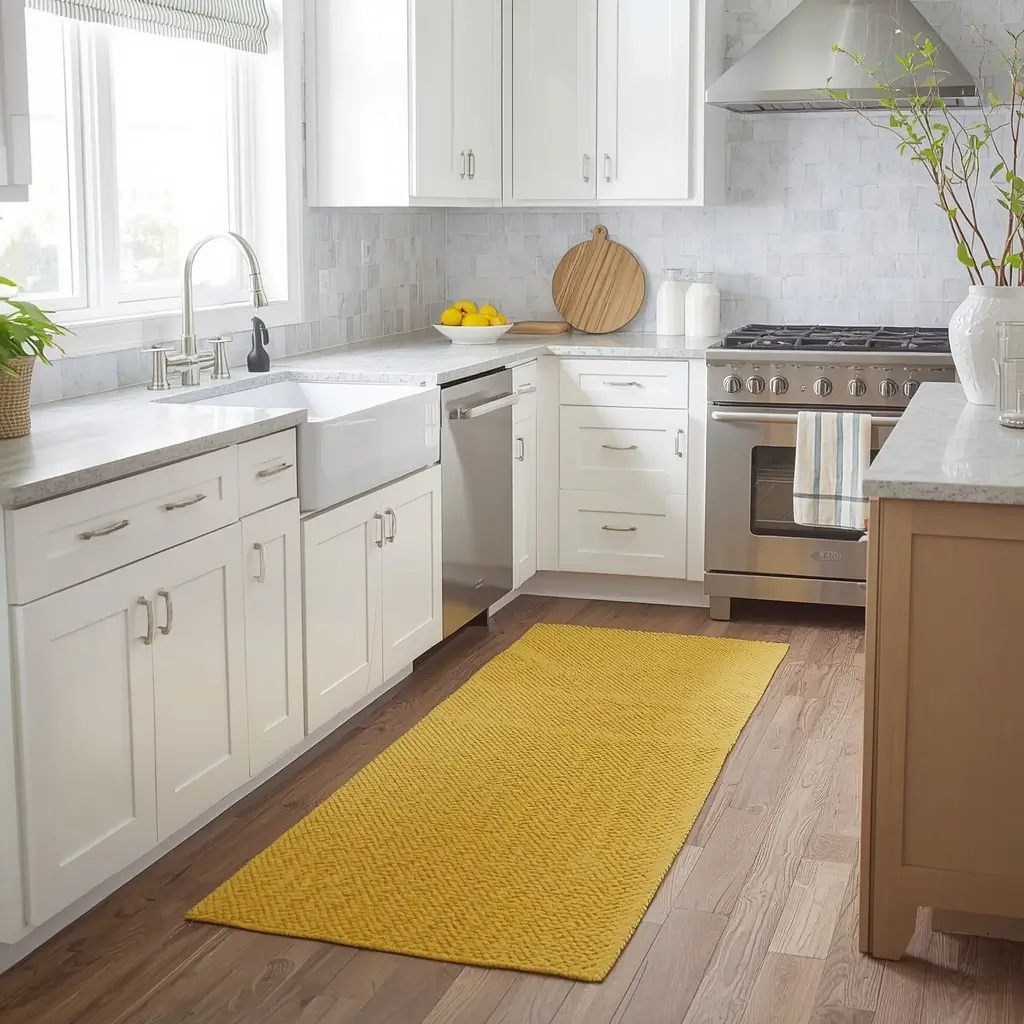
When choosing kitchen rugs, consider colors that either match or stand out from your kitchen’s look. Bright colors can make the space feel lively, while neutral tones can bring a sense of calm.
Bold colors in kitchen rugs can add a pop of excitement to your cooking area. If your kitchen has neutral shades, a bright rug can be the perfect touch to create a balanced yet vibrant atmosphere.
Neutral-colored kitchen rugs can make your space feel more relaxed and open. They are perfect for homeowners looking to create a serene cooking environment without overwhelming the senses with too much color.
6 Layer for Depth
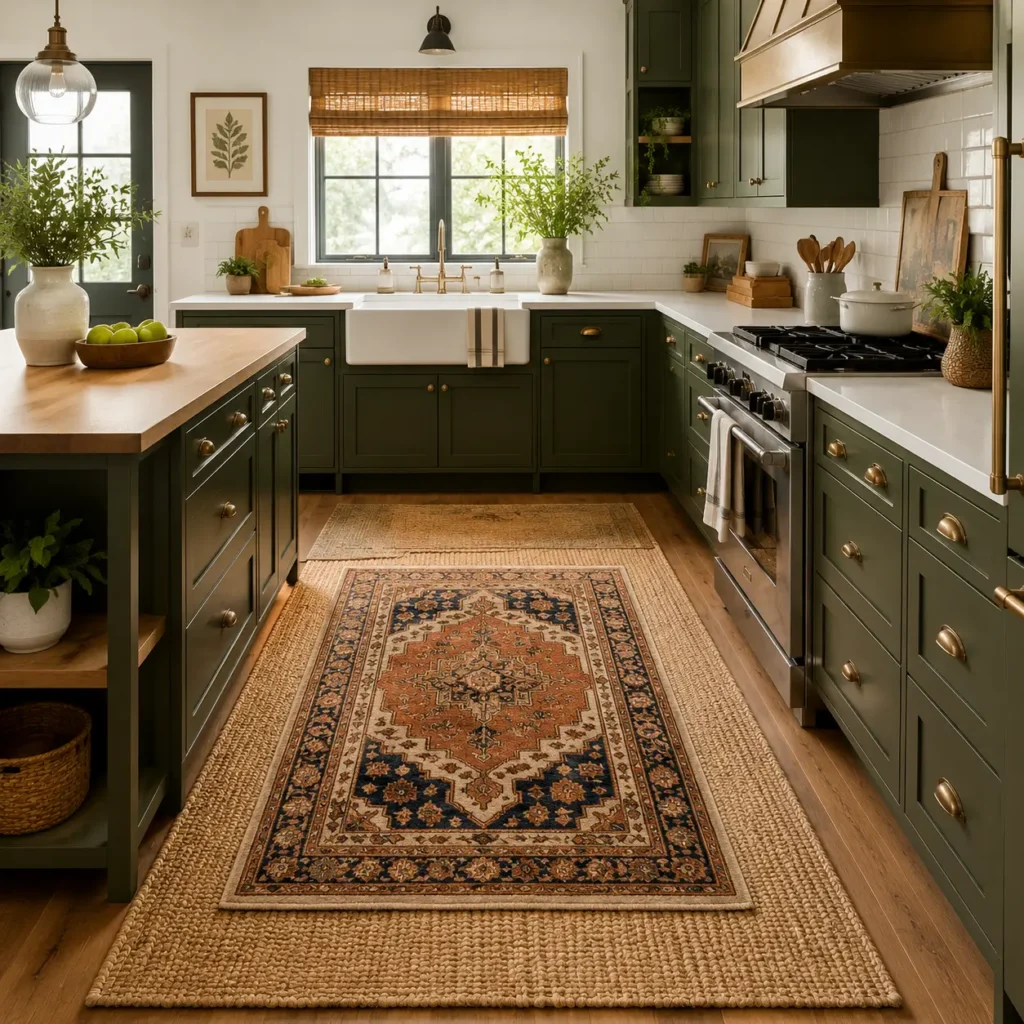
Layering rugs in your kitchen can add depth and visual interest. Try placing a smaller patterned rug on top of a larger neutral one. This simple trick can make your space look more dynamic and stylish.
When you layer rugs, it’s easy to change the look of your kitchen without a big commitment. You can swap out the top rug for a new pattern or color whenever you feel like updating the space.
Layering rugs also helps define different areas in your kitchen. For instance, use a larger rug to cover the main floor and a smaller one by the sink or stove to create distinct zones.
7 Match Your Style
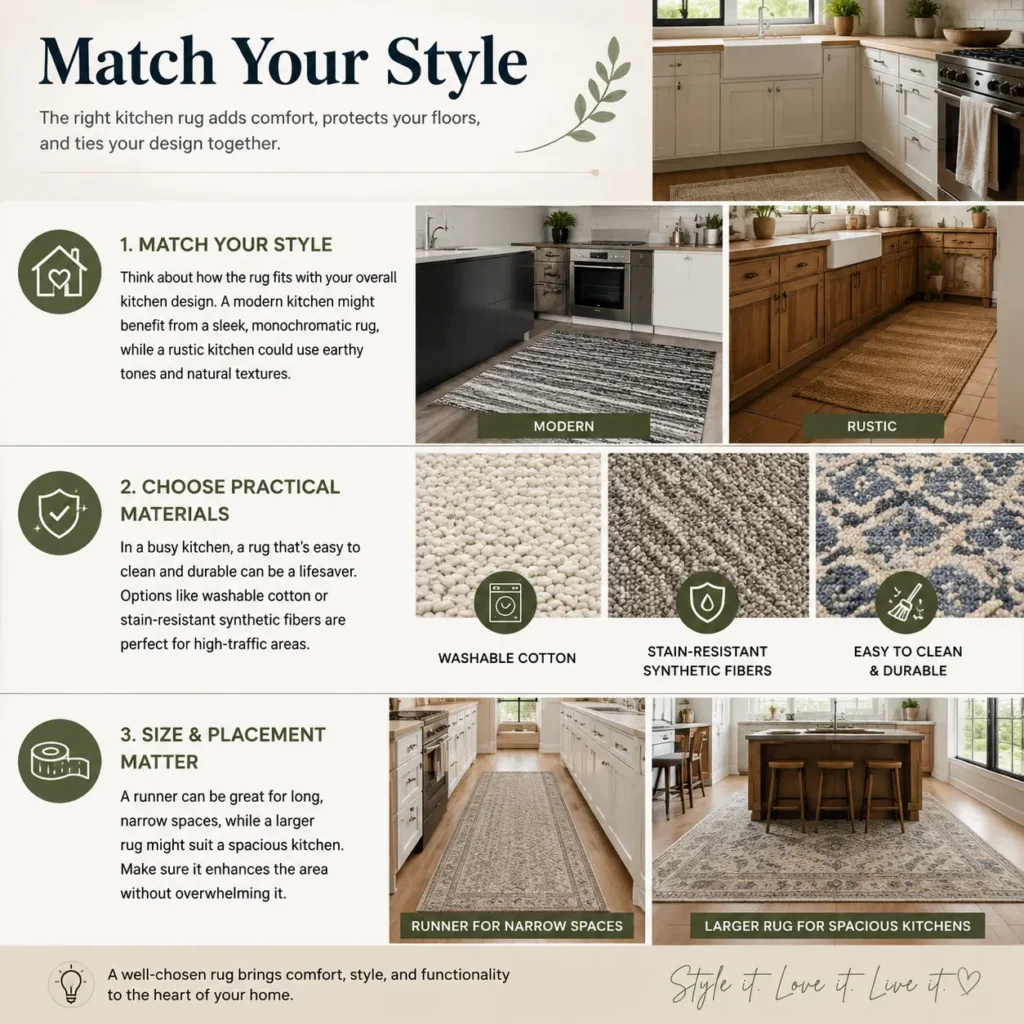
When choosing a kitchen rug, think about how it fits with your overall kitchen design.
A modern kitchen might benefit from a sleek, monochromatic rug, while a rustic kitchen could use a rug with earthy tones. Consider the material of the rug for practicality.
In a busy kitchen, a rug that’s easy to clean and durable can be a lifesaver. Options like washable cotton or stain-resistant synthetic fibers are perfect for high-traffic areas.
Don’t forget about the size and placement of your kitchen rug. A runner can be great for long, narrow spaces, while a larger rug might suit a spacious kitchen.
8 Focus on Comfort
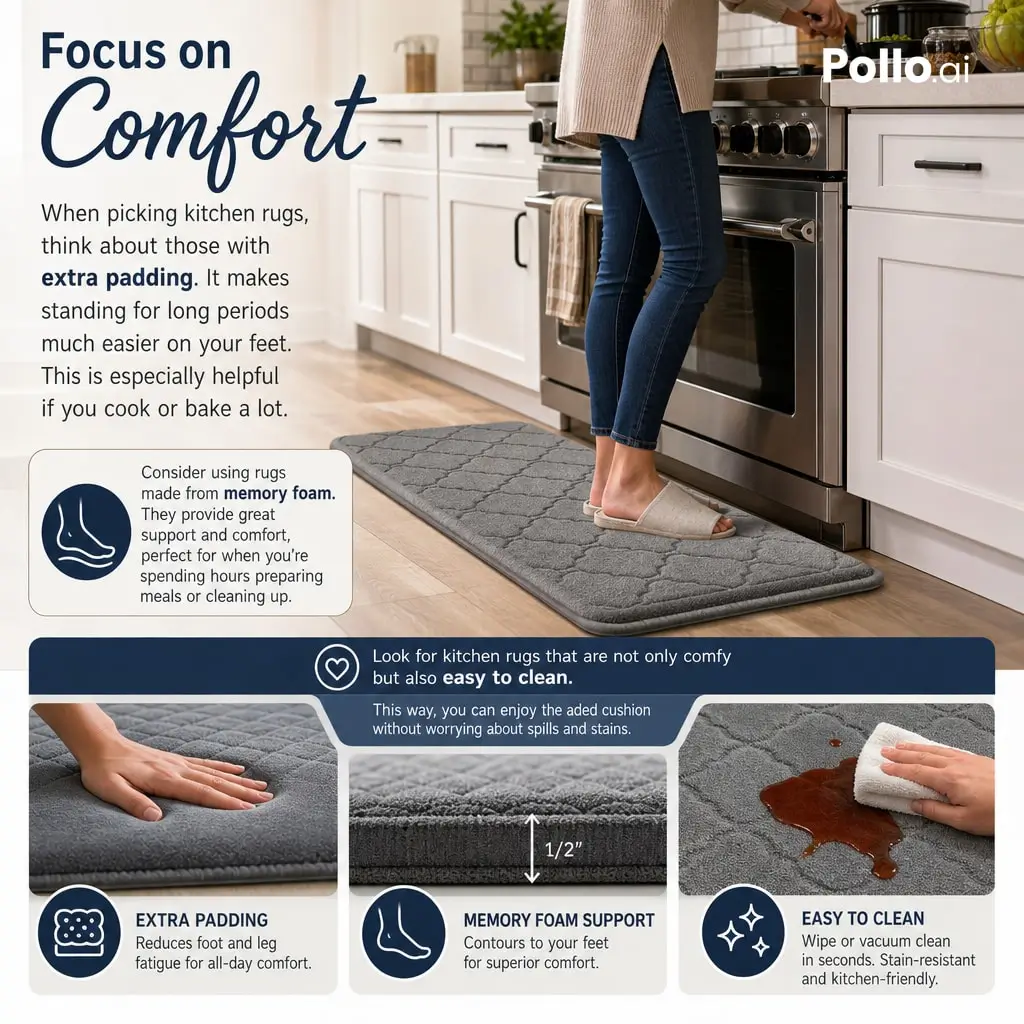
When picking kitchen rugs, think about those with extra padding. It makes standing for long periods much easier on your feet. This is especially helpful if you cook or bake a lot.
Consider using rugs made from memory foam. They provide great support and comfort, perfect for when you’re spending hours preparing meals or cleaning up.
Look for kitchen rugs that are not only comfy but also easy to clean. This way, you can enjoy the added cushion without worrying about spills and stains.
9 Easy to Clean
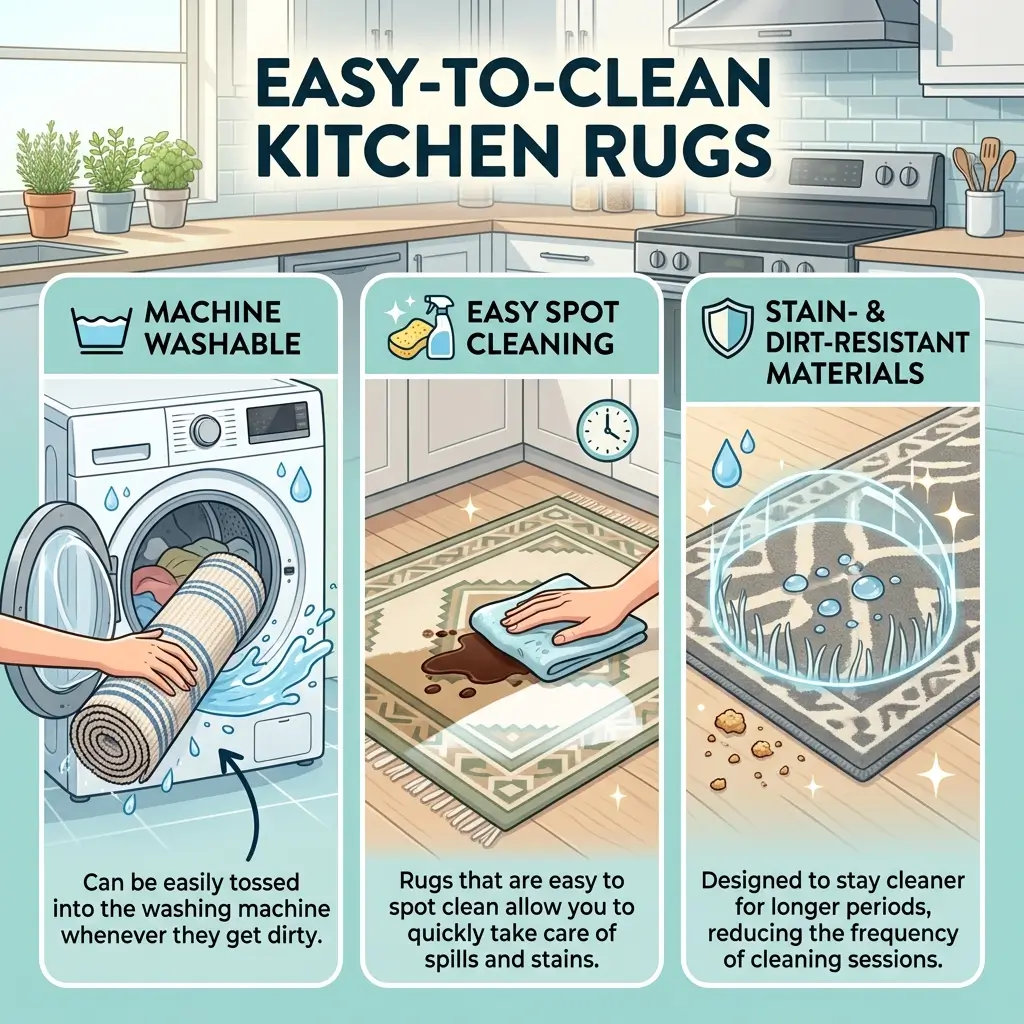
When choosing kitchen rugs, look for ones that are machine washable. This makes it easy to keep them clean and fresh without much hassle.
Machine washable rugs can be easily tossed into the washing machine whenever they get dirty. Spot-cleaning is another convenient feature to look for in kitchen rugs.
Rugs that are easy to spot clean allow you to quickly take care of spills and stains, maintaining a tidy appearance with minimal effort. Consider rugs made from materials that resist stains and dirt.
These rugs are designed to stay cleaner for longer periods, reducing the frequency of cleaning sessions. This can save you time and keep your kitchen looking neat with less work.
10 Durability Matters
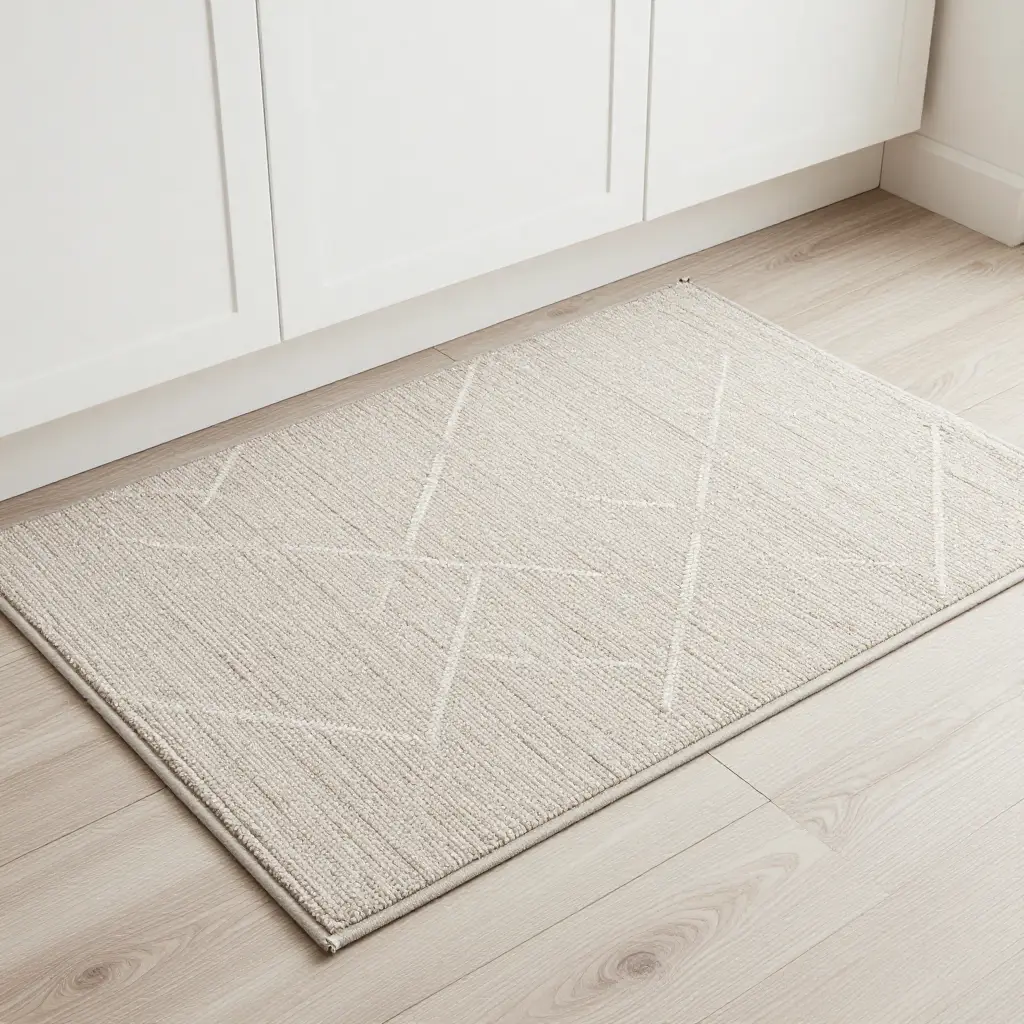
When choosing a kitchen rug, it’s important to go for one that can withstand a lot of foot traffic.
Look for materials like nylon or polypropylene, which are known for their durability and resistance to wear and tear. Frequent cleaning is a must for kitchen rugs.
Opt for rugs that are easy to clean, such as those that are machine-washable or have stain-resistant properties. This will ensure your rug stays looking fresh and new. Consider the backing of the rug as well.
A non-slip backing can prevent accidents, especially in a busy kitchen. This feature not only keeps the rug in place but also adds to its overall lifespan by reducing movement.
11 Think About Shape
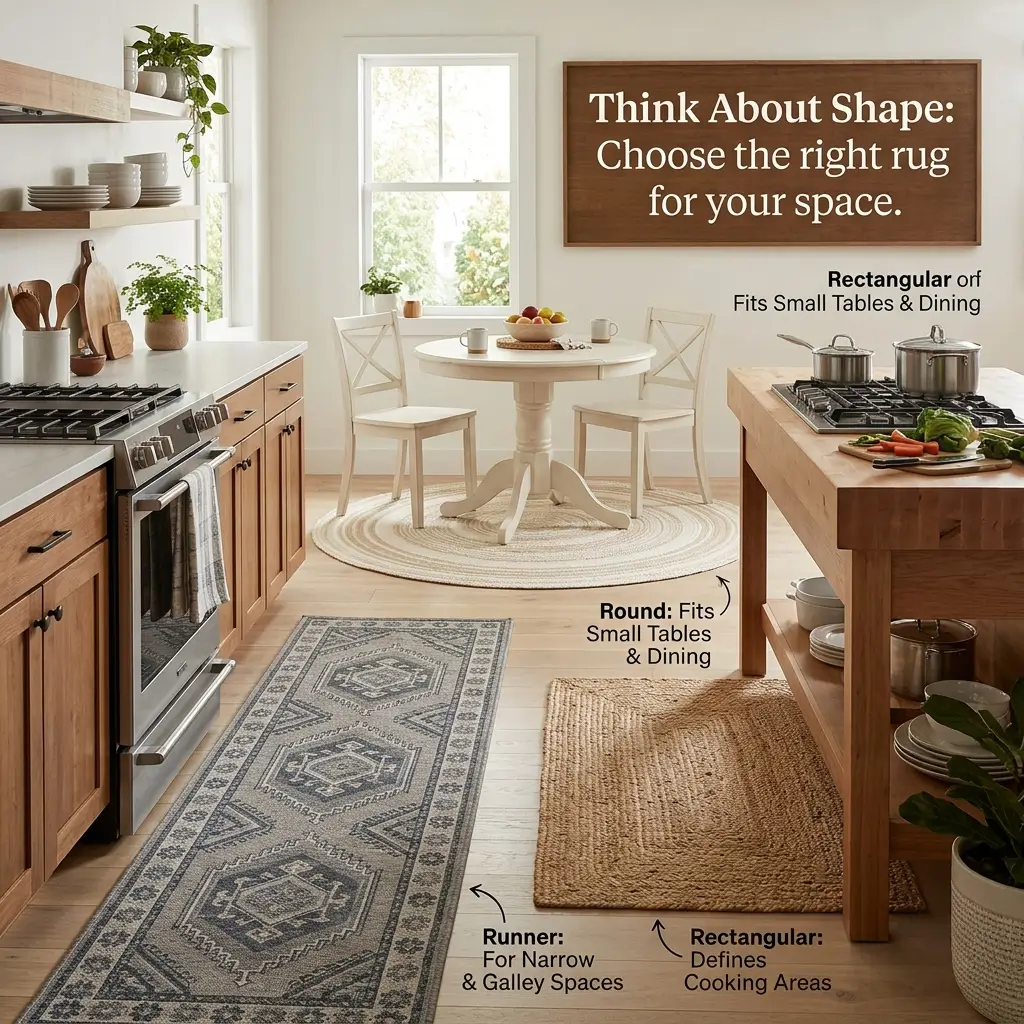
When choosing kitchen rugs, consider the shape of your space. A rectangular rug can define a cooking area, while a round rug might fit better under a small table.
The right shape can enhance functionality and style in your kitchen. For narrow spaces or galley kitchens, a runner rug is an ideal choice.
It can add warmth and comfort to high-traffic areas while protecting your flooring. Plus, runners come in various designs to match your kitchen’s decor.
If you have an open-plan kitchen, combine different rug shapes to create zones. A rectangular rug can anchor the cooking area, while a round one can highlight the dining space.
Mixing shapes helps to organize and visually separate different parts of the kitchen.
12 Eco-Friendly Options
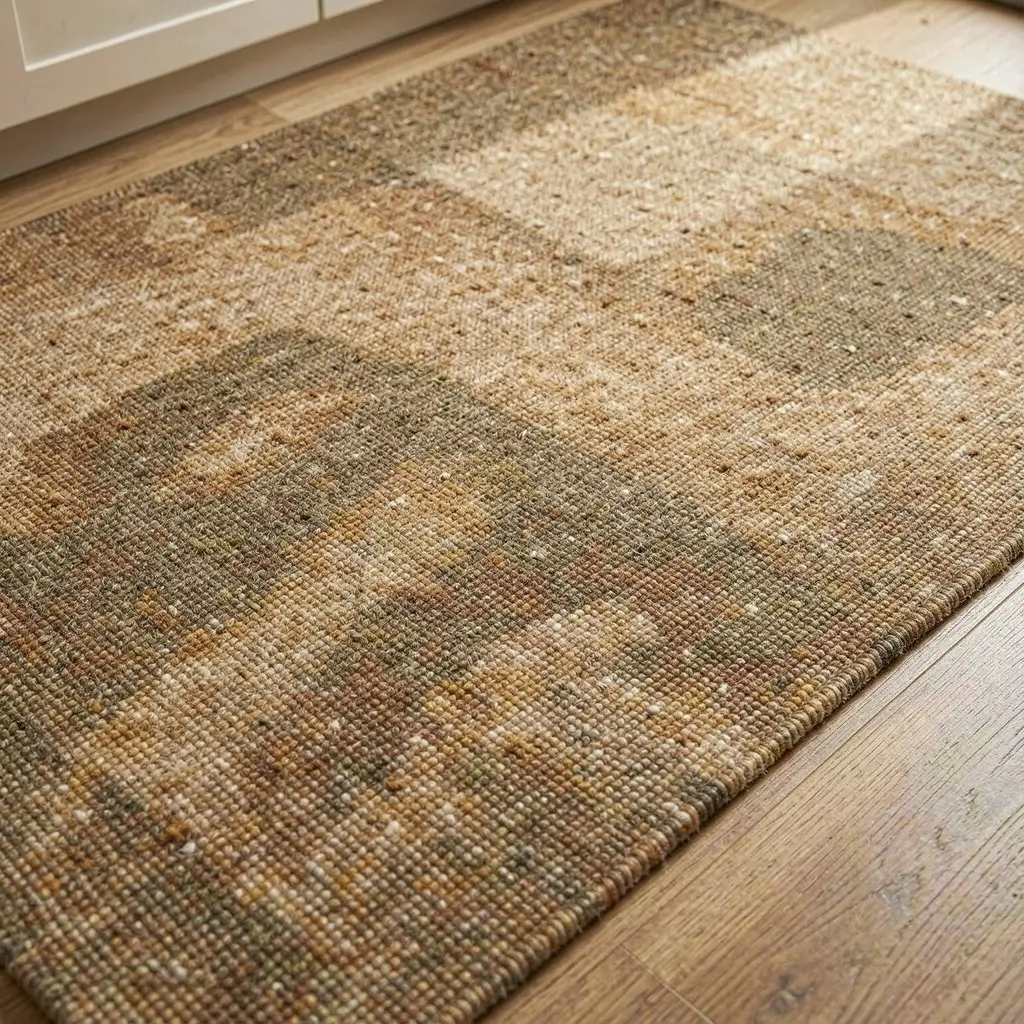
Choosing eco-friendly kitchen rugs made from sustainable materials like jute, bamboo, or organic cotton can help reduce your carbon footprint.
These materials are renewable and often biodegradable, making them a smart choice for environmentally conscious homeowners.
Eco-friendly rugs not only benefit the environment but can also enhance your kitchen’s look. They come in various styles and colors, so you don’t have to sacrifice aesthetics for sustainability.
Look for options with natural dyes for an added eco-friendly touch. When picking an eco-friendly kitchen rug, consider its durability and ease of cleaning.
Sustainable materials like wool and hemp are known for their long-lasting properties and can handle the wear and tear of a busy kitchen. This makes them a practical and eco-conscious choice.
13 Seasonal Swaps
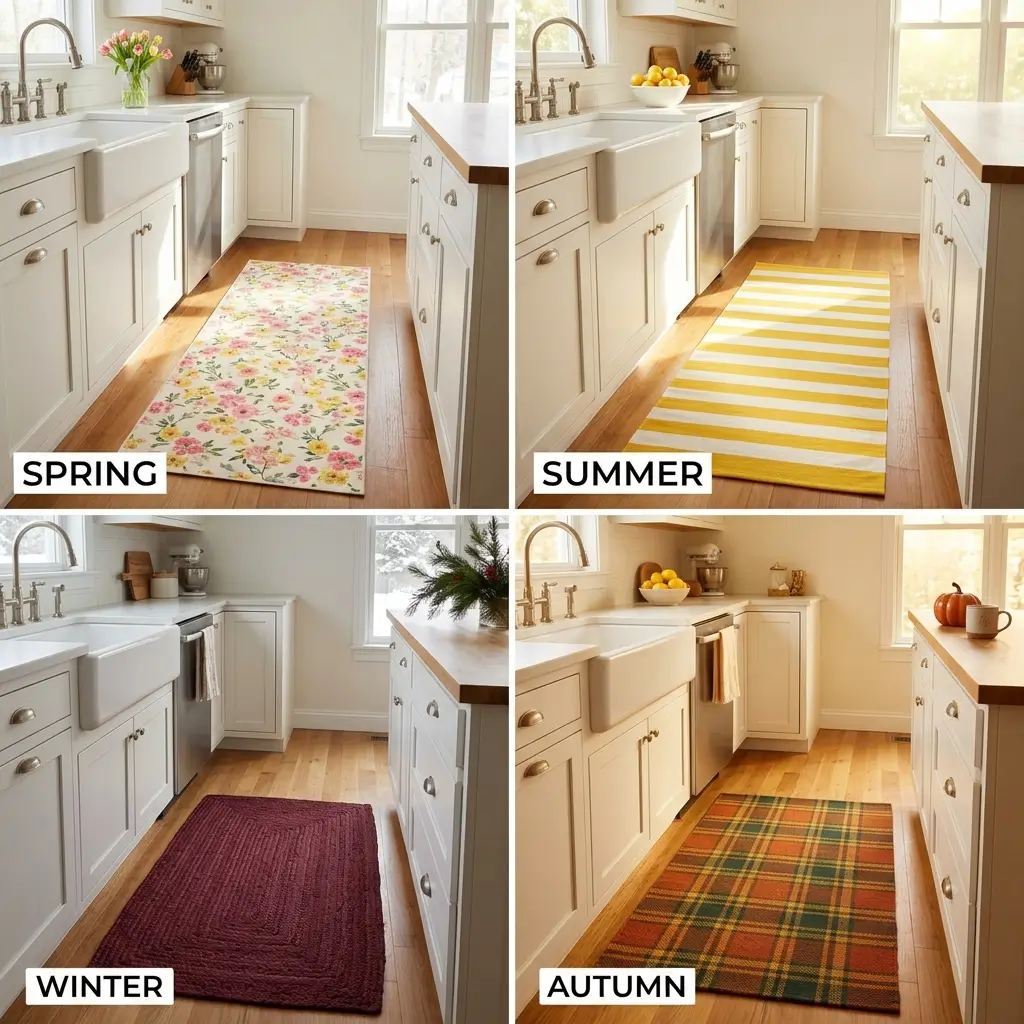
Switching your kitchen rugs with the seasons is an easy way to keep the space looking fresh.
Try lighter, brighter rugs in spring and summer, and opt for cozier, darker ones in fall and winter to match the seasonal vibe. Using different rugs throughout the year can also help protect your floors.
Heavier rugs in winter can keep the cold at bay, while lighter ones in summer can prevent scratches and wear on the floor. Seasonal rugs can reflect the changing trends and moods of each time of year.
Floral patterns might work well in spring, while plaid or deeper colors can bring a warm, autumnal feel.
14 Budget-Friendly Finds
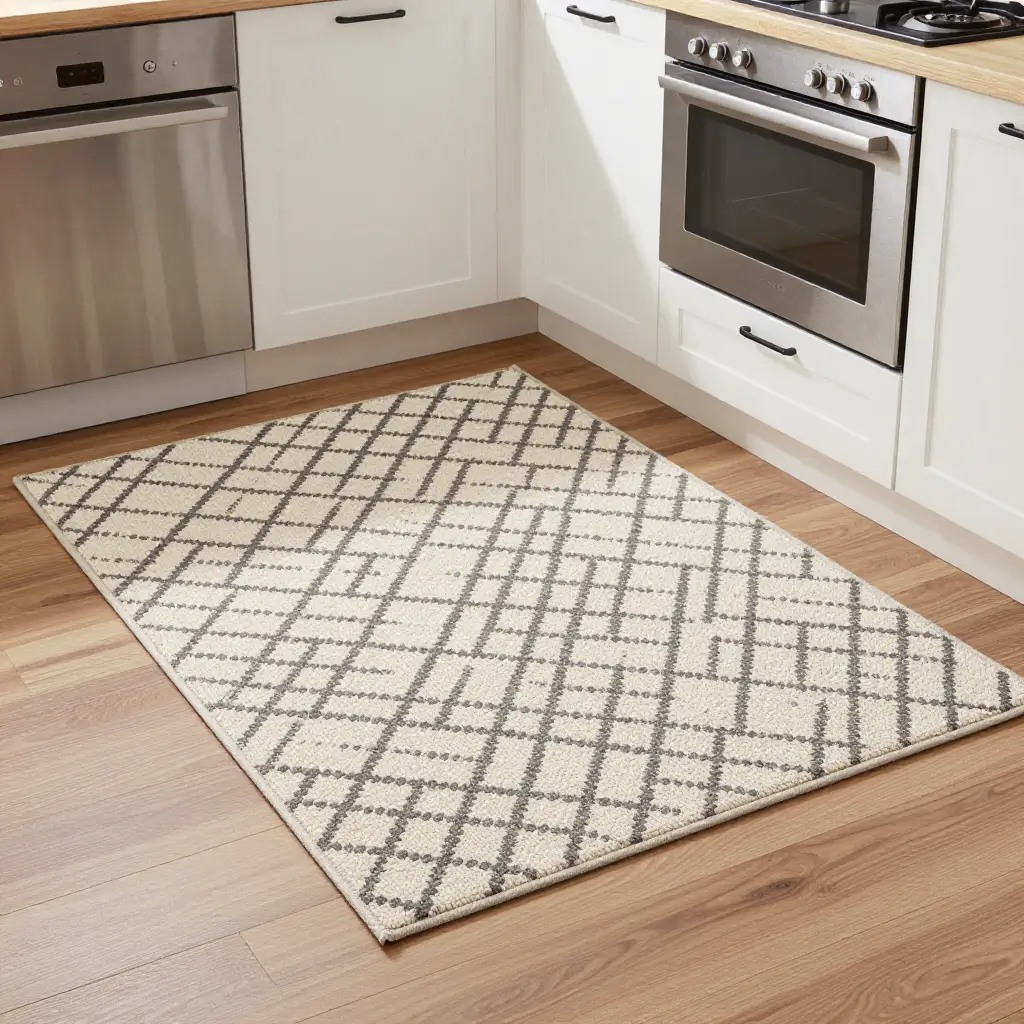
You don’t need a big budget to find a stylish and functional kitchen rug. Many affordable options offer great quality and design.
When shopping for budget-friendly kitchen rugs, consider materials like cotton or synthetic fibers. These materials are not only affordable but also durable and easy to clean.
Look for kitchen rugs with non-slip backings to ensure safety and stability. Many budget-friendly options come with this feature, providing peace of mind while you cook and move around your kitchen.
15 Personalize Your Space
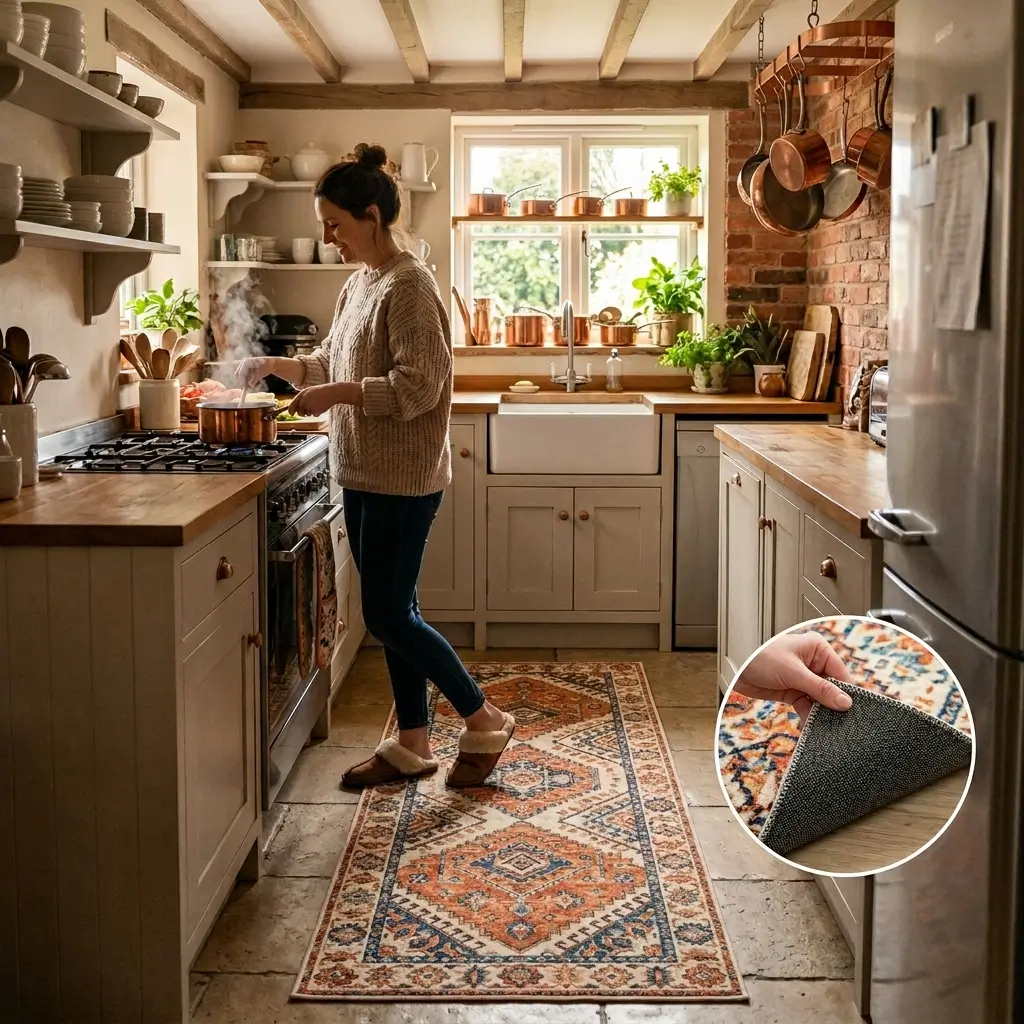
Adding a kitchen rug can instantly warm up the room, creating a cozy atmosphere. Choose a design that matches your style, whether it’s modern, rustic, or eclectic.
Kitchen rugs come in various materials, from easy-to-clean synthetic fibers to plush, luxurious options.
Consider your kitchen’s traffic and the amount of time you spend there when selecting a rug. A durable, low-maintenance rug is perfect for busy kitchens.
Beyond aesthetics, kitchen rugs can provide practical benefits like cushioning your feet while you cook and reducing the risk of slips. Opt for a rug with a non-slip backing to ensure it stays in place.
Conclusion
Selecting the perfect kitchen rug involves considering factors such as size, material, and design. With these expert tips, you can find a rug that not only enhances your kitchen’s look but also adds comfort and functionality.
Remember to think about maintenance and durability to ensure your rug stands the test of time. Happy decorating!
Questions & Answers:
Question: Why is it important to measure your space before buying a kitchen rug?
Answer: Measuring your space ensures that the rug fits well, creates a focal point, and brings a sense of balance to your room. It also helps to avoid tripping hazards and ensures the rug fits comfortably within the space, accounting for door clearance and furniture placement.
Question: What materials are recommended for kitchen rugs?
Answer: Cotton and synthetic fibers are recommended because they are easy to clean, durable, and can handle spills and frequent use without much hassle.
Question: Why is non-slip backing important for kitchen rugs?
Answer: Non-slip backing prevents slips and falls, especially in busy areas like the kitchen where spills are common. It also keeps the rug securely in place, preventing it from bunching up and becoming a tripping hazard.
Question: How can the pattern of a kitchen rug be practical?
Answer: Patterns in kitchen rugs can hide spills and stains, making them practical for busy homes. They can also add style to the space and create a focal point that ties the room together.
Question: What are the benefits of choosing colorful or neutral kitchen rugs?
Answer: Bright colors can make the space feel lively and vibrant, while neutral tones can bring a sense of calm and relaxation. The choice depends on the desired atmosphere in the kitchen.
Question: How can layering rugs add to the kitchen’s decor?
Answer: Layering rugs can add depth and visual interest to the kitchen. It allows for easy updates to the look of the space and helps define different areas within the kitchen, making it more functional and stylish.
Question: What should you consider when matching a kitchen rug to your style?
Answer: Consider the overall kitchen design, the material’s practicality, and the rug’s size and placement. Choose a rug that enhances the area without overwhelming it, and opt for materials that are easy to clean and durable.
Question: Why is comfort an important factor in choosing a kitchen rug?
Answer: Comfort is important because it makes standing for long periods easier on your feet, especially if you cook or bake a lot. Rugs with extra padding or made from memory foam provide great support and comfort.
Question: How can you ensure a kitchen rug is easy to clean?
Answer: Choose kitchen rugs that are machine washable and easy to spot clean. Rugs made from materials that resist stains and dirt can stay cleaner for longer, reducing the frequency of cleaning sessions.
Question: What are eco-friendly options for kitchen rugs?
Answer: Eco-friendly kitchen rugs made from sustainable materials like jute, bamboo, or organic cotton can help reduce your carbon footprint. These materials are renewable and often biodegradable, making them a smart choice for environmentally conscious homeowners.