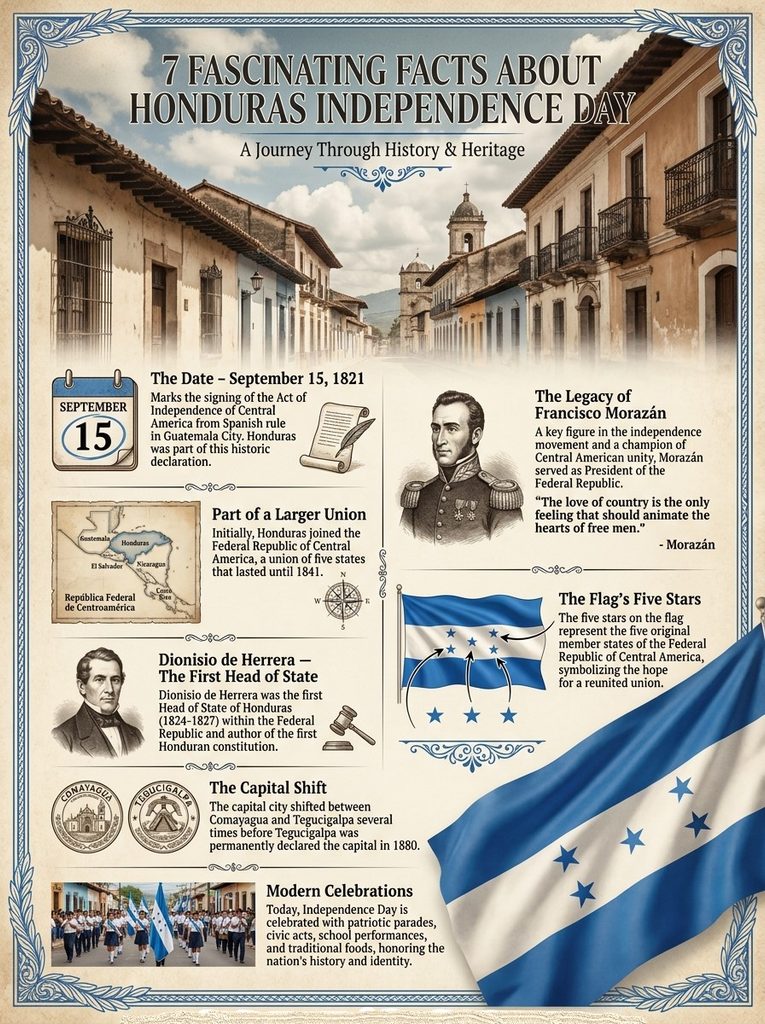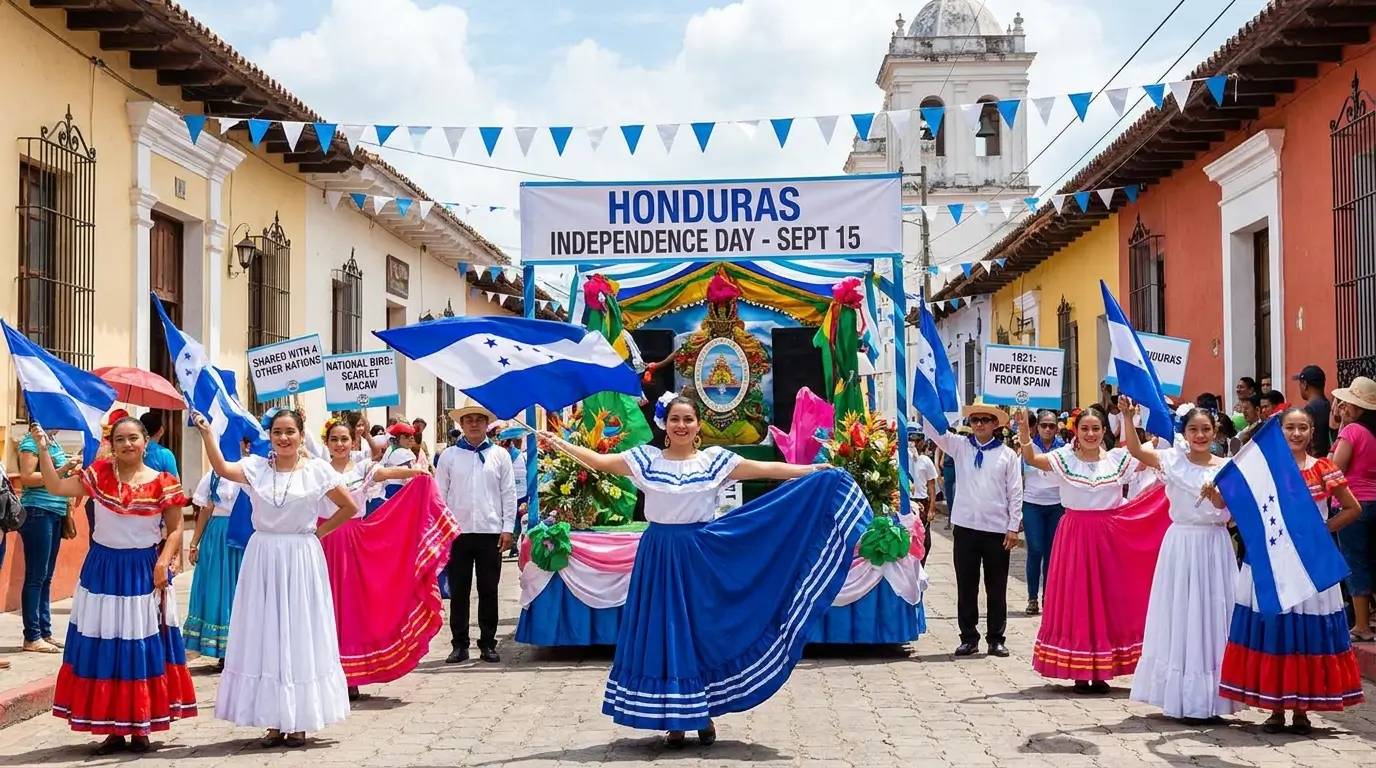
Forget boring history textbooks that put you to sleep faster than a warm glass of milk. Honduras Independence Day history packs enough drama, political intrigue, and sheer celebratory energy to rival any modern blockbuster movie.
Ever wondered how a small Central American nation broke free from a sprawling European empire without fighting a single bloody war?
Let us explore seven wild facts about how Honduras claimed its freedom and why this historic milestone still matters today. 🙂

Fact 1: September 15 Marks Freedom From Spanish Rule
The Birth of the 1821 Declaration
Central American leaders gathered in Guatemala City on September 15, 1821, to sign the historic Act of Independence. They officially severed centuries of colonial control under the Spanish crown.
Local elites recognized that Spanish authority crumbled across the Americas, so they seized the moment. They drafted a political document that changed the destiny of an entire region overnight.
Why Bloodshed Stayed Out of the Equation
Many revolutionary movements involve years of brutal warfare and catastrophic destruction. Honduras completely defied this chaotic trend by securing freedom through pure diplomacy and political maneuvering.
Colonial authorities realized that fighting an uphill battle against local sentiment made zero sense. Peaceful negotiation triumphed over military conflict, sparing countless lives during the transition.
Key Elements of the Signing Session
- The Drafter: Brilliant politician José Cecilio del Valle penned the famous Act of Independence.
- The Atmosphere: Crowds gathered outside the government palace, shouting for immediate freedom while musicians played lively tunes.
- The Outcome: Five distinct provinces broke away from Madrid in one coordinated diplomatic stroke.
Fact 2: Honduras Shared Independence With Four Neighbors
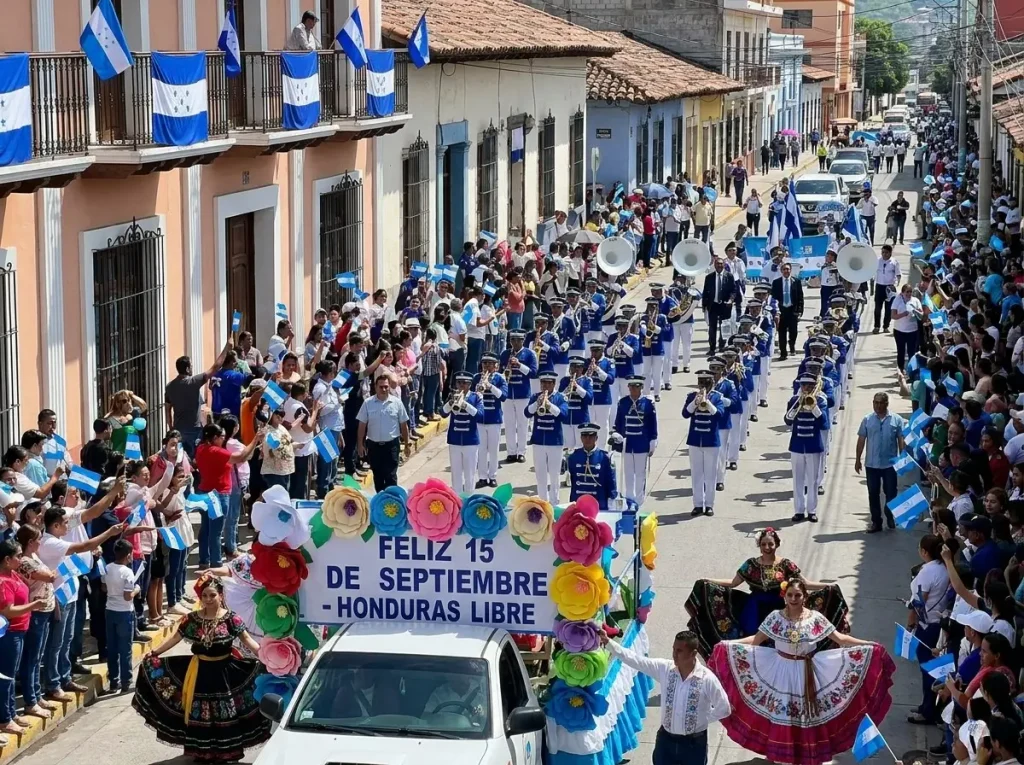
The Captaincy General Legacy
Honduras did not march alone toward freedom during that pivotal autumn. For nearly three centuries, Spain administered the region through the Captaincy General of Guatemala.
This massive administrative hub governed territories spanning modern-day Guatemala, El Salvador, Honduras, Nicaragua, and Costa Rica. Shared governance created deep economic and political ties among all five colonies.
Simultaneous Liberation Across Borders
Every single one of these five territories gained independence on the exact same day. Leaders across the isthmus shared identical frustrations regarding heavy colonial taxation and restrictive trade laws.
Napoleon’s invasion of Spain weakened Madrid’s grip, creating the ultimate window of opportunity. Collective action yielded massive rewards, uniting neighboring populations under a common banner of liberty.
Quick Comparison of the Five Sister Provinces
- Guatemala: Served as the political epicenter where leaders signed the primary independence documents.
- El Salvador: Contributed fiery revolutionary leaders who pushed for immediate separation from colonial rule.
- Honduras: Embraced the declaration enthusiastically, despite geographical isolation and communication delays.
- Nicaragua & Costa Rica: Completed the pentagon of new republics that emerged from Spanish rule on September 15.
Fact 3: Slow Mail Delivery Delayed News to Comayagua
The Two-Week Postal Lag
Cell phones and high-speed internet did not exist back in 1821. Couriers carried official government dispatches entirely on horseback across rugged mountain terrain. Because of this primitive transit system, news traveled at a painfully slow crawl.
The Shocking Arrival in Comayagua
Leaders signed the declaration in Guatemala City on September 15, but local authorities in Comayagua remained completely clueless. Comayagua served as the colonial capital of Honduras at that time.
Official documents finally arrived on September 28, nearly two weeks after the rest of Central America celebrated freedom. Can you imagine throwing a massive celebration two weeks late just because the mail carrier rode a very tired horse?
Obstacles Faced by Early Couriers
- Rugged Terrain: Steep mountain ranges and dense jungles slowed down every messenger.
- Weather Disruptions: Heavy seasonal rains washed out dirt paths and flooded river crossings.
- Information Voids: Isolated towns spent weeks wondering whether Spanish authorities or local patriots held power.
Fact 4: A Brief Detour Into the Mexican Empire
The Iturbide Chapter
Freedom tasted sweet, but independence came with immediate geopolitical complications. Mexican military leader Agustín de Iturbide established the First Mexican Empire shortly after Mexico won its own freedom.
Eager for regional security and political stability, several Central American leaders voted to join this expansive new empire. Honduras found itself absorbed into Mexican territory almost before the ink on the initial declaration dried.
Why the Union Crumbled Quickly
Annexation proved deeply unpopular among many local factions who cherished regional autonomy. Imperial rule from Mexico City felt uncomfortably similar to the Spanish domination they just escaped.
Iturbide’s regime collapsed under intense financial strain and political revolt in 1823, liberating Honduras from imperial control once again.
Chronology of Early Political Shifts
- September 1821: Central American provinces declare independence from Spain.
- January 1822: Conservative elites push the region into the First Mexican Empire.
- March 1823: The Mexican Empire dissolves after Emperor Iturbide abdicates power.
- July 1823: Central American leaders convene a new congress to chart an independent course.
Fact 5: The Federal Republic Experiment Brought Unity and Chaos
The Morazán Era of Idealism
Central American leaders established the Federal Republic of Central America in 1823. This ambitious union grouped Honduras, Guatemala, El Salvador, Nicaragua, and Costa Rica into a single federal state.
Brilliant Honduran statesman Francisco Morazán assumed the presidency in 1830, championing aggressive liberal reforms. Morazán promoted public education, free trade, and the reduction of clerical privileges.
The Ultimate Collapse of the Federation
Conservative landowners and religious leaders fiercely resisted Morazán’s sweeping modernization policies. Endless civil wars and regional rivalries tore the federal government apart from the inside.
Internal conflict destroyed the federation, leading to its total dissolution by 1838. Honduras officially proclaimed absolute and permanent sovereignty on November 5, 1838.
Traits of the Short-Lived Republic
- Shared Vision: Founders dreamed of a powerful united republic that could rival major global superpowers.
- Bitter Divisions: Constant clashes between liberals and conservatives paralyzed national administration.
- Lasting Legacy: Figures like Morazán remain legendary national heroes who symbolized ultimate dedication to the homeland.
Fact 6: Flag Day Launches a Full Fortnight of Patriotic Celebrations
The September Tradition
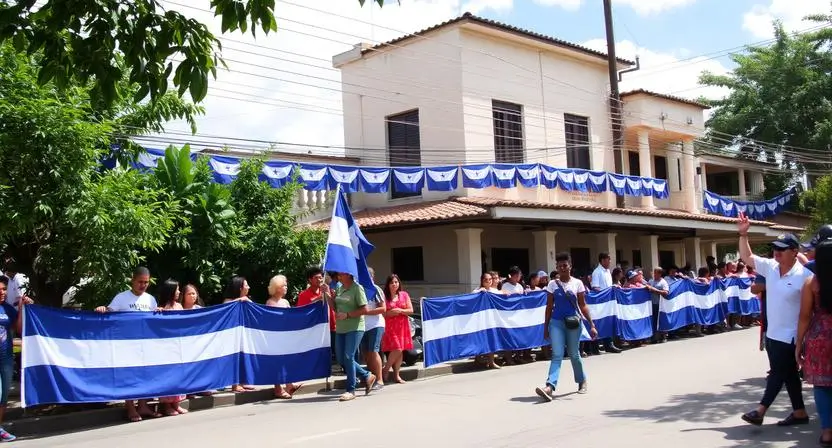
Honduras does not restrict independence festivities to a single 24-hour window. Patriotic fervor engulfs the entire nation starting on September 1 with Día de la Bandera (National Flag Day).
Citizens spend two solid weeks decorating homes, schools, and city streets with blue and white banners. Every town pulses with vibrant music, traditional food aromas, and unmatched community spirit.
Spectacular Parades and Festivities
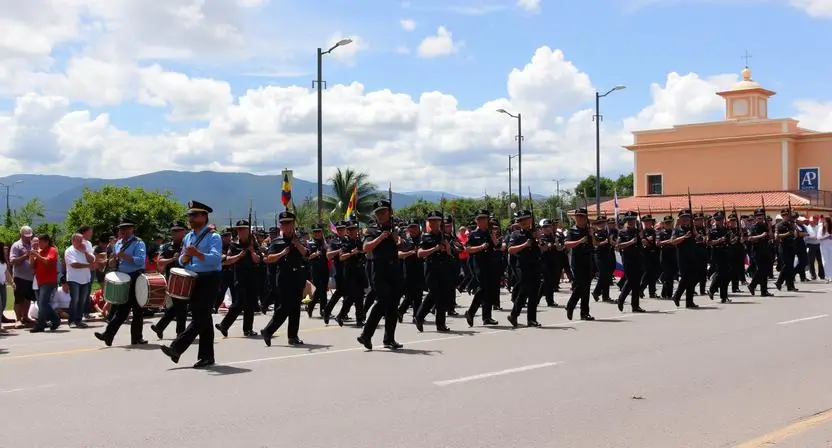
- Marching Bands: Local students practice for months to deliver thunderous drum cadences and brass melodies.
- Palillonas and Folk Dancers: Talented troupes perform graceful traditional dances while baton-twirling palillonas lead massive street processions.
- The 21-Gun Salute: Military personnel fire an annual salvo of 21 cannon shots at Cerro Juan A. Laínez in Tegucigalpa to honor the anniversary.
Personal Reflections on the Celebration
IMO, experiencing Honduran Independence festivities in person beats watching any television documentary.
The sheer volume of school marching bands combined with the smell of baleadas creates a sensory overload you will never forget. Every street corner bursts with life, reminding onlookers that hard-won freedom deserves massive celebration.
Fact 7: Five Stars on the Flag Honor Central American Brotherhood
The Meaning Behind the Blue and White
Honduras features a striking national flag divided into two azure blue stripes separated by a wider white stripe.
Those blue bands represent the Pacific Ocean and the Caribbean Sea bordering the country. The central white band symbolizes peace, prosperity, and purity of national thoughts.
The Five Emerald Stars
Five turquoise stars sit neatly in an X-pattern right in the middle of the white band. FYI, these stars carry deep historical weight by paying direct homage to the former Federal Republic of Central America.
Each star represents one of the five sister nations, Honduras, Guatemala, El Salvador, Nicaragua, and Costa Rica. Honduras placed those stars on its banner to keep the dream of regional solidarity alive forever.
Symbolism Breakdown
- Azure Stripes: Represent the two majestic oceans guarding Central America.
- White Band: Represents peace and intellectual clarity.
- Five Stars: Symbolize the five original member states striving for unity.
Conclusion
Honduras Independence Day history proves that freedom required patience, diplomacy, and enduring resilience.
From slow horseback couriers carrying dispatches to Comayagua to ambitious federal republics rising and falling, the journey shaped a proud and vibrant nation.
Citizens honor this rich legacy every September with thunderous drums, brilliant flags, and unshakeable community pride. Embrace the spirit of liberty, share your own cultural explorations, and never underestimate the power of a united people!
Frequently Asked Questions (FAQs)
- When is Honduras Independence Day celebrated? Citizens celebrate Honduras Independence Day every year on September 15, marking the anniversary of the 1821 declaration.
- Did Honduras fight a war to gain independence from Spain? No, Honduras achieved independence peacefully through diplomatic agreement when regional leaders signed the Act of Independence in Guatemala City.
- Why did news of independence take two weeks to reach Comayagua? Couriers carried official documents entirely on horseback across mountainous terrain, which delayed the delivery of independence papers to the colonial capital until September 28.
- What do the five stars on the Honduran flag represent? The five stars symbolize the five former member states of the Federal Republic of Central America: Honduras, Guatemala, El Salvador, Nicaragua, and Costa Rica.
- When do official independence celebrations begin in Honduras? Festivities officially begin on September 1 with National Flag Day (Día de la Bandera), kicking off a two-week patriotic season.