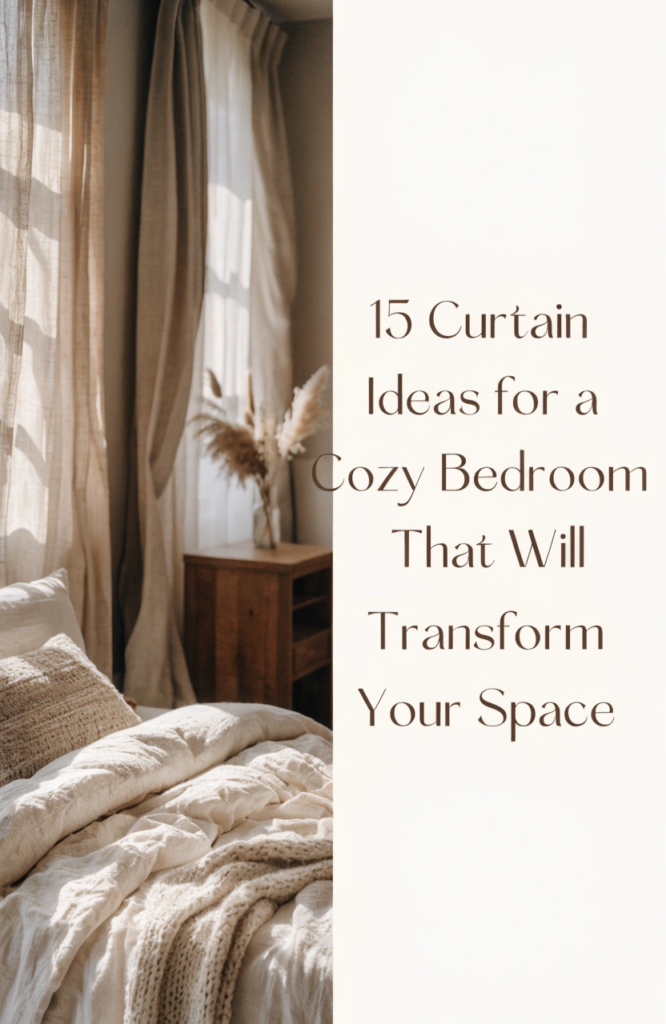
The right bedroom curtains do more than cover a window. They influence how daylight enters the room, how much privacy you have, and how the bed, walls, and other furnishings work together. A lightweight fabric can soften a bright bedroom, while lined curtains can help darken a room that receives streetlights or early morning sunshine.
The best choice depends on your window, preferred level of darkness, room colors, and the amount of space available around the bed. Some bedrooms benefit from full-length fabric panels, while others work better with compact shades or a combination of two window treatments.
These 15 curtain ideas for a cozy bedroom explore different fabrics, colors, patterns, and hanging styles, with practical guidance to help you decide which option suits your space.
1. Light Sheer Curtains
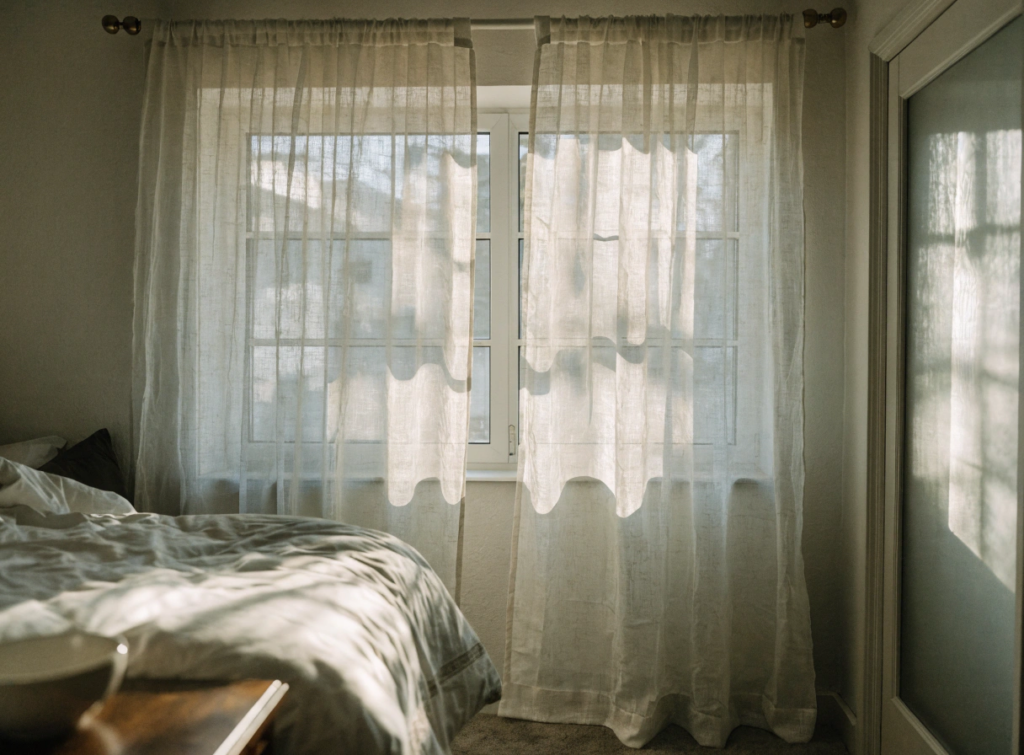
Sheer curtains work well in bedrooms where natural light is a priority. Their translucent fabric softens incoming daylight and reduces the stark appearance of an uncovered window. White, soft gray, muted sage, and dusty blue are useful choices when you want the fabric to complement the existing room rather than dominate it.
Hang sheers close to the ceiling and extend the rod beyond the window frame to give the window a more generous appearance. Full-length panels generally create a more finished look than curtains that stop halfway down the wall.
Best for: Bright bedrooms, small rooms, and spaces where daytime light matters.
Keep in mind: Sheers offer limited light blocking and do not guarantee privacy at night. Add a lined curtain or suitable blind if the bedroom faces a neighboring property or a busy street.

2. Blackout Curtains
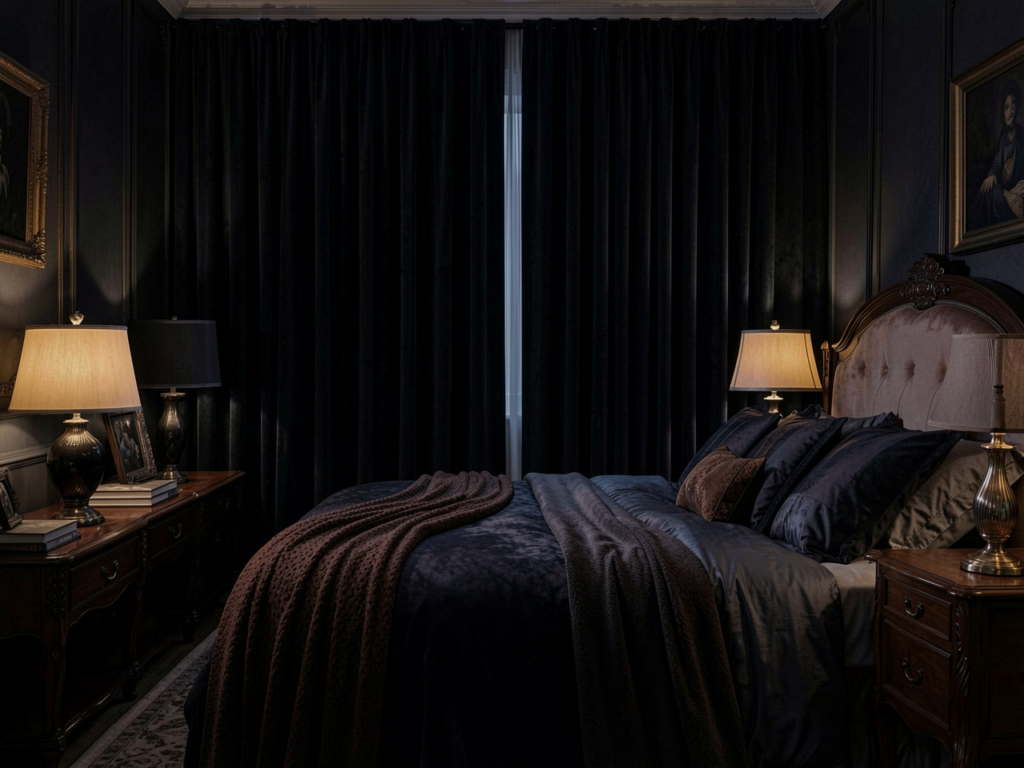
Blackout curtains are a practical choice for bedrooms that receive strong morning sunlight, street lighting, or light from nearby buildings. They are available in plain fabrics, textured weaves, and colors that work with both traditional and contemporary interiors.
For a balanced design, coordinate the curtain color with one or two existing elements, such as the headboard, rug, or bedding. Deep navy, forest green, muted plum, and charcoal can introduce depth without requiring a dramatic change to the entire room.
Pay attention to the installation as well as the fabric. Light can enter around the sides, top, and bottom of a curtain even when the material itself blocks most light. A wider rod, suitable lining, and close-fitting installation can improve coverage.
Best for: Bedrooms that need substantial light reduction.
Keep in mind: Blackout curtains do not automatically soundproof a room. Their ability to reduce noise is limited and varies by construction and fit.
3. Layered Curtains
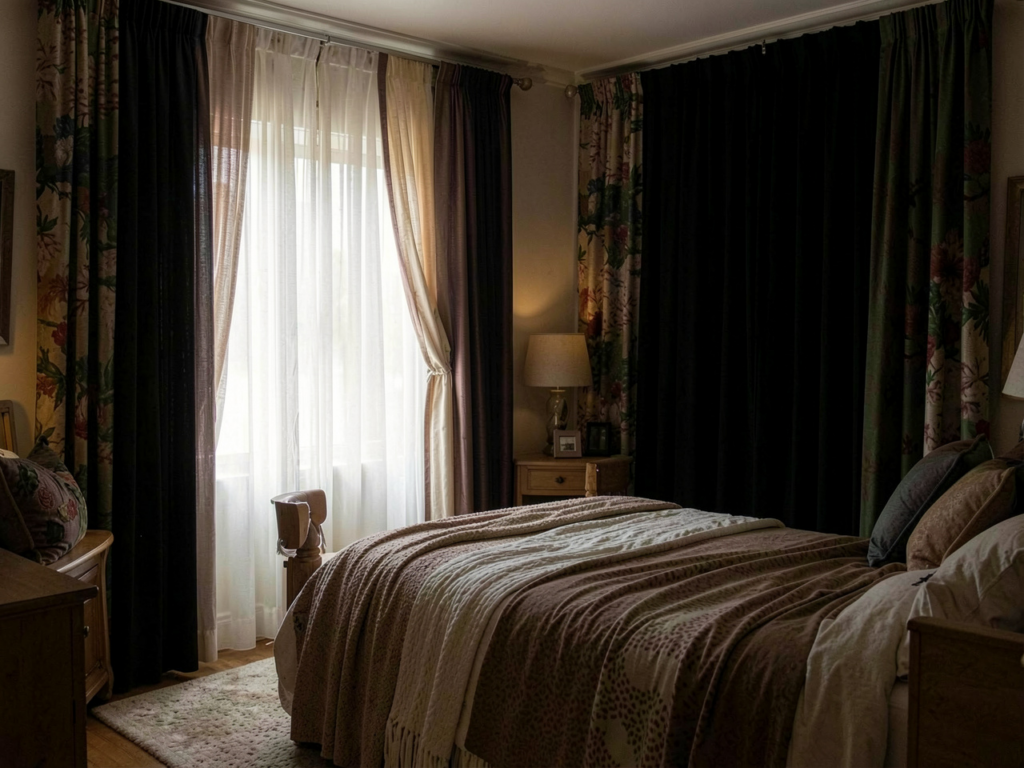
Layered curtains combine two window treatments, usually a sheer inner panel and a heavier outer curtain. This arrangement lets you adjust the room throughout the day without changing the overall design.
During daylight hours, draw the sheer panels across the window to soften the light. In the evening, close the heavier curtains for greater privacy and darkness. The two layers can also introduce contrasting textures, such as a fine linen-look sheer paired with a substantial woven outer fabric.
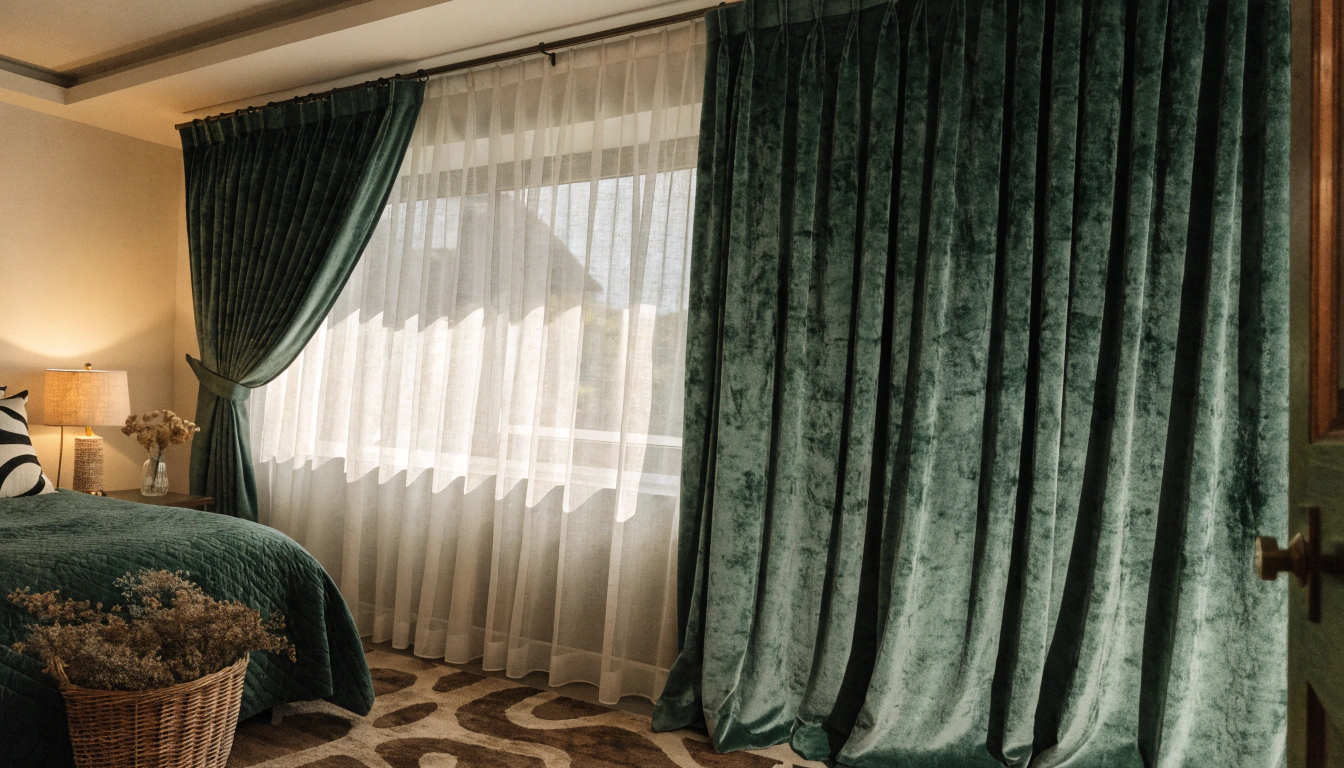
For a restrained look, choose colors that share an undertone. Warm white sheers work well with olive, rust, or chocolate-brown outer curtains. Cooler white sheers can complement slate blue or charcoal.
Best for: Bedrooms with changing light conditions or windows facing nearby homes.
Keep in mind: Double curtain rods need adequate space and secure mounting. Measure the combined depth of both layers before choosing hardware, especially when the window sits close to furniture.
4. Patterned Curtains
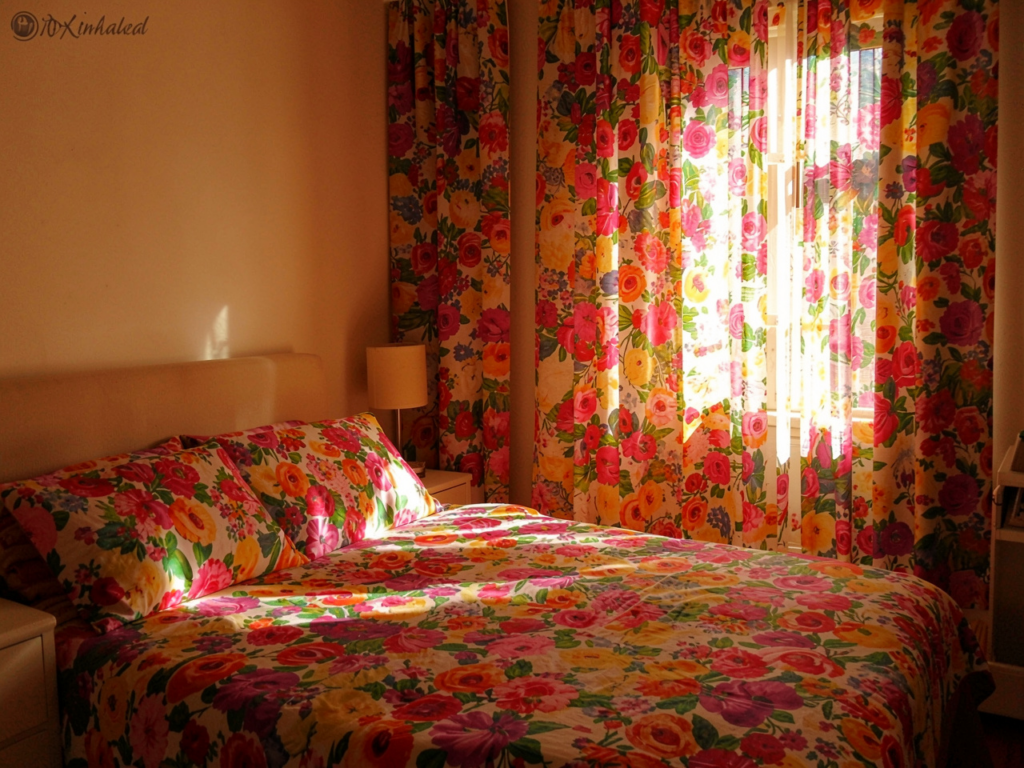
Patterned curtains can provide the visual interest a bedroom needs when its walls, bedding, and furniture are relatively simple. Florals, fine stripes, botanical prints, and geometric motifs each create a different effect.
A small botanical pattern suits a traditional or cottage-inspired bedroom. Broad stripes can emphasize height or width, depending on their orientation and placement. A larger geometric print often works better in a room with plain bedding and uncomplicated furniture.
Use the pattern to establish a clear color relationship. If the curtains contain rust, olive, and cream, repeat one of those colors in a cushion, throw, or artwork. There is no need to match every element.
Best for: Bedrooms that need a focal point without adding more furniture.
Keep in mind: Large prints can become visually busy when the bedding, rug, and wallpaper all compete for attention. Choose one dominant pattern and keep surrounding surfaces simpler.
5. Velvet Curtains
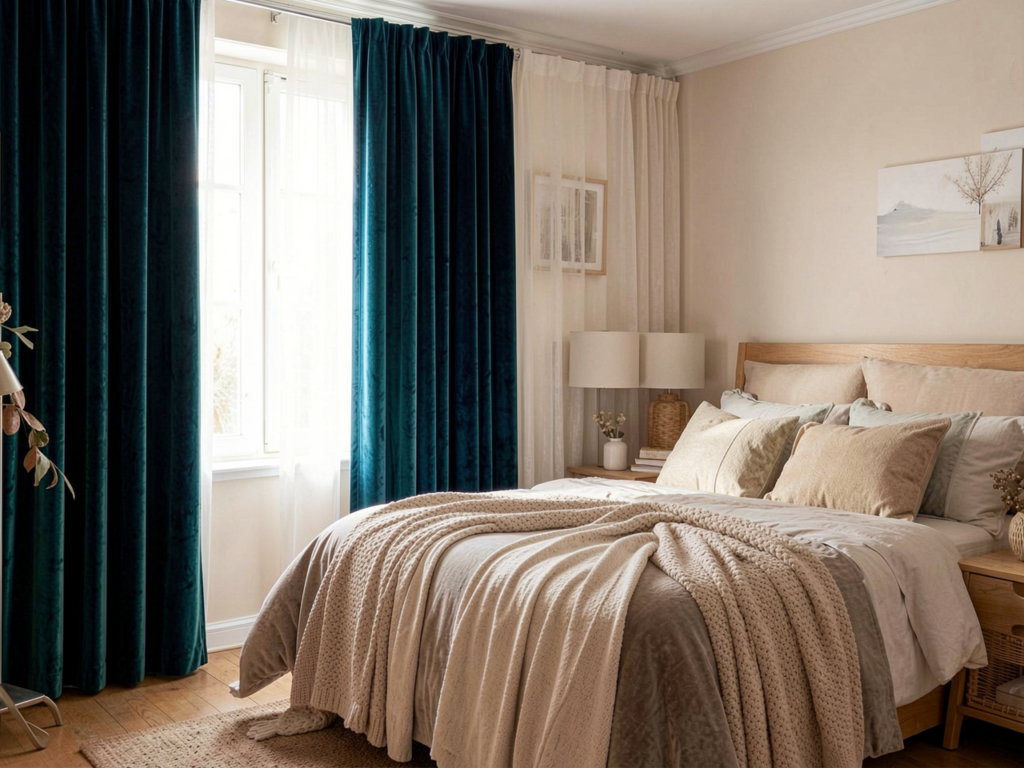
Velvet curtains introduce a dense, tactile surface that suits bedrooms with substantial furniture, upholstered headboards, or darker accent colors. The fabric catches light differently across its folds, creating depth even when the curtains are a solid color.
Try burgundy with walnut furniture, dark green with warm wood, or midnight blue against soft gray walls. These combinations can give the bedroom a mature, layered appearance without relying on decorative accessories.
Velvet-look polyester can be easier to maintain than some delicate fabrics, although care requirements vary by product. Check the manufacturer’s washing or dry-cleaning instructions before purchasing.
Best for: Bedrooms that benefit from visual weight, richer colors, or a more enclosed atmosphere.
Keep in mind: Thick curtains can feel overwhelming in a very small room if the color contrasts sharply with the walls. They may also require stronger curtain rods and more substantial brackets.
6. Tie-Top Curtains
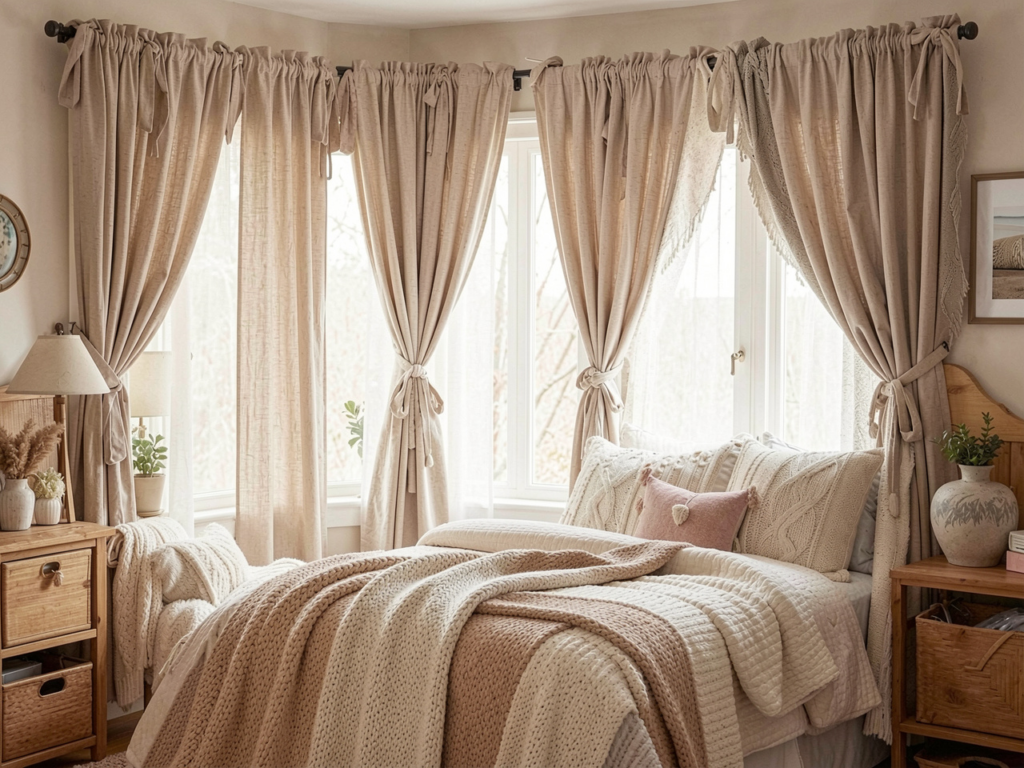
Tie-top curtains have fabric ties at the top instead of conventional rings or grommets. Their informal construction works well in relaxed interiors, including cottage-inspired bedrooms, casual guest rooms, and spaces with natural wood furniture.
Cotton and linen-blend fabrics suit this style because their texture complements the visible ties. Muted stripes, small botanical prints, and solid colors can all work, depending on the room’s existing furnishings.
The ties themselves become part of the design, so they look best when the fabric falls naturally and the spacing remains consistent. This style can be especially effective on a modest window where elaborate pleating would feel excessive.
Best for: Casual bedrooms that favor natural fabrics and uncomplicated furnishings.
Keep in mind: Tie-top curtains may take longer to open and close than curtains fitted with sliding rings. Consider another heading style if you frequently adjust the window covering.
7. Roman Shades
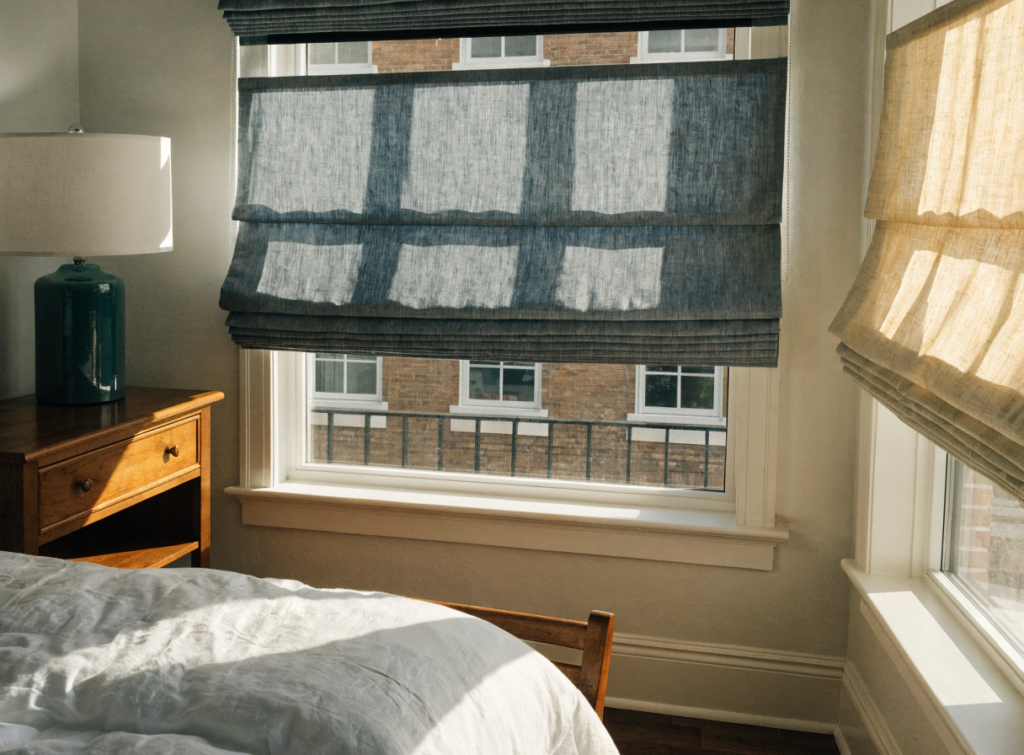
Roman shades fold into horizontal sections as they rise, creating a tailored appearance without long fabric panels extending to the floor. They are useful in bedrooms where a clean window outline is more important than the softness of full-length curtains.
Choose a textured neutral for a quiet background or a muted color that complements the headboard. Depending on the product, Roman shades can be made with light-filtering, room-darkening, or blackout fabrics.
They can also be a practical solution when a bed, desk, or radiator makes long curtains difficult to arrange. If you want more softness, pair the shade with fixed decorative side panels where space permits.
Best for: Compact bedrooms, windows behind furniture, and streamlined interiors.
Keep in mind: Not every Roman shade blocks light effectively. Inspect the fabric specification and edge coverage if darkness and privacy are priorities.
8. Bamboo Shades
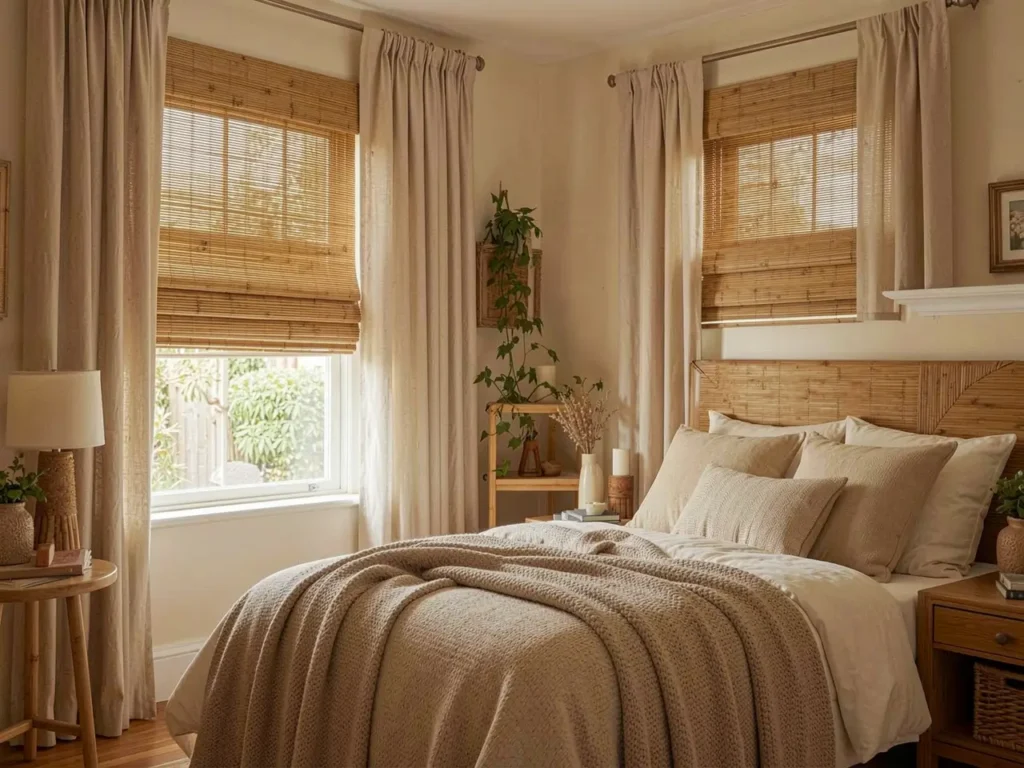
Woven bamboo or natural-fiber shades bring visible texture to a bedroom. Their horizontal weave introduces variation that can balance smooth painted walls, plain bedding, and simple wooden furniture.
For a more complete window treatment, combine the shade with full-length fabric panels. A medium-brown woven shade pairs well with olive curtains and warm timber furniture, while a lighter natural weave can complement muted blue or soft green walls.
The combination works because the two materials serve different visual purposes: the shade provides structure, and the side panels add softness.
Best for: Bedrooms with natural wood, woven furniture, or a relaxed contemporary style.
Keep in mind: Woven shades can allow light through gaps in the weave. Add a compatible liner or another window covering if privacy or darkness is important. Check the product’s material and sustainability claims rather than assuming every natural-fiber shade has the same environmental benefits.
9. Linen Curtains
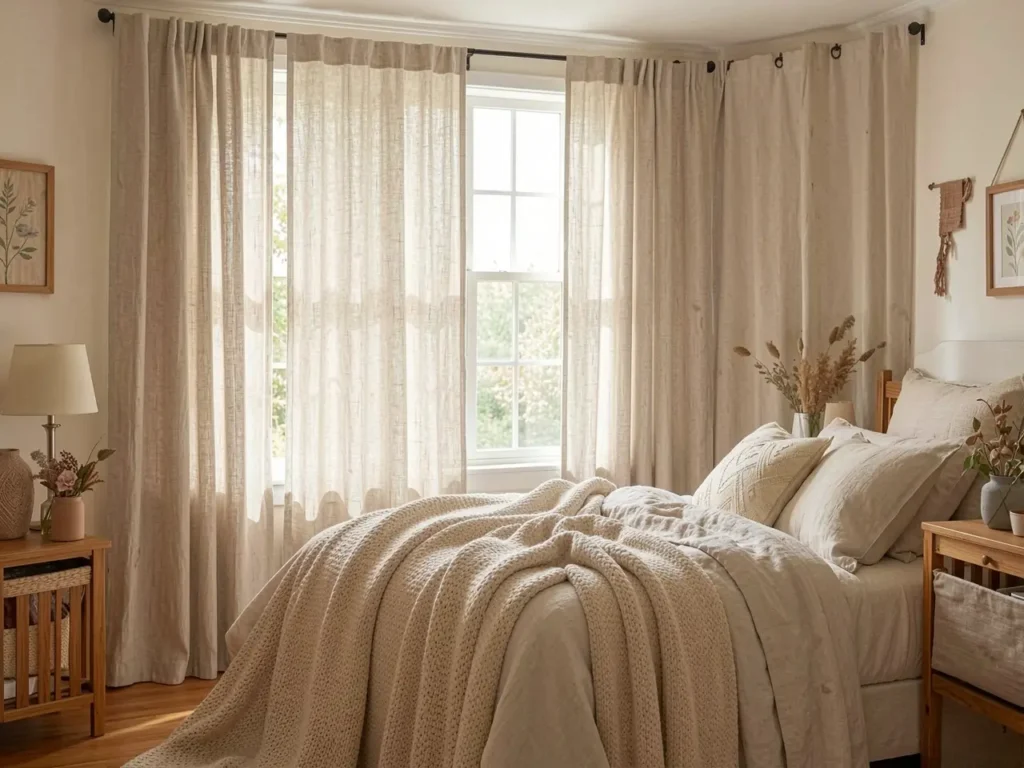
Linen curtains are valued for their relaxed texture and natural drape. The fabric can introduce subtle irregularities that make a bedroom feel less formal, particularly when paired with a wooden bed frame, a simple upholstered headboard, or crisp cotton bedding.
Natural flax linen often has a distinctive texture and may crease more readily than synthetic alternatives. Linen-blend curtains can offer a similar visual effect with different care and draping characteristics.
Color makes a difference. Muted olive, dusty blue, warm white, and soft terracotta provide alternatives to the familiar neutral palette. Choose a shade that responds to the room’s existing finishes rather than selecting curtains in isolation.
Best for: Bedrooms that favor tactile materials and a relaxed, understated finish.
Keep in mind: Unlined linen is usually not the best choice when strong light blocking is essential. Look for a lined version if you want the appearance of linen with improved light control.
10. Grommet Curtains
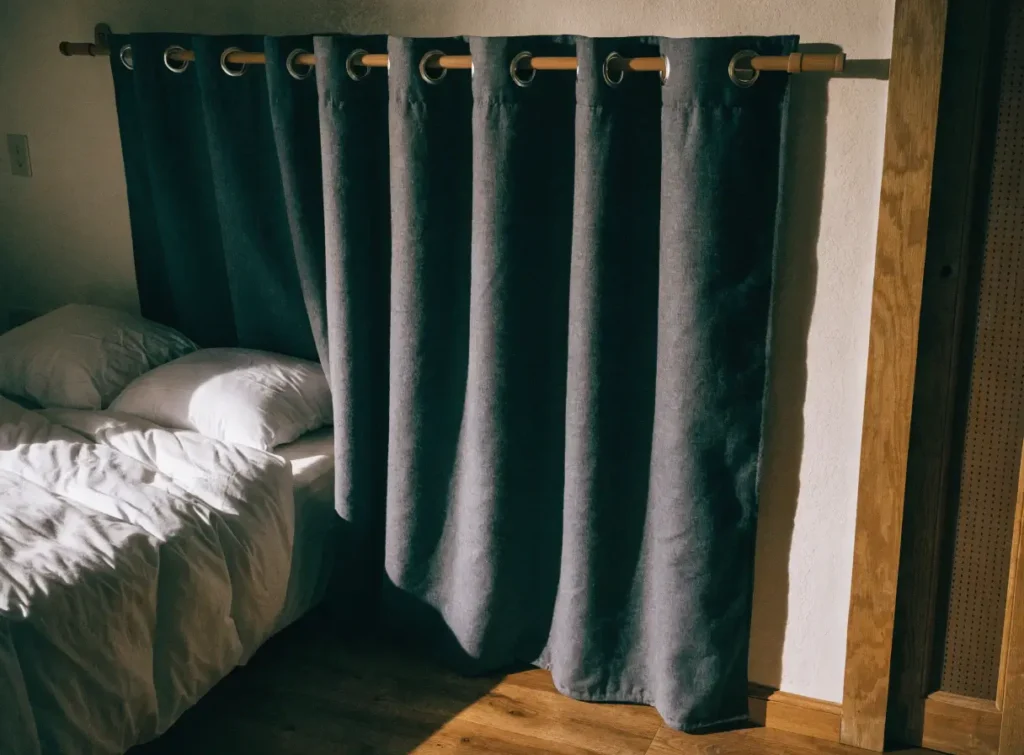
Grommet curtains have reinforced circular openings along the top, allowing the panels to slide directly onto a compatible rod. Their evenly spaced folds create a straightforward, contemporary appearance.
They suit bedrooms with simple furniture, clean-lined headboards, and uncomplicated window frames. Solid-color curtains are especially effective because the regular folds provide enough structure without requiring an elaborate pattern.
Choose a rod diameter that fits the grommets and check the finished panel width before ordering. Curtains that are too narrow may look stretched across the window, while excessively wide panels can bunch together and become difficult to move.
Best for: Modern bedrooms where convenient operation and a clean finish are priorities.
Keep in mind: Grommet curtains expose more of the rod than some other heading styles. If you prefer a softer, more tailored appearance, pinch-pleat curtains may be a better alternative.
11. Thermal Curtains
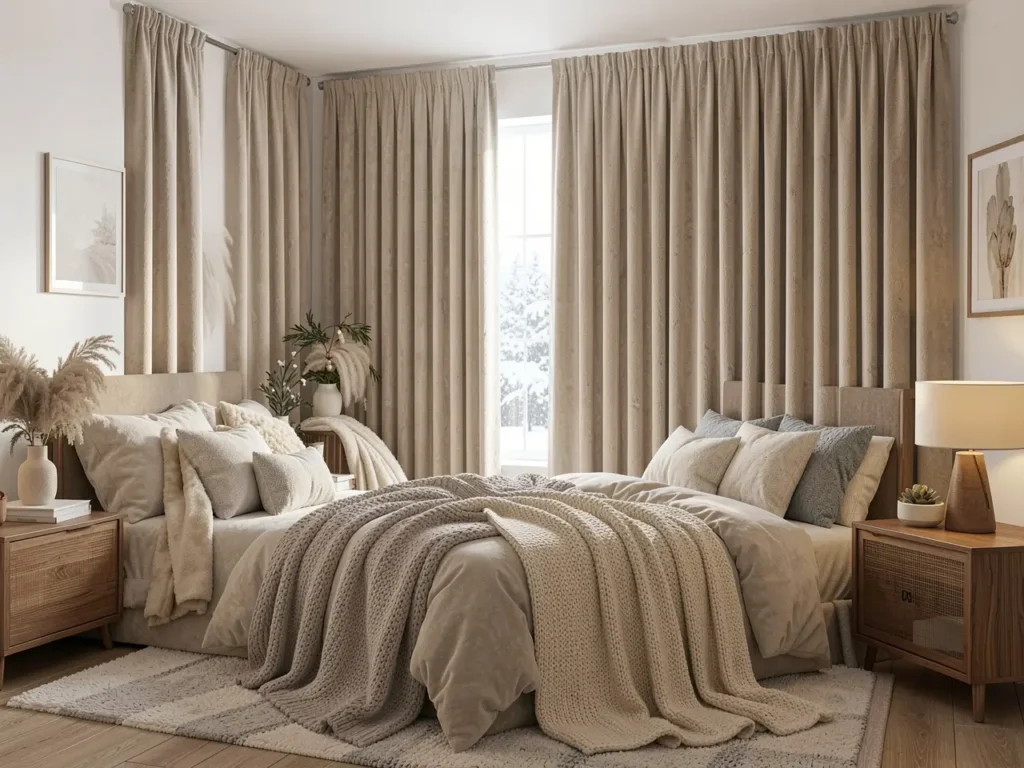
Thermal-lined curtains can help reduce heat transfer through windows, depending on their construction, coverage, and how well they fit. They are worth considering in bedrooms that feel chilly near the window or receive strong sunlight during the day.
Look for a curtain with a clearly described lining and enough width to cover the opening properly. Floor-length panels may suit many bedroom windows, but the best length depends on the sill, radiator, furniture placement, and whether the fabric can hang freely.
For a cohesive design, match the curtain’s color to a substantial feature in the room. Warm brown can connect with wooden furniture, while deep green can provide contrast against pale walls.
Best for: Bedrooms where window comfort and light management are practical concerns.
Keep in mind: Curtains are not a substitute for repairing draughty windows or improving inadequate insulation. Energy savings are not guaranteed and depend on the building and the window treatment.
12. Fringe Trim Curtains
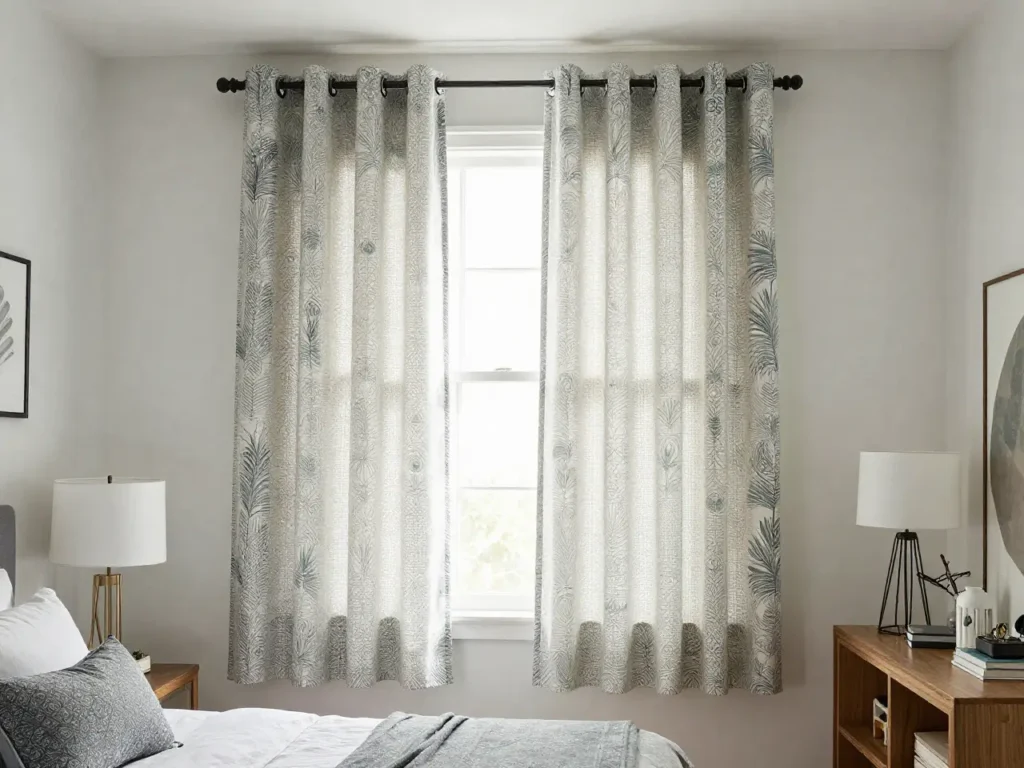
Fringe-trim curtains add a decorative edge without requiring a bold print or a contrasting curtain color. The trim can run along the leading edge, the bottom hem, or another carefully chosen section of the panel.
A narrow fringe in a coordinating shade works well in bedrooms with upholstered furniture, patterned rugs, or traditional detailing. For a more contemporary room, keep the curtain fabric plain and use restrained trim rather than multiple decorative borders.
This approach is useful when you want the window treatment to feel distinctive but do not want another large pattern competing with the bedding.
Best for: Eclectic, traditional, and relaxed bedrooms that benefit from small details.
Keep in mind: Decorative trim can collect dust and may complicate washing. Check the care instructions and avoid elaborate fringe if low-maintenance cleaning is a priority.
13. Pleated Curtains
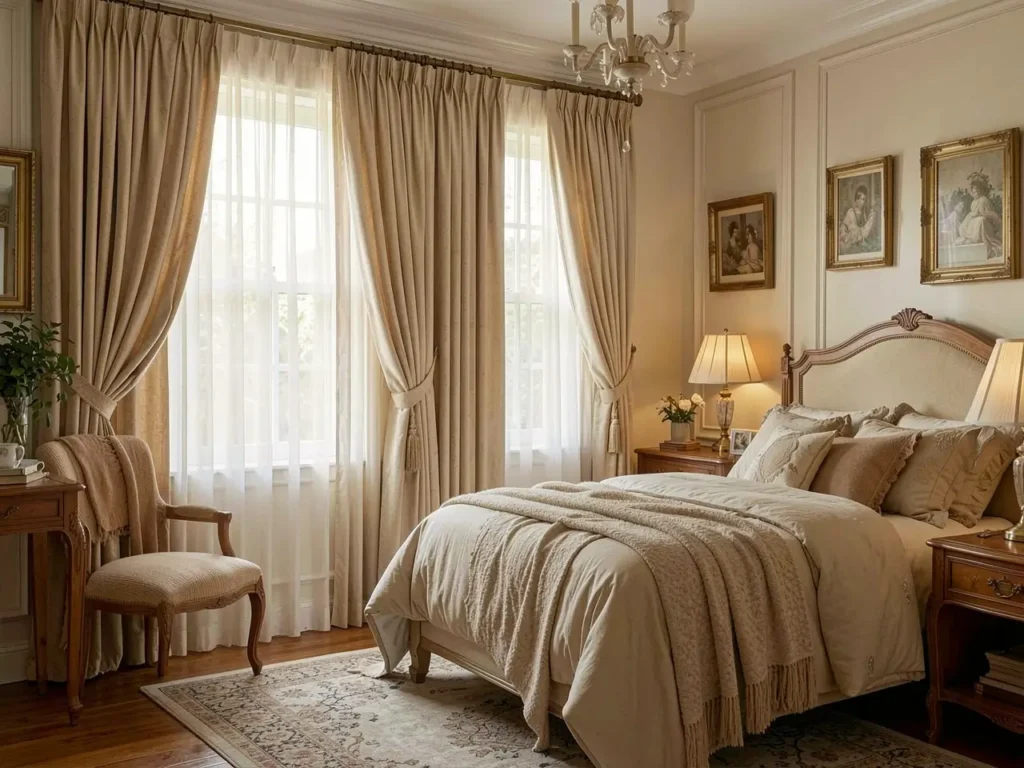
Pleated curtains create a structured line at the top of the window. Pinch pleats offer a classic, tailored look, while pencil pleats provide a softer, more gathered finish.
They are particularly effective in bedrooms where the curtains form part of a balanced arrangement around the bed. Deep blue, muted rust, forest green, and understated stripes can all work with pleated headings, depending on the furniture and wall color.
Measure carefully before ordering because pleated curtains require enough fabric to form the intended folds. Track or rod compatibility also matters, especially if you want the curtains to open smoothly.
Best for: Traditional, transitional, and refined contemporary bedrooms.
Keep in mind: Pleated curtains can cost more than basic ready-made panels and may need professional alterations for an exact fit.
14. Cafe Curtains

Café curtains usually cover only the lower part of a window. In a bedroom, they can be useful when the lower portion needs screening but the upper section should remain open to daylight.
They work best in appropriate settings, such as a ground-floor bedroom with a tall window, a private garden view, or a window where the upper glazing is well above neighboring sightlines.
A small-scale stripe or understated check can give the treatment a distinctive character. Keep the hardware simple so the shorter panels do not look disconnected from the rest of the room.
Best for: Specific window layouts where partial coverage is sufficient.
Keep in mind: Café curtains are not suitable for every bedroom. They may leave the bed area or upper window exposed to outside views, so assess privacy from the actual viewing angles before choosing this style.
15. Printed Valances
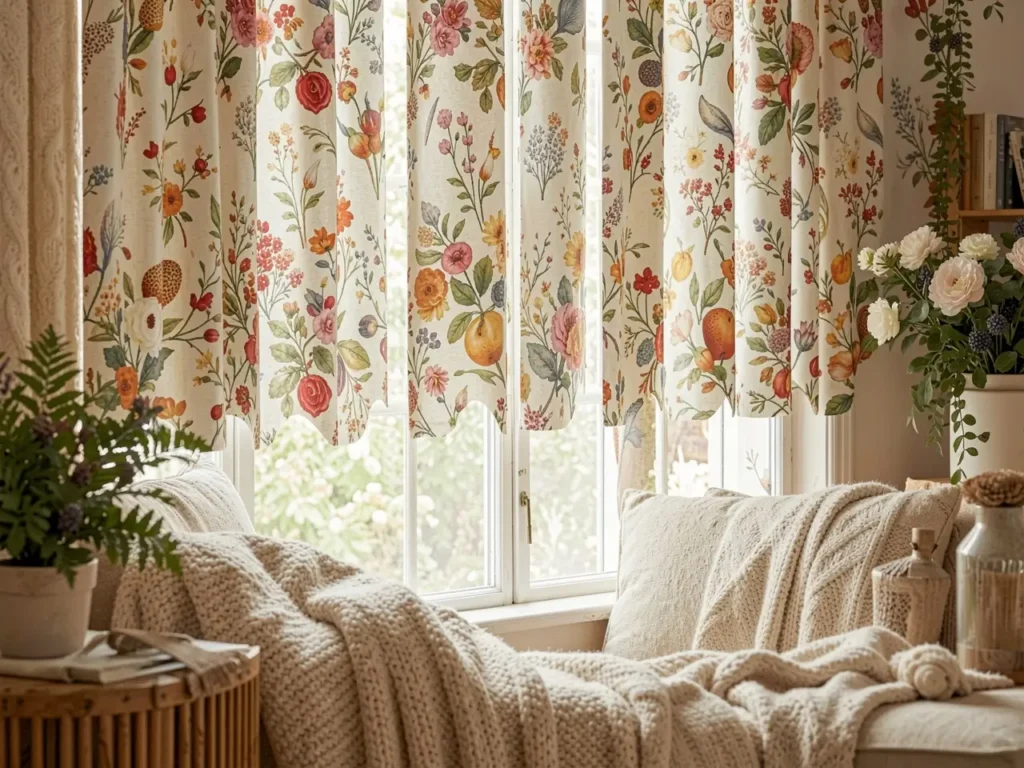
A valance covers the upper section of a window and adds a decorative finish. It can be used with blinds or full-length curtains, particularly in traditional bedrooms where the window treatment needs a little more visual detail.
A small floral print can complement a classic upholstered bed, while a restrained geometric pattern may suit a more contemporary setting. Coordinate the valance with one color from the room’s existing textiles to establish a clear connection.
The proportions matter. A short valance generally works best when it relates to the size of the window rather than covering an unnecessarily large section of the glazing.
Best for: Traditional bedrooms and windows that benefit from a decorative upper treatment.
Keep in mind: Valances alone provide little privacy and usually do not offer meaningful light control. Pair them with an appropriate blind or curtain if the window needs practical coverage.
How to Choose the Right Curtains for Your Bedroom
Before purchasing a window treatment, decide what matters most in your room. A curtain that looks attractive in a photograph may not work well if it blocks a radiator, leaves gaps around the window, or conflicts with the furniture layout.
Start with light and privacy
- Consider when sunlight reaches the window and whether the room faces a road, another building, or a private outdoor space. Sheers are useful for softening daylight, while lined or blackout curtains are better suited to rooms that need greater darkness. Layering gives you more flexibility.
Measure the window and hanging space
- Measure the window width, the intended rod or track width, and the distance from the hanging point to the desired hem. Extend the rod beyond the window where space allows, so the open curtains can sit away from the glass.
- For curtain width, consider the manufacturer’s recommended fullness rather than ordering panels that barely cover the opening. A fuller arrangement generally creates more natural folds.
Choose the right length
- Floor-length curtains often give a bedroom a more continuous, finished appearance. Curtains that stop at the sill can be more practical when a desk, radiator, or bed sits beneath the window.
- Avoid allowing fabric to rest against a heat source or obstruct furniture movement. A slight clearance above the floor is usually easier to maintain than long panels that drag across it.
Coordinate the fabric with the room
- Use the curtains to support the bedroom’s existing color scheme. For example, muted green panels can connect with a wooden headboard and warm white bedding, while dusty blue curtains can introduce color into a room with walnut furniture.
- Texture matters as much as color. Linen adds visible irregularity, velvet creates a denser surface, and sheers soften the window’s appearance without introducing much visual weight.
Check cleaning and installation requirements
- Read the product label before buying. Some fabrics can be machine-washed, while others require more careful cleaning. Check whether the rod, track, brackets, lining, and installation hardware are included or need to be purchased separately.
- These details can affect the overall cost and how well the curtains perform over time.
Common Bedroom Curtain Mistakes to Avoid
- Choosing sheers for complete privacy: Lightweight fabric may become transparent when the bedroom is illuminated at night.
- Buying curtains that are too narrow: Insufficient width produces sparse folds and may leave parts of the window exposed.
- Ignoring the rod and brackets: Heavy panels need compatible hardware and secure fixing.
- Selecting a pattern without considering the bedding: Competing prints can make a small bedroom feel visually crowded.
- Expecting curtains to solve every insulation or noise problem: Window treatments may help with comfort, but results depend on the product and the building.
- Overlooking furniture placement: Curtains should open and close without catching on bedside tables, desks, or other nearby furnishings.
Frequently Asked Questions
What curtains make a bedroom feel cozy?
The best choice depends on the room. Linen and linen-blend curtains add relaxed texture, velvet creates a denser and richer appearance, and layered curtains offer greater flexibility with daylight and privacy. Color, length, and the way the panels hang all contribute to the final result.
Should bedroom curtains touch the floor?
Floor-length curtains often create a balanced, finished appearance. However, sill-length panels may be more practical for windows above desks, radiators, or furniture. Measure the hanging point and choose a length that suits the room’s layout and maintenance needs.
Are blackout curtains better than sheer curtains for a bedroom?
Neither is universally better. Blackout curtains are useful when darkness is a priority, whereas sheers are useful for softening daylight. Layering both can provide more flexibility if you want natural light during the day and greater privacy in the evening.
How do I make bedroom curtains look more expensive?
Start with accurate measurements, adequate fabric width, suitable hardware, and a hem that falls cleanly. Choose a fabric with a texture that complements the room and keep the color palette coordinated. A well-fitted, simple curtain often looks better than an elaborate treatment that does not suit the window.
Final Thoughts
The most effective curtain ideas for a cozy bedroom combine appearance with the practical needs of the window. Sheers can soften daylight, lined panels can provide greater darkness, and textured fabrics can introduce depth without changing the furniture.
Start by identifying your priorities, measuring the window accurately, and selecting a fabric and hanging style that suit the space. When the curtain length, fullness, color, and function are considered together, even a modest window treatment can make the bedroom feel more complete.