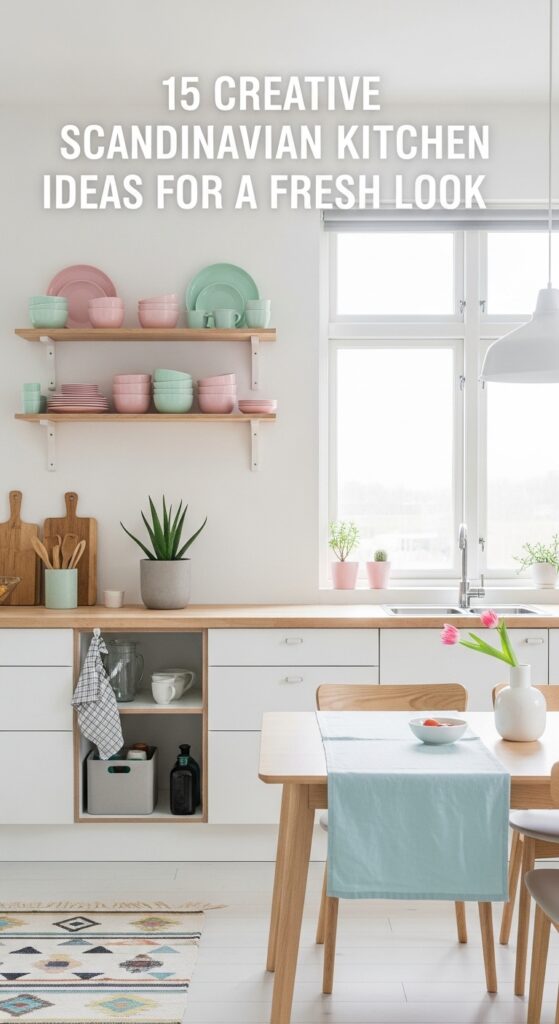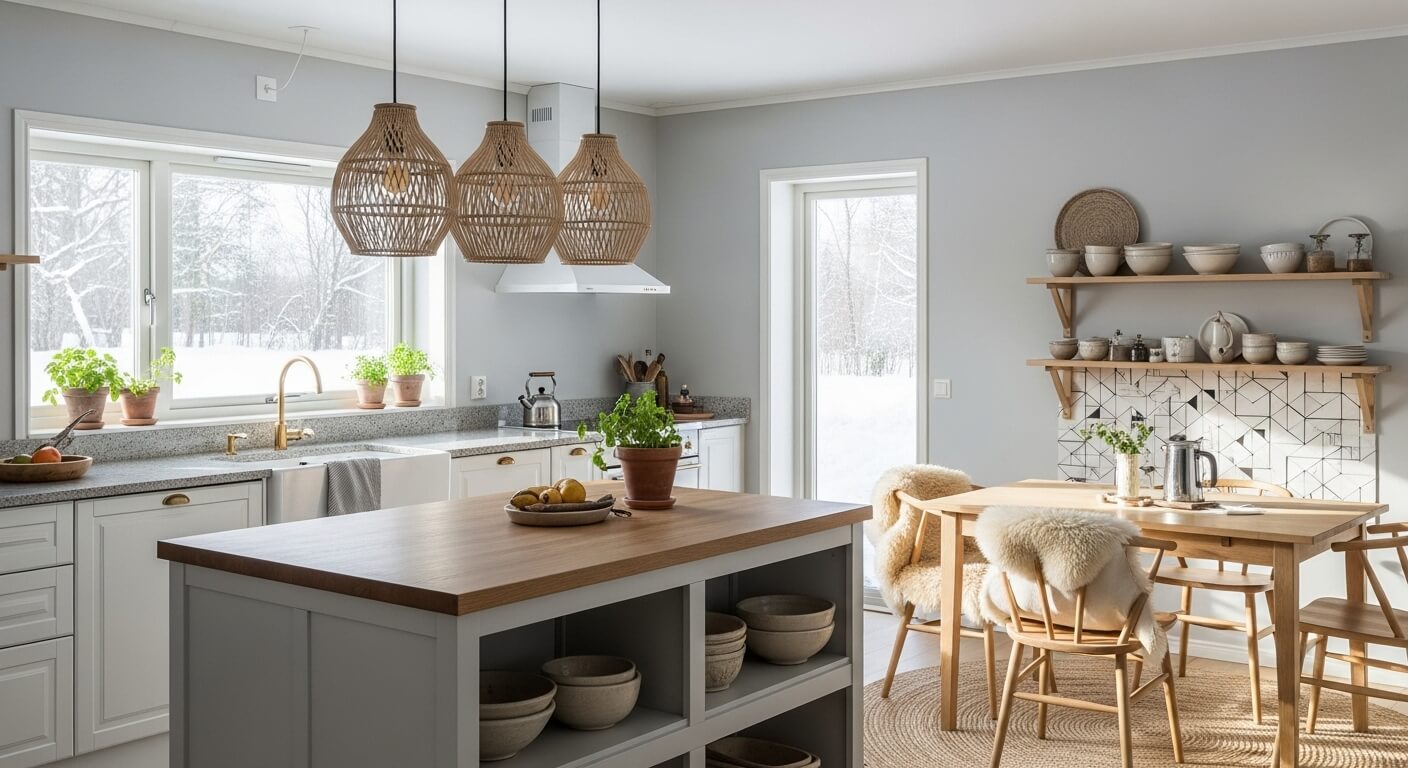
A Scandinavian kitchen combines light colors, natural materials, simple lines, and practical storage to create a space that feels calm rather than sterile. The goal is not an empty white room, it is a kitchen that is easy to use, easy to clean, and warm enough for everyday life.
Scandinavian design typically favors a light palette, exposed wood, uncomplicated cabinet fronts, and abundant natural and artificial light. Light-toned woods such as oak, ash, and birch are especially common because they add warmth without visual clutter.
Whether you are updating a few details or planning a larger renovation, these 15 ideas can help you create a fresh Nordic-inspired kitchen that suits a real household.
1. Anchor the Space with a Bright, White Palette
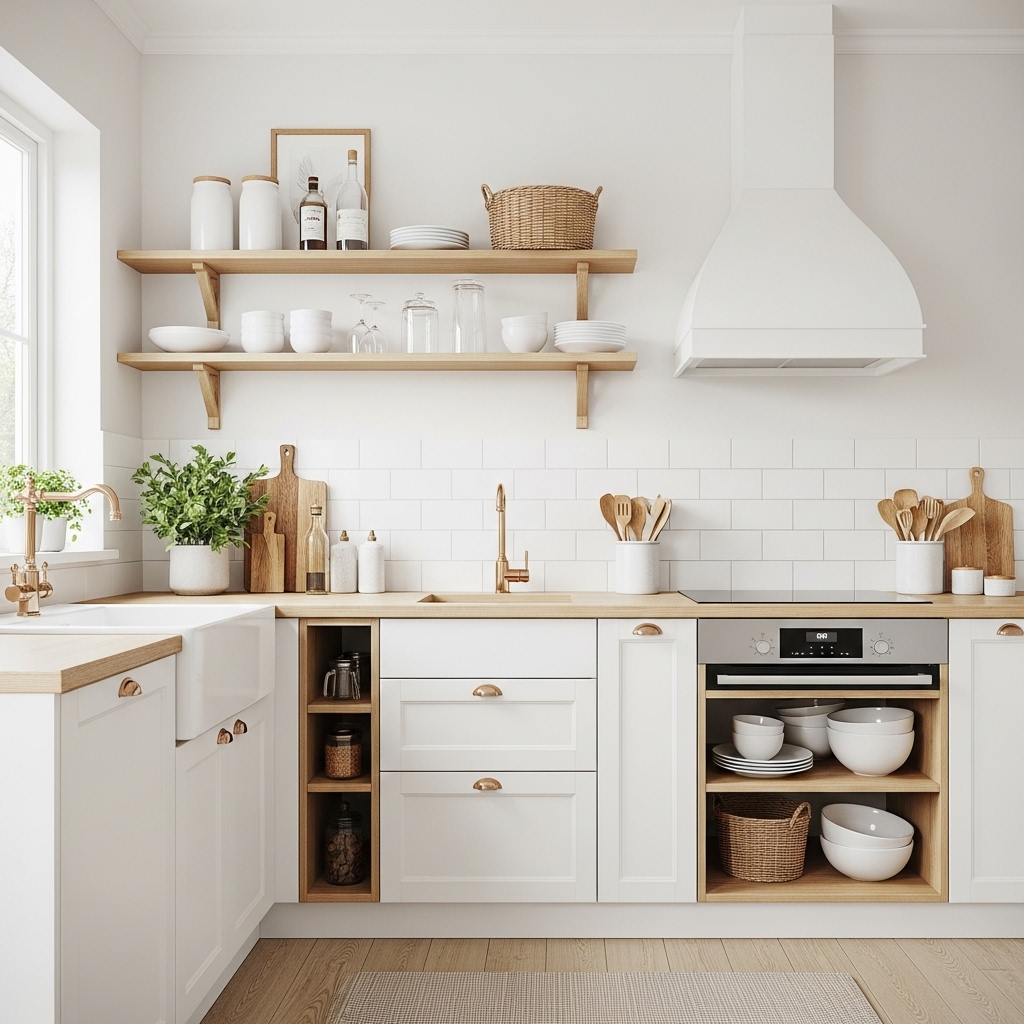
Use white or off-white as the foundation, then add warmth through light wood, soft gray, beige, or muted sage. A completely white kitchen can feel stark, so vary the finishes: matte cabinet doors, a lightly textured backsplash, pale wood flooring, and warm metal hardware.
For a balanced Scandinavian palette, try:
- White or warm white walls and upper cabinets
- Light oak, ash, or birch accents
- Soft gray or greige lower cabinets
- Black, brushed brass, or matte nickel hardware
- One muted accent color, such as dusty blue, sage, or clay
This approach keeps the room bright while preventing the “showroom” effect that can make minimalist kitchens feel impersonal.
2. Swap Upper Cabinets for Open Shelving
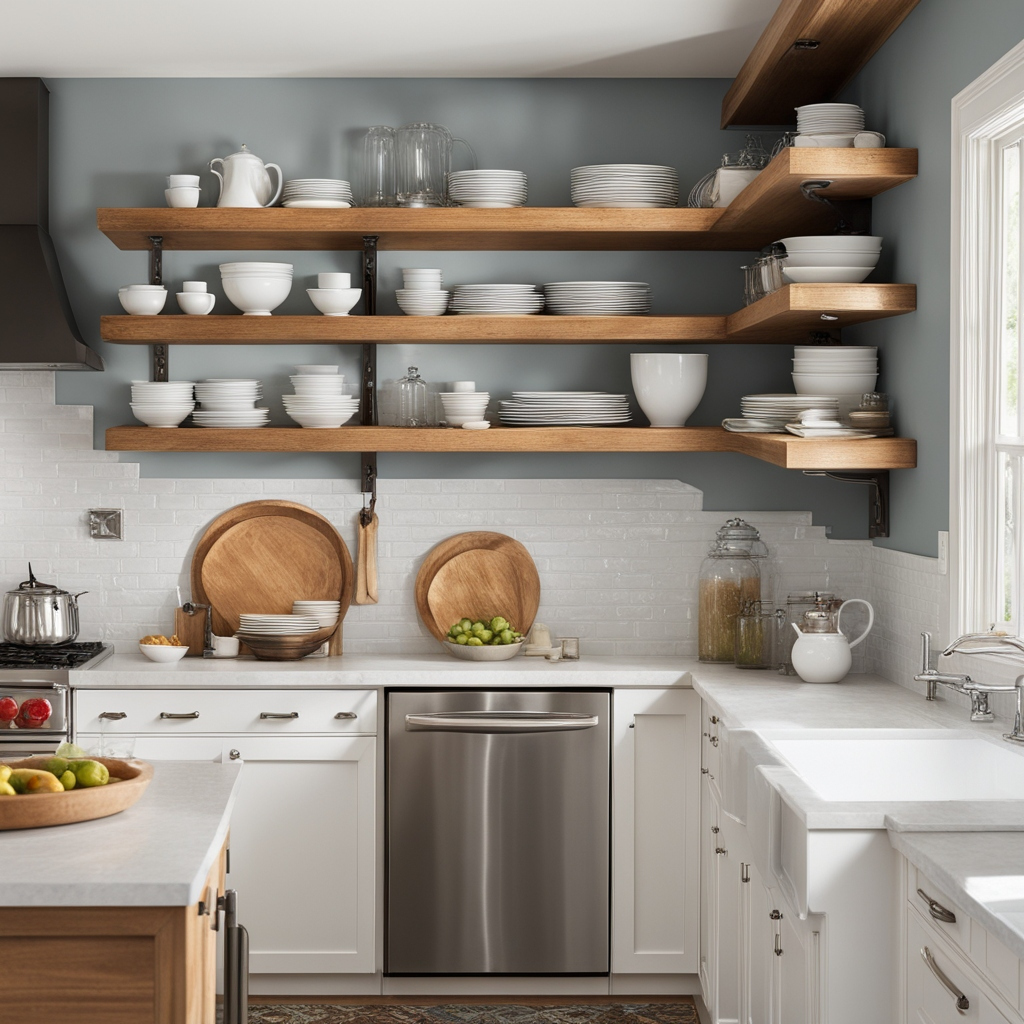
Open shelves can make a kitchen feel lighter and give you space to display everyday dishes, glassware, cookbooks, or ceramics. They work especially well beside a window or on a wall that does not face the cooktop.
Before removing upper cabinets, consider the trade-offs. Open shelving keeps items visible and accessible, but it also collects dust and cooking residue, so it suits people who enjoy tidying and curating their displays.
A practical approach is to combine both:
- Keep closed cabinets for appliances, food, and less attractive essentials.
- Use one or two open shelves for attractive, frequently used items.
- Avoid placing delicate or grease-prone items directly beside an open cooktop.
- Store heavy items on lower shelves and lighter pieces higher up.

3. Natural Elements
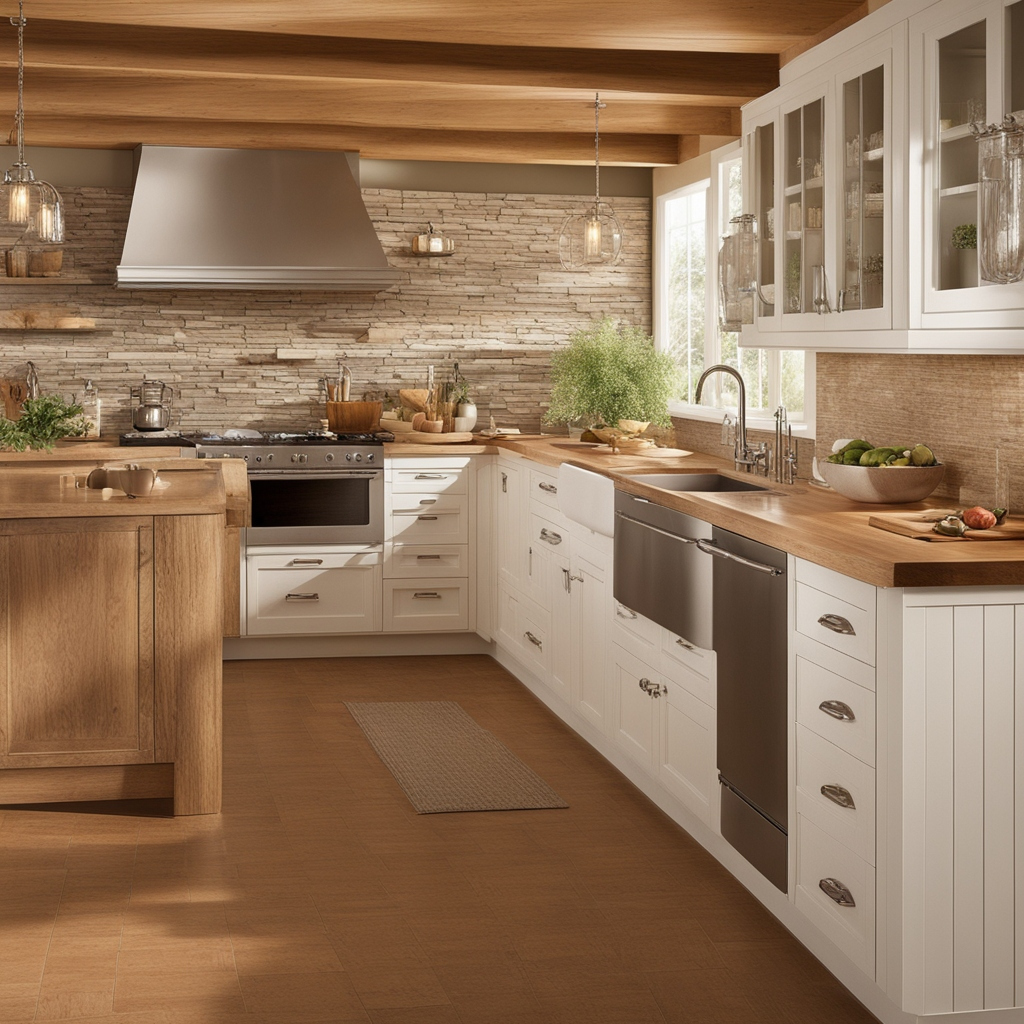
Using natural materials like wood and stone in your kitchen can add a cozy feel and interesting texture. These elements help bring the outdoors inside, creating a warm and inviting space.
Adding wooden countertops or stone backsplashes can make your kitchen feel more connected to nature. These materials are not only beautiful but also durable and long-lasting.
Incorporating natural elements like wooden shelves or stone flooring can enhance the overall look of your kitchen.
These features add a unique charm and can make the room feel more organic and comfortable.
4. Minimalist Design
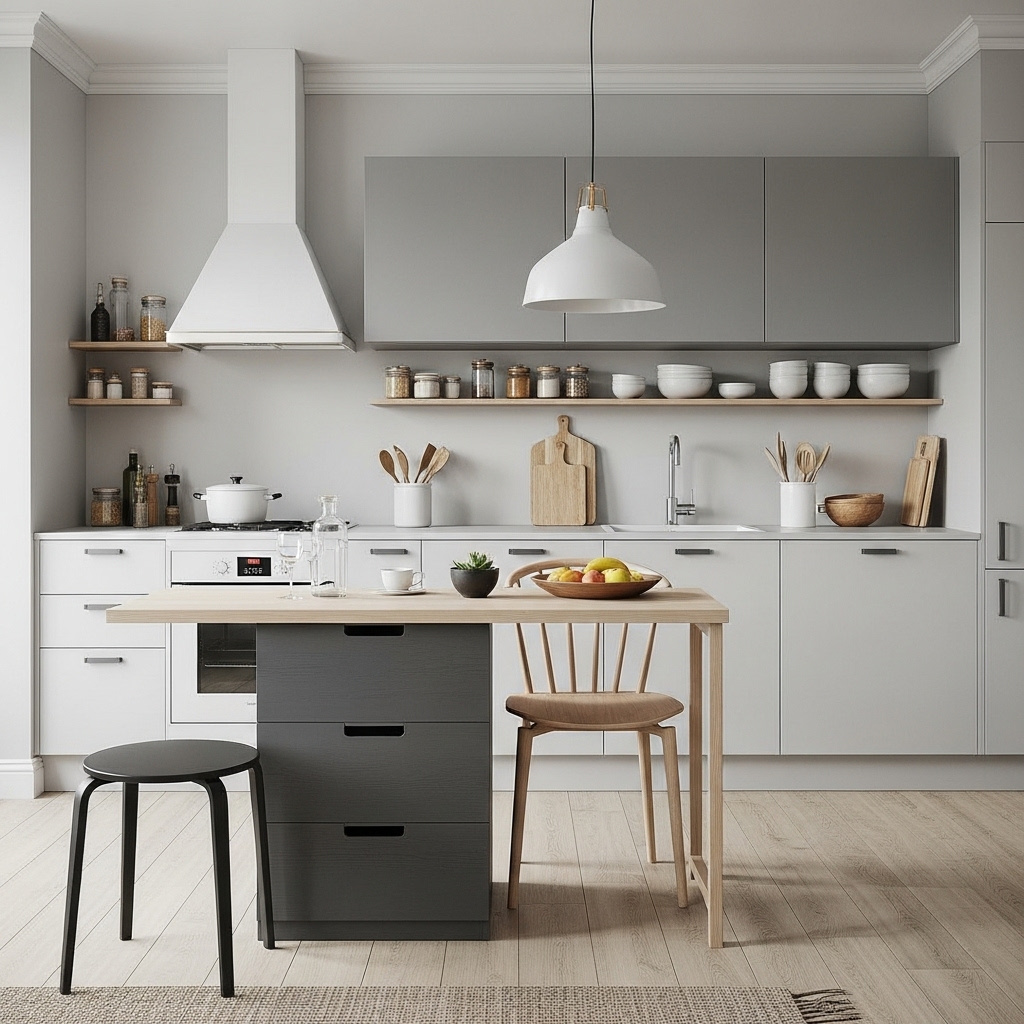
A Scandinavian kitchen idea is to use neutral colors like white, gray, and light wood tones. These colors create a calm and airy feel, making the space look clean and open.
Incorporate functional pieces like open shelving and multi-purpose furniture. This not only helps in keeping the kitchen tidy but also adds to the minimalist look by reducing clutter.
Opt for simple yet stylish fixtures and fittings. Sleek handles, minimalistic light fixtures, and clean-lined cabinetry can enhance the aesthetic while maintaining functionality.
5. Plan a Practical Work Zone
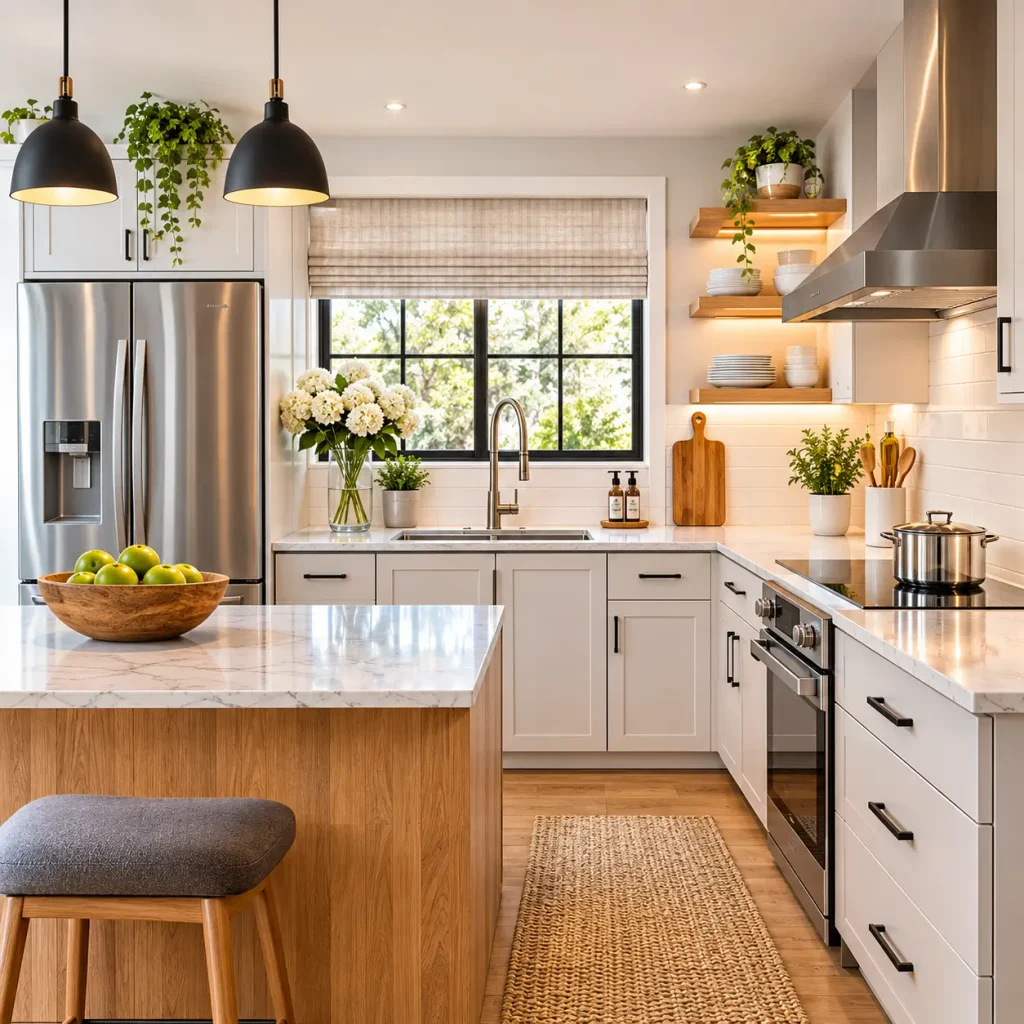
A beautiful kitchen still needs to work well. The classic “work triangle” connects the cooktop, sink, and refrigerator; the three areas used most often during meal preparation.
NKBA planning guidance describes each leg of this triangle as generally measuring between 4 and 9 feet, with all three legs totaling no more than 26 feet. It also recommends avoiding significant obstruction from islands or peninsulas.
In a small kitchen, a strict triangle may not be possible. Focus instead on keeping the sink, cooking area, and refrigerator within a convenient sequence, with enough counter space beside each for prep and landing hot dishes.
6. Neutral Tones
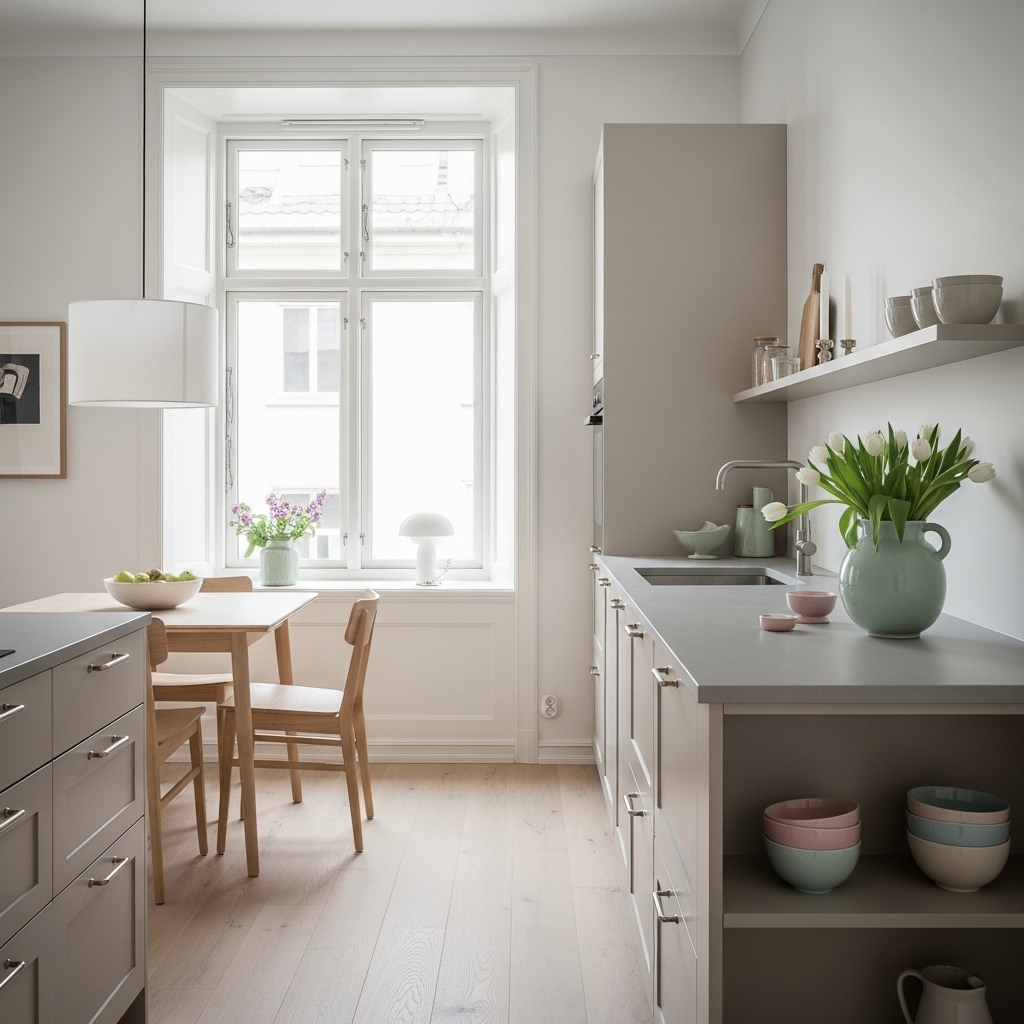
Neutral colors like beige and gray are perfect for achieving a Scandinavian kitchen style. These shades create a calming and open feel, making your kitchen a welcoming space.
Soft pastels can add a subtle touch of color to your kitchen without overwhelming the senses. They blend well with neutral tones, enhancing the overall harmony of your space.
Using neutral tones in your kitchen can make the space feel larger and more inviting. These colors reflect light well, brightening up the area and creating a more open atmosphere.
7. Install Statement Pendant Lights
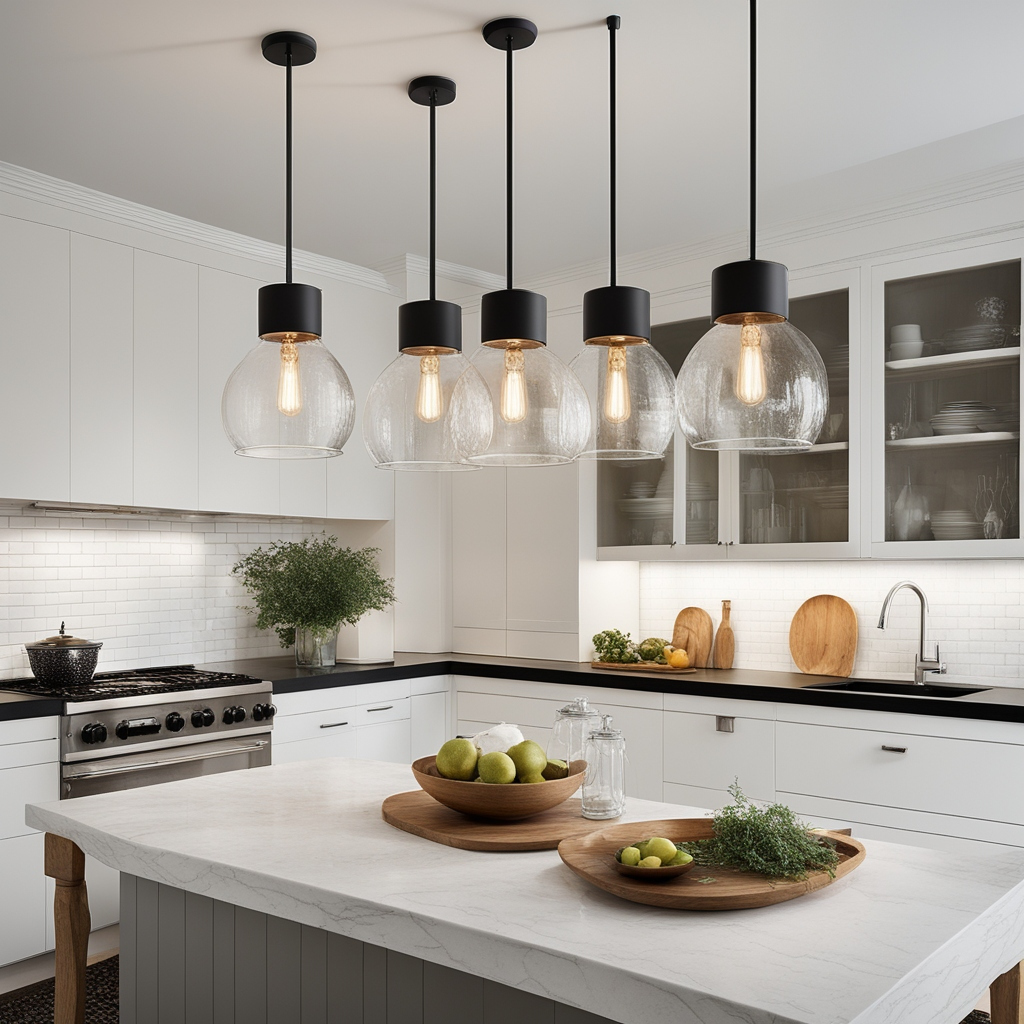
A pair of simple pendant lights above an island or dining table can become the kitchen’s focal point without overwhelming the space. Look for clean shapes, natural materials, matte black, brushed metal, or soft white shades.
Avoid relying on one ceiling fixture alone. Combine ambient lighting with task lighting under cabinets and accent lighting where you want emphasis, such as over open shelves or a breakfast nook.
For a Scandinavian feel, choose lighting that is sculptural but restrained—one or two well-chosen fixtures usually look better than several competing designs.
8. Bring In Greenery and Fresh Herbs
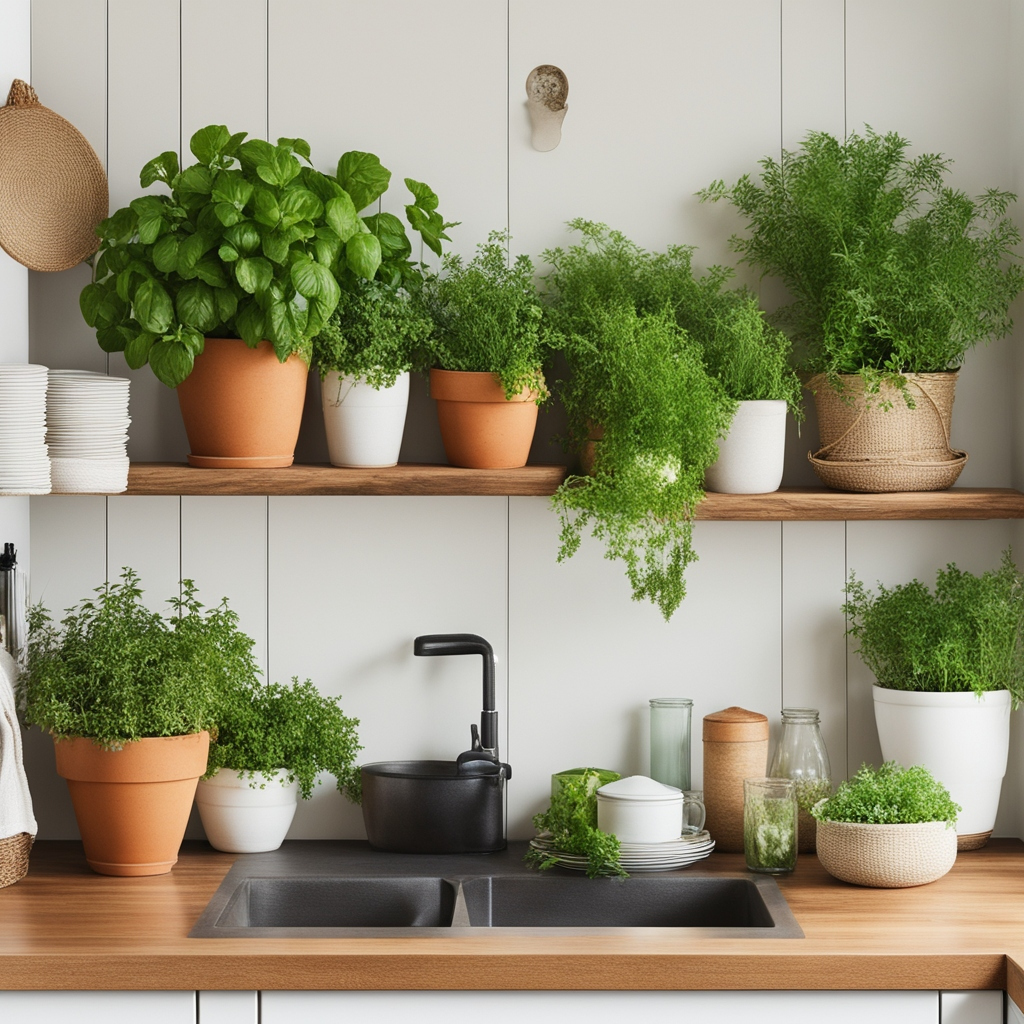
Plants add color, softness, and life to a minimalist kitchen. A few well-chosen pots on a windowsill, shelf, or island can make the space feel more personal without adding clutter.
Herbs are especially useful. Basil, mint, parsley, chives, and rosemary can thrive in a bright kitchen window and provide fresh flavor for cooking. Choose pots with drainage and place herbs where they receive appropriate light.
Plants are best treated as decorative and culinary additions rather than a major air-purification solution. Their main benefit in a Scandinavian kitchen is visual warmth and a connection to nature.
9. Smart Storage
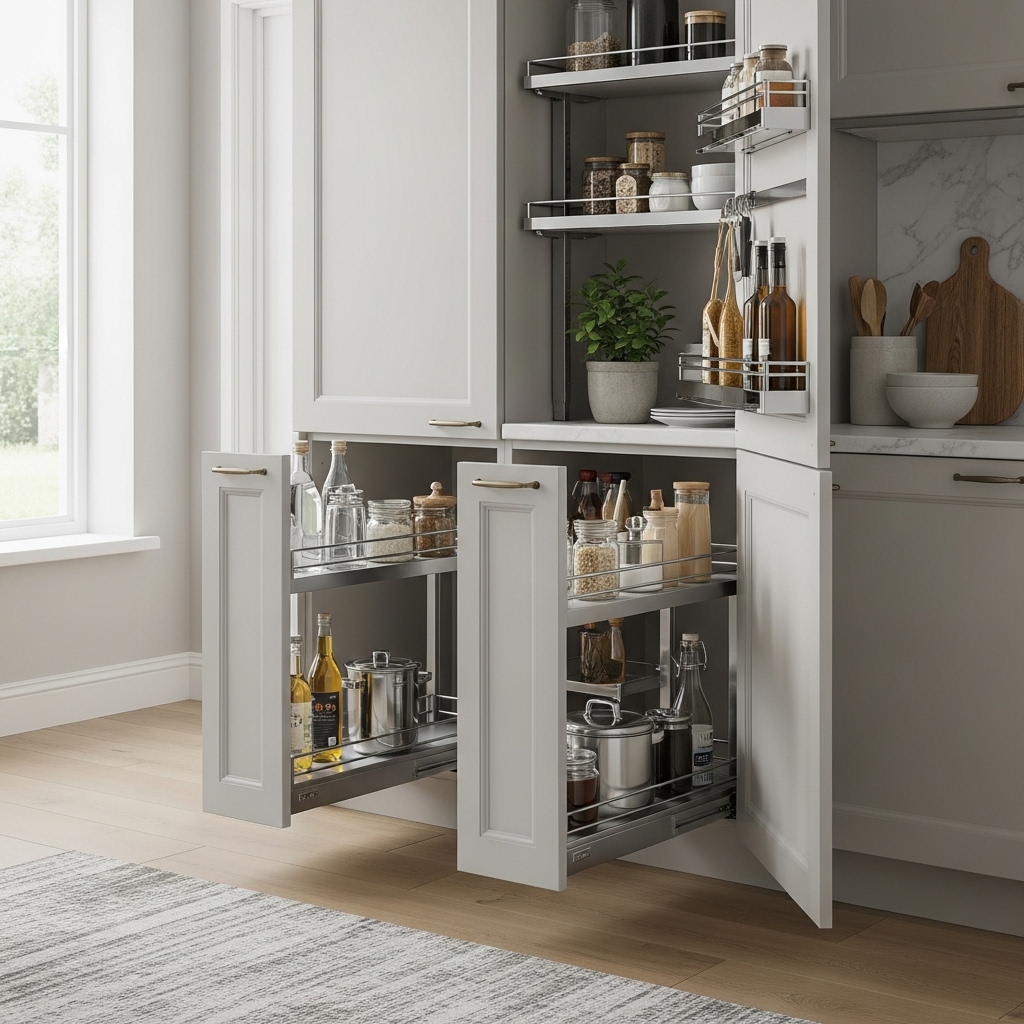
Maximize your kitchen space with pull-out shelves that let you reach everything easily. These shelves can be installed in cabinets and make it simple to store and find items easily.
Hidden cabinets are a great way to keep your kitchen looking tidy. These cabinets blend in with your existing decor and provide extra storage without taking up more space,
Drawer organizers help you keep your utensils and gadgets in order. By using these organizers, you can quickly find what you need and make your cooking experience more enjoyable.
10. Use Texture Instead of Excess Decoration
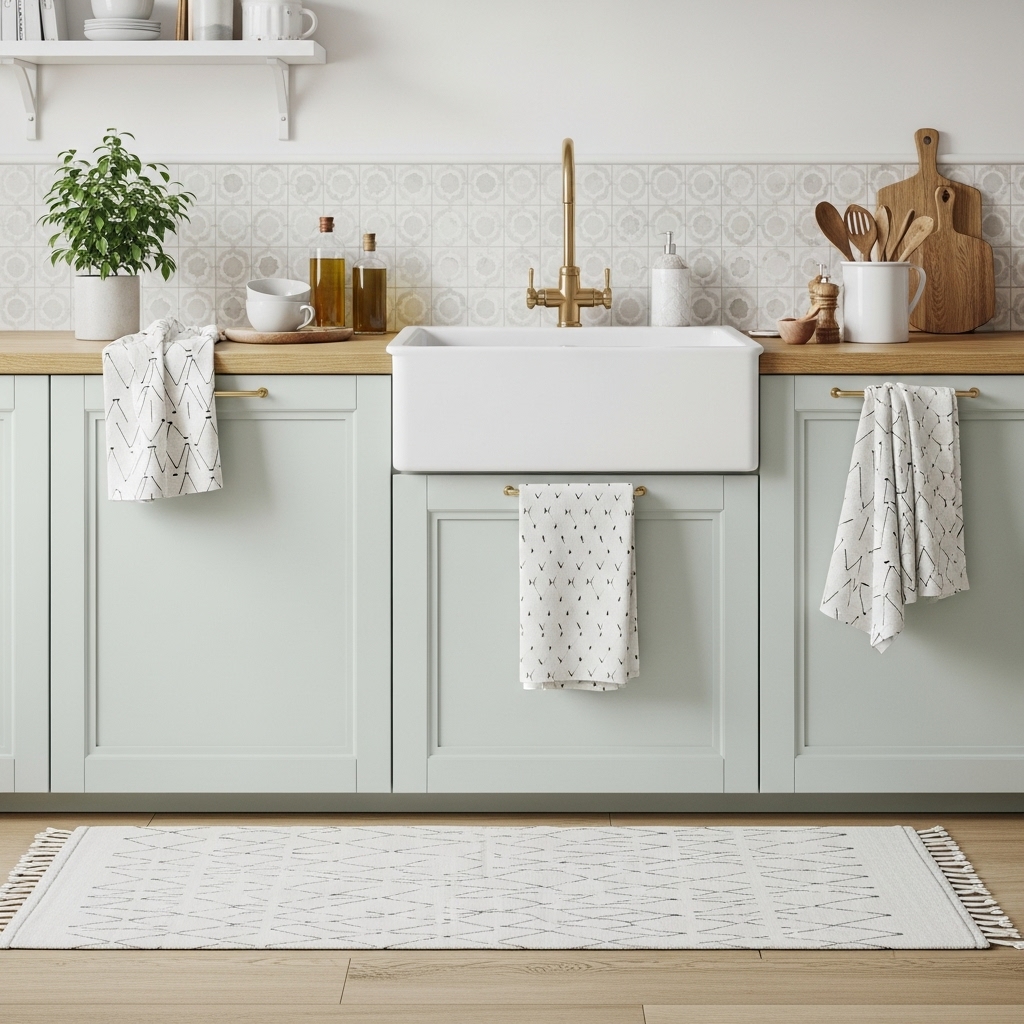
Scandinavian style is minimal, but it should not feel flat. Texture creates interest while keeping the design restrained.
Add subtle texture through:
- Linen or cotton dish towels
- A woven runner or washable rug
- Matte ceramic dishes
- Wooden utensils and boards
- Ribbed glass, stoneware, or handmade-looking pottery
- A lightly textured backsplash
Limit patterns to one or two places. A patterned runner or softly geometric backsplash can add character, while plain cabinets and counters keep the room calm.
11. Choose Sustainable, Durable Materials
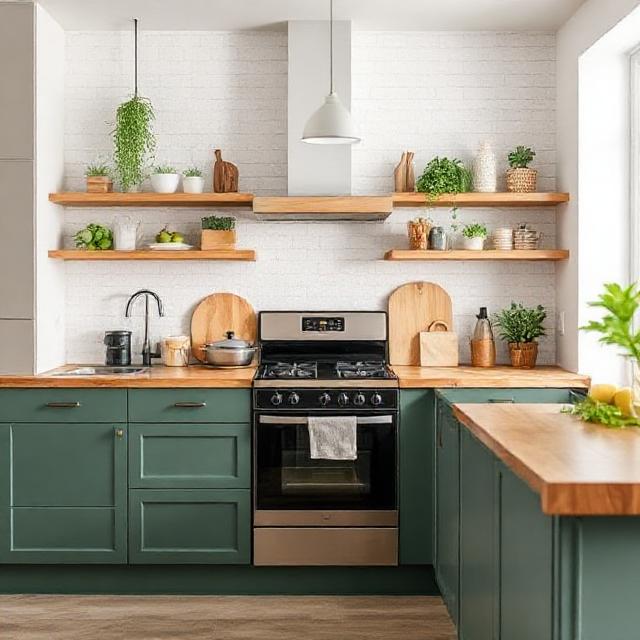
Sustainability in kitchen design is not only about buying “eco” products—it is also about choosing materials that last. Durable cabinetry, quality hardware, repairable fixtures, and timeless finishes reduce waste over time.
Good options include:
- FSC-certified or reclaimed wood, where appropriate
- Bamboo for accessories or select surfaces
- Recycled-glass or ceramic tiles
- Stone, quartz, or solid-surface counters based on your budget and maintenance preferences
- Energy-efficient appliances with strong energy ratings
Before replacing functioning cabinets or appliances, consider repainting doors, changing hardware, upgrading lighting, or improving storage. Smaller changes can refresh the room while avoiding unnecessary waste.
12. Mix Materials With Restraint
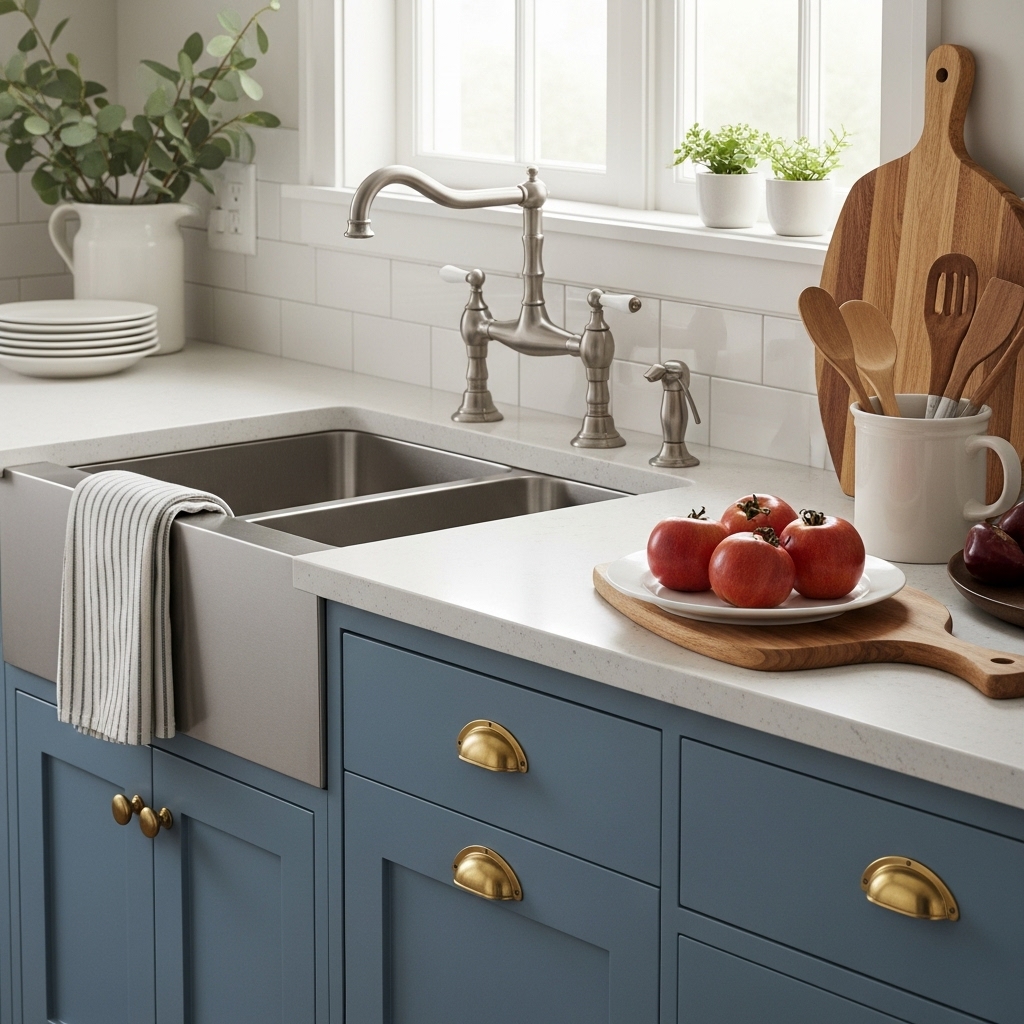
Scandinavian kitchens often combine two or three materials: pale wood, matte white surfaces, stone or tile, and a small amount of metal. The key is restraint.
For example, pair white cabinets with oak shelves, a honed stone countertop, and matte black pulls. Or combine light-gray cabinetry with a white subway-tile backsplash, brass hardware, and natural woven accents.
Avoid mixing too many finishes. If your countertop and backsplash have strong movement or pattern, keep cabinets, walls, and hardware quieter.
13. Compact Solutions
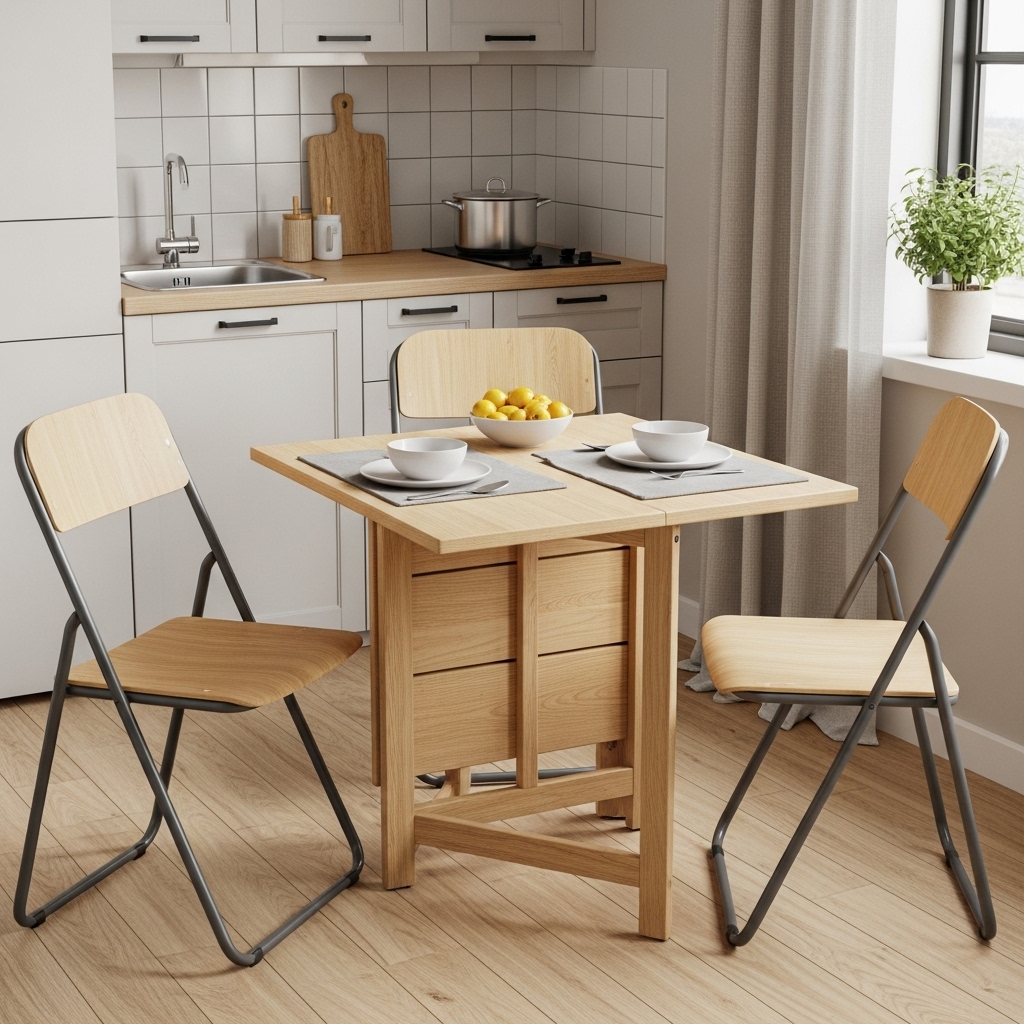
A Scandinavian approach suits small kitchens because it emphasizes light, order, and efficient storage.
Try these compact solutions:
- Use vertical wall space for shelves, rails, hooks, or a magnetic knife strip.
- Choose a slim rolling cart that can move where needed.
- Install a fold-down table or compact breakfast bar.
- Use drawer dividers instead of overstuffed cabinets.
- Select visually light furniture, such as open-leg stools or a round table.
- Keep countertops mostly clear, storing appliances you rarely use.
For more surface and backsplash inspiration, see these tiles for small kitchen ideas
14. Add Vintage or Handmade Character
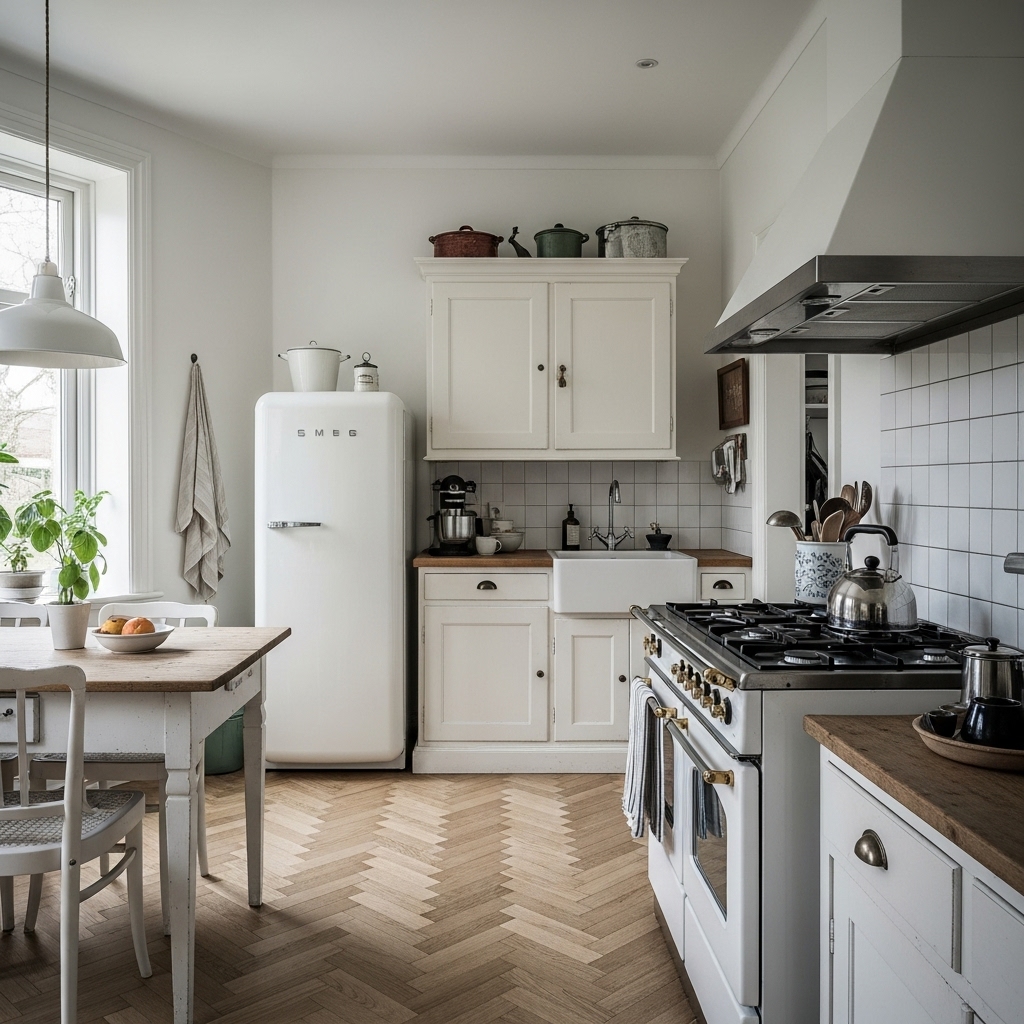
A few older or handmade pieces can keep a Scandinavian kitchen from feeling mass-produced. Look for a farmhouse table, a vintage stool, ceramic bowls, a wooden bread box, or a classic wall clock.
Choose items that are useful as well as decorative. A vintage cabinet can provide storage; a handmade bowl can hold fruit; a framed print can add personality above a coffee station.
The goal is character, not clutter. One or two meaningful pieces will usually have more impact than a shelf filled with decorative objects.
15. Personalize the Space Thoughtfully
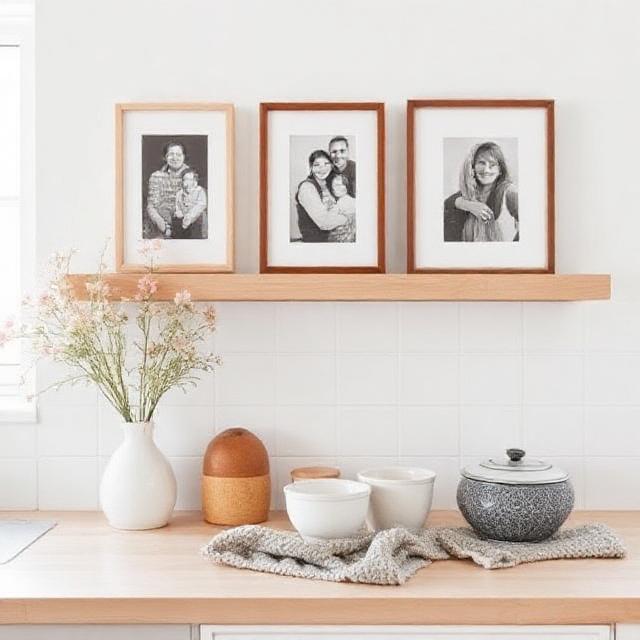
Scandinavian design values simplicity, but it does not require impersonal rooms. Display a few items that reflect how you live: a favorite cookbook, family photos in matching frames, a child’s artwork, a piece of local pottery, or a textile from a memorable trip.
Keep personal displays grouped and edited. A small gallery wall, a styled shelf, or a rotating display on the refrigerator can add warmth without making the kitchen feel busy.
How to Avoid a Cold Scandinavian Kitchen
The most common mistake is treating Scandinavian design as “all white and nothing else.” To keep the room welcoming:
- Use at least one natural material, such as wood, stone, ceramic, linen, or rattan.
- Choose warm white rather than a stark blue-based white if your room receives little daylight.
- Include layered lighting rather than one bright overhead fixture.
- Keep a few useful, personal objects visible.
- Balance open shelving with closed storage.
- Add greenery or fresh herbs.
Scandinavian Kitchen Ideas by Budget
| Budget level | Best updates |
|---|---|
| Low cost | Paint walls or cabinet fronts, replace hardware, add open shelves, change lighting, add plants and textiles |
| Medium budget | Replace countertops or backsplash, upgrade lighting, install better storage organizers, add a compact island or cart |
| Higher budget | Replace cabinetry, improve layout and appliances, add a window or skylight, install new flooring |
Frequently Asked Questions
What defines a Scandinavian kitchen?
A Scandinavian kitchen typically features light colors, natural wood, simple cabinetry, practical storage, layered lighting, and a clean but welcoming atmosphere. Function is as important as appearance.haecker-kuechen+1
Are Scandinavian kitchens only white?
No. White is common because it reflects light, but Scandinavian kitchens also use warm wood, gray, beige, black accents, and muted colors such as sage, dusty blue, or clay.
Do open shelves work in a Scandinavian kitchen?
Yes, but use them selectively. Open shelves look best when they display attractive, frequently used items. Closed cabinets are better for food, small appliances, and everyday clutter.
How do I make a Scandinavian kitchen feel cozy?
Add pale wood, textured textiles, warm lighting, plants, ceramics, and a few personal objects. Avoid using only stark white surfaces and harsh overhead lighting.
What is the best layout for a small Scandinavian kitchen?
Prioritize clear counters, vertical storage, good task lighting, and a convenient relationship between the sink, cooktop, and refrigerator. A formal work triangle is helpful, but small kitchens may need a simplified work zone instead.media.nkba
Is a Scandinavian kitchen expensive?
Not necessarily. Paint, hardware, lighting, shelving, textiles, and organization products can create a strong Scandinavian look at a modest cost. Cabinetry, countertops, flooring, and layout changes cost more.
Final Thoughts
A successful Scandinavian kitchen balances light, simplicity, warmth, and everyday function. Start with a light palette and better lighting, then introduce natural wood, smart storage, and a few personal or handmade pieces.
You do not need to complete every idea at once. Even one change, such as replacing harsh lighting, adding oak shelves, or organizing a cluttered drawer, can move your kitchen closer to the calm, practical Scandinavian look you want.