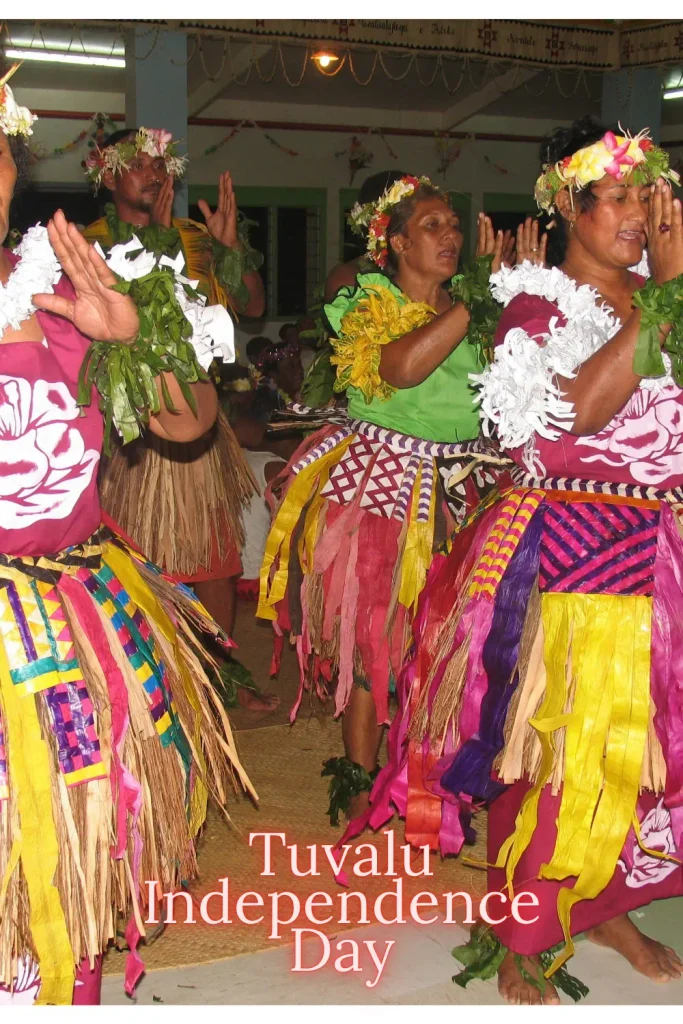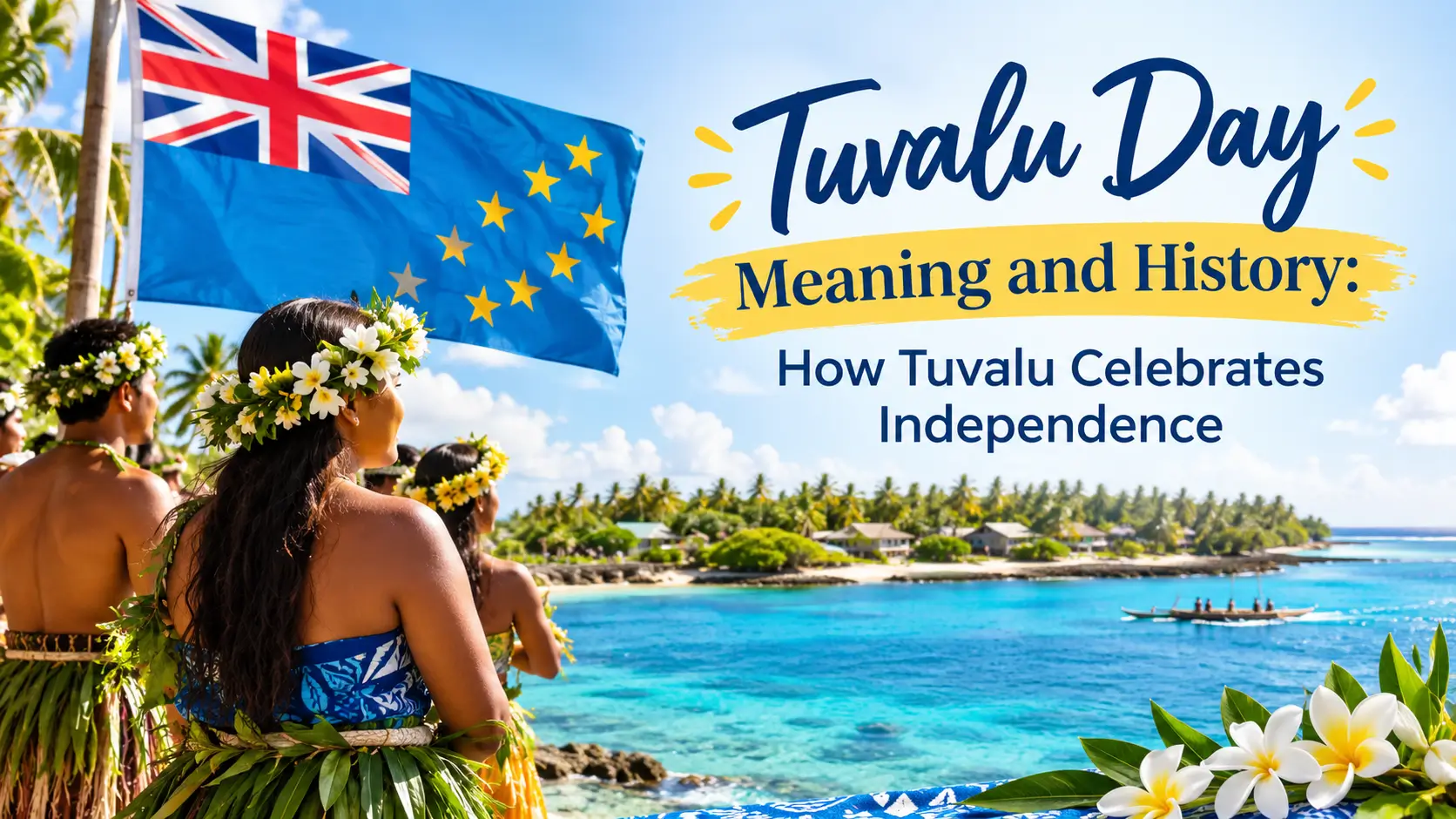
What does Tuvalu Day mean, and why is October 1 such an important date for this small Pacific island nation?
For the people of Tuvalu, the day represents national independence, identity, cultural pride, and the right to determine the country’s own future.
Tuvalu Day is observed on October 1 to commemorate Tuvalu’s independence from British rule on October 1, 1978.
The date marks the beginning of Tuvalu as an independent nation after its separation from the former Gilbert and Ellice Islands colony.
Today, Tuvalu Day provides an opportunity to celebrate the country’s history, traditions, communities, and national achievements while looking toward the future.
Tuvalu Day is Tuvalu’s national Independence Day, celebrated every October 1 to commemorate the country becoming independent from Britain in 1978.
In this guide, you will discover the meaning of Tuvalu Day, its historical background, the road to independence, and how Tuvaluans mark this important national occasion.

What Is the Meaning of Tuvalu Day?

The meaning of Tuvalu Day is closely connected to independence and national identity.
October 1, 1978, was the date when Tuvalu became an independent sovereign country after ending its constitutional relationship as a British colony.
Tuvalu’s Constitution specifically defines Independence Day as October 1, 1978. Therefore, Tuvalu Day is more than simply a public celebration. It represents:
- National independence from British colonial administration
- Tuvaluan identity and national unity
- Cultural heritage passed between generations
- Self-government and national sovereignty
- Community participation in national life
- Pride in Tuvalu’s islands and traditions
- Hope for the country’s future
For many people, the occasion also provides an opportunity to remember the generations who helped shape Tuvalu before and after independence.
Tuvalu Day and the Road to Independence
To understand the importance of Tuvalu Day, it helps to look at the history that came before independence. The islands now known as Tuvalu were historically referred to as the Ellice Islands.
During the colonial period, the Ellice Islands were administered together with the Gilbert Islands, which are now part of Kiribati.
The British established the Gilbert and Ellice Islands Colony, bringing several Pacific island groups under a shared colonial administration.
The arrangement reflected the wider expansion of European colonial powers across the Pacific during the nineteenth and twentieth centuries.
Over time, however, the people of the Ellice Islands developed a stronger sense of a distinct identity.
The Ellice Islands and Tuvalu’s Changing Identity
The Ellice Islands consisted of islands and atolls with their own communities, languages, traditions, and social structures.
Although the islands were administered alongside the Gilbert Islands, the two groups had different cultural and linguistic characteristics.
As political awareness increased during the twentieth century, the desire for greater self-determination became increasingly significant.
The eventual creation of an independent Tuvalu was therefore part of a broader process of political change and decolonization in the Pacific.
When Did Tuvalu Become Independent?
Tuvalu became independent on October 1, 1978. This date is central to the meaning of Tuvalu Day because it marks the formal transition from British colonial administration to an independent state.
The Tuvalu Constitution confirms October 1, 1978, as Independence Day. The independence process also followed an important earlier development.
In the 1970s, the Gilbert and Ellice Islands moved toward separate political futures. Tuvalu eventually emerged as an independent country, while the Gilbert Islands later became the independent Republic of Kiribati.
The transition reflected the wider wave of Pacific decolonization during the 1970s.
Why 1978 Was a Historic Year for Tuvalu
The year 1978 was significant because Tuvalu was establishing the institutions required for its new status as an independent country.
Government administration, education, public records, legislation, and other national institutions became increasingly important during this transition.
Tuvalu’s Ministry of Education notes that the country’s education legislation dates from 1978, the same year it gained independence.
The establishment of the National Library and Archives in September 1978 also reflected the importance placed on preserving Tuvalu’s documentary heritage as the country prepared for independence.
A Brief Timeline of Tuvalu Day History
The history of Tuvalu Day becomes easier to understand when viewed as a timeline.
Before the Colonial Period
- Tuvalu’s islands had established communities, traditions, social systems, and connections with the wider Pacific long before European colonial administration.
- Traditional community structures remain an important part of Tuvaluan society today.
Colonial Administration
- The islands became part of the British-administered Gilbert and Ellice Islands Colony. The Ellice Islands were administered together with the Gilbert Islands for much of the colonial period.
1970s: Political Change
- The 1970s brought major political changes across the Pacific. Several island territories moved toward greater self-government and independence.
- Tuvalu’s path toward independence developed within this wider regional transformation.
October 1, 1978: Independence
- On October 1, 1978, Tuvalu became independent from Britain. This is the historic event commemorated by Tuvalu Day each year.
After Independence
- Following independence, Tuvalu developed as a sovereign Pacific island nation while maintaining important international and regional relationships.
- The country later joined the United Nations on September 5, 2000, further establishing its participation in the international community.
How Is Tuvalu Day Celebrated?
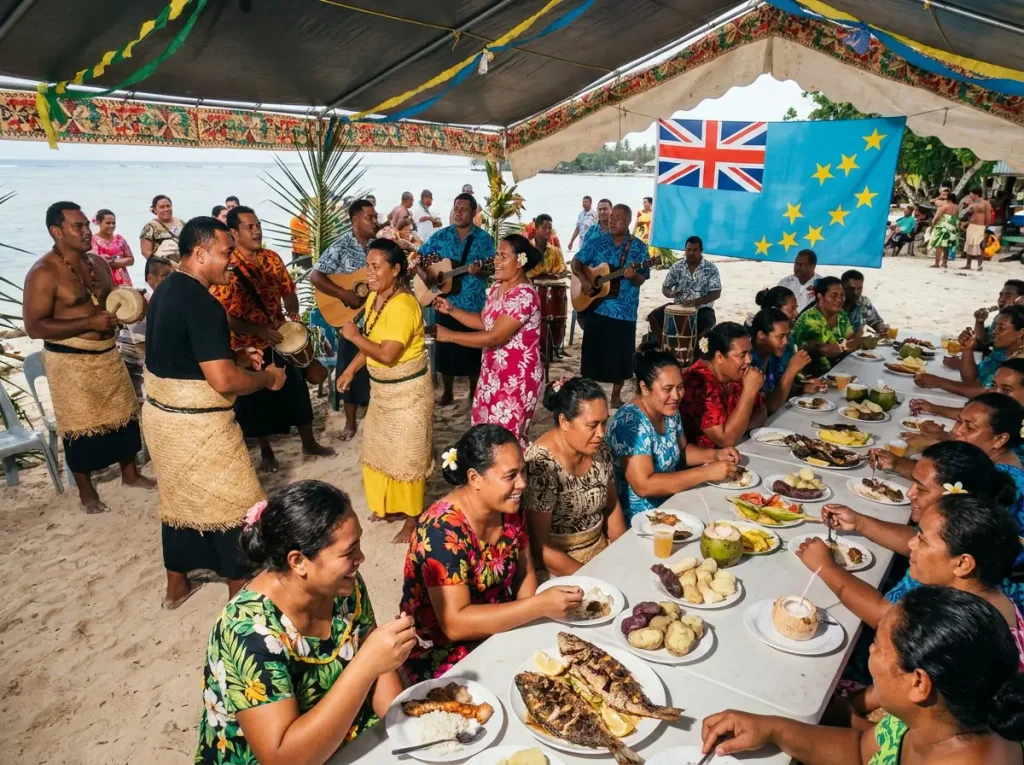
Tuvalu Day celebrations focus on national pride, community, culture, and togetherness. Because Tuvalu is made up of small islands and atolls, community participation is especially important to national celebrations.
Traditional activities can include cultural performances, music, dancing, sporting events, gatherings, speeches, and shared meals.
The exact program can vary from year to year, depending on national and local arrangements.
Common elements associated with national celebrations include:
- Official ceremonies – Government representatives and community leaders may participate in formal events.
- Traditional performances – Dancing, singing, and cultural presentations showcase Tuvaluan heritage.
- Community gatherings – Families and communities come together to mark the national occasion.
- Sports activities – Sporting events can form part of celebrations and encourage community participation.
- Traditional food – Shared meals help bring families and communities together.
- National symbols – The Tuvalu flag and other symbols of national identity are displayed.
- Cultural activities – Traditional skills, dress, music, and performances may feature prominently.
The Importance of Culture on Tuvalu Day
Tuvalu Day is also a celebration of cultural heritage. Tuvalu’s identity is shaped by its island communities, traditional practices, family relationships, music, dance, language, faith, and connection with the ocean.
The country’s Department of Home Affairs identifies cultural preservation as one of its responsibilities, including safeguarding Tuvaluan culture and traditions and supporting the country’s cultural policy.
Consequently, national celebrations provide an opportunity for younger generations to learn about traditions that have been passed down over many years.
Tuvalu Day and Traditional Community Life
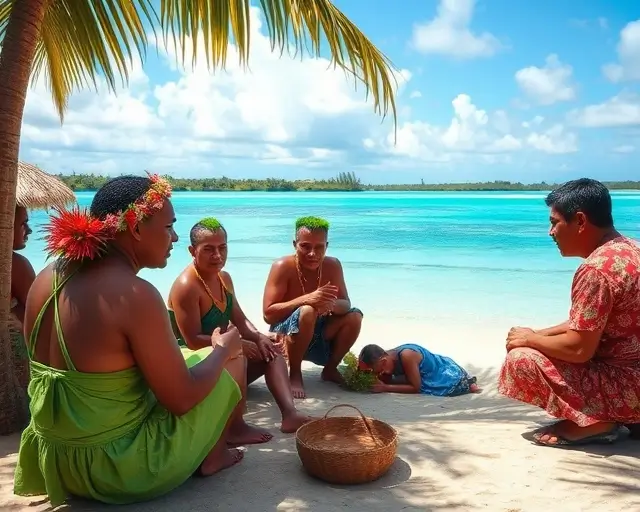
Traditional forms of local governance remain important in Tuvalu.
At the island level, structures such as the Kaupule, or island councils, and Falekaupule, councils of elders, contribute to community governance and consultation.
New Zealand’s Ministry of Foreign Affairs and Trade notes that these traditional structures continue to support community participation alongside parliamentary democracy.
This combination of traditional and modern institutions is an important part of Tuvalu’s national story.
Tuvalu’s National Identity After Independence
Independence gave Tuvalu the opportunity to manage its national affairs as a sovereign state.
The country’s Constitution provides the legal foundation for government and reflects its history, cultural identity, and aspirations. However, independence did not mean that Tuvalu’s challenges disappeared.
As a small island developing state, Tuvalu faces distinctive geographical, economic, environmental, and infrastructure challenges.
New Zealand’s current country plan describes Tuvalu as both a Least Developed Country and a Small Island Developing State, while identifying climate change and sustainable development as important national concerns.
Therefore, Tuvalu Day can be viewed not only as a celebration of the past but also as a reminder of the country’s continuing journey.
Why Is Tuvalu Day Important?
There are several reasons why this national day remains meaningful.
1. It Remembers Independence
- First and foremost, Tuvalu Day commemorates the country’s independence from Britain in 1978.
2. It Celebrates National Unity
- The occasion brings people together around a shared national identity despite the geographical separation of Tuvalu’s islands.
3. It Preserves Cultural Heritage
- Traditional music, dance, food, clothing, ceremonies, and community activities help keep cultural traditions visible.
4. It Educates Younger Generations
- National celebrations can help young people understand how Tuvalu developed into an independent nation.
5. It Honors Tuvaluan Identity
- Tuvalu Day provides a public expression of pride in the country’s history, communities, islands, and cultural heritage.
6. It Looks Toward the Future
- The day also encourages reflection on Tuvalu’s future and the responsibilities associated with maintaining a resilient and sustainable nation.
Tuvalu Day Facts at a Glance
Here are some quick facts to remember:
- Country: Tuvalu
- National occasion: Independence Day
- Date: October 1
- Year of independence: 1978
- Former colonial name: Ellice Islands
- Former colonial administration: Gilbert and Ellice Islands Colony
- Independence: From Britain
- Region: Pacific Ocean
- Capital: Funafuti
- Modern significance: National identity, independence, culture, unity, and heritage
- United Nations membership: September 5, 2000
How to Learn More About Tuvalu Day History
If you are researching Tuvalu Day meaning and history for school, a cultural project, travel article, or educational presentation, use reliable sources whenever possible.
A useful research checklist includes:
- Confirm the date of Tuvalu’s independence.
- Learn about the former Gilbert and Ellice Islands Colony.
- Research the Ellice Islands’ path toward self-government.
- Examine the significance of October 1, 1978.
- Explore Tuvaluan cultural traditions.
- Learn about traditional community governance.
- Look at Tuvalu’s development after independence.
- Use government and reputable historical sources.
Tuvalu Day vs. Tuvalu Independence Day
You may see both Tuvalu Day and Tuvalu Independence Day used when discussing October 1. The two terms refer to the same national occasion in the context of Tuvalu’s independence.
The key distinction is that Independence Day clearly describes the historical event being commemorated, while Tuvalu Day can be used more generally when referring to the national celebration.
The central fact remains unchanged: October 1 commemorates Tuvalu’s independence in 1978.
What Can We Learn From the History of Tuvalu Day?
The history of Tuvalu Day offers several broader lessons about national identity and independence.
Independence Can Strengthen National Identity
- The transition from colonial administration to independent government gave Tuvalu a distinct place in the international community.
Cultural Heritage Matters
- Political independence is only one part of nation-building. Language, traditions, community relationships, and cultural practices also help define a nation.
History Connects Generations
- Learning about independence allows younger generations to understand the experiences and decisions that shaped their country.
Small Nations Can Have a Distinct Global Identity
- Although Tuvalu is geographically small, its national identity and international presence are significant. Its history demonstrates that size does not determine whether a country can develop a distinctive national character.
Conclusion: Remembering the Meaning of Tuvalu Day
The story of Tuvalu Day is ultimately a story of independence, identity, and national pride. Every October 1, Tuvaluans commemorate the historic moment in 1978 when their country became independent from Britain.
Tuvalu Day provides an opportunity to celebrate cultural traditions, strengthen community connections, remember the country’s journey, and introduce younger generations to the history of their nation.
Tuvalu’s experience also illustrates the importance of preserving cultural identity while building a modern independent state. From traditional community structures to national institutions, the country’s history continues to shape its present and future.
Frequently Asked Questions About Tuvalu Day
1. What is Tuvalu Day?
Tuvalu Day is Tuvalu’s Independence Day, commemorated on October 1 each year. It marks the country’s independence from Britain in 1978.
2. When is Tuvalu Day celebrated?
Tuvalu Day is celebrated on October 1. The date comes from Tuvalu’s independence on October 1, 1978.
3. Why is Tuvalu Day important?
Tuvalu Day is important because it commemorates national independence and celebrates Tuvaluan identity, culture, heritage, unity, and self-government.
4. When did Tuvalu gain independence?
Tuvalu gained independence from Britain on October 1, 1978. This date is officially identified as Independence Day in the country’s Constitution.
5. What was Tuvalu called before independence?
The islands were historically known as the Ellice Islands and were administered with the Gilbert Islands as part of the Gilbert and Ellice Islands Colony.
6. How do people celebrate Tuvalu Independence Day?
Celebrations can include official ceremonies, cultural performances, traditional music and dancing, sports, community gatherings, shared meals, and displays of national pride. Specific activities may vary by year and location.
7. What does Tuvalu Day symbolize?
Tuvalu Day symbolizes independence, national unity, cultural identity, heritage, self-government, and pride in Tuvalu’s history.