Every year on September 16, people around the world observe the International Day for the Preservation of the Ozone Layer. But what is the real meaning of this important environmental day?
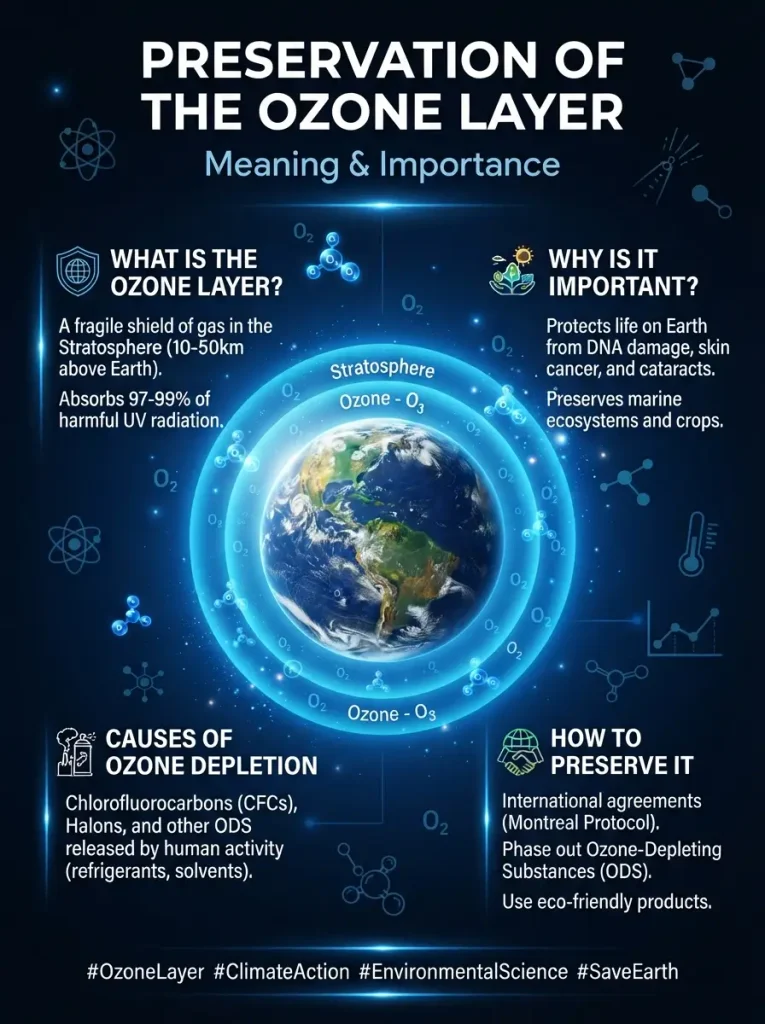
The Preservation of the Ozone Layer refers to the global effort to protect and restore the ozone layer from harmful chemicals and human activities that cause ozone depletion.
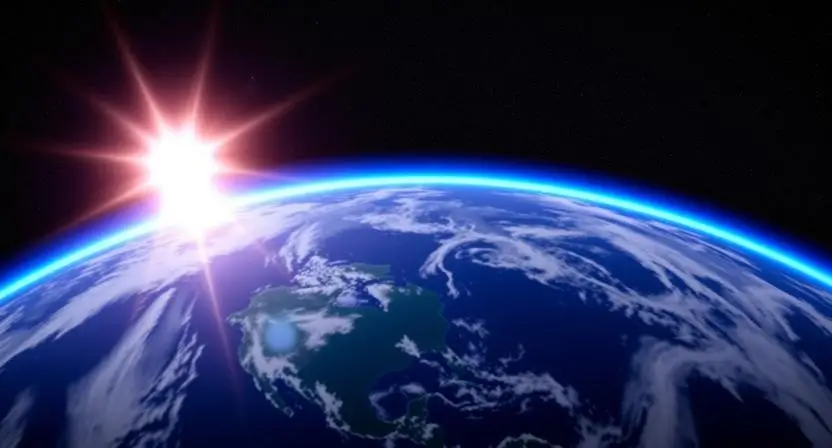
The ozone layer acts as a natural shield around Earth, absorbing much of the Sun’s harmful ultraviolet (UV) radiation and helping protect people, animals, plants, and ecosystems.
The observance also celebrates international cooperation and the progress made through the Montreal Protocol on Substances that Deplete the Ozone Layer, which was adopted on September 16, 1987.
The United Nations officially proclaimed September 16 as the International Day for the Preservation of the Ozone Layer in 1994.
The International Day for the Preservation of the Ozone Layer is observed on September 16 to raise awareness about protecting Earth’s ozone layer, commemorate the Montreal Protocol, and encourage global action against ozone-depleting substances.

What Is the Ozone Layer?
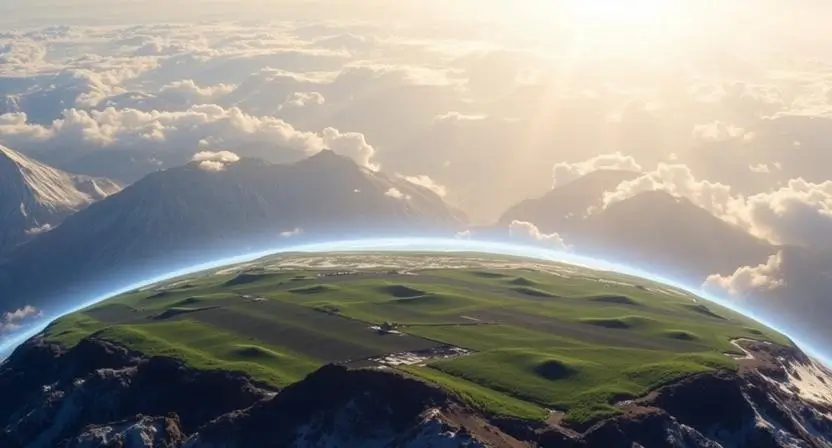
The ozone layer is a region of the stratosphere containing relatively high concentrations of ozone, a gas made up of three oxygen atoms.
Although ozone also exists elsewhere in the atmosphere, stratospheric ozone is particularly important because it absorbs harmful ultraviolet radiation from the Sun.
Think of the ozone layer as a protective filter surrounding Earth. It does not block all sunlight, but it absorbs a significant amount of damaging UV radiation before it reaches the Earth’s surface.
This protection matters because excessive exposure to ultraviolet radiation can contribute to health problems and environmental damage.
The United Nations describes the ozone layer as a thin atmospheric shield that helps protect life on Earth from harmful UV rays.
Why Is the Ozone Layer Important?
The ozone layer is important because it helps protect:
- Human health
- Animals and wildlife
- Plants and forests
- Marine ecosystems
- Agricultural systems
- Natural habitats
- Food chains
- Overall environmental balance
Therefore, Preservation of the Ozone Layer is not simply about protecting a layer of gas in the atmosphere. It is about protecting the living systems that depend on Earth’s atmosphere.
Preservation of the Ozone Layer: Meaning Explained
The meaning of Preservation of the Ozone Layer goes beyond simply preventing further ozone depletion.
It involves several connected actions:
- Reducing ozone-depleting substances
- Following international environmental agreements
- Promoting safer alternatives
- Supporting scientific research
- Encouraging responsible technology
- Educating communities about ozone protection
- Continuing international cooperation
Historically, chemicals such as chlorofluorocarbons (CFCs), halons, carbon tetrachloride, methyl chloroform, and methyl bromide contributed significantly to ozone depletion.
Many of these substances were used in refrigeration, air-conditioning, aerosols, fire suppression, and industrial processes.
The preservation effort therefore requires governments, industries, scientists, communities, and individuals to work together.
Why Is the International Day for the Preservation of the Ozone Layer Celebrated?
The day serves several important purposes.
1. To Raise Environmental Awareness
Many environmental problems are difficult to see because they happen high in the atmosphere. Ozone depletion is one such issue.
International Ozone Day helps explain the science in a way that students, families, communities, and decision-makers can understand.
2. To Remember the Montreal Protocol
September 16 was selected because it commemorates the signing of the Montreal Protocol in 1987.
The agreement created international measures to control and phase out substances that damage the ozone layer. The protocol entered into force in 1989 and remains one of the world’s major environmental agreements.
3. To Celebrate International Cooperation
The ozone story demonstrates that environmental challenges can be addressed when countries cooperate.
The Vienna Convention and Montreal Protocol achieved universal participation in 2009, making them remarkable examples of international environmental cooperation.
4. To Encourage Continued Action
Although substantial progress has been made, protecting the ozone layer still requires continued attention.
The chemicals involved can remain in the atmosphere for many years. Therefore, maintaining progress requires countries to continue following international commitments and monitoring atmospheric changes.
History of the International Day for the Preservation of the Ozone Layer
Concern about ozone depletion increased as scientists discovered evidence that certain human-made chemicals could damage stratospheric ozone.
In response, governments adopted the Vienna Convention for the Protection of the Ozone Layer in 1985. Two years later, the international community adopted the Montreal Protocol on substances that deplete the ozone layer.
The United Nations General Assembly proclaimed September 16 as the International Day for the Preservation of the Ozone Layer in 1994.
The first observance took place in 1995.
Since then, the day has become an annual opportunity to discuss ozone protection, environmental responsibility, scientific progress, and international cooperation.
The Montreal Protocol and Preservation of the Ozone Layer
The Montreal Protocol is at the heart of modern efforts to protect the ozone layer. Its main objective is to control and eventually eliminate the production and consumption of substances that deplete stratospheric ozone.
The agreement established timetables for reducing different groups of chemicals. It has also been adjusted over time as scientific understanding and technological possibilities have developed.
According to the UNEP Ozone Secretariat, the Montreal Protocol has successfully reduced ozone-depleting substances and continues to support the recovery of the ozone layer.
For readers seeking authoritative information, the United Nations and UNEP Ozone Secretariat provide reliable educational and scientific resources about ozone protection.
What Is the Kigali Amendment?
The story of ozone protection did not end with the original Montreal Protocol.
In 2016, countries adopted the Kigali Amendment, which focuses on reducing hydrofluorocarbons (HFCs). HFCs do not directly deplete the ozone layer, but many are powerful greenhouse gases.
The Kigali Amendment therefore connects ozone protection with climate action.
The United Nations notes that full implementation of the Kigali Amendment could avoid significant additional global warming, particularly when combined with improvements in energy-efficient cooling.
This connection makes modern Preservation of the Ozone Layer efforts relevant not only to atmospheric protection but also to climate resilience and sustainable cooling.
International Day for the Preservation of the Ozone Layer 2026 Theme
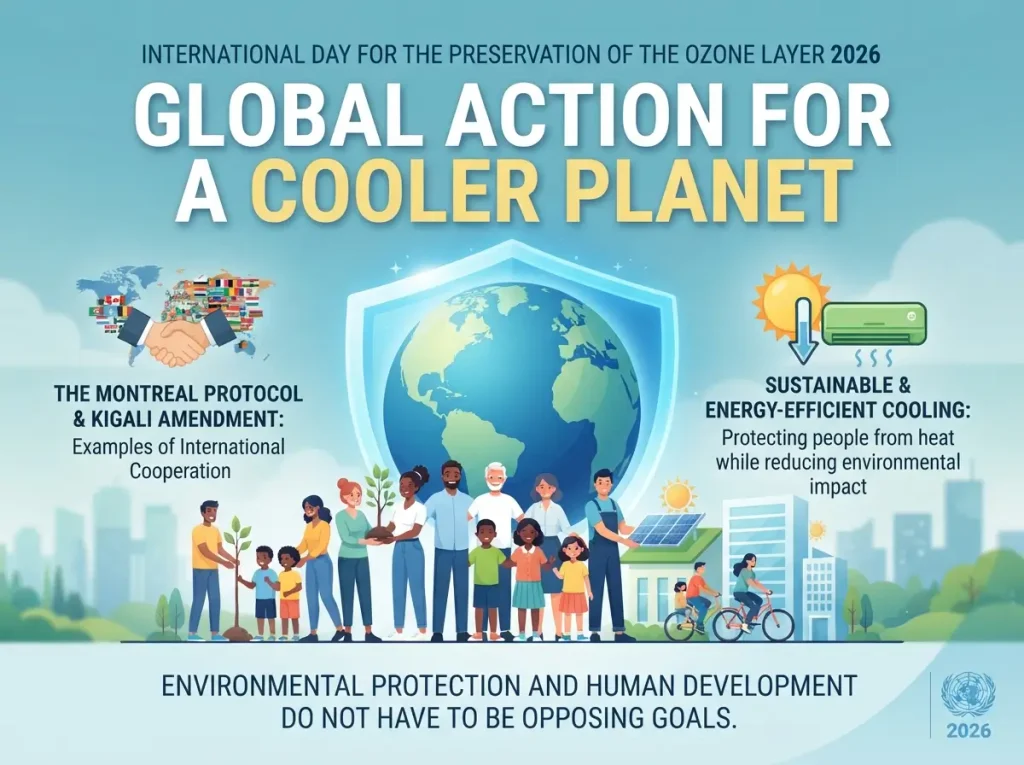
The 2026 theme for the International Day for the Preservation of the Ozone Layer is:
“Global action for a cooler planet”
The theme highlights the importance of the Montreal Protocol and the Kigali Amendment as examples of international cooperation.
It also draws attention to the growing need for cooling as temperatures rise. Sustainable and energy-efficient cooling can help protect people from extreme heat while reducing environmental impacts.
The theme carries an important message: environmental protection and human development do not have to be opposing goals.
With effective policies, innovation, responsible technology, and international cooperation, societies can improve access to cooling while also reducing environmental harm.
Why Is Preservation of the Ozone Layer Important?
The importance of ozone preservation can be understood through its effects on health, nature, and the environment.
1. Protecting Human Health
A weakened ozone layer allows more harmful UV radiation to reach Earth’s surface.
Greater UV exposure can increase risks associated with skin damage, eye problems, and other health concerns.
Protecting the ozone layer therefore contributes to long-term public health.
2. Protecting Plants and Agriculture
Plants can be affected by excessive ultraviolet radiation.
Because agriculture depends on healthy crops and functioning ecosystems, protecting atmospheric conditions is part of broader environmental protection.
3. Protecting Marine Ecosystems
Tiny marine organisms such as phytoplankton play an important role in aquatic food webs.
Changes affecting these organisms can have consequences throughout marine ecosystems.
4. Protecting Wildlife
Animals can also be affected by environmental changes associated with increased UV exposure.
Preserving the ozone layer therefore supports broader biodiversity protection.
5. Supporting Climate Action
Some substances that damage the ozone layer are also powerful greenhouse gases.
Furthermore, the Kigali Amendment demonstrates how improved cooling technologies can address both environmental and climate concerns.
How Does Ozone Depletion Happen?
Ozone depletion occurs when certain chemicals reach the stratosphere and participate in chemical reactions that destroy ozone molecules.
CFCs are a well-known example.
These substances can remain in the atmosphere for a long time. When they reach the stratosphere, ultraviolet radiation can break them apart and release chlorine or bromine.
Those elements can participate in chemical reactions that destroy ozone.
This scientific discovery helped motivate governments to create international controls on ozone-depleting substances.
The success of these measures provides an important environmental lesson: scientific evidence, effective policies, technological innovation, and international cooperation can work together to solve global problems.
Has the Ozone Layer Recovered?
The answer requires some nuance.
The ozone layer has shown significant signs of recovery because countries have dramatically reduced many ozone-depleting substances.
Scientific assessments have found that the Montreal Protocol has put the ozone layer on a recovery pathway. However, recovery takes time because many ozone-depleting chemicals remain in the atmosphere for decades.
Therefore, the goal is not to assume the problem has completely disappeared.
Instead, continued monitoring, compliance, scientific research, and responsible environmental policies remain essential.
The UNEP Ozone Secretariat reports that the Montreal Protocol has successfully met important objectives and that the ozone layer is on its way to recovery.
How Can We Help Protect the Ozone Layer?
Individuals cannot solve ozone depletion alone, but everyday choices can support wider environmental goals.
Simple Ozone Protection Checklist
- Choose energy-efficient appliances where possible.
- Maintain refrigeration and air-conditioning equipment properly.
- Dispose of old cooling equipment responsibly.
- Support environmentally responsible products and services.
- Avoid unnecessary waste of energy.
- Learn about ozone-friendly technologies.
- Share reliable environmental information.
- Support policies that promote sustainable cooling.
- Encourage schools to teach students about atmospheric science.
- Participate in environmental awareness activities.
The most important point is that individual action works best when combined with responsible business practices, effective laws, scientific research, and international cooperation.
Ways Schools Can Celebrate Ozone Day
Schools can turn International Ozone Day into a practical learning opportunity.
Ideas for Students and Teachers
- Create an ozone awareness poster
- Organize a classroom discussion
- Research the Montreal Protocol
- Hold an environmental quiz
- Create presentations about UV radiation
- Discuss climate-friendly cooling
- Write an essay about ozone protection
- Organize an environmental clean-up activity
- Create social media awareness graphics
- Invite an environmental professional for a talk
These activities can help students understand that global environmental challenges are connected to science, technology, health, economics, and everyday life.
Interesting Facts About Ozone Layer Preservation
Here are several facts worth remembering:
- September 16 is International Day for the Preservation of the Ozone Layer.
- The day commemorates the 1987 signing of the Montreal Protocol.
- The United Nations proclaimed the observance in 1994.
- The Montreal Protocol entered into force in 1989.
- The Vienna Convention and Montreal Protocol achieved universal participation in 2009.
- The Kigali Amendment was adopted in 2016.
- HFCs are greenhouse gases addressed through the Kigali Amendment.
- Ozone protection demonstrates the value of international scientific cooperation.
- The 2026 theme is “Global action for a cooler planet.”
What Is the Main Message of Ozone Day?
The central message of International Ozone Day is simple:
Protecting the atmosphere protects life.
The history of ozone protection shows that humanity can respond to a global environmental threat when science identifies the problem and countries work together on practical solutions.
However, success should not lead to complacency.
The continued Preservation of the Ozone Layer requires governments to meet environmental commitments, industries to adopt safer technologies, scientists to continue monitoring atmospheric conditions, and communities to remain informed.
Conclusion: Why Ozone Preservation Still Matters
The International Day for the Preservation of the Ozone Layer is more than an annual environmental observance. It is a reminder of what can happen when science, international cooperation, policy, and technological innovation work toward a shared goal.
The ozone layer provides essential protection from harmful ultraviolet radiation. Its preservation supports human health, ecosystems, agriculture, wildlife, and the wider environment.
The Montreal Protocol demonstrates that global environmental challenges can be addressed through coordinated action.
Meanwhile, the Kigali Amendment shows how ozone protection can also contribute to climate action and the development of more sustainable cooling technologies.
As we mark September 16, let us remember that protecting the atmosphere is a responsibility shared across generations.
Learn, share, act, and encourage others to protect our planet.
Frequently Asked Questions About Preservation of the Ozone Layer
1. What is the meaning of Preservation of the Ozone Layer?
Preservation of the Ozone Layer means protecting Earth’s stratospheric ozone from chemicals and activities that cause ozone depletion while supporting its long-term recovery.
2. When is International Day for the Preservation of the Ozone Layer?
International Day for the Preservation of the Ozone Layer is observed every year on September 16. The date commemorates the signing of the Montreal Protocol in 1987.
3. Why is the ozone layer important?
The ozone layer is important because it absorbs much of the Sun’s harmful ultraviolet radiation, helping protect humans, animals, plants, and ecosystems.
4. What is the Montreal Protocol?
The Montreal Protocol is an international environmental agreement adopted in 1987 to control and phase out substances that deplete the ozone layer.
5. What is the 2026 International Ozone Day theme?
The 2026 International Day for the Preservation of the Ozone Layer theme is “Global action for a cooler planet.” It highlights the Montreal Protocol, the Kigali Amendment, and the importance of sustainable cooling.
6. Can individuals help with ozone layer preservation?
Yes. Individuals can support ozone protection by making informed choices, using energy efficiently, maintaining cooling equipment properly, disposing of old appliances responsibly, and supporting environmental awareness.
7. Is the ozone layer recovering?
Yes. International action under the Montreal Protocol has significantly reduced ozone-depleting substances and placed the ozone layer on a recovery pathway. However, continued international cooperation and monitoring remain necessary.