Mental health affects how people think, feel, relate to others, handle stress, and make everyday decisions. Yet mental health concerns are still misunderstood or surrounded by stigma in many communities.
World Mental Health Day, observed every year on October 10, creates an opportunity to talk openly about mental health, promote understanding, and encourage better support and care.
But what does World Mental Health Day really mean, and how did it begin? Its history goes back to 1992, when the World Federation for Mental Health introduced the observance as a way to increase public education and advocacy.
Over the years, it has grown into a worldwide platform for awareness, conversation, and action.
What Is World Mental Health Day?

World Mental Health Day is an international observance held on October 10 each year. Its main purpose is to raise awareness of mental health issues around the world and encourage action to improve mental health and access to appropriate support.
The day brings together individuals, families, schools, health professionals, governments, community organizations, and other groups. They may organize educational activities, discussions, campaigns, community events, and other initiatives.
The observance also reminds people that mental health is an important part of overall well-being.
Looking after emotional and psychological well-being should not be treated as something that only matters when a person is experiencing a serious mental health condition.
When Is World Mental Health Day Celebrated?
World Mental Health Day is celebrated annually on October 10.
The date remains the same each year, although the campaign focus or theme may change. Different countries and organizations can adapt activities to address the mental health needs of their communities.
For example, activities may focus on:
- Mental health education
- Reducing stigma and discrimination
- Supporting young people
- Mental health at work
- Access to mental health services
- Human rights and dignity
- Mental health during emergencies
- Listening to people with lived experience
World Mental Health Day Meaning
The meaning of World Mental Health Day goes beyond simply recognizing a date on the calendar. It is a reminder that mental health deserves attention, understanding, resources, and respect.

Promoting Mental Health Awareness
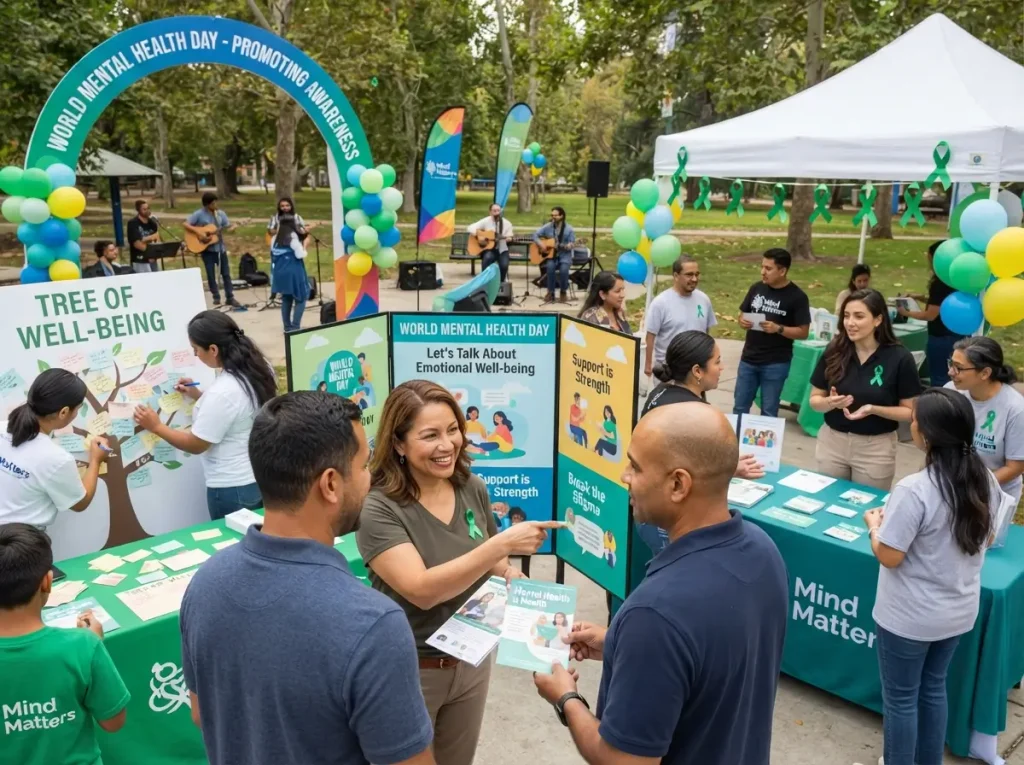
Many people have questions about mental health but may not know where to find reliable information. World Mental Health Day provides an opportunity to share simple, accurate information about emotional well-being and mental health conditions.
Awareness can help people recognize that experiencing emotional difficulties does not make someone weak or less valuable.
Reducing Mental Health Stigma

Stigma means negative attitudes, stereotypes, or unfair treatment toward a person or group. Mental health stigma can discourage people from talking about their experiences or seeking appropriate help.
World Mental Health Day encourages respectful conversations that replace myths and judgment with understanding.
Encouraging Access to Support
Awareness is important, but it is only one part of the solution. People also need access to suitable, affordable, and respectful mental health care.
The World Health Organization describes the day as an opportunity to discuss what more needs to be done to make mental health care a reality for people around the world.
Recognizing Mental Health as Part of Overall Health
Physical and mental health are closely connected. Stress, difficult life experiences, social isolation, and other challenges can affect a person’s overall well-being.
Recognizing mental health as an important part of health encourages people to take emotional well-being seriously.
History of World Mental Health Day
How Did World Mental Health Day Begin?
World Mental Health Day was first observed on October 10, 1992. It was started as an annual activity of the World Federation for Mental Health (WFMH), with Richard Hunter, then Deputy Secretary General, playing an important role in launching the initiative.
The original goal was to promote mental health advocacy and educate the public about relevant mental health issues. At first, the observance did not have a specific annual theme.
One of the early activities involved a global two-hour television broadcast. The program connected people in different countries and demonstrated the potential of an international mental health awareness campaign.
When Did World Mental Health Day Get Its First Theme?
A specific theme was introduced for the first time in 1994.
The theme was “Improving the Quality of Mental Health Services Throughout the World.” This helped give the annual observance a more focused message and encouraged organizations to develop activities around a shared subject.
Reports from different countries showed growing interest in the campaign. Within a few years, World Mental Health Day had become an important occasion for governments, organizations, professionals, and community groups to highlight mental health concerns.
How Has the Day Grown?
Since its beginnings in 1992, World Mental Health Day has developed into a global awareness movement.
Activities have included public education campaigns, conferences, community events, government proclamations, advocacy programs, and discussions involving people with lived experience of mental health challenges.
The World Federation for Mental Health has reported that the observance became active in many countries, while WHO continues to use October 10 as an important global opportunity to raise awareness and mobilize support for mental health.
World Mental Health Day Themes Over the Years
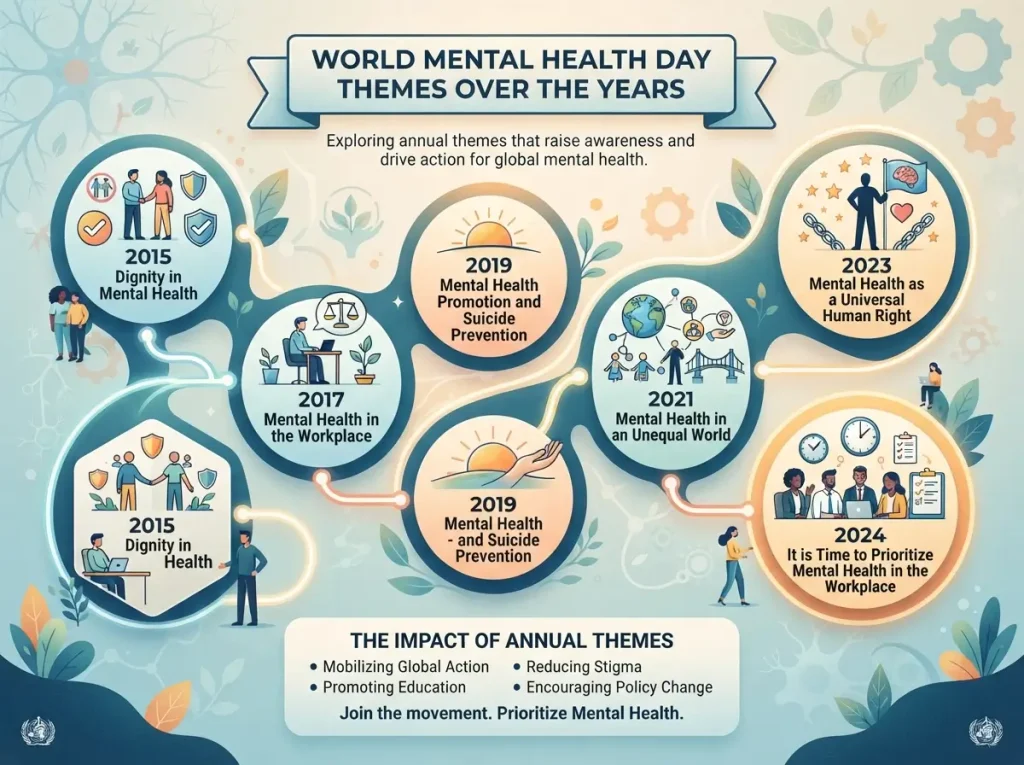
The annual theme gives organizations and communities a particular issue to explore.
Some recent themes include:
| Year | Theme |
|---|---|
| 2019 | Focus on Suicide Prevention |
| 2020 | Move for Mental Health: Let’s Invest |
| 2021 | Mental Health Care for All: Let’s Make It a Reality |
| 2022 | Make Mental Health & Well-Being for All a Global Priority |
| 2023 | Mental Health Is a Universal Human Right |
| 2024 | Mental Health at Work |
| 2025 | Mental Health in Humanitarian Emergencies |
| 2026 | Lived Experiences Heard: Real Voices, Real Change |
These themes show how the focus of mental health advocacy has developed over time.
They have addressed access to care, investment, human rights, workplaces, emergencies, and the importance of listening to people who have directly experienced mental health challenges.
Why Is World Mental Health Day Important?
1. It Encourages Open Conversations
Mental health can be difficult to discuss. Some people fear judgment, misunderstanding, or discrimination.
World Mental Health Day creates a natural opportunity for schools, families, workplaces, communities, and organizations to start respectful conversations.
2. It Challenges Harmful Myths
Incorrect information can make mental health problems harder to understand. Public education can help people distinguish facts from stereotypes.
For example, needing mental health support does not mean someone is weak. Seeking appropriate help can be a positive step toward better well-being.
3. It Highlights the Need for Better Services
Awareness cannot solve every mental health challenge. Communities also need trained professionals, appropriate services, supportive policies, and accessible care.
World Mental Health Day helps keep these issues visible in public discussions.
4. It Promotes Dignity and Human Rights
People experiencing mental health conditions should be treated with dignity and respect. WHO emphasizes that mental health is connected to fundamental rights, including access to quality care and inclusion in the community.
5. It Gives Communities a Chance to Act
The day can turn awareness into practical action. A school might organize a well-being discussion, while a community organization could provide mental health education or information about available support.
Small actions can help make mental health conversations more normal and supportive.
How Can People Observe World Mental Health Day?
There is no single correct way to observe the day. Activities can be adapted to the needs, culture, and resources of each community.
At Home
Families can:
- Talk openly about emotional well-being.
- Encourage respectful listening.
- Learn about common mental health concerns.
- Check in with family members.
- Challenge negative stereotypes about mental health.
At School
Schools can organize:
- Age-appropriate mental health education
- Classroom discussions
- Well-being activities
- Posters and awareness displays
- Talks with qualified professionals
- Activities that encourage kindness and inclusion
Mental health education should be presented in a safe and age-appropriate way, without pressuring students to share private experiences publicly.
In the Workplace
Organizations can use the day to discuss healthy workplace practices, respectful communication, supportive leadership, and ways employees can access appropriate assistance.
WHO has highlighted workplace mental health as an important area of international discussion.
In the Community
Community groups can arrange public talks, educational campaigns, support information sessions, awareness walks, or discussions with mental health professionals.
The most useful activities are those that provide reliable information and encourage constructive action rather than simply creating awareness for one day.
Simple Ways to Support Mental Health Awareness
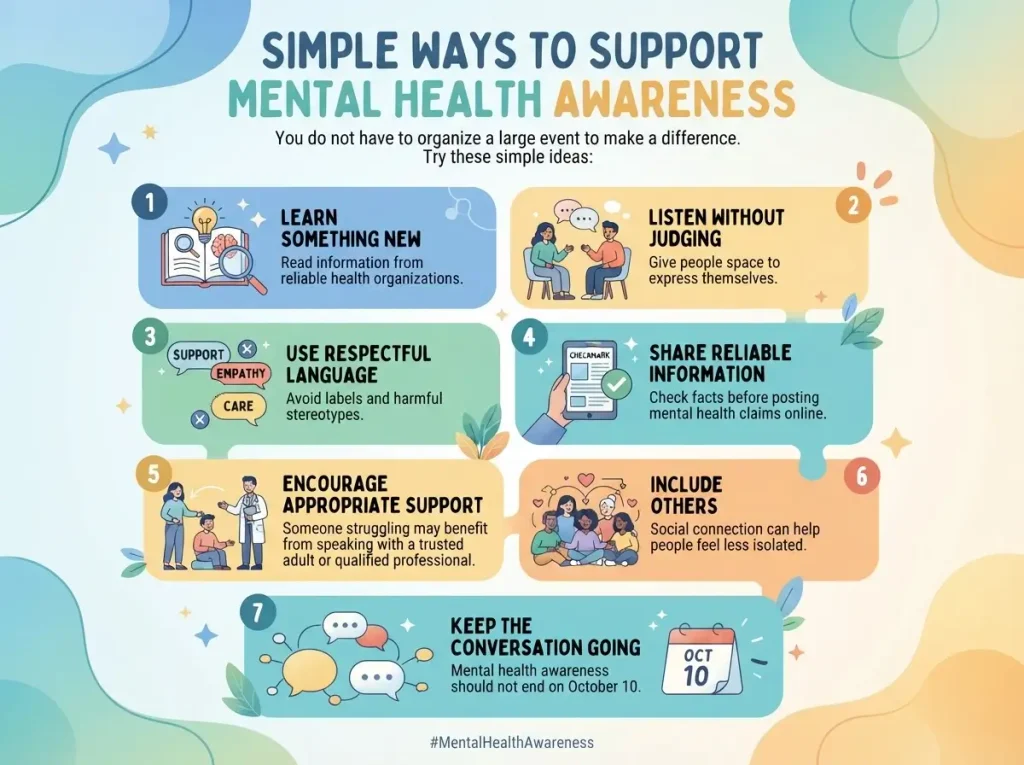
You do not have to organize a large event to make a difference.
Try these simple ideas:
- Learn something new: Read information from reliable health organizations.
- Listen without judging: Give people space to express themselves.
- Use respectful language: Avoid labels and harmful stereotypes.
- Share reliable information: Check facts before posting mental health claims online.
- Encourage appropriate support: Someone struggling may benefit from speaking with a trusted adult or qualified professional.
- Include others: Social connection can help people feel less isolated.
- Keep the conversation going: Mental health awareness should not end on October 10.
World Mental Health Day in Kenya and Around the World
World Mental Health Day can be observed differently from one country to another. Local organizations may focus on issues that are especially relevant to their communities.
The World Federation for Mental Health has documented international activities in countries including Kenya. In its historical reports, Kenya’s mental health authorities were involved in national awareness activities, including events held in different parts of the country.
This local approach is important because mental health needs are influenced by culture, community resources, economic conditions, social relationships, and access to services.
What Can We Learn From World Mental Health Day?
The biggest lesson is that mental health deserves attention throughout the year. October 10 can start a conversation, but meaningful progress requires continued education, compassion, appropriate services, and action.
It also requires listening to people with lived experience rather than making assumptions about what they need.
Another important lesson is that mental health is not only an individual responsibility.
Families, schools, workplaces, communities, health systems, and governments all have roles to play in creating environments where people can seek support without unnecessary shame or discrimination.
Conclusion
World Mental Health Day is observed every October 10 to raise awareness, reduce stigma, and encourage stronger support for mental health around the world.
It began in 1992 through the World Federation for Mental Health and gradually developed into a major international observance. Its history shows how a focused awareness initiative can grow into a global platform for education and advocacy.
Whether through a school discussion, family conversation, workplace activity, or community campaign, October 10 provides an opportunity to learn, listen, and take mental health seriously. Most importantly, the message should continue beyond one day.
Frequently Asked Questions About World Mental Health Day
1. What is the meaning of World Mental Health Day?
World Mental Health Day is an annual observance that raises awareness of mental health issues and encourages action to improve mental health support and care worldwide.
2. When is World Mental Health Day celebrated?
World Mental Health Day is celebrated every year on October 10.
3. When did World Mental Health Day start?
The first World Mental Health Day was observed on October 10, 1992, as an initiative of the World Federation for Mental Health.
4. Who started World Mental Health Day?
The World Federation for Mental Health started World Mental Health Day. Richard Hunter, who was then the organization’s Deputy Secretary General, played an important role in launching the initiative.
5. What was the first World Mental Health Day theme?
The first specific theme was introduced in 1994. It was “Improving the Quality of Mental Health Services Throughout the World.”
6. Why is World Mental Health Day important?
It helps increase public understanding, challenge stigma, promote dignity, and encourage stronger mental health services and support.
7. How can I celebrate World Mental Health Day?
You can learn about mental health, participate in an awareness activity, have a respectful conversation, share reliable information, or support a community mental health initiative.
8. Is World Mental Health Day only about mental illness?
No. It also promotes mental well-being, awareness, prevention, understanding, human rights, supportive communities, and better access to appropriate care.