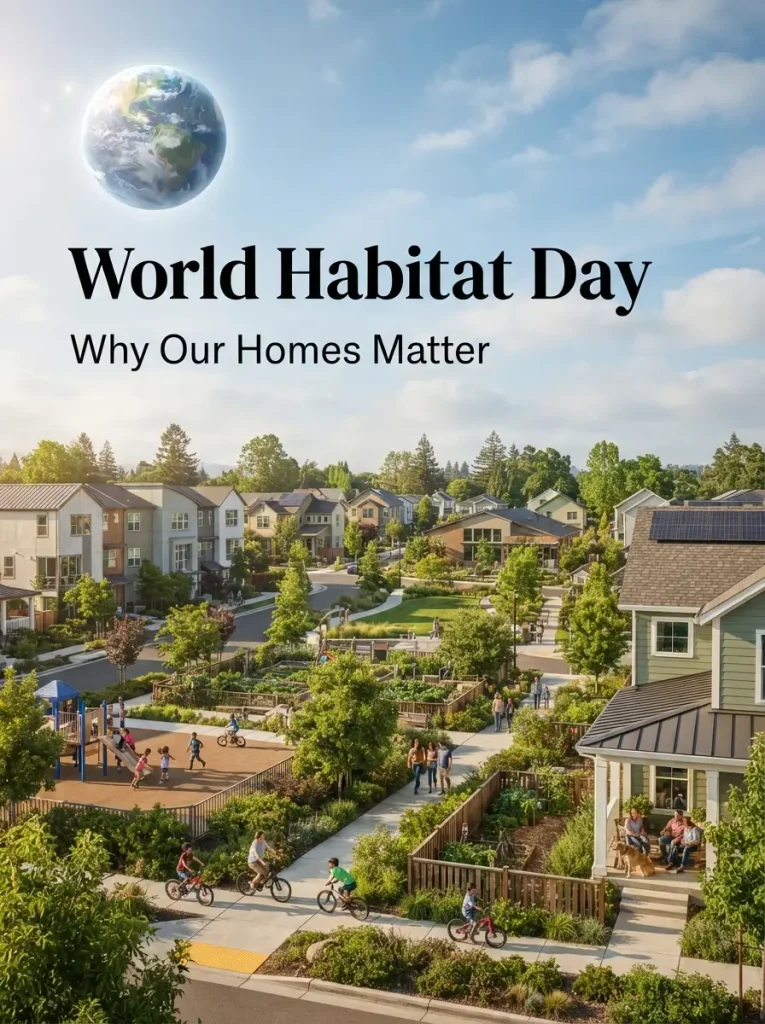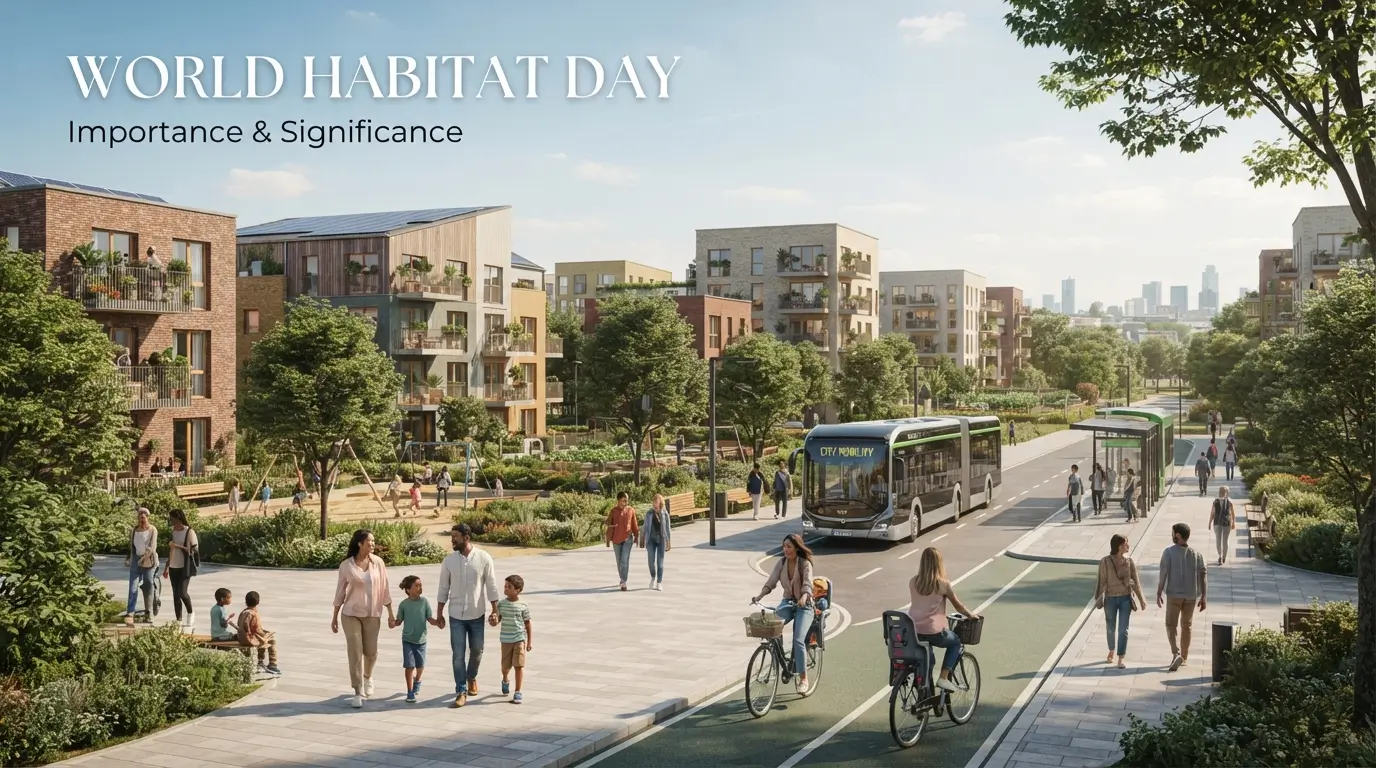
World Habitat Day is an important global observance that reminds us that everyone deserves a safe, healthy, and suitable place to live.
A home is more than a roof and four walls. It provides security, privacy, dignity, and a foundation for family and community life.
Observed every year on the first Monday of October, World Habitat Day also draws attention to the challenges faced by people living in inadequate housing, overcrowded settlements, and unsafe communities.
It encourages governments, organizations, communities, and individuals to think about how cities and towns can become more inclusive and sustainable.
This article explains the World Habitat Day importance and significance, its history, major themes, and practical ways people can support better housing and communities.
What Is World Habitat Day?
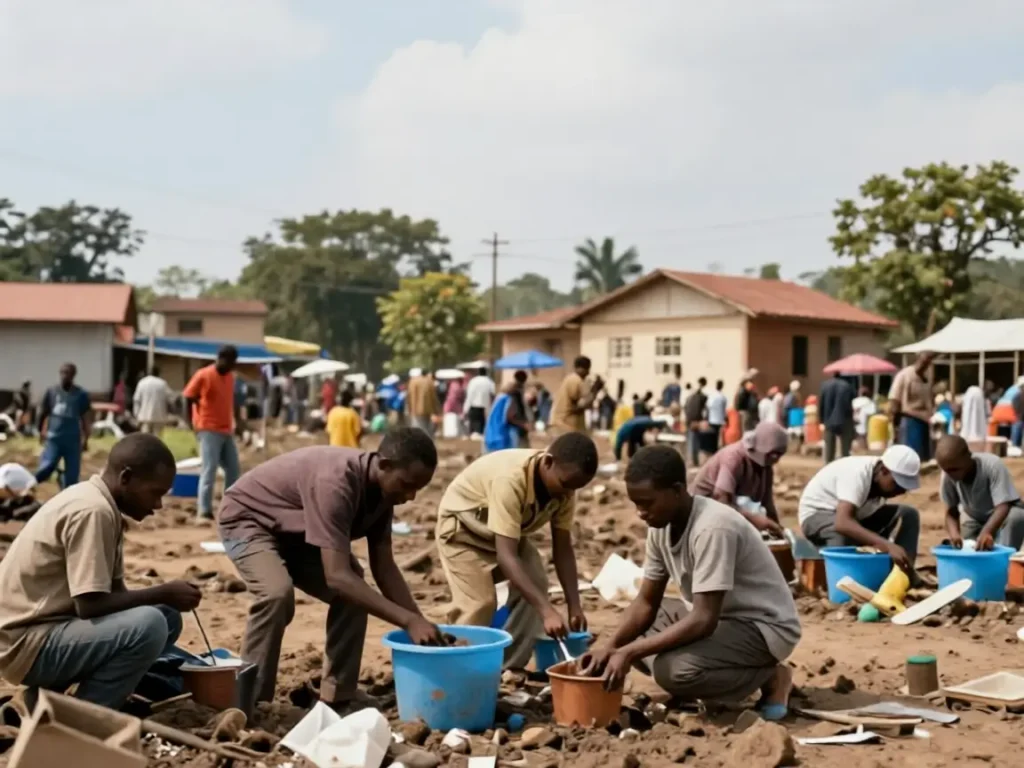
World Habitat Day is a United Nations observance that focuses on the right of people to have adequate housing and live in safe, sustainable communities.
The day was established by the United Nations in 1985 and was first observed in 1986. It is marked annually on the first Monday of October.
The observance encourages the world to consider the condition of human settlements and the future of cities and towns. It also highlights issues such as homelessness, poverty, housing shortages, poor sanitation, urban growth, and access to basic services.
Rather than focusing only on buildings, World Habitat Day considers the wider environment in which people live.
A good habitat should provide access to essential services, transportation, education, healthcare, clean water, sanitation, green spaces, and opportunities for work.

Why Is World Habitat Day Important?
The importance of World Habitat Day comes from a simple idea: where people live has a major effect on their quality of life.
Millions of people around the world face housing challenges. Some live in overcrowded homes, informal settlements, unsafe buildings, or areas without reliable water and sanitation.
World Habitat Day helps bring these problems into public discussion.
1. It Promotes the Right to Adequate Housing
Everyone needs a safe place to live. Adequate housing provides protection from weather, insecurity, and other dangers.
However, having a house does not always mean having adequate housing. A suitable home should also provide reasonable safety, privacy, sanitation, and access to essential services.
World Habitat Day encourages societies to consider housing as an important part of human well-being and dignity.
2. It Raises Awareness of Homelessness
Homelessness remains a serious challenge in many parts of the world.
People can become homeless for many reasons, including poverty, unemployment, displacement, conflict, natural disasters, family problems, and high housing costs.
World Habitat Day provides an opportunity to discuss the causes of homelessness and explore solutions that help people find stable and affordable homes.
3. It Highlights Poor Housing Conditions
Not everyone who has a home lives in safe or healthy conditions.
Some families live in houses that lack clean water, proper toilets, electricity, ventilation, or adequate space. Others may live in buildings that are poorly constructed or located in areas vulnerable to flooding, landslides, or other hazards.
The day reminds decision-makers that housing policies should consider both the availability and quality of homes.
4. It Encourages Sustainable Urban Development
Cities continue to grow as people move to urban areas in search of education, employment, and other opportunities.
Rapid growth can place pressure on housing, roads, public transport, water supplies, waste management, and other services.
World Habitat Day encourages better urban planning so that cities can grow in an organized and sustainable way.
The Significance of World Habitat Day
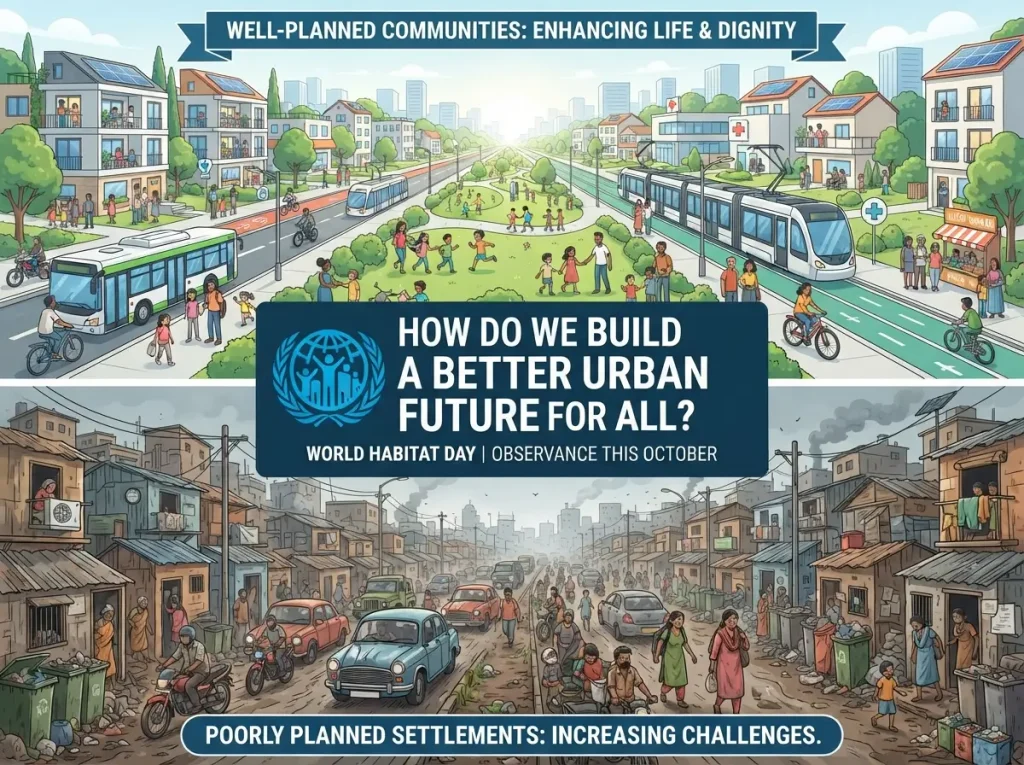
The significance of World Habitat Day goes beyond celebrating homes. It encourages people to think about the relationship between housing, communities, development, and human dignity.
A well-planned community can make everyday life easier. People can have better access to schools, healthcare, markets, workplaces, public transport, parks, and other important services.
Poorly planned settlements, on the other hand, can increase problems such as overcrowding, traffic, pollution, poor sanitation, and limited access to essential services.
World Habitat Day therefore encourages a broader question:
What kind of communities do we want future generations to live in?
History of World Habitat Day
The United Nations designated the first Monday of October as World Habitat Day in 1985. The first observance took place in 1986.
The observance was created to encourage reflection on the state of human settlements and the basic right to adequate housing.
Since then, World Habitat Day has been observed in different countries through conferences, public discussions, educational activities, campaigns, community projects, and other events.
Each year, the observance focuses on a particular theme connected to housing, cities, human settlements, or urban development. These themes help draw attention to emerging challenges and possible solutions.
World Habitat Day and Sustainable Cities
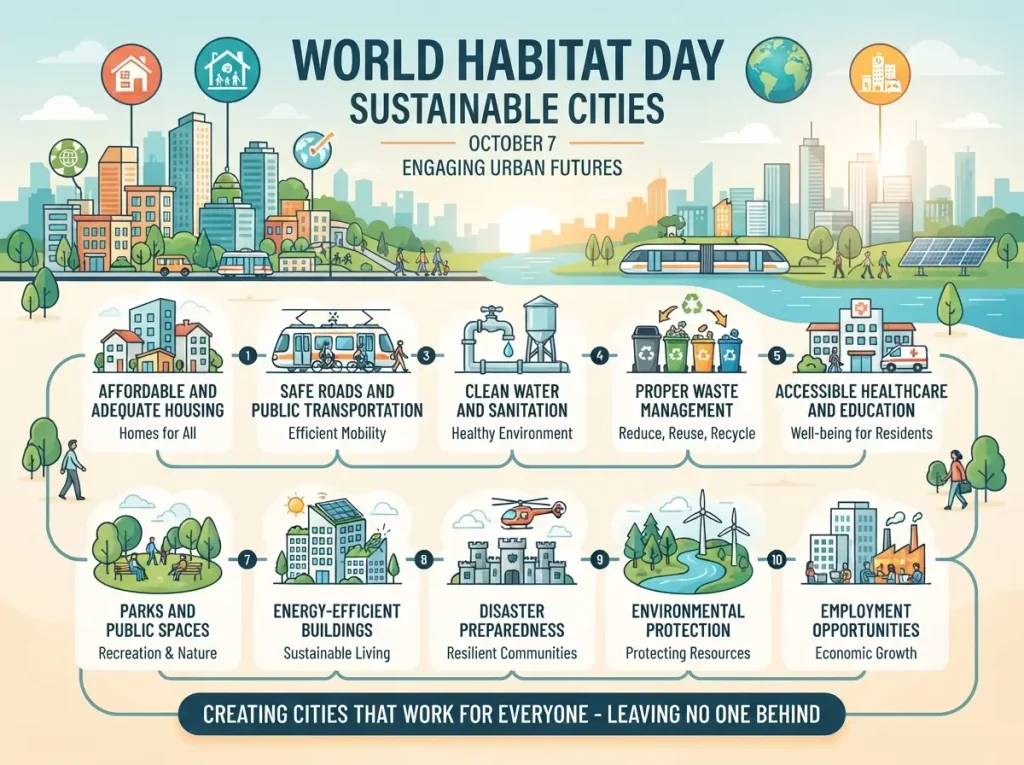
One major connection between World Habitat Day and sustainable development is the need to create cities that work for everyone.
A sustainable city should consider the needs of people while also protecting natural resources.
Important areas include:
- Affordable and adequate housing
- Safe roads and public transportation
- Clean water and sanitation
- Proper waste management
- Accessible healthcare and education
- Parks and public spaces
- Energy-efficient buildings
- Disaster preparedness
- Environmental protection
- Employment opportunities
These factors are connected. For example, building affordable homes far away from workplaces may create additional transportation costs for families.
Good urban planning considers housing together with transportation, employment, services, and the environment.
World Habitat Day and Affordable Housing
Affordable housing is an important part of the discussion surrounding human settlements.
When housing costs consume too much of a family’s income, people may have less money available for food, education, healthcare, transportation, and other basic needs.
Affordable housing does not simply mean constructing inexpensive buildings. It also involves considering location, transportation, utilities, maintenance costs, safety, and access to services.
What Can Help Improve Housing Affordability?
Different communities may use different approaches, such as:
- Supporting affordable housing development
- Improving existing housing
- Providing basic infrastructure in underserved areas
- Encouraging responsible land-use planning
- Supporting housing programs for vulnerable families
- Improving public transportation
- Strengthening building standards
- Working with communities when planning new developments
There is no single solution that works everywhere. Local conditions, population growth, land availability, and economic circumstances all matter.
The Connection Between Housing and Health
Housing conditions can affect physical and emotional well-being.
Poor ventilation, overcrowding, unsafe structures, inadequate sanitation, and limited access to clean water can create health risks.
A healthy home should provide reasonable protection from environmental hazards and support basic hygiene.
This is why housing policy is also closely connected to public health.
Improving homes and neighborhoods can contribute to healthier communities when it is combined with access to healthcare, clean water, sanitation, nutritious food, and other essential services.
The Role of Communities on World Habitat Day
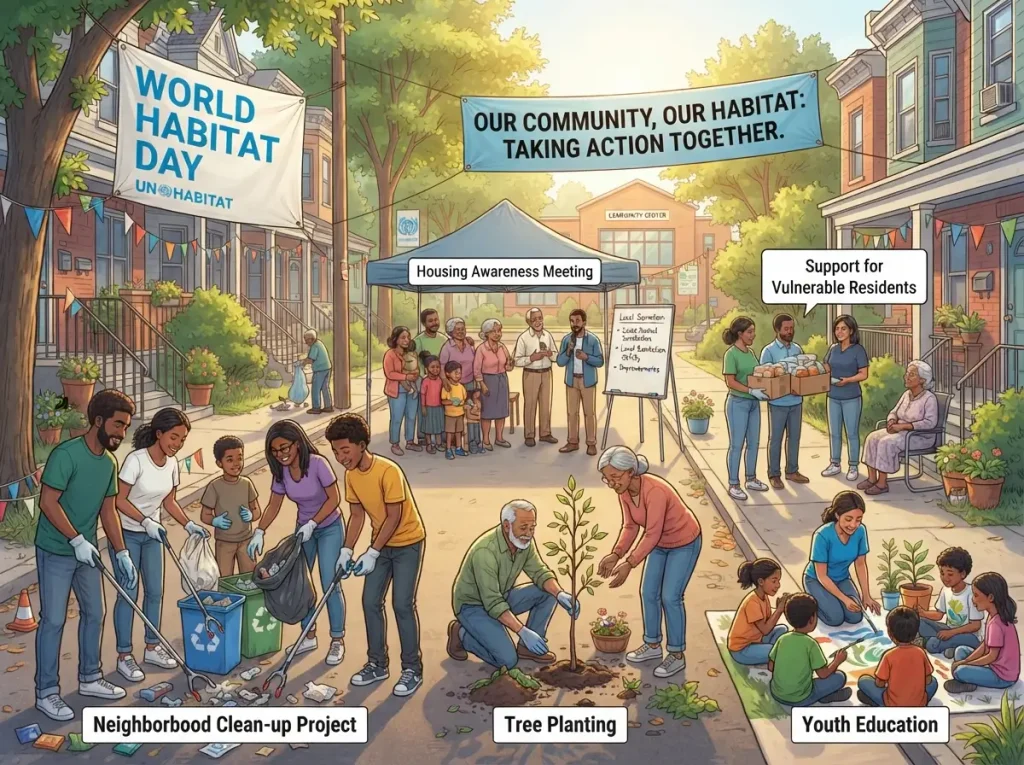
World Habitat Day is not only the responsibility of governments and international organizations. Communities and individuals can also contribute.
Local communities often understand their housing challenges better than anyone else. Their experiences can help shape practical solutions.
Community activities can include:
- Neighborhood clean-up projects
Residents can work together to improve public spaces and reduce waste. - Tree planting
Planting appropriate trees can contribute to greener and more attractive neighborhoods. - Housing awareness meetings
Communities can discuss sanitation, safety, housing rights, and local development concerns. - Support for vulnerable residents
Community groups can assist older people, families facing hardship, and people experiencing homelessness. - Youth education
Young people can learn about sustainable cities, environmental responsibility, and responsible community development.
How Schools Can Celebrate World Habitat Day
Schools can use World Habitat Day as an opportunity to teach students about housing and responsible communities.
Teachers can organize activities such as:
- Essay-writing competitions
- Drawing and poster competitions
- Classroom discussions
- Tree-planting activities
- Community clean-up exercises
- Debates about sustainable cities
- Research projects about local housing challenges
- Lessons about water, sanitation, and environmental protection
For example, students could be asked to design their ideal sustainable neighborhood. Their designs could include homes, schools, roads, parks, waste-management areas, water facilities, and public transportation.
Such activities make the subject practical and easier to understand.
How Individuals Can Support Better Habitats
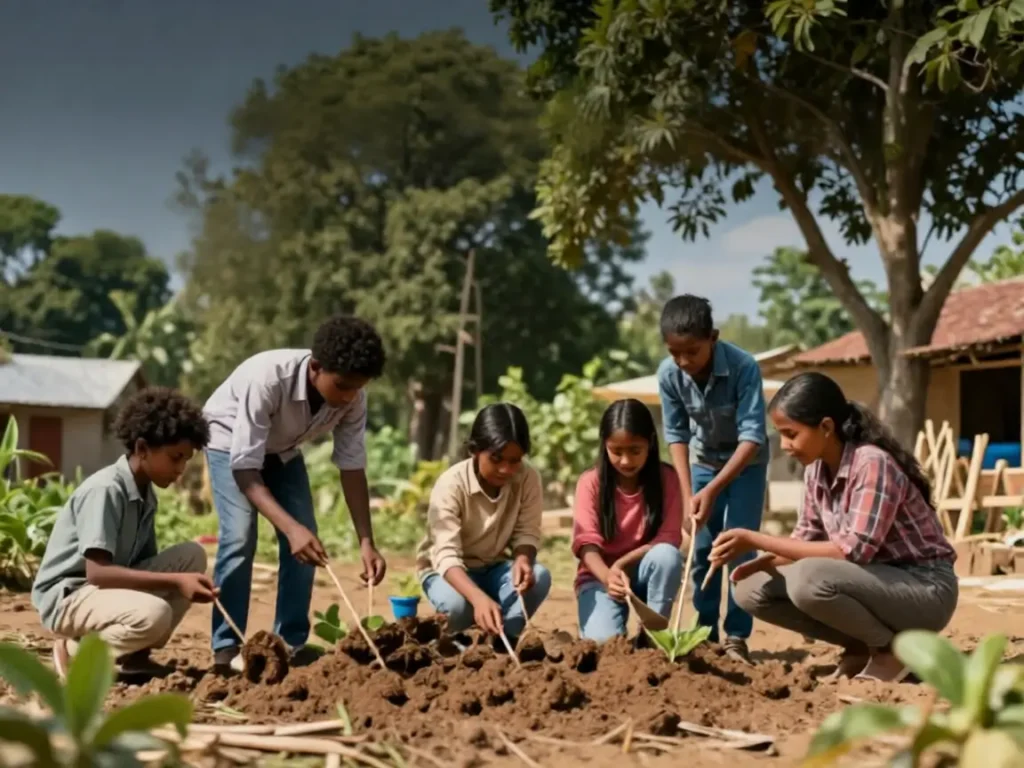
You do not need to be a city planner or housing expert to support the goals of World Habitat Day.
Simple actions can make a difference.
Keep Your Surroundings Clean
- Proper waste disposal helps protect neighborhoods from pollution, pests, and blocked drainage systems.
Protect Shared Spaces
- Parks, roadsides, playgrounds, community gardens, and other public areas belong to the wider community. Keeping them clean and safe benefits everyone.
Use Resources Responsibly
- Saving water and electricity can reduce pressure on natural resources and household expenses.
Support Community Projects
- Participating in neighborhood improvement activities can strengthen cooperation and improve local surroundings.
Learn About Local Housing Issues
- Understanding challenges in your own community is a useful first step toward meaningful action.
World Habitat Day: Key Issues at a Glance
| Issue | Why It Matters |
|---|---|
| Affordable housing | Helps families meet other basic needs |
| Homelessness | Can affect safety, health, education, and employment |
| Clean water | Essential for health and hygiene |
| Sanitation | Helps prevent disease and environmental pollution |
| Urban planning | Helps cities grow in an organized way |
| Public transportation | Connects people with jobs and essential services |
| Green spaces | Support healthier and more pleasant communities |
| Disaster resilience | Helps communities prepare for hazards |
| Sustainable buildings | Can reduce resource use and environmental impact |
| Community participation | Helps ensure local needs are considered |
Why World Habitat Day Matters for the Future
The future of housing is closely connected to population growth, climate change, economic development, technology, and urbanization.
As towns and cities expand, planners and communities will need to consider how to provide housing while protecting the environment and ensuring access to essential services.
Climate-related risks also make resilient housing increasingly important in many areas. Homes and infrastructure may need to be designed with local environmental risks in mind.
World Habitat Day provides an opportunity to consider these challenges before they become even more difficult to address.
Conclusion
The importance and significance of World Habitat Day lie in its reminder that a suitable home and healthy community are fundamental to human well-being.
Housing affects safety, health, dignity, education, employment, and family life. World Habitat Day also encourages us to look beyond individual houses and consider the communities surrounding them.
Clean water, sanitation, transportation, green spaces, safe infrastructure, and thoughtful urban planning all contribute to better habitats.
By learning about housing challenges and supporting practical community improvements, governments, organizations, schools, and individuals can help create safer, more inclusive, and sustainable places to live.
Frequently Asked Questions About World Habitat Day
1. When is World Habitat Day celebrated?
World Habitat Day is observed every year on the first Monday of October.
2. Why is World Habitat Day celebrated?
It is celebrated to raise awareness about adequate housing, human settlements, homelessness, sustainable cities, and the need for safe and inclusive communities.
3. Who started World Habitat Day?
The United Nations designated the first Monday of October as World Habitat Day in 1985. The first observance was held in 1986.
4. What is the main purpose of World Habitat Day?
Its main purpose is to encourage people and decision-makers to consider the condition of human settlements and promote better housing and sustainable communities.
5. What does adequate housing mean?
Adequate housing generally means more than simply having a roof. It includes factors such as safety, security, privacy, sanitation, basic services, affordability, and a suitable living environment.
6. How can schools celebrate World Habitat Day?
Schools can organize debates, essays, poster competitions, clean-up activities, tree planting, research projects, and lessons about sustainable communities.
7. How can individuals observe World Habitat Day?
Individuals can learn about local housing issues, keep their surroundings clean, participate in community projects, conserve resources, and support efforts that improve local living conditions.
8. What is the connection between World Habitat Day and sustainable development?
World Habitat Day highlights the importance of creating communities where people can access suitable housing, essential services, transportation, employment, and healthy environments while using resources responsibly.