Have you ever stood in a massive line at an amusement park or sat in bumper-to-bumper traffic and wondered how many people actually live on this planet?
I think about this constantly, especially when I try to navigate the holiday rush at the local supermarket. Today, we share our planetary home with more neighbors than at any other point in human history.
World Population Day arrives every July 11, providing the perfect excuse for us to examine global demographics.
Let’s unpack the most surprising World Population Day facts and numbers that define our crowded planet. You will quickly see that our global family portrait changes every single minute.
We need to understand these shifts if we want to comprehend the future of our global economy, environment, and society. Grab a cup of coffee and get ready for a wild statistical ride.
Why July 11 Matters: The Origin Story
Do you think global leaders just picked July 11 out of a calendar hat? The history behind this day involves a massive demographic milestone that caught the attention of the entire world.
The Day of Five Billion
Back in the late 1980s, the global population crossed a numerical threshold that both terrified and fascinated demographers.
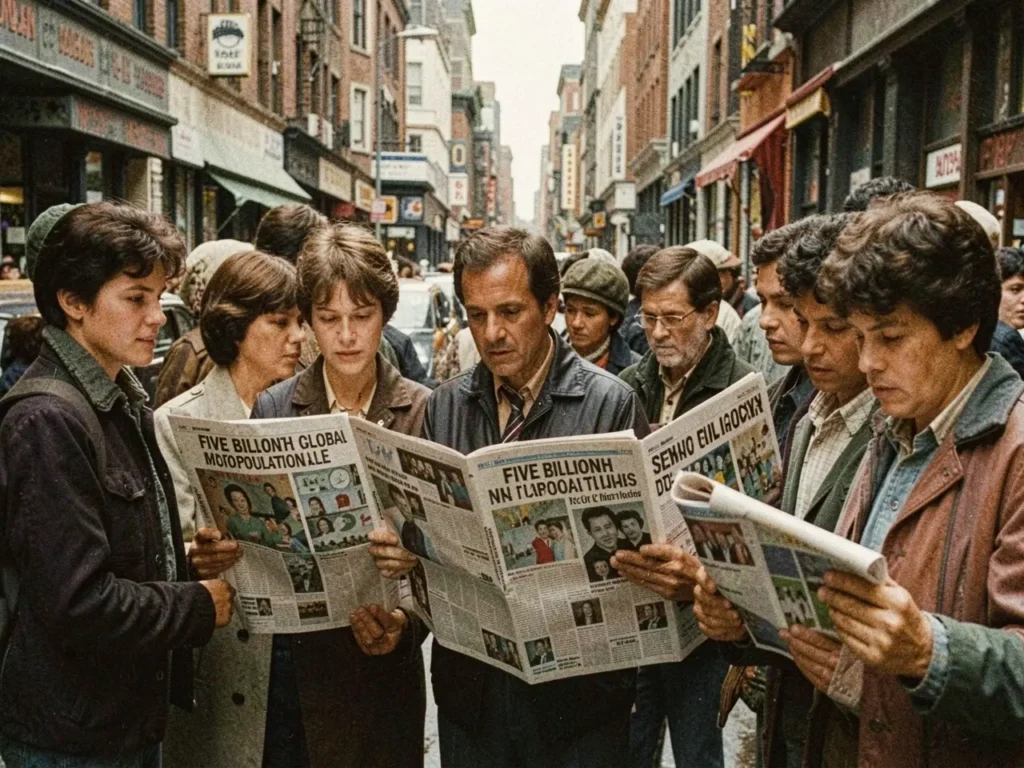
On July 11, 1987, the planet welcomed its five-billionth living resident. The sudden surge in numbers captured the front pages of newspapers worldwide.
This historic moment triggered intense global discussions about sustainable development, resource consumption, and planetary limits. Thinkers suddenly realized that human growth accelerated at an unprecedented pace.
The United Nations Steps In
The incredible public engagement surrounding the five-billion milestone convinced international bodies to establish a permanent day for awareness.
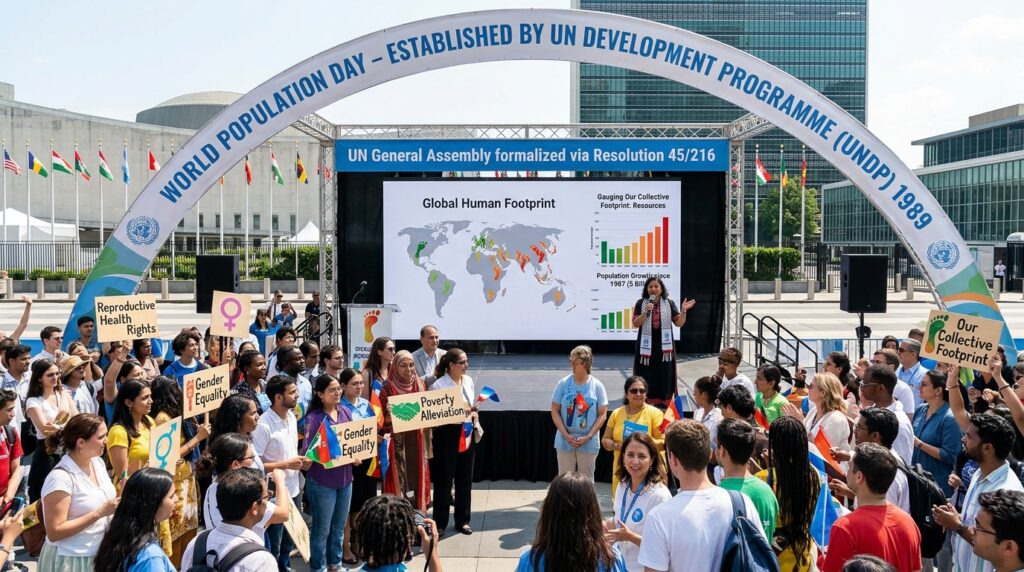
The Governing Council of the United Nations Development Programme (UNDP) established World Population Day in 1989.
One year later, in December 1990, the United Nations General Assembly formalized the event through Resolution 45/216.
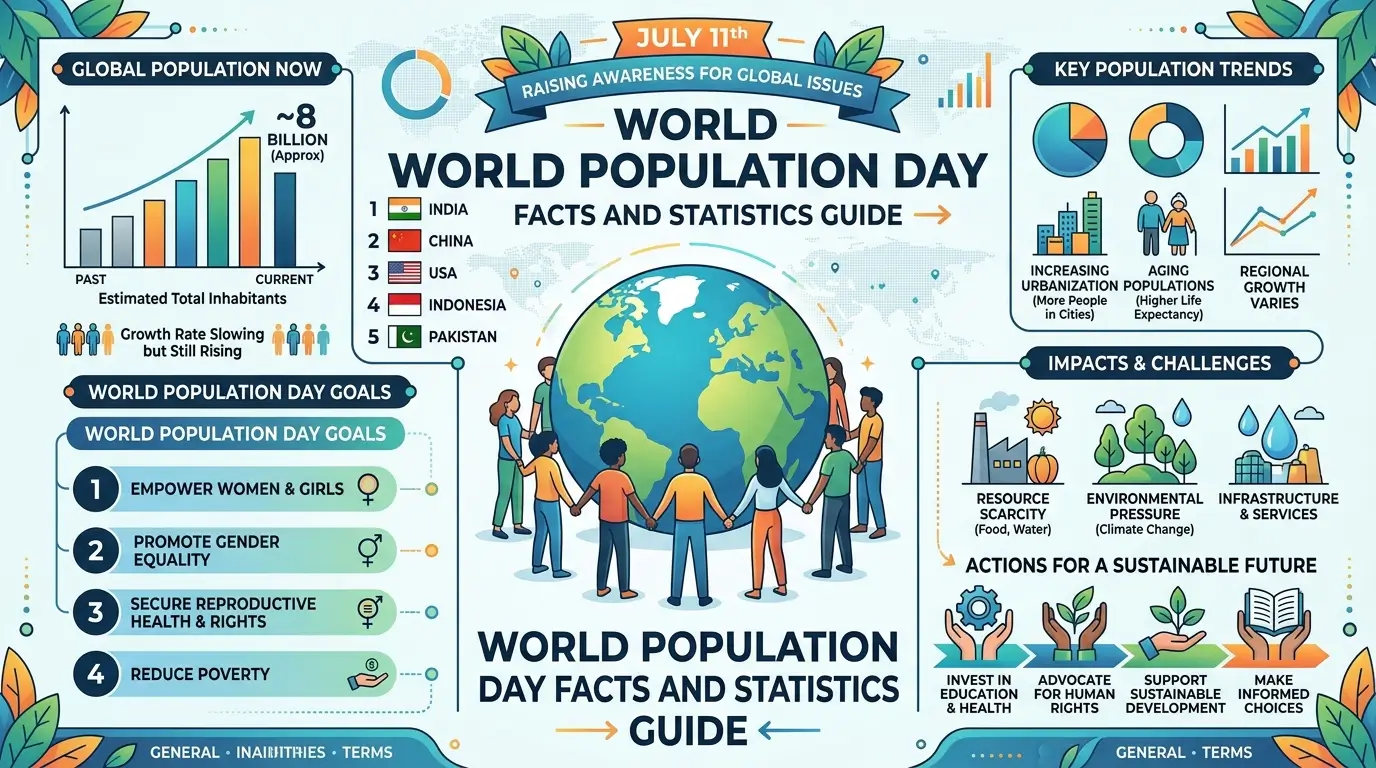
They wanted to use this annual checkpoint to focus public attention on reproductive health rights, gender equality, and poverty alleviation. Today, we still use this mid-summer date to gauge our collective footprint on Earth.
Looking Back at the First Four Billions
We often forget how quickly our global family grew over the last two centuries. If you look at the historical timeline, the acceleration will absolutely shock you.
Humanity needed thousands of generations to secure our first 1 billion people in 1804. We then waited more than a century to add the next layer, hitting 2 billion in 1927.
The growth engine really kicked into high gear after that point. We crossed the 3 billion mark in 1960, taking only 33 years to add another billion neighbors.
The timeline shrank even further when we reached 4 billion in 1974, requiring a mere 14 years.
This historical context shows that our current numbers do not represent a standard steady line. Instead, humanity experienced a massive vertical rocket ride over the last century.
Mind-Blowing Global Numbers Right Now
Let’s look closely at the real-time statistics because they will absolutely warp your sense of scale. We have moved incredibly far past that five-billion milestone from 1987.
Tracking the 8.3 Billion Milestone
As we move through 2026, the global population stands at approximately 8.3 billion people. Let that number sink into your mind for a second.
Humanity only crossed the 8 billion threshold in November of 2022. We added roughly 300 million people to the global tally in less than four years.
We multiplied our planetary headcount more than eightfold in just over two centuries.
The Daily Growth Engine

You might hear people say that the global population growth rate is slowing down, and they speak the truth from a percentage standpoint. However, the absolute volume of new humans remains massive.
The planet gains between 200,000 and 220,000 people every single day, when you subtract deaths from births. Every 24 hours, our global neighborhood adds the equivalent population of a mid-sized city.
FYI, this means we add a whole new United States worth of people to the world roughly every four years.
Here is a breakdown of our rapid expansion rate:
- Net daily increase: Around 210,000 new faces.
- Net hourly increase: Roughly 8,750 people joining the party.
- Net increase per minute: About 146 new humans.
- Annual addition: Approximately 75 to 80 million people.

The Global Population Leaderboard
Where do all these billions of people actually live? The geographic distribution of our species looks incredibly unequal when you examine individual nations.
India and China: The Demographic Heavyweights
For centuries, China held the undisputed crown as the most populous country on Earth. However, we recently witnessed a historic changing of the guard.
India now leads the global pack as the most populous nation, housing over 1.42 billion citizens. China occupies the second spot, maintaining a population of roughly 1.40 billion.
Combined, these two neighboring Asian titans hold more than a third of the entire human race. If you gathered every resident of India and China in one place, you would need an unfathomable amount of stadium seating.
The Rest of the Top Five
A massive drop-off occurs when you look below the top two positions. The remaining countries in the global top five seem small by comparison, even though they contain massive numbers of people.
- United States: The U.S. firmly holds the third position with an estimated 342 million residents.
- Indonesia: This sprawling archipelago nation takes fourth place, boasting roughly 285 million people.
- Pakistan: Pakistan secures the fifth spot on the leaderboard with a population exceeding 261 million.
Demographic Shifts: Boom vs. Bust
This is the section where World Population Day statistics get genuinely fascinating. We do not see a uniform tide lifting all boats. Instead, the world is splitting into two completely opposite demographic realities.
The Graying Giants Facing Population Busts

Many wealthy, industrialized nations currently face a unique crisis: their population growth has stalled completely.
Countries like Japan, South Korea, and Italy are dealing with a severe demographic phenomenon that experts call the “silver tsunami”. An enormous percentage of their citizens now fits into the 65-and-older age category.
South Korea consistently breaks its own records for the lowest fertility rate in the world, dropping way below the 2.1 replacement level.
These governments must urgently redesign their societies to support millions of elderly retirees with a shrinking pool of young workers.
Sub-Saharan Africa’s Explosive Population Boom
While East Asia and Europe cool down dramatically, Sub-Saharan Africa keeps its demographic engine roaring at maximum capacity.
Many nations across this vibrant region maintain average fertility rates well above 4 children per woman. Nigeria, for instance, holds the sixth spot globally with over 250 million people and shows no signs of slowing down.
UN demographers project that African countries will drive more than half of all global population growth between now and 2050. This surge offers a massive economic opportunity, but it also strains local schools, hospitals, and job markets.
The Rise of the Megacities
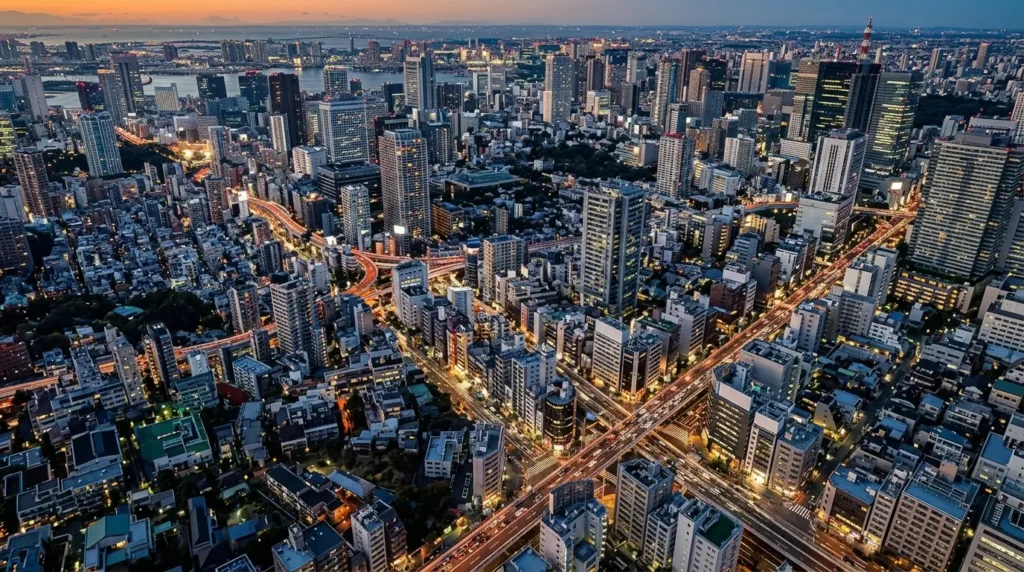
Where do these billions of people pack themselves? They do not spread out evenly across the countryside. Instead, they crowd into massive concrete jungles that we call megacities.
A megacity holds a population of 10 million people or more. Decades ago, only a few iconic places like Tokyo and New York claimed this prestigious title. Today, the world counts dozens of megacities across every single continent.
This urban concentration creates entirely new challenges for civil engineers and city planners.
Tokyo still leads the global urban pack, housing over 37 million residents within its metropolitan area. Delhi follows closely in second place, while cities like Shanghai,
São Paulo, and Dhaka grow larger by the minute. Living in these hyper-dense urban zones changes how people interact, commute, and survive.
The Ecological Footprint: A Fair Comparison
When we discuss World Population Day facts, we cannot ignore the environmental debate. Many commentators point fingers at high-growth nations, blaming them for the strain on our global ecosystems.
However, an honest comparison reveals a very different truth. A single citizen living in a wealthy nation like the United States consumes more energy and produces more carbon emissions than dozens of citizens in a developing African nation.
Therefore, the consumption habits of the few pose a greater threat to our climate than the sheer numbers of the many. We often blame the wrong groups when discussing planetary strain.
We must separate population growth from environmental destruction if we want to solve our global issues.
We cannot simply demand that poorer nations stop growing while wealthier nations refuse to cut their excessive waste.
True sustainability requires systemic changes in consumption rather than just regulating birth certificates.
The 2026 Focus: Empowering the Next Generation
Every single year, the UN selects a precise theme to guide our international policy conversations. The theme for World Population Day 2026 centers on realizing the hopes and aspirations of young people.
This focal point matches our current global reality perfectly. Roughly half of the global population is under 30 years old.
If we fail to invest in their education, reproductive healthcare, and professional skills, we will waste the greatest demographic asset in human history.
Leaders must include youth voices in policy debates to ensure an inclusive, stable future. Let’s look at a head-to-head comparison of these contrasting demographic styles:
- High-Growth Dynamics: Young median age, expanding labor pools, high fertility rates, intense pressure on public education and urban housing.
- Declining Dynamics: Advancing median age, shrinking labor pools, sub-replacement fertility rates, intense pressure on pension systems and healthcare infrastructure.
Honest Reflections on Our Growing Family
I must confess that staring at these population clocks brings a strange mixture of admiration and anxiety.
On one hand, our ability to keep billions of people alive reflects incredible breakthroughs in agricultural science, sanitation, and modern medicine.
On the other hand, we live on a planet with strict physical limits. Can our global systems provide clean water, reliable energy, and adequate shelter to another billion people without destroying our ecosystems?
IMO, the real danger does not stem from the sheer number of human bodies. The core issue lies in the deep inequality of resource consumption.
The wealthiest slice of the global population uses a disproportionate amount of the planet’s energy and resources, while the poorest half leaves a minimal footprint.
World Population Day should inspire us to distribute resources more fairly and consume more mindfully, rather than simply fearing the birth of new children.
We possess enough space and resources; we simply suffer from terrible logistics and rampant waste.
Looking Ahead: Projections for the Next Century
Where does this crazy growth trajectory ultimately take us? Demographers spend their entire careers developing sophisticated computer algorithms to forecast where humanity will head next.
The Milestone of 2050
The United Nations projects that our global population will hit roughly 9.7 billion people by 2050. During this transition, we will see India widen its lead over China significantly.
Concurrently, several African nations will climb higher on the top ten leaderboard, displacing older European and Asian nations.
Managing this mid-century peak will require international collaboration on a scale that humanity has never attempted before. We must develop hyper-efficient smart cities and truly sustainable agricultural networks.
The Ultimate Global Peak
Do humans just keep multiplying until we completely run out of standing room? Fortunately, the data says no.
Current demographic models show that the global population will eventually hit a firm ceiling. Most experts expect our numbers to peak between 10.3 and 10.9 billion people during the 2080s.
Once we cross that peak, the global population will likely enter a slow, steady decline as lower birth rates finally take hold everywhere.
So, if you value peace and quiet, you just need to wait a few more decades for the global growth engine to cool down naturally.
How You Can Make a Difference
You do not need to run a government agency or hold a degree in demography to participate in this global conversation. Everyday citizens can take practical steps to honor the spirit of this day.
- Spread the knowledge: Share verified World Population Day facts on your personal social feeds to get your friends thinking about these trends.
- Advocate for gender equality: Support non-profit organizations that empower young women through education and career development, which naturally stabilizes population growth.
- Audit your personal consumption: Reduce your personal waste and carbon footprint to relieve the strain on our shared global environment.
Conclusion
World Population Day provides a perfect annual reminder to look at the big picture of human existence.
With 8.3 billion people currently walking this earth, every policy, consumer choice, and social initiative carries tremendous weight.
We face stark demographic challenges, ranging from graying workforces in developed nations to explosive youth populations in developing regions.
Yet, these statistics also highlight our species’ profound capacity for innovation and resilience. Let’s use this July 11 to plan a world that accommodates the needs of every single resident.
We are all passengers on this beautiful, crowded spaceship, so we might as well make the ride as comfortable as possible for everyone. Be sure to share your own thoughts on these trends with your social circle today. 🙂
Frequently Asked Questions
When did the world population officially cross 8 billion?
Humanity officially passed the 8 billion milestone on November 15, 2022. The United Nations recognized this moment as a monumental achievement in public health and science.
This milestone proved our ability to extend human lifespans through medicine. We added the last billion in just eleven years.
Which global region shows the fastest population growth right now?
Sub-Saharan Africa easily outpaces the rest of the world in growth velocity. Countries like Niger, Somalia, and the Democratic Republic of the Congo record the highest average fertility rates on the planet.
These youth-heavy populations will shape the global workforce in the coming decades. Local governments must prepare massive investments in infrastructure to keep up.
Why does the UN celebrate World Population Day specifically on July 11?
The UN selected this date because the global population reached the five-billion mark on July 11, 1987. The massive international focus on that milestone inspired the creation of a permanent awareness day.
The organizers wanted an annual anchor to debate reproductive health and resource management. We still use this date to measure our progress.
What is the main theme for World Population Day 2026?
The 2026 theme centers on realizing the hopes and aspirations of young people. The international community wants to emphasize the necessity of investing in youth education, employment, and human rights.
Over half of our global neighbors are under the age of 30. We cannot build a stable future without giving them a seat at the decision-making table.
Which countries are seeing their populations actively shrink?
Nations like Japan, South Korea, Italy, and several Eastern European states are experiencing active population contraction. Their birth rates have dropped significantly below the standard replacement level of 2.1 births per woman.
This trend creates a massive shortage of young labor and strains eldercare systems. These countries must pioneer new economic models to manage their graying societies.