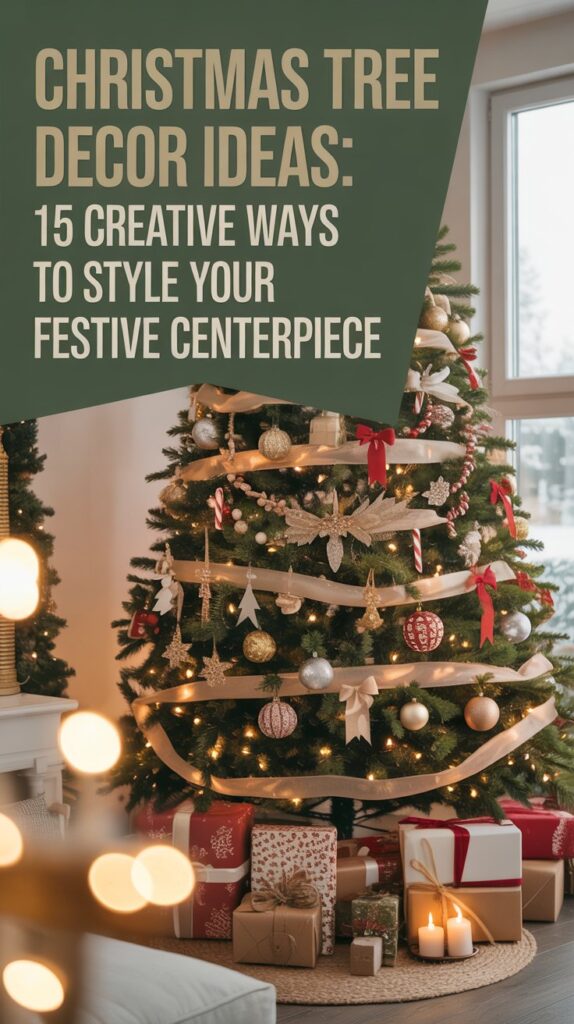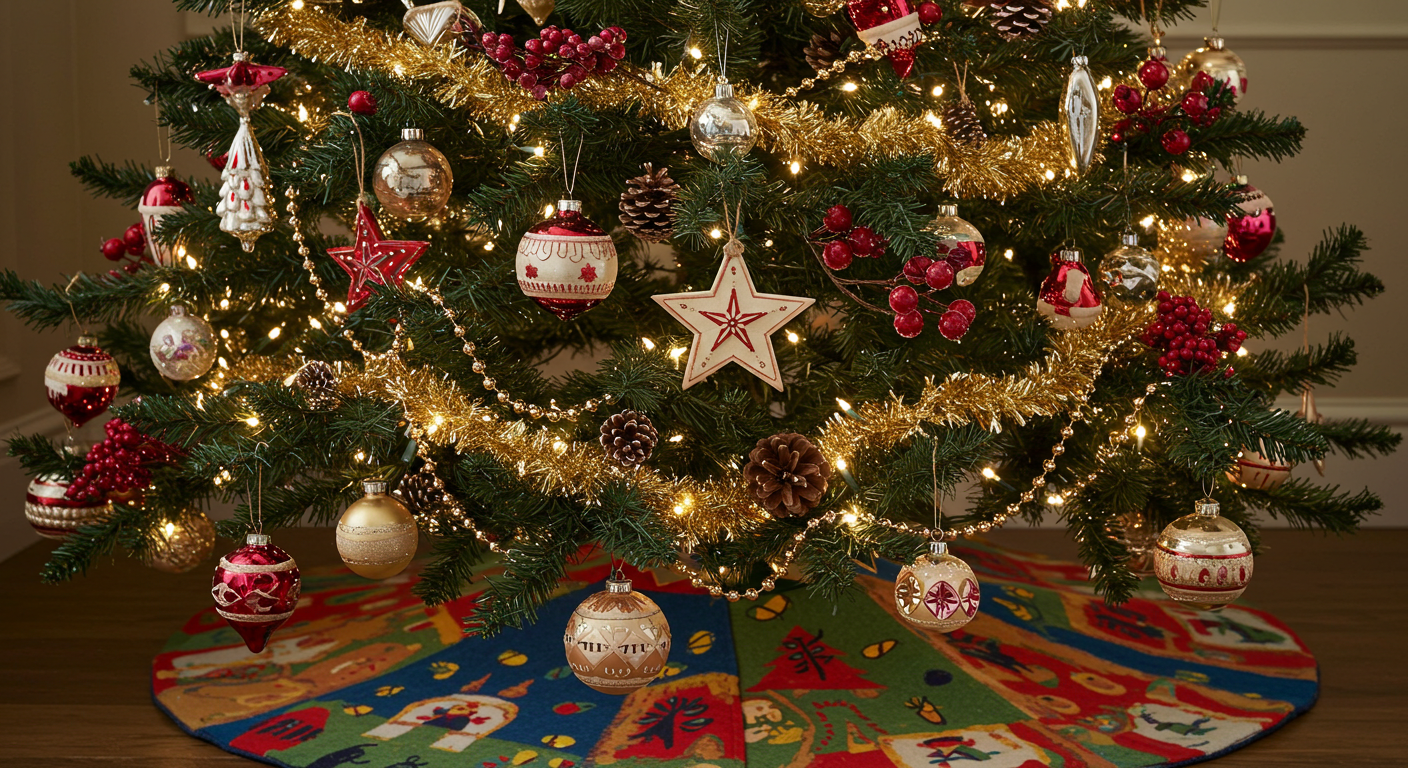
Decorating your Christmas tree is one of the most enjoyable parts of preparing your home for the holiday season. Whether you love traditional red and gold ornaments, natural woodland accents, or modern minimalist decorations, the right combination can turn an ordinary tree into a beautiful festive centerpiece.
However, choosing a decorating theme can sometimes be challenging. With so many colors, ornaments, ribbons, and lighting options available, it is easy to end up with a tree that feels overcrowded or lacks a coordinated appearance.
The secret is to choose a style that complements your home, select a consistent color palette, and combine different textures and ornament sizes thoughtfully.
If you are looking for inspiration, these 15 Christmas tree decor ideas offer something for every decorating preference. From timeless traditional arrangements to playful tropical designs, discover creative ways to make your Christmas tree feel personal, welcoming, and beautifully styled.
1. Classic Red and Gold Elegance
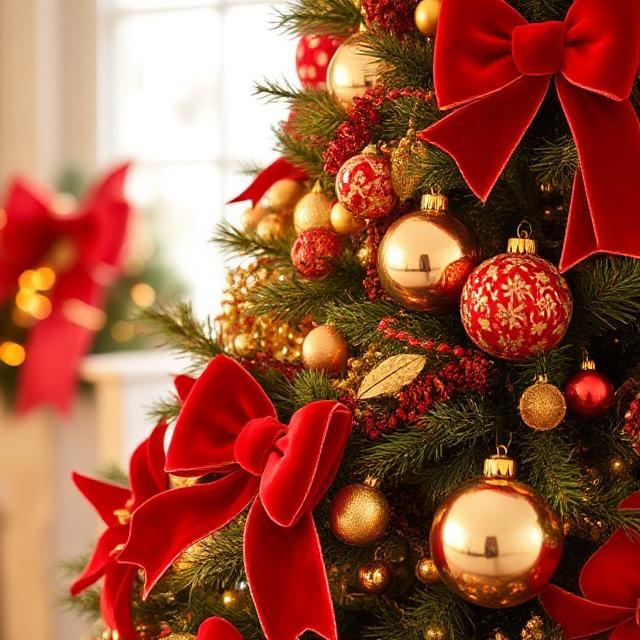
Red and gold remain a beautiful combination for anyone who loves traditional Christmas decorations with a luxurious touch. The rich red creates warmth, while gold accents introduce a festive glow that looks especially attractive under warm white lights.
Start with red and gold baubles in different sizes. Add velvet ribbons, gold bead garlands, and decorative stars to create layers throughout the branches.
For a more sophisticated appearance, combine matte red ornaments with glossy gold finishes rather than using decorations with identical textures.
Styling tip: Place larger red ornaments deeper inside the branches and use smaller gold decorations toward the outer tips. Finish with an oversized red velvet bow or a gold star.
Best for: Traditional living rooms, classic holiday celebrations, and homes with warm neutral interiors.

2. Rustic Woodland Christmas Tree
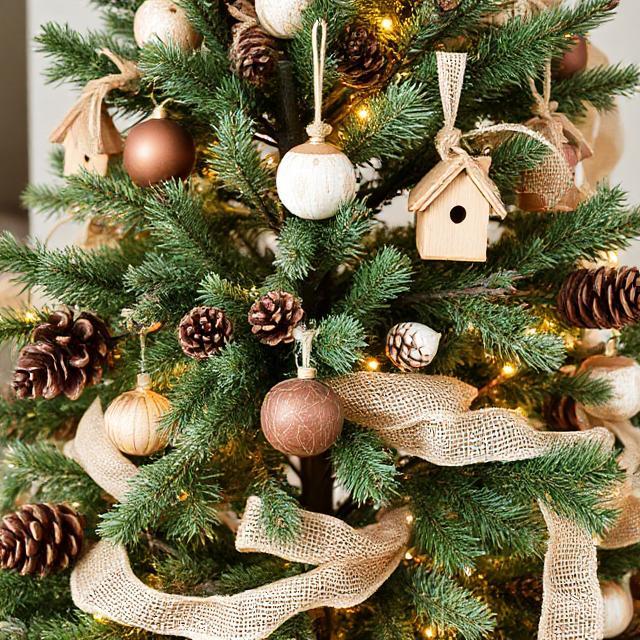
Bring the natural beauty of a woodland setting into your home with rustic Christmas tree decorations. This theme celebrates earthy colors, natural textures, and handmade details.
Choose wooden ornaments, pinecones, burlap ribbons, and small decorative branches. Warm white lights complement the natural materials without making the tree appear overly glamorous.
You can also introduce miniature bird ornaments, wooden stars, and fabric decorations in shades of brown, cream, and forest green.
For additional texture, wrap a wide burlap ribbon loosely around the tree or use simple twine to hang lightweight wooden decorations.
Styling tip: Use a woven basket or a natural fabric tree collar to conceal the tree stand and complete the rustic appearance.
Best for: Farmhouse interiors, country-style homes, and anyone who enjoys nature-inspired Christmas decorations.
3. Minimalist Scandinavian Christmas Tree
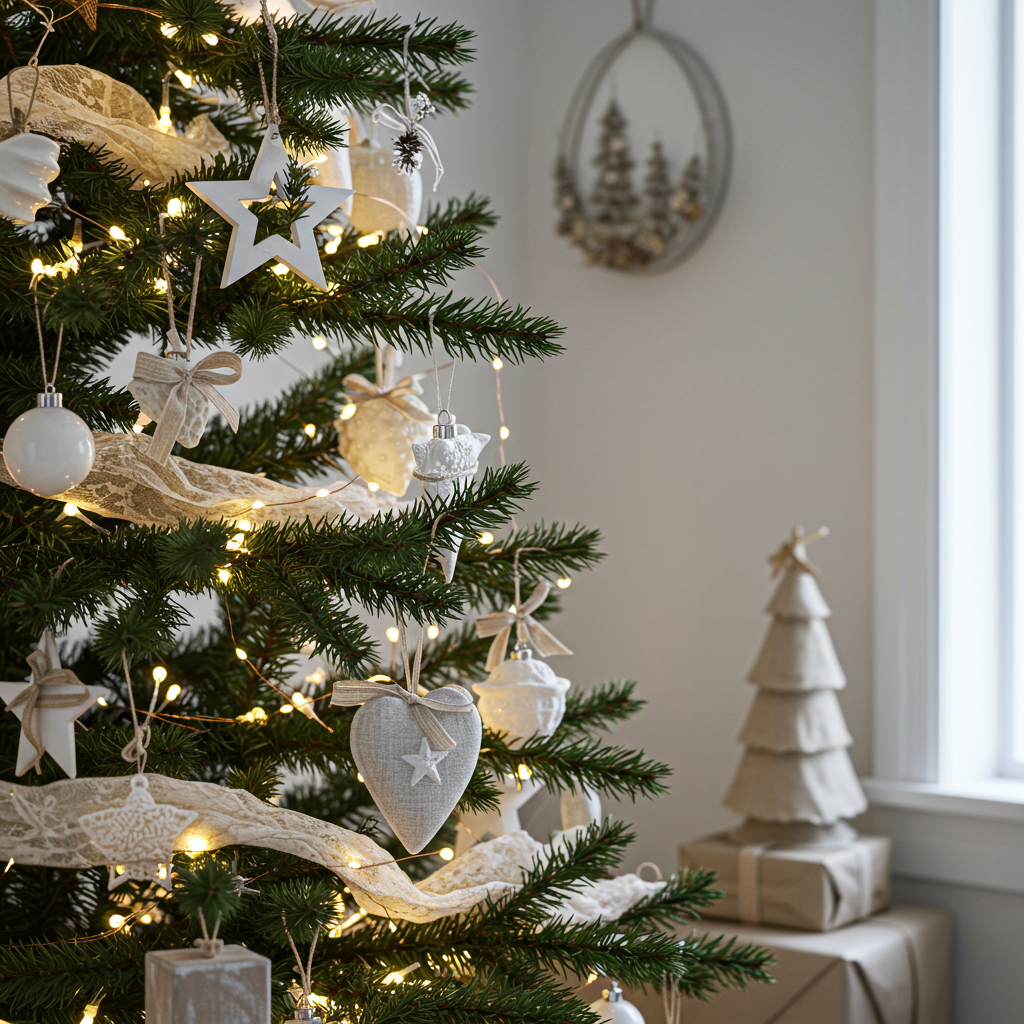
If you appreciate simple, uncluttered interiors, a Scandinavian-inspired Christmas tree may be the perfect choice. This decorating style focuses on natural materials, understated colors, and carefully selected ornaments.
Begin with a palette of white, beige, soft gray, and natural wood. Choose wooden stars, simple geometric ornaments, and a few matte white baubles.
Instead of filling every available space, allow some branches to remain visible. This creates an airy appearance and gives each decoration room to stand out.
You can introduce linen or cotton ribbons for a subtle decorative finish. A simple wooden star makes an attractive tree topper without overpowering the design.
Styling tip: Keep the color palette limited to two or three main shades. A restrained approach is what makes this style visually appealing.
Best for: Modern homes, small living spaces, and lovers of clean, understated interiors.
4. Vintage Christmas Tree Charm
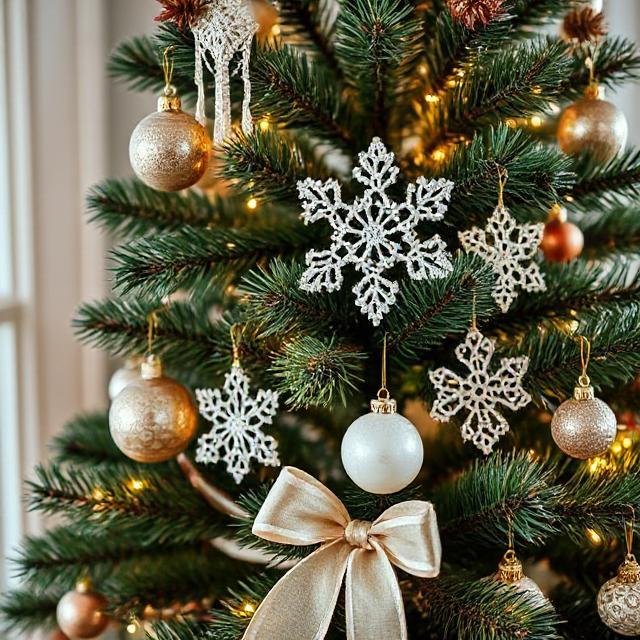
Create a nostalgic holiday atmosphere with a vintage-inspired Christmas tree. This theme brings together traditional ornaments, delicate details, and decorations that remind you of Christmas celebrations from earlier generations.
Look for vintage-style glass baubles, decorative bells, miniature toy ornaments, and delicate glass icicles. Choose colors such as burgundy, antique gold, dusty pink, and deep green.
You can also incorporate handmade decorations, embroidered fabric ornaments, and sentimental family keepsakes.
If you have treasured ornaments passed down through generations, give them special positions where they can be appreciated.
Styling tip: Combine vintage-inspired decorations with warm white lights. If you are using fragile heirlooms, hang them securely and keep them out of reach of young children and pets.
Best for: Traditional homes, nostalgic holiday themes, and families who enjoy meaningful Christmas traditions.
5. Candy Cane Christmas Tree
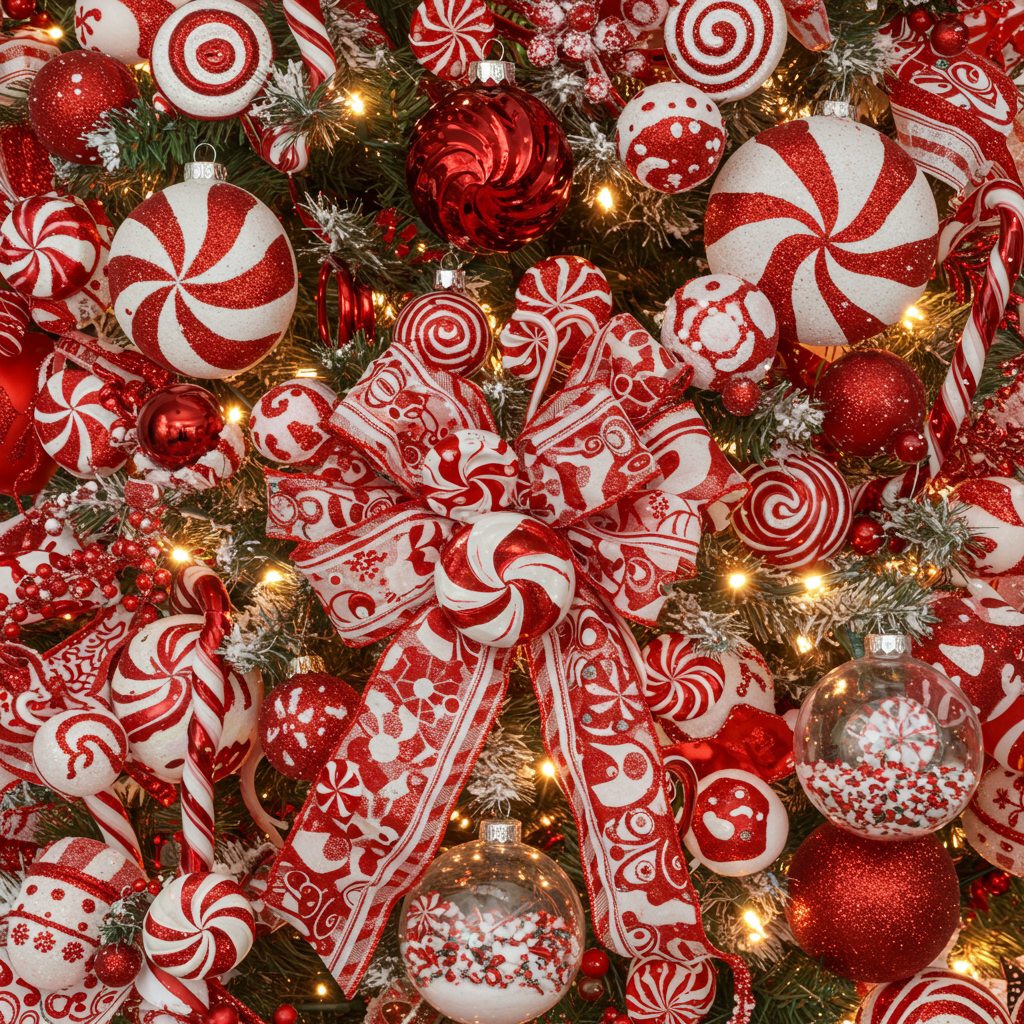
A candy cane-inspired Christmas tree is a cheerful choice for anyone who enjoys playful holiday decorations. Its combination of red, white, and peppermint-inspired details creates a recognizable festive appearance.
Start with red and white baubles, striped ribbons, and candy cane ornaments. Add peppermint-swirl decorations and a few clear ornaments filled with decorative faux snow.
For extra dimension, use different ornament shapes, including stars, round baubles, and miniature gift boxes.
This theme works particularly well when you repeat the red-and-white pattern throughout the tree rather than concentrating all the decorations in one area.
Styling tip: Use white or warm white lights to highlight the striped ornaments. A large red bow or peppermint-inspired topper makes a charming finishing touch.
Best for: Family homes, children’s Christmas celebrations, and playful holiday interiors.
6. Coastal Christmas Tree Decor
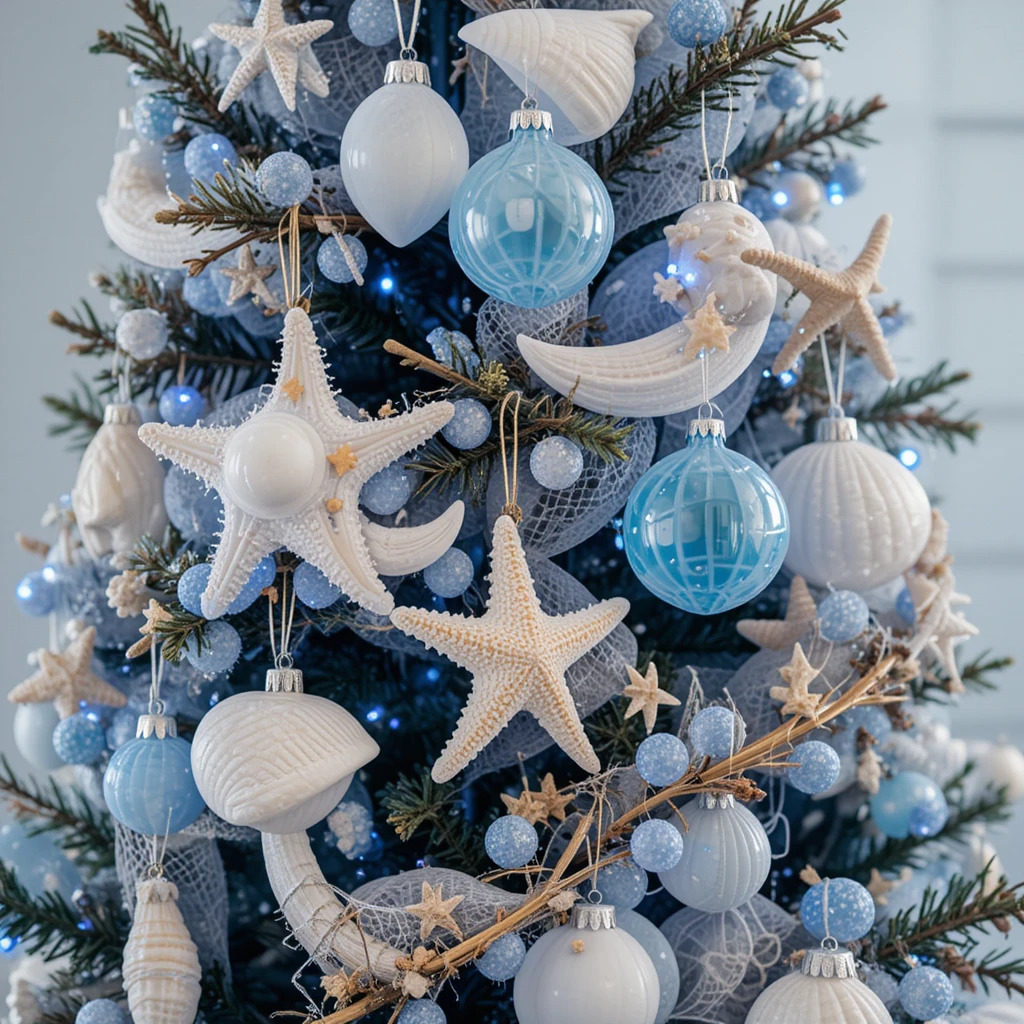
Give your holiday decorations a refreshing twist with a coastal Christmas tree. Inspired by the colors and textures of the ocean, this theme offers an alternative to conventional red-and-green Christmas styling.
Choose decorations in ocean blue, turquoise, white, and sandy beige. Add seashell ornaments, starfish decorations, glass baubles, and subtle pearl accents.
Driftwood-inspired ornaments and lightweight natural-fiber ribbons can introduce additional texture.
For a more polished result, avoid using too many competing shades of blue. Instead, select one dominant blue and combine it with white and neutral accents.
Styling tip: Use warm white lights to create a softer appearance. If you prefer a cooler ocean-inspired effect, choose cool white lights rather than mixing several different light colors.
Best for: Beach-inspired interiors, coastal homes, and anyone looking for an unconventional Christmas color scheme.
7. Whimsical Fantasy Christmas Tree
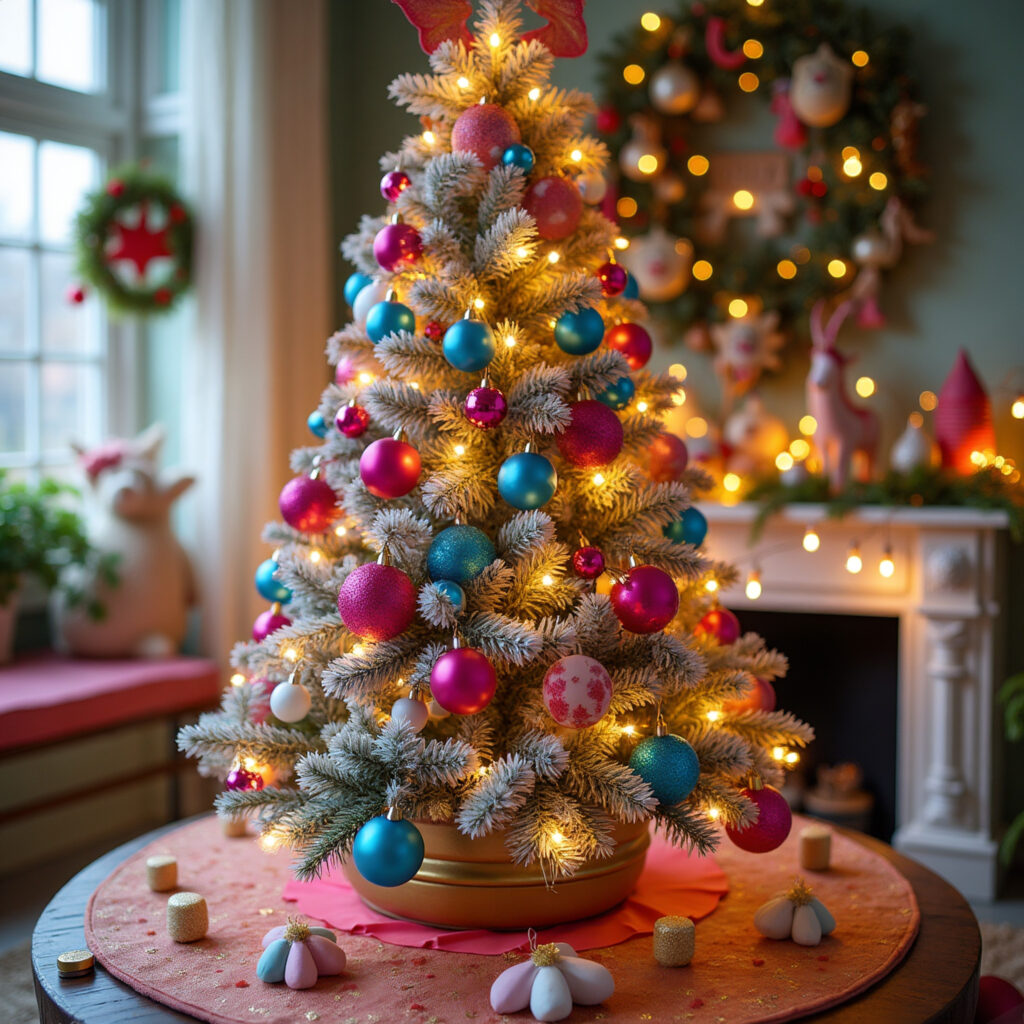
For a Christmas tree filled with personality, consider a whimsical fantasy theme. This playful approach allows you to combine bright colors, unusual ornament shapes, and imaginative decorations.
Use colorful baubles, fairy-inspired ornaments, miniature houses, playful characters, and oversized decorative stars. Pink, purple, turquoise, yellow, and bright red can create an energetic color palette.
You can also incorporate glittery ribbons and multicolored string lights for a more playful appearance.
The key is to make the decorations feel intentional rather than randomly assembled. Repeating a few colors across the tree helps bring the different ornaments together.
Styling tip: Choose a statement topper, such as a large decorative bow, colorful star, or fantasy-inspired ornament. Keep heavier decorations securely attached to sturdy branches.
Best for: Family celebrations, children’s rooms, and people who enjoy colorful, imaginative holiday decorations.
8. Monochromatic Christmas Tree Magic
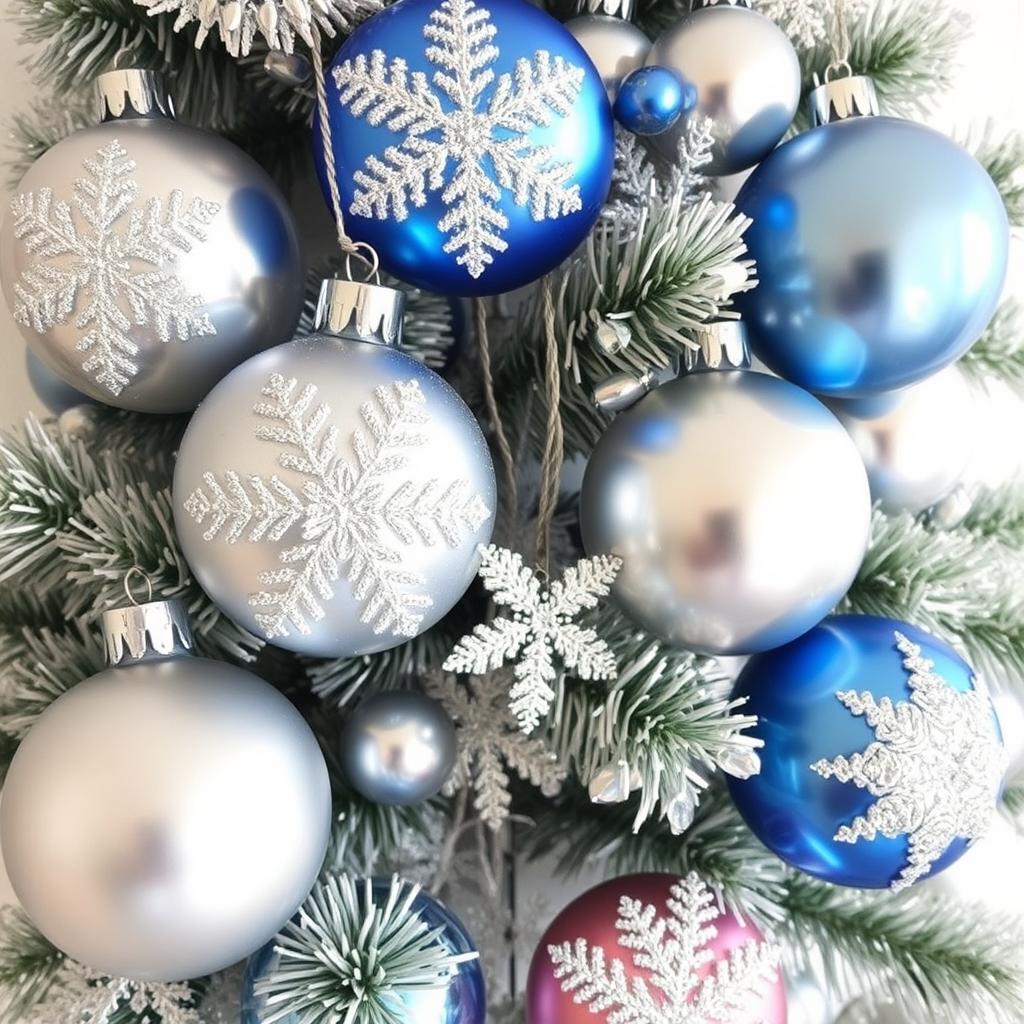
A monochromatic Christmas tree creates a coordinated appearance by using different shades and textures of one main color.
You can choose silver, blush pink, icy blue, champagne, or even deep green. The trick is to introduce different finishes so the decorations do not blend into one flat-looking arrangement.
For example, a silver Christmas tree can feature chrome baubles, matte silver stars, glittery snowflakes, and satin ribbons.
Similarly, a pink-themed tree can combine blush ornaments, rose-colored decorations, and pale pink fabric bows.
Styling tip: Combine at least three finishes, such as matte, glossy, and glittery. This creates visual depth while maintaining the simplicity of a single-color theme.
Best for: Contemporary interiors, coordinated holiday displays, and people who prefer a polished decorating style.
9. DIY Natural Christmas Tree Decorations
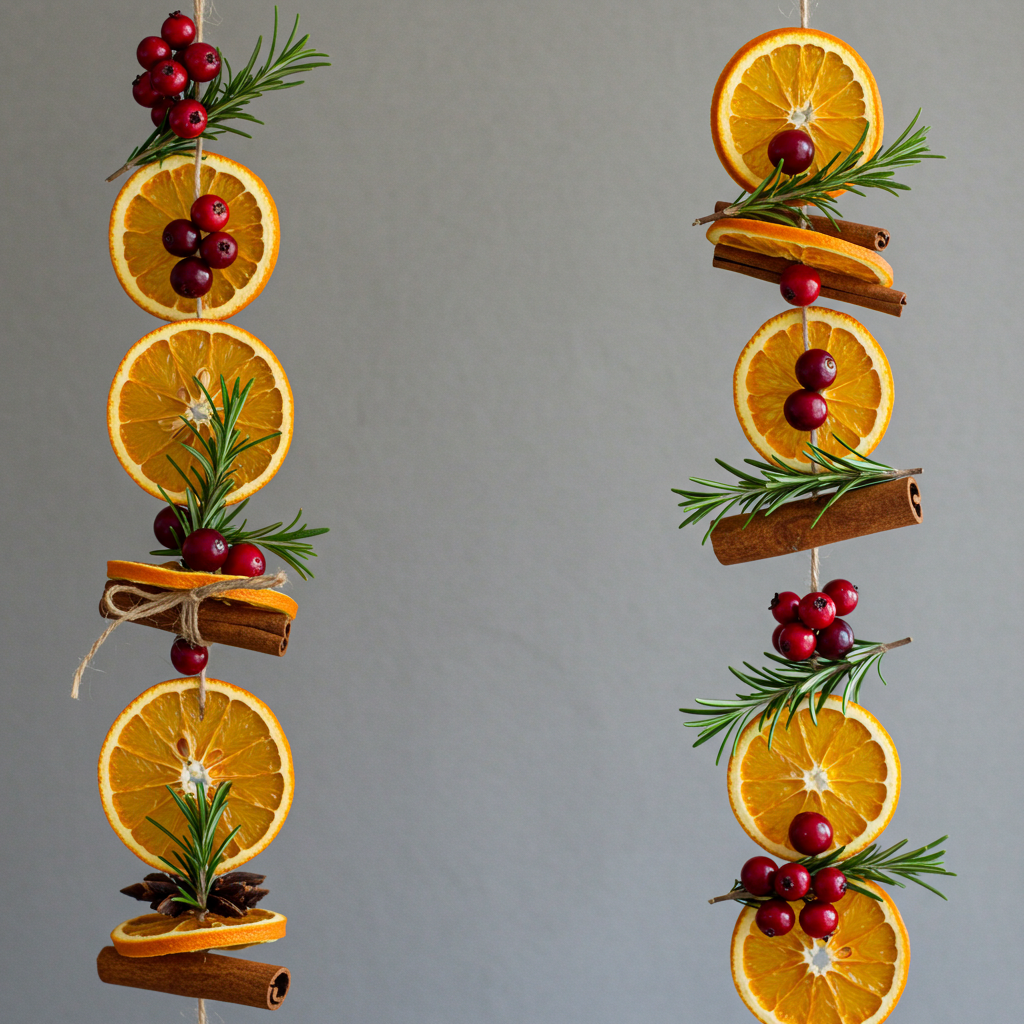
If you enjoy handmade decorations, consider creating a Christmas tree using natural materials. This approach adds a personal touch while giving your holiday display a warm, organic appearance.
Dried orange slices are particularly attractive because their translucent appearance allows light to pass through them. You can also use cinnamon sticks, wooden beads, pinecones, and simple twine decorations.
To prepare orange slices, cut them into thin, even pieces and dry them thoroughly using a suitable low-temperature drying method. Allow them to cool completely before using them as ornaments.
Arrange the dried slices on strings to create simple garlands, or hang individual pieces using decorative twine.
Small bundles of cinnamon sticks can also make charming ornaments. However, avoid leaving natural decorations damp or allowing them to deteriorate. Check them regularly and replace any that show signs of mold or damage.
Styling tip: Combine natural decorations with warm white LED lights, wooden ornaments, and neutral-colored ribbons for a cohesive woodland-inspired appearance.
Best for: DIY enthusiasts, nature-inspired interiors, and budget-conscious holiday decorating.
10. Glamorous Metallic Christmas Tree
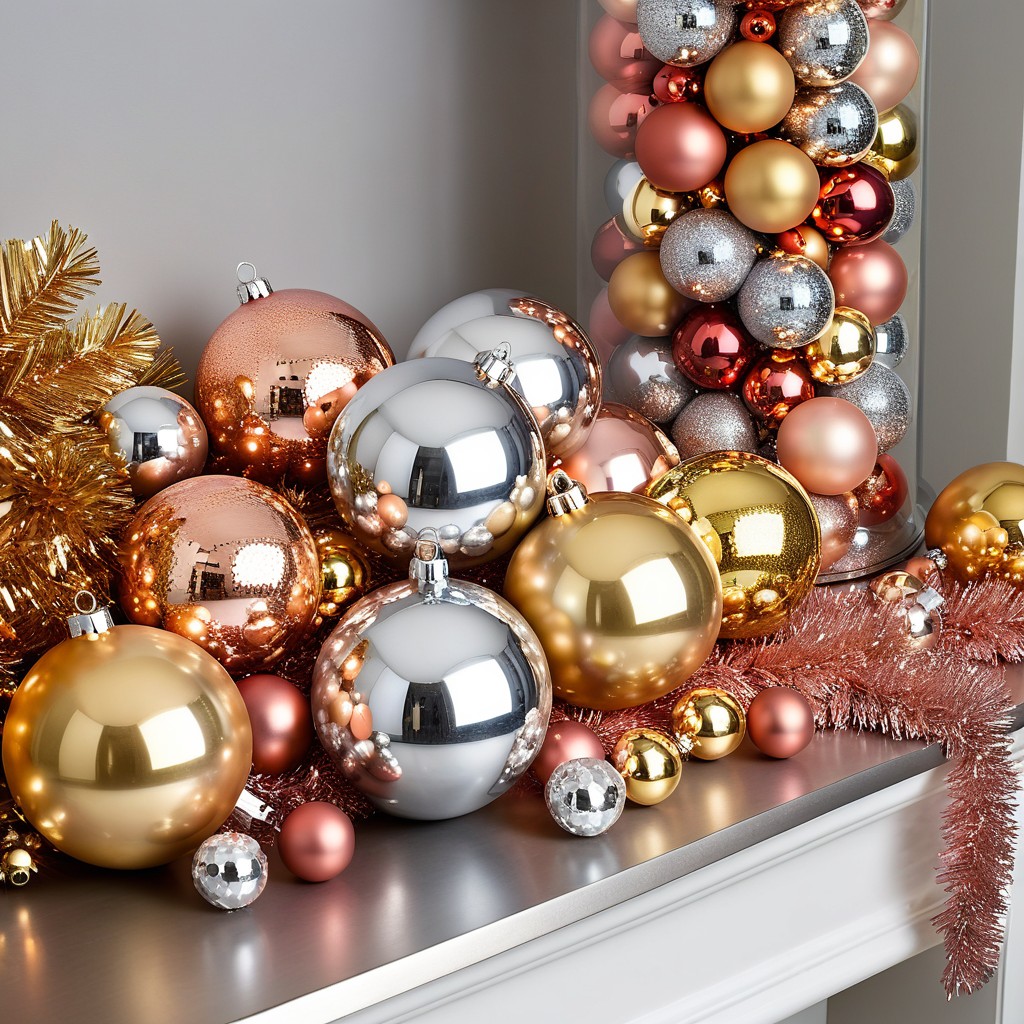
If you want your Christmas tree to make a bold statement, a metallic theme is an excellent option. Unlike the traditional red-and-gold style, this look combines reflective finishes and glamorous decorative details.
Mix gold, silver, and rose gold ornaments with mirrored baubles, metallic stars, and shimmering decorative garlands.
You can also incorporate geometric ornaments and crystal-inspired decorations to introduce different shapes and textures.
To avoid a cluttered appearance, choose one dominant metallic shade and use the remaining colors as accents.
For example, a gold-dominant tree can feature champagne and rose gold details, while a silver-dominant tree can incorporate subtle white accents.
Styling tip: Use strategically placed warm white lights to highlight the reflective surfaces. Avoid overcrowding the branches with too many shiny decorations.
Best for: Glamorous interiors, formal holiday gatherings, and anyone who loves luxurious Christmas displays.
11. Farmhouse Christmas Tree Decor
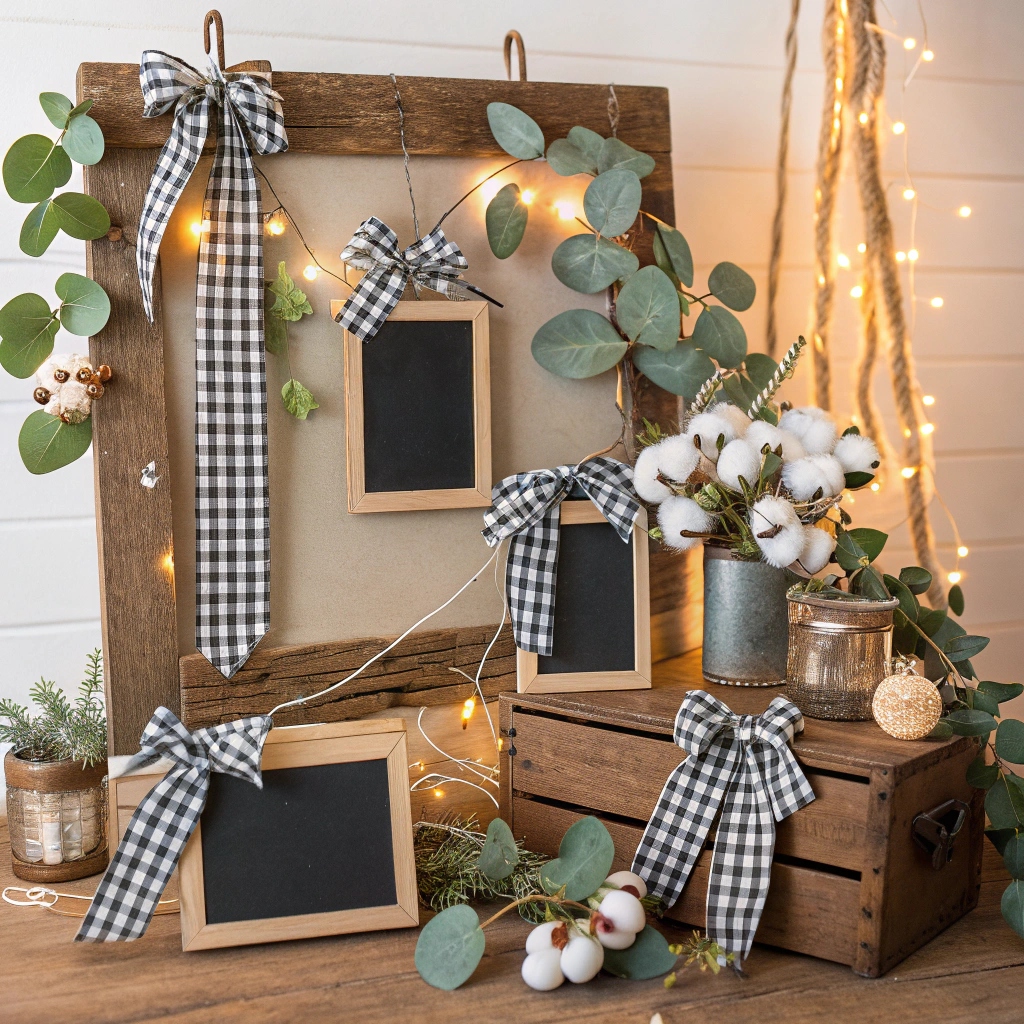
Farmhouse Christmas tree decor combines rustic simplicity with cozy, welcoming details. It is a wonderful option if you want your festive centerpiece to feel relaxed without sacrificing style.
Start with a palette of cream, white, brown, and muted green. Add gingham ribbons, wooden stars, miniature metal ornaments, and fabric decorations.
Faux eucalyptus stems and cotton-inspired accents can introduce additional texture. You can also use small decorative tags with handwritten holiday messages.
For a traditional farmhouse finish, consider a galvanized metal or woven tree collar.
Styling tip: Use warm white lights and soft fabric ribbons. Keep the decorations relatively simple so that the natural textures remain the main attraction.
Best for: Farmhouse interiors, country-inspired homes, and cozy family living rooms.
12. Black and White Christmas Tree
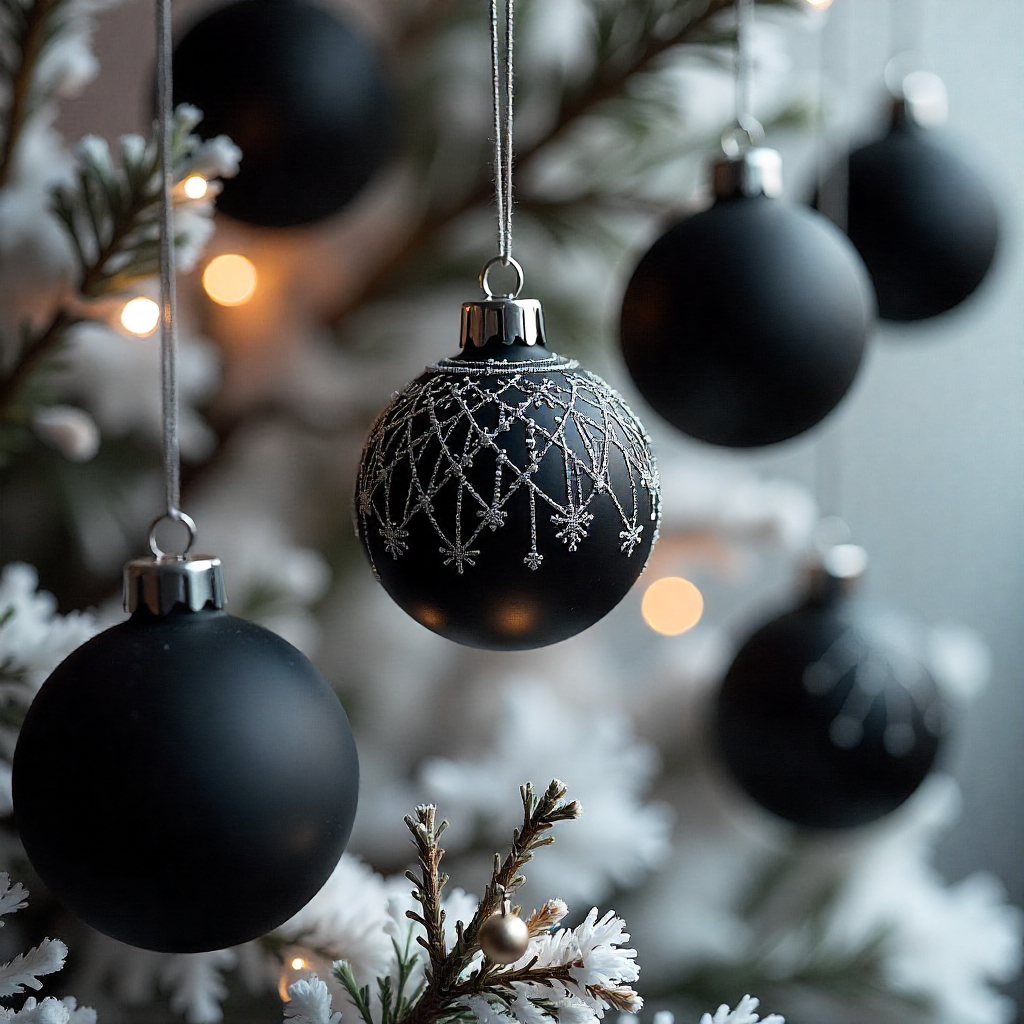
For a bold and contemporary holiday display, consider decorating your tree in black and white. This high-contrast combination creates a striking appearance while offering an alternative to traditional Christmas colors.
Use glossy white baubles, matte black ornaments, black-and-white striped ribbons, and decorative snowflakes.
You can also introduce clear glass ornaments and subtle silver accents to soften the contrast.
To maintain balance, distribute the darker ornaments evenly rather than placing them all on one side of the tree.
Styling tip: Choose warm white lights to create a welcoming atmosphere. A large white star or black decorative bow can complete the design.
Best for: Modern homes, monochromatic interiors, and people who appreciate contemporary Christmas decorations.
13. Tropical Christmas Tree
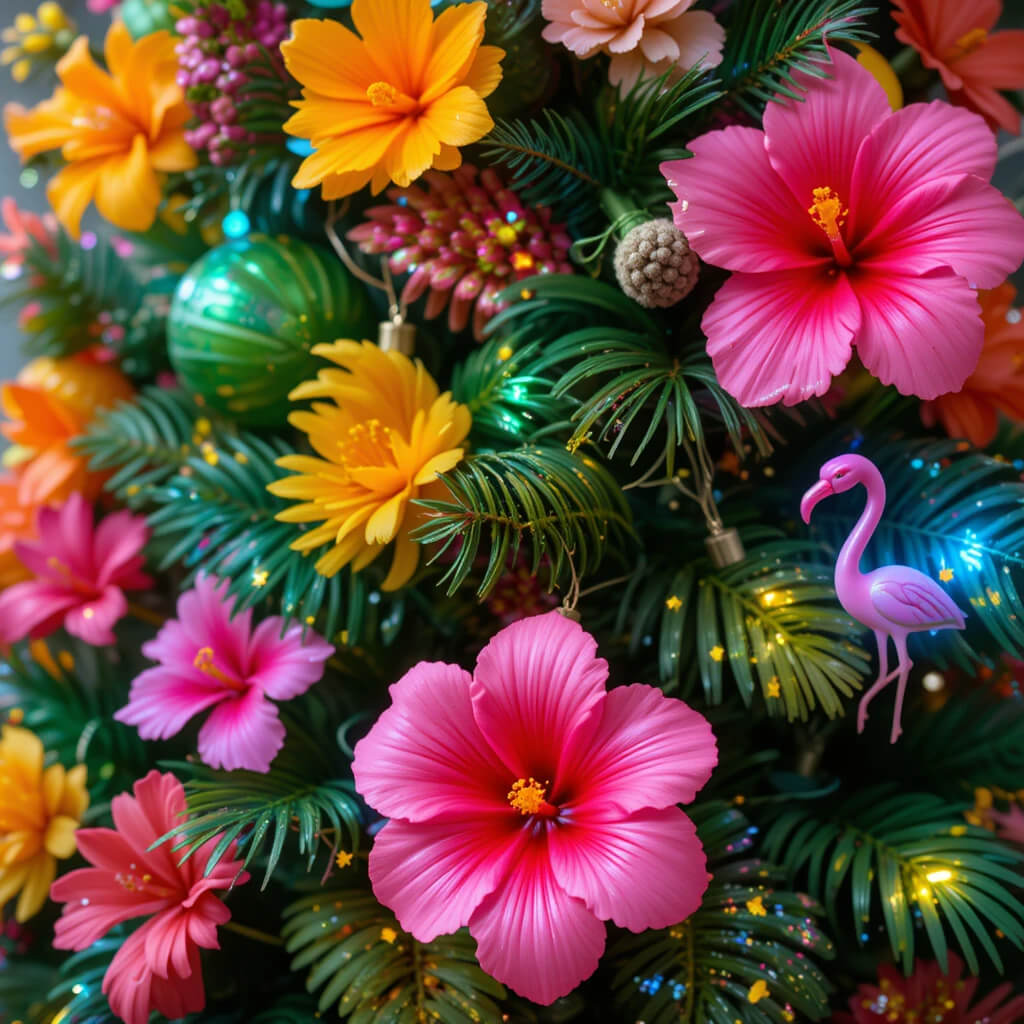
Who says Christmas decorations must follow traditional winter-inspired themes? A tropical Christmas tree offers a refreshing way to celebrate the season with bright colors and nature-inspired details.
Choose decorations featuring tropical flowers, palm leaves, pineapples, flamingos, and other playful motifs.
A vibrant palette of pink, orange, turquoise, yellow, and green can give your tree a cheerful holiday appearance.
If you prefer a more refined tropical look, combine leafy green accents with white, coral, and gold ornaments.
You can also incorporate lightweight artificial flowers and decorative leaf garlands to create a fuller appearance.
Styling tip: Use warm white lights to balance the vibrant colors. Avoid combining too many unrelated patterns; repeat a few dominant shades throughout the tree.
Best for: Tropical-inspired homes, warm-climate Christmas celebrations, and people who enjoy colorful holiday decorating.
14. Character-Themed Christmas Tree
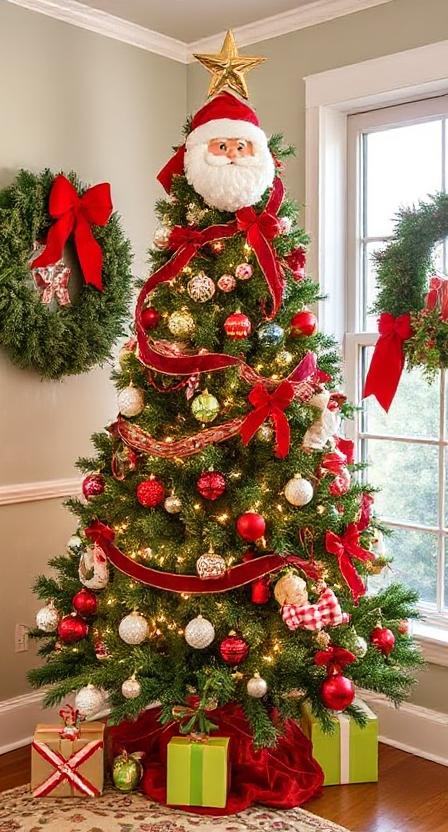
A character-themed Christmas tree is a fun way to celebrate your family’s favorite holiday characters, animated films, or fictional worlds.
You can create a Santa-inspired tree using red and white decorations, miniature stockings, candy-themed ornaments, and small gift-box accents.
Alternatively, a Grinch-inspired theme can feature bright green ornaments, red decorations, and playful character figures. A Frozen-inspired tree can use icy blue, white, and silver decorations.
The most important thing is to establish a recognizable color palette and select ornaments that support the chosen theme.
Styling tip: Use character ornaments as statement decorations rather than covering every branch with them. This keeps the tree visually balanced and allows special pieces to stand out.
Best for: Families with children, themed holiday parties, and fans of popular Christmas characters.
15. Elegant White Winter Wonderland Tree
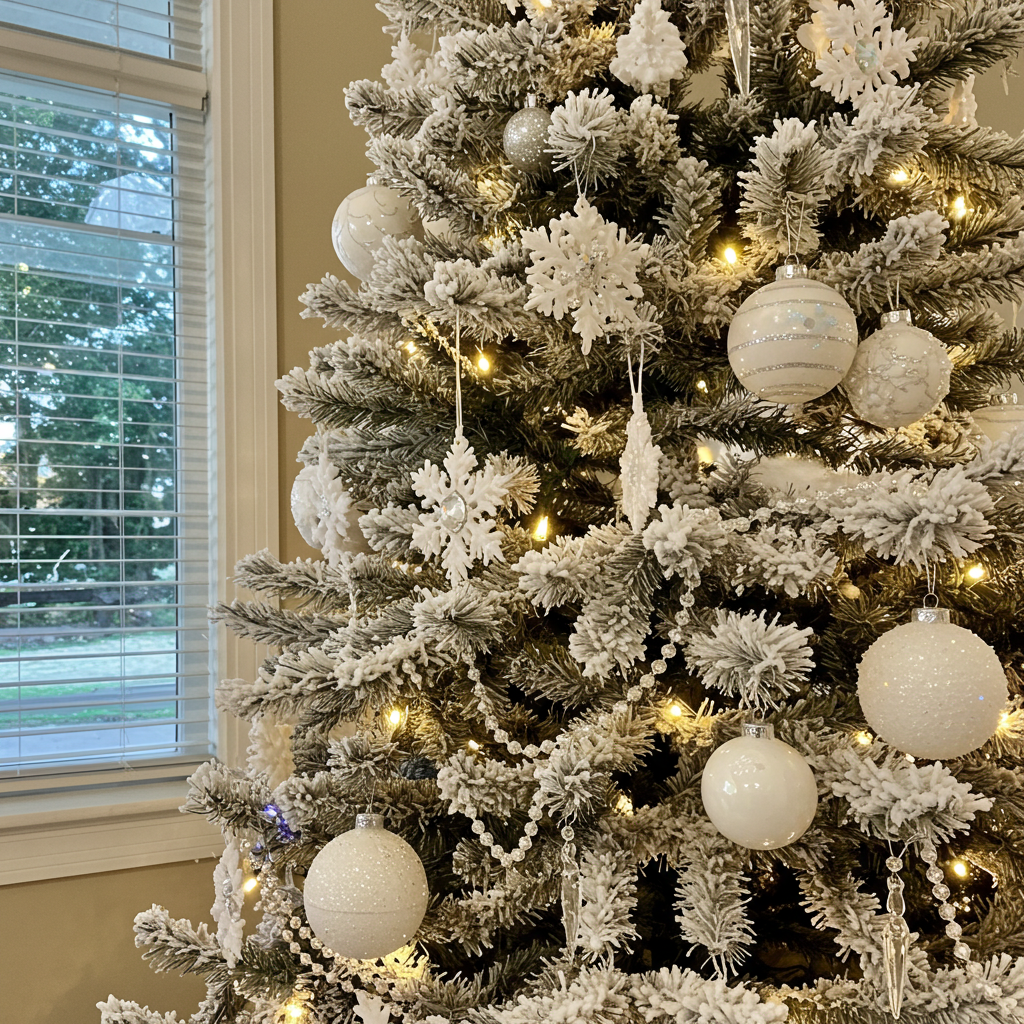
Create a beautiful winter-inspired centerpiece with an elegant white Christmas tree theme. This decorating style combines soft white shades, delicate textures, and sparkling accents to create a peaceful festive display.
Start with white baubles in different finishes, including matte, glossy, and pearl-effect designs. Add silver snowflakes, crystal-inspired icicles, and delicate pearl garlands.
You can also introduce frosted decorative branches and white fabric ribbons to create a layered appearance.
If you want a snow-covered effect, consider a pre-flocked artificial tree or suitable decorative flocking products. Follow the manufacturer’s instructions and avoid spraying unapproved materials onto electrical lights or connections.
Styling tip: Combine white and silver decorations with warm white lights for a softer, welcoming atmosphere. Choose cool white lighting if you prefer a crisp, icy appearance.
Best for: Elegant living rooms, winter-inspired interiors, and people who appreciate delicate, sophisticated Christmas decorations.
How to Decorate a Christmas Tree for a Beautiful, Balanced Look
Choosing a theme is only the first step. The way you arrange the decorations also determines whether your Christmas tree looks coordinated and inviting.
Here is a simple decorating process you can follow.
1. Choose Your Color Scheme
Before purchasing ornaments, decide on two or three main colors. This gives your decorations a consistent appearance and makes it easier to select complementary accessories.
Some attractive combinations include:
| Christmas tree style | Recommended colors |
|---|---|
| Traditional | Red, gold, and green |
| Scandinavian | White, beige, and natural wood |
| Rustic woodland | Brown, forest green, and cream |
| Glamorous | Gold, silver, and champagne |
| Winter wonderland | White, silver, and icy blue |
| Modern | Black, white, and silver |
| Tropical | Green, pink, and coral |
You can introduce an additional accent color if it complements your main palette.
2. Add Christmas Tree Lights First
Install your lights before adding ornaments, ribbons, and garlands. This makes it easier to position them around the branches without disturbing other decorations.
Start near the trunk and gradually work toward the outer branches. Distribute the lights evenly to avoid overly bright or dark areas.
LED string lights are a popular option. Always inspect the wires and connections, follow the manufacturer’s instructions, and use lights suitable for their intended location.
3. Arrange Ribbons and Garlands
Ribbons and garlands help create visual movement and connect the different decorations.
You can drape wide velvet ribbons vertically, wrap delicate bead garlands around the branches, or create large bows for a traditional look.
Avoid placing all your ribbons in one area. Distribute them around the tree so that the design feels balanced.
4. Place Large Ornaments Before Small Ones
Begin with your larger baubles and statement decorations. Distribute them evenly around the tree, including some ornaments closer to the trunk for added depth.
Next, add medium and small decorations to fill noticeable gaps.
Mixing different shapes and finishes also helps create a more interesting arrangement.
5. Add the Tree Topper
The tree topper provides a finishing touch and helps establish the overall theme.
Popular choices include:
- Traditional gold or silver stars.
- Large velvet bows.
- Angel decorations.
- Snowflake toppers.
- Rustic wooden stars.
- Character-inspired ornaments.
Choose a topper that suits the size and style of your tree. Make sure it is securely attached and does not make the tree unstable.
6. Finish With a Decorative Tree Skirt or Collar
A tree skirt or collar conceals the stand and creates a more finished appearance.
For a traditional theme, choose a red or cream fabric skirt. A woven basket collar works beautifully with rustic decorations, while a metallic or neutral collar complements modern interiors.
You can also arrange a few wrapped decorative gift boxes underneath the tree to complete the festive display.
Christmas Tree Decorating Tips to Remember
Whether you are decorating a large living-room tree or a smaller tree for a bedroom, these simple suggestions can help you achieve a more attractive result.
- Work with your existing décor: Choose colors that complement your furniture, curtains, and other holiday decorations.
- Use different ornament sizes: Combine large statement pieces with smaller decorations for visual depth.
- Avoid overcrowding: Leave enough space between ornaments so that individual decorations remain visible.
- Repeat colors throughout the tree: Distribute your main colors evenly instead of grouping similar ornaments together.
- Incorporate personal decorations: Family keepsakes, handmade ornaments, and meaningful decorations make your tree more memorable.
- Decorate according to your budget: Reuse existing baubles and update the look with a new ribbon, topper, or a few statement ornaments.
- Consider your available space: A slim or tabletop tree may work better in a small room than a large, heavily decorated tree.
Christmas Tree Safety Tips
A beautiful Christmas tree should also be a safe one.
If you are decorating a real tree, keep it properly watered and position it away from fireplaces, radiators, candles, and other heat sources. The U.S. Fire Administration recommends keeping Christmas trees at least three feet from heat sources and making sure they do not block exits. U.S. Fire Administration+1
Also remember to:
- Inspect light strings for frayed wires, damaged insulation, or loose connections.
- Follow the manufacturer’s instructions about connecting multiple light strings.
- Never use lit candles as Christmas tree decorations.
- Turn off tree lights before leaving home or going to bed.
- Keep fragile glass ornaments and small decorations away from young children and pets.
- Remove a real tree when it becomes dry.
These precautions help make your festive decorations more enjoyable throughout the holiday season.
Frequently Asked Questions About Christmas Tree Decor Ideas
1. How do I choose a Christmas tree decorating theme?
Start by considering your personal decorating style, the colors in your home, and the atmosphere you want to create. Traditional homes may look beautiful with red and gold decorations, while modern interiors often suit minimalist, monochromatic, or metallic themes.
Choose a color palette before purchasing ornaments to make your decorating decisions easier.
2. What are the most popular Christmas tree decorating colors?
Traditional combinations include red and gold, green and gold, and red and white. Other attractive options include silver and blue, white and champagne, blush pink and gold, and black and white.
The best combination depends on your preferred decorating style and existing home décor.
3. How can I make my Christmas tree look fuller?
Start by arranging the branches carefully, particularly if you have an artificial tree. Add lights throughout the branches, then use ribbons, garlands, and ornaments of different sizes to create depth.
You can also use decorative picks and suitable artificial foliage to fill visible gaps.
4. How do you decorate a Christmas tree step by step?
Start by assembling and shaping the branches. Next, add the lights, followed by ribbons or garlands. Arrange larger ornaments first, fill the remaining spaces with smaller decorations, and finish with a tree topper and decorative tree skirt.
Step-by-step decorating helps create a more balanced appearance.
5. How can I decorate a Christmas tree on a budget?
You do not need to purchase an entirely new set of decorations every year. Reuse existing ornaments, make simple DIY decorations, and introduce a few affordable accessories to refresh your theme.
Dried orange slices, handmade paper ornaments, fabric bows, pinecones, and wooden decorations can all add personality without requiring an expensive decorating budget.
6. What type of lights look best on a Christmas tree?
Warm white lights create a cozy, traditional appearance, while cool white lights complement icy blue, silver, and winter wonderland themes. Multicolored lights are ideal for playful and whimsical designs.
LED string lights offer a popular option, but always choose products suitable for your tree’s location and follow the manufacturer’s safety instructions.
7. How do I decorate a small Christmas tree?
Choose a simple theme with a limited color palette. Use lightweight ornaments, narrow ribbons, and small decorative accents that suit the tree’s proportions.
Avoid oversized decorations that overwhelm the branches. A slim or tabletop tree can look equally attractive when styled thoughtfully.
8. Can I mix different Christmas tree decorating styles?
Yes. Mixing decorating styles can create a distinctive and personal Christmas tree.
The key is to establish a unifying element, such as a shared color, material, or texture. For example, you can combine rustic wooden ornaments with elegant gold baubles or pair traditional red decorations with modern velvet ribbons.
Conclusion
Your Christmas tree can be as traditional, elegant, playful, or creative as you want it to be. The most beautiful displays are not necessarily the ones with the most expensive decorations, but those that bring together complementary colors, interesting textures, and meaningful details.
Whether you choose classic red and gold elegance, rustic woodland charm, a minimalist Scandinavian design, or a glamorous metallic theme, start with a style that reflects your personality and complements your home.
Use these Christmas tree decor ideas as inspiration, make thoughtful use of the decorations you already own, and add personal touches that make your holiday celebrations special.
After all, the perfect Christmas tree is one that makes your home feel festive, welcoming, and ready for the season.