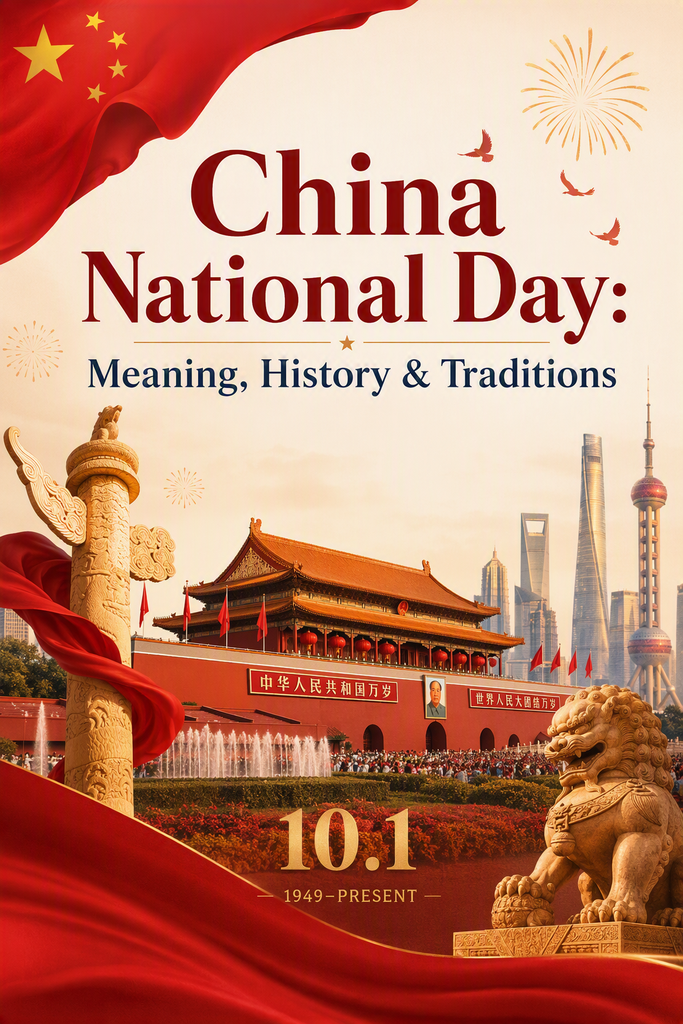
China National Day is one of the country’s most important public holidays, bringing together history, national identity, cultural traditions, and spectacular celebrations.
Observed every October 1, it commemorates the founding of the People’s Republic of China in 1949.
From grand ceremonies in Beijing’s Tiananmen Square to family reunions and the excitement of Golden Week, this annual occasion has historical and cultural significance.
But what events led to its establishment, and how have its celebrations evolved?
This guide explores the meaning and history of China National Day, its origins, major traditions, national symbols, and the ways people observe the holiday today.
What Is China National Day?
China National Day is an annual public holiday celebrated on October 1 to commemorate the founding of the People’s Republic of China (PRC) in 1949.
It marks the establishment of the government led by the Communist Party of China following the Chinese Civil War.
On October 1, 1949, Mao Zedong formally proclaimed the establishment of the People’s Republic of China during a ceremony in Beijing’s Tiananmen Square.
The anniversary has since become a major national occasion featuring official ceremonies, patriotic displays, cultural performances, tourism, and family activities.

The History of China National Day
Understanding China National Day requires looking at the political developments that transformed China during the first half of the 20th century.
1. China Before 1949
China experienced significant political upheaval during the early 1900s. The Qing dynasty ended following the 1911 Revolution, and the Republic of China was established in 1912.
However, political instability continued as competing groups struggled for control.
The Chinese Communist Party (CCP), founded in 1921, and the Nationalist Party, also known as the Kuomintang (KMT), eventually became the principal opponents in the Chinese Civil War.
Following Japan’s defeat in World War II in 1945, full-scale civil war resumed. By 1949, Communist forces had gained control of most of mainland China, while the Nationalist government retreated to Taiwan.
2. October 1, 1949: The Founding of the People’s Republic of China
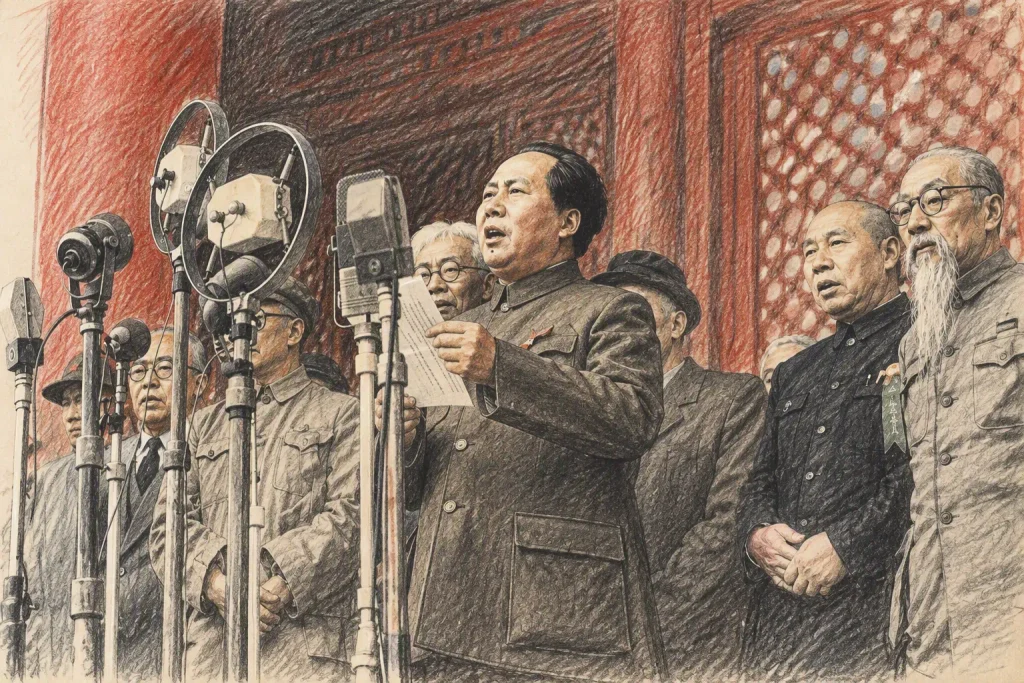
October 1, 1949, became a defining date in modern Chinese history.
During a ceremony in Beijing’s Tiananmen Square, Mao Zedong announced the establishment of the People’s Republic of China.
The ceremony included the raising of the new national flag, a military review, and a public procession.
The announcement marked the establishment of a new central government on mainland China and the beginning of Communist Party rule.
3. When Did China National Day Become an Official Holiday?
Although the founding ceremony took place on October 1, the formal decision to establish the annual holiday came later.
On December 2, 1949, the Central People’s Government adopted a resolution designating October 1 as the National Day of the People’s Republic of China.
Since then, the holiday has commemorated the founding of the PRC through public ceremonies and other observances.
4. How China National Day Celebrations Have Evolved
Over the decades, National Day celebrations have changed in scale and format.
Major anniversaries have featured elaborate state ceremonies and large public events in Beijing. Other years have emphasized flag-raising ceremonies, decorations, cultural performances, and local festivities.
The introduction of extended National Day holidays also made leisure travel, tourism, and family visits important parts of the modern holiday experience.
The Meaning and Significance of China National Day
China National Day carries several historical, political, and cultural meanings.
Remembering the Establishment of the PRC
The holiday commemorates the creation of the People’s Republic of China and the political transition that took place in 1949.
In official Chinese commemorations, the anniversary is associated with national independence, sovereignty, unity, and development.
The historical transition also had lasting consequences for relations between mainland China and Taiwan.
National Identity and Historical Memory
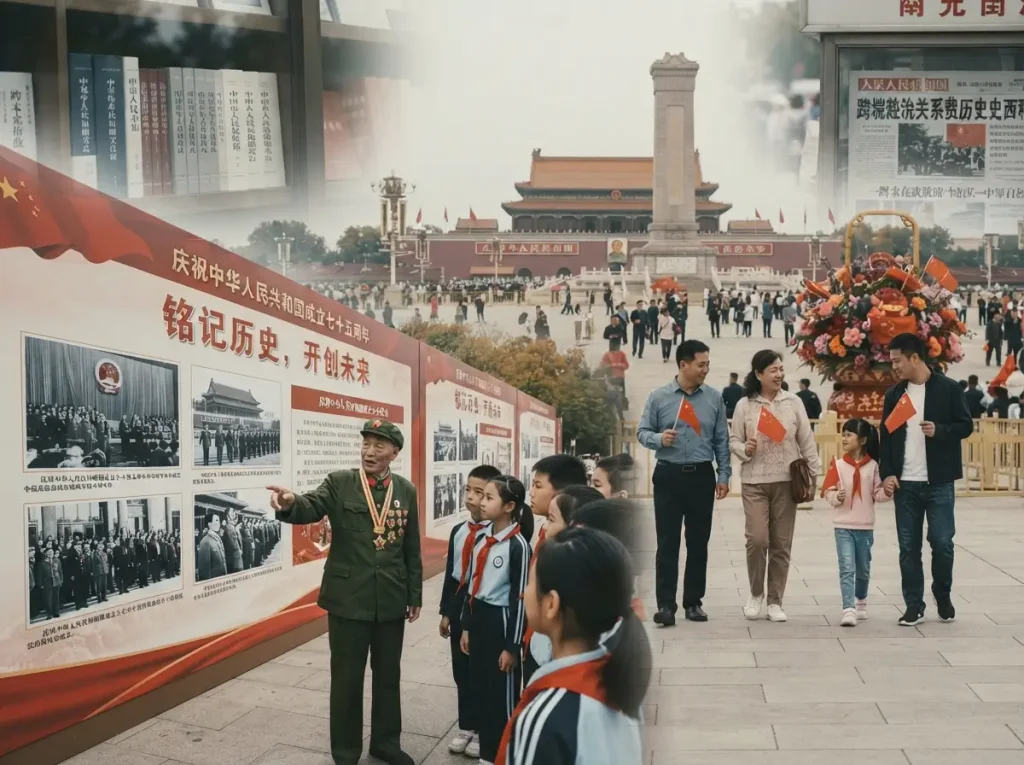
Official ceremonies, exhibitions, documentaries, and educational activities use the anniversary to highlight important events in the country’s modern history.
For many participants, the holiday also provides an opportunity to engage with national traditions, visit historical landmarks, and spend time with family.
However, the founding of the PRC remains a subject of differing historical and political interpretations, particularly regarding the Chinese Civil War, the Communist Party’s subsequent governance, and cross-strait relations.
Cultural and Social Significance
Beyond its official meaning, National Day has developed into an important social occasion.
Extended holidays give many residents time to travel, visit relatives, explore cultural attractions, and participate in community activities.
As a result, the celebration combines a historical anniversary with one of China’s busiest domestic travel periods.
How Is China National Day Celebrated?
Celebrations vary between cities, communities, and individual households. Nevertheless, several activities are closely associated with the holiday.
1. Flag-Raising Ceremonies
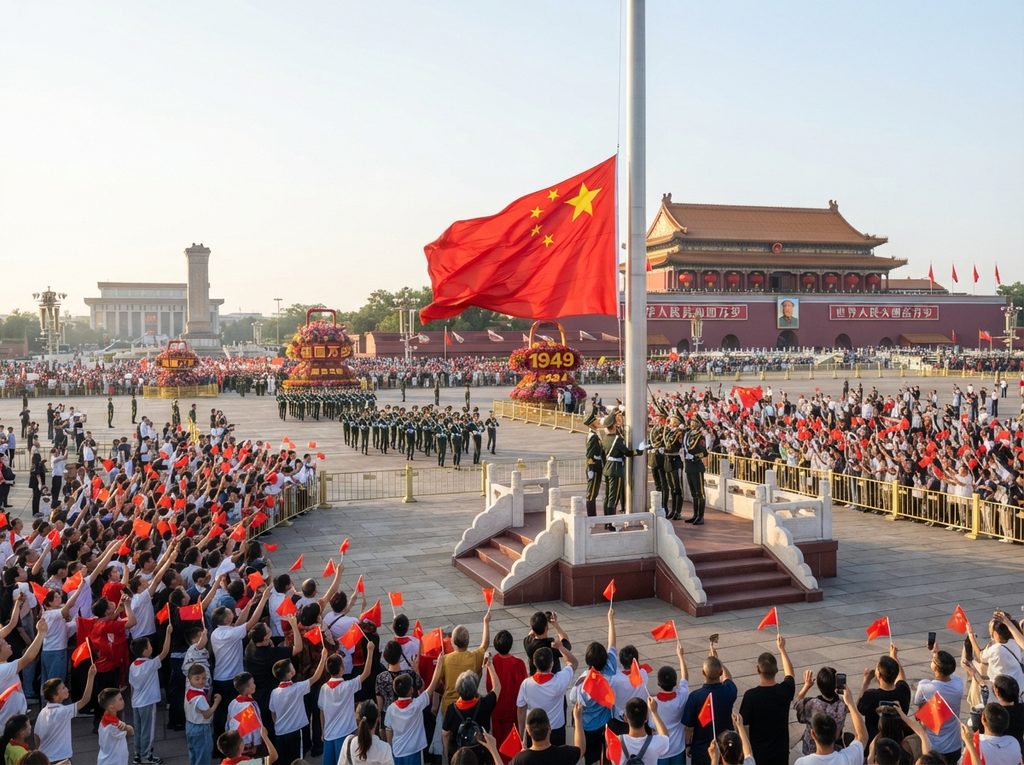
Flag-raising ceremonies are among the most recognizable National Day traditions.
Tiananmen Square in Beijing is a prominent location for these ceremonies, which attract spectators during the holiday period.
The national flag is also displayed at government buildings, schools, public squares, and other locations throughout the country.
2. Public Decorations and Cultural Displays
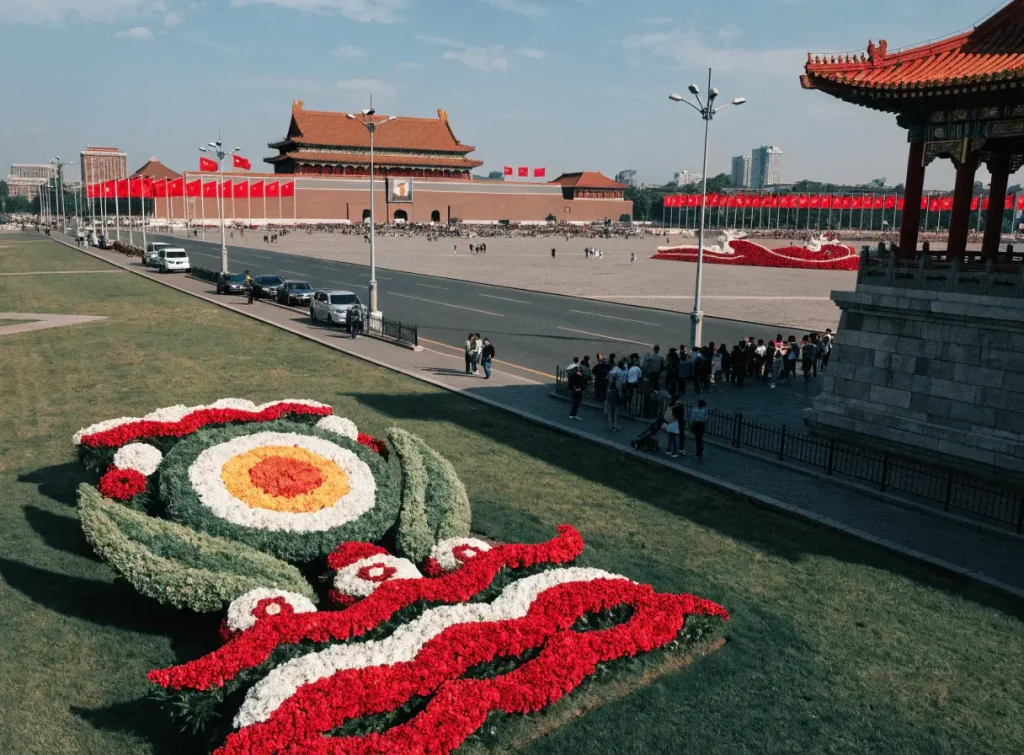
Red flags, floral arrangements, and themed decorations appear in many public spaces during National Day.
In Beijing, Tiananmen Square is particularly well known for its elaborate floral displays. Other cities may organize exhibitions, concerts, and cultural performances.
These decorations help create a festive atmosphere throughout the holiday.
3. Military Parades on Major Anniversaries
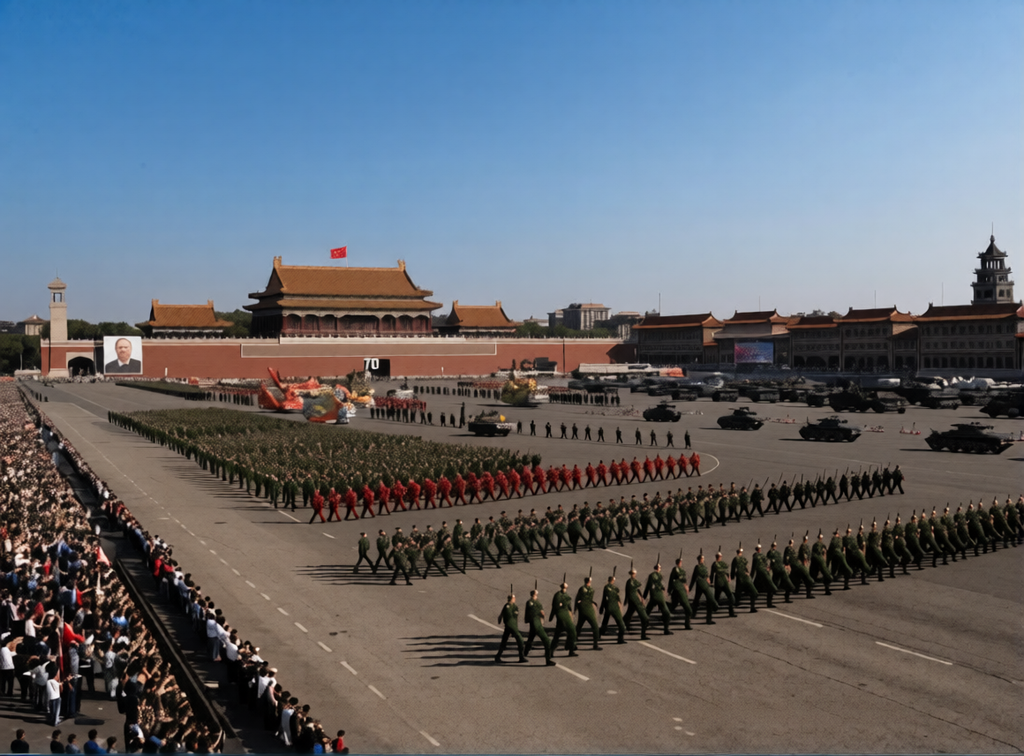
Large military parades have been held on selected National Day anniversaries, including the 50th anniversary in 1999, the 60th in 2009, and the 70th in 2019.
Such events typically feature military formations, equipment displays, and official ceremonies.
However, major military parades are not an annual National Day tradition. Their scheduling depends on official decisions.
4. Light Shows and Evening Entertainment

Some cities organize themed light shows, public performances, and evening entertainment.
Illuminated landmarks and colorful displays can attract residents and visitors, particularly in major urban centers.
The availability of fireworks, performances, and other activities varies by city and year.
5. Family Gatherings and Domestic Travel
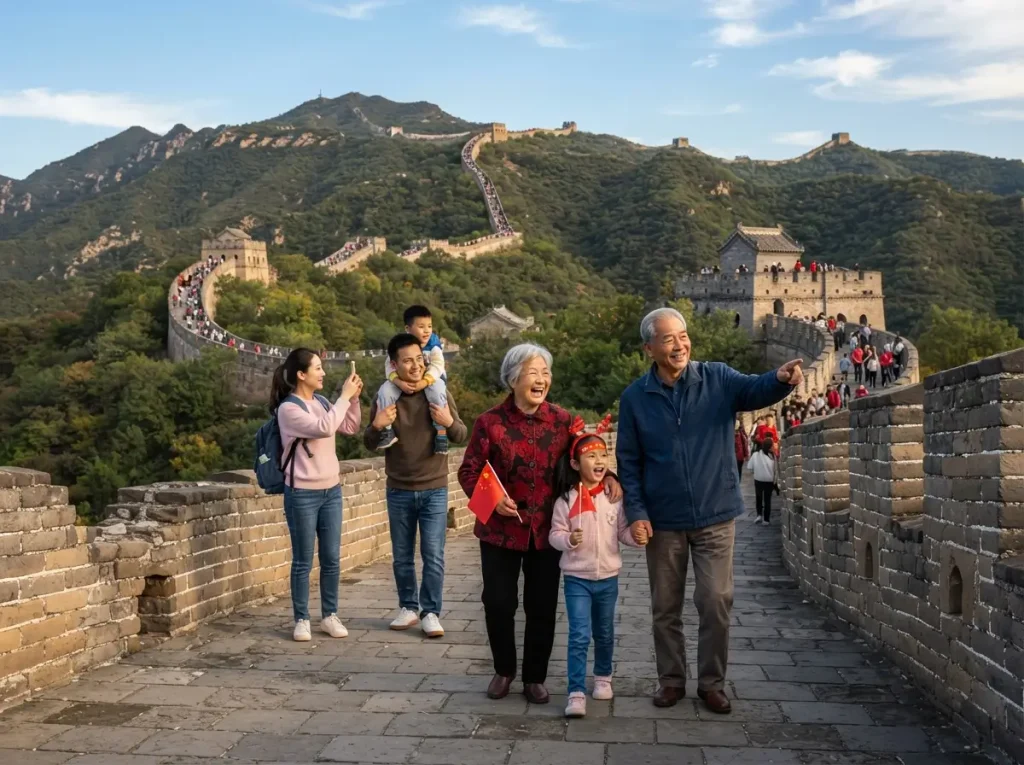
Many people use the National Day holiday to visit relatives or explore destinations within China.
Popular activities include visiting museums, discovering historical sites, hiking, shopping, and enjoying regional cuisine.
For families, the extended break can provide valuable time together outside normal school and work schedules.
China National Day and Golden Week
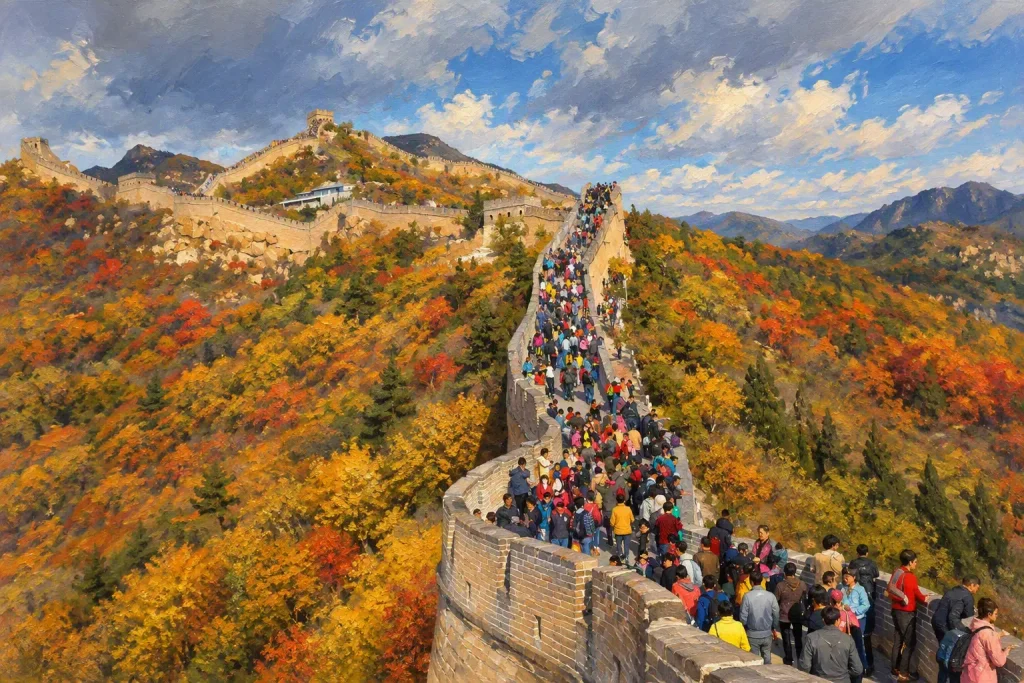
One of the most distinctive features of modern China National Day is its association with Golden Week.
What Is China’s Golden Week?
Golden Week is an extended holiday period created by combining public holidays with weekends and, in some years, adjusted working days.
The National Day Golden Week typically provides seven consecutive days off, although the exact arrangements are announced by the government.
The extended break has become particularly important for domestic tourism, family visits, shopping, and leisure activities.
How Golden Week Affects Tourism
Golden Week is one of China’s major domestic tourism periods.
Popular attractions, transportation networks, restaurants, and accommodation providers can experience substantial increases in demand.
In September 2026, China’s Ministry of Culture and Tourism announced a nationwide campaign covering the Mid-Autumn Festival and National Day holidays.
The local authorities plan more than 20,000 cultural and tourism events. For visitors planning a trip during Golden Week, early preparation is especially useful.
- Reserve accommodation and transportation in advance.
- Check the opening hours of major attractions.
- Consider visiting less crowded destinations.
- Allow extra travel time at major railway stations and airports.
- Review official holiday announcements before finalizing travel arrangements.
Important Symbols of China National Day
Several national symbols feature prominently in official celebrations and public decorations.
The Chinese National Flag
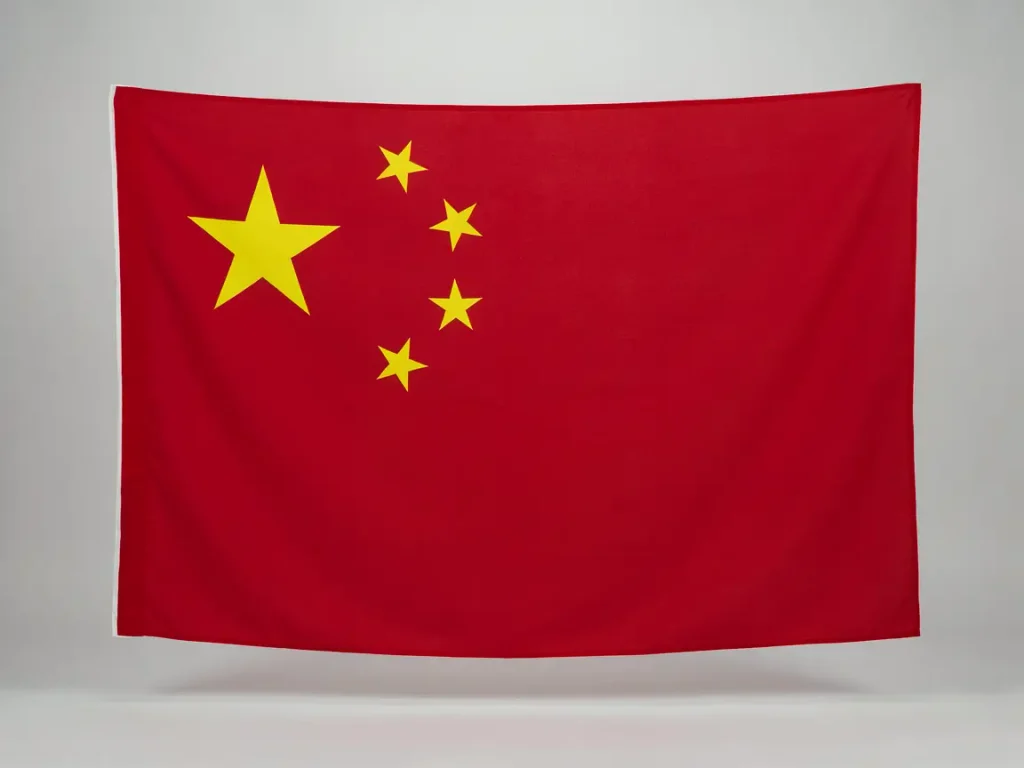
China’s national flag has a red background and five yellow stars. The large star represents the Communist Party of China.
The four smaller stars symbolize the groups of people united under its leadership, according to the flag’s official symbolism. The flag is prominently displayed during National Day ceremonies.
Tiananmen Square

Tiananmen Square is closely associated with China National Day because it was the location of the 1949 founding ceremony.
It remains a central setting for major state commemorations and public flag-raising ceremonies.
The National Emblem

China’s national emblem features Tiananmen beneath five stars, surrounded by ears of grain and a cogwheel.
It appears in government buildings and official settings and represents the state.
Interesting Facts About China National Day
Here are some useful facts that highlight the holiday’s history and traditions.
- 1. It celebrates the founding of the PRC, not China’s earliest civilization. China’s recorded history stretches back thousands of years, while the People’s Republic was established in 1949.
- October 1 became the official holiday in December 1949. The government formally designated the anniversary two months after the founding ceremony.
- Golden Week encourages domestic travel. Millions of residents use the extended break to explore the country, visit relatives, and enjoy recreational activities.
- Major military parades are occasional events. They are generally associated with selected anniversaries rather than every annual celebration.
- National Day has a different historical meaning from Chinese New Year. National Day commemorates a modern political event, whereas Chinese New Year follows the traditional lunisolar calendar and emphasizes family reunions and cultural customs.
China National Day vs. Chinese New Year
Although both occasions are important public holidays, their origins and traditions are different.
| Feature | China National Day | Chinese New Year |
|---|---|---|
| Date | October 1 | Varies annually |
| Main significance | Founding of the PRC | Beginning of the traditional lunar year |
| Historical origin | 1949 | Ancient cultural traditions |
| Common activities | Official ceremonies, tourism, public celebrations | Family reunions, festive meals, traditional customs |
| Main holiday period | Golden Week | Spring Festival holiday |
Chinese New Year is traditionally centered on family reunions, ancestral customs, and hopes for the coming year. In contrast, National Day commemorates a specific event in China’s modern political history.
Conclusion: Understanding the Meaning of China National Day
China National Day commemorates the founding of the People’s Republic of China on October 1, 1949.
Its history provides an opportunity to understand the political changes that shaped modern China and the national traditions that developed afterward.
Today, the holiday combines official ceremonies, cultural activities, historical remembrance, and the travel opportunities of Golden Week.
Whether you’re researching Chinese history or planning a visit, understanding the origins of this anniversary offers valuable insight into contemporary Chinese society.
Explore our other articles about international holidays, national celebrations, and cultural traditions to discover how countries around the world commemorate important historical events.
Frequently Asked Questions About China National Day
1. When is China National Day celebrated?
China National Day is celebrated annually on October 1. It commemorates the founding of the People’s Republic of China on October 1, 1949.
2. What is the meaning of China National Day?
The holiday marks the establishment of the People’s Republic of China following the Chinese Civil War. It is an official occasion for commemorating the country’s modern history and displaying national symbols.
3. Why is October 1 important in Chinese history?
On October 1, 1949, Mao Zedong proclaimed the establishment of the People’s Republic of China during a ceremony in Beijing’s Tiananmen Square. The date subsequently became the country’s National Day.
4. How long is China National Day in 2026?
The official 2026 holiday runs from October 1 through October 7, providing seven consecutive days off. September 20 and October 10 are designated as adjusted working days.
5. How do people celebrate China National Day?
Common activities include flag-raising ceremonies, public decorations, cultural performances, family visits, and domestic travel. Major anniversaries may also feature large state ceremonies.
6. What is Golden Week in China?
Golden Week is an extended public holiday period associated with National Day. It usually provides seven consecutive days off and is a popular time for tourism, shopping, and family activities.
7. Is China National Day the same as Chinese New Year?
No. China National Day commemorates the founding of the People’s Republic of China in 1949, while Chinese New Year is a traditional festival marking the beginning of a new year on the Chinese lunisolar calendar.