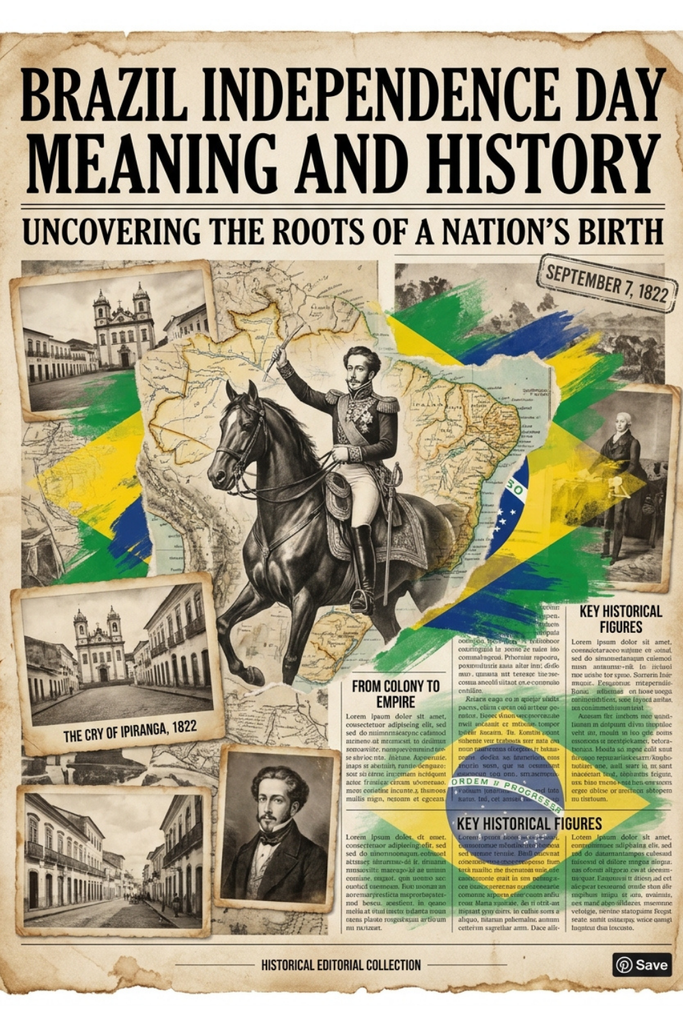
Imagine breaking up with your parent country by leaving your own royal son in charge of the breakaway nation.
Portugal tried to keep its prized South American colony on a tight leash, but a rebellious prince had other plans.
Most nations fight brutal, decades-long revolutionary wars to throw off colonial rulers.
Brazil took a hilariously dramatic shortcut involving a royal family escape, intense stomach cramps, and a son shouting at his own father’s government.
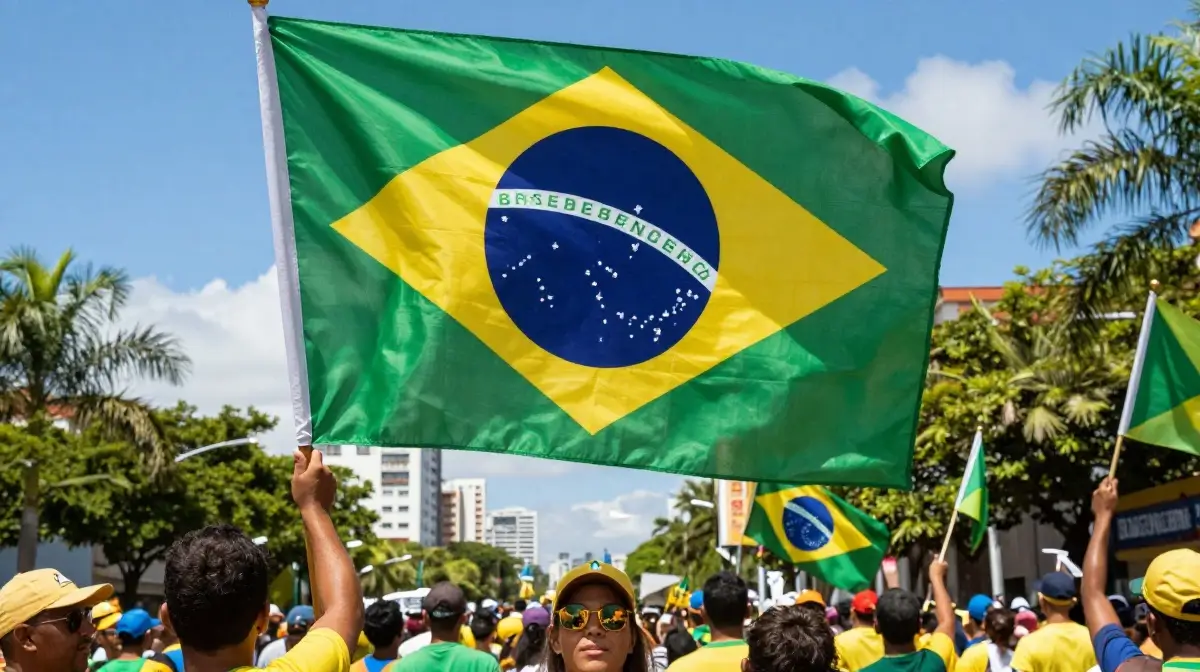
If you want to understand modern Brazilian pride, you need to look at Brazil Independence Day and the strange historical twists that shaped South America’s largest nation.
What Makes Brazil Independence Day So Unique?
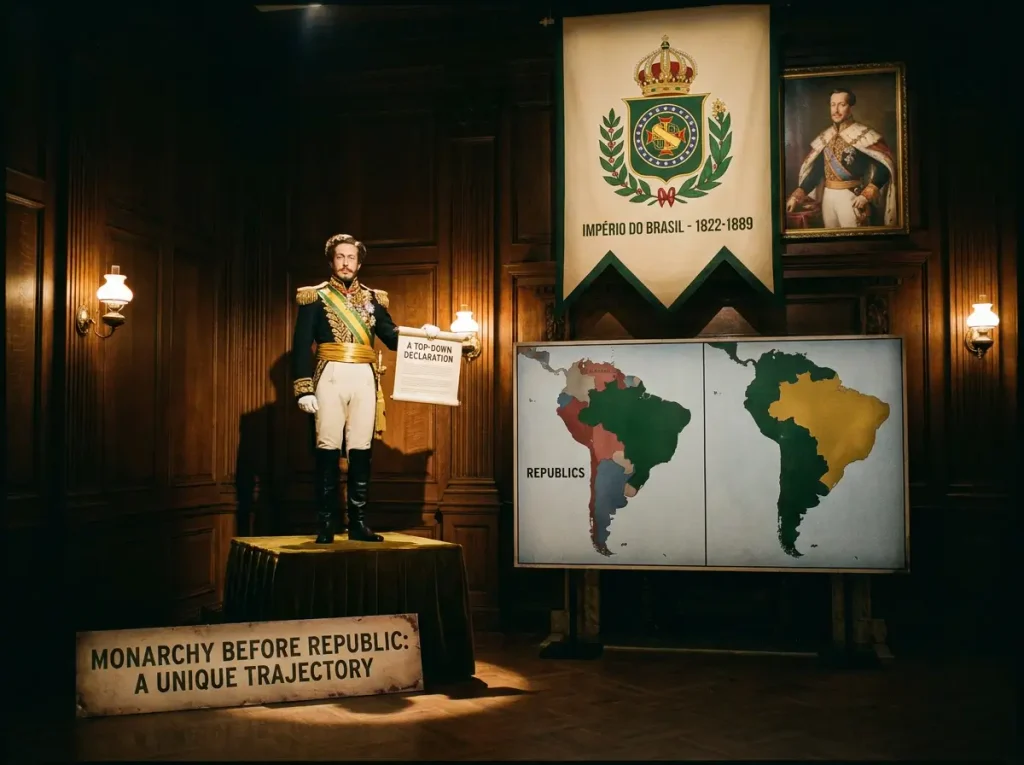
Did you know that Brazil did not start out as a republic after gaining freedom? While neighboring Spanish colonies formed fresh democracies, Brazil crowned a European prince as its official Emperor.
This unexpected choice created a unique political trajectory in Latin America. The transition kept the vast country united under one central government while surrounding regions fractured into smaller independent republics.
FYI, this peaceful transition spared Brazil from the long, destructive civil wars that crippled its neighbors in the early nineteenth century.
- A Royal Dynasty On Both Sides: Portugal and early independent Brazil shared the exact same ruling house of Braganza.
- A Top-Down Declaration: The ruling elite led the breakaway movement rather than a peasant rebellion or grassroots uprising.
- Monarchy Before Republic: Brazil operated as the Empire of Brazil for sixty-seven years before becoming a republic in 1889.

The Backstory: How Napoleon Accidentally Created Modern Brazil
How did a European conqueror accidentally kickstart South American independence? In 1807, Napoleon Bonaparte marched his French troops across Spain to invade Portugal.
Prince Regent João VI refused to surrender to France. Instead, he made a frantic, chaotic move that changed global history forever.
The Portuguese Royal Family Packs Its Bags
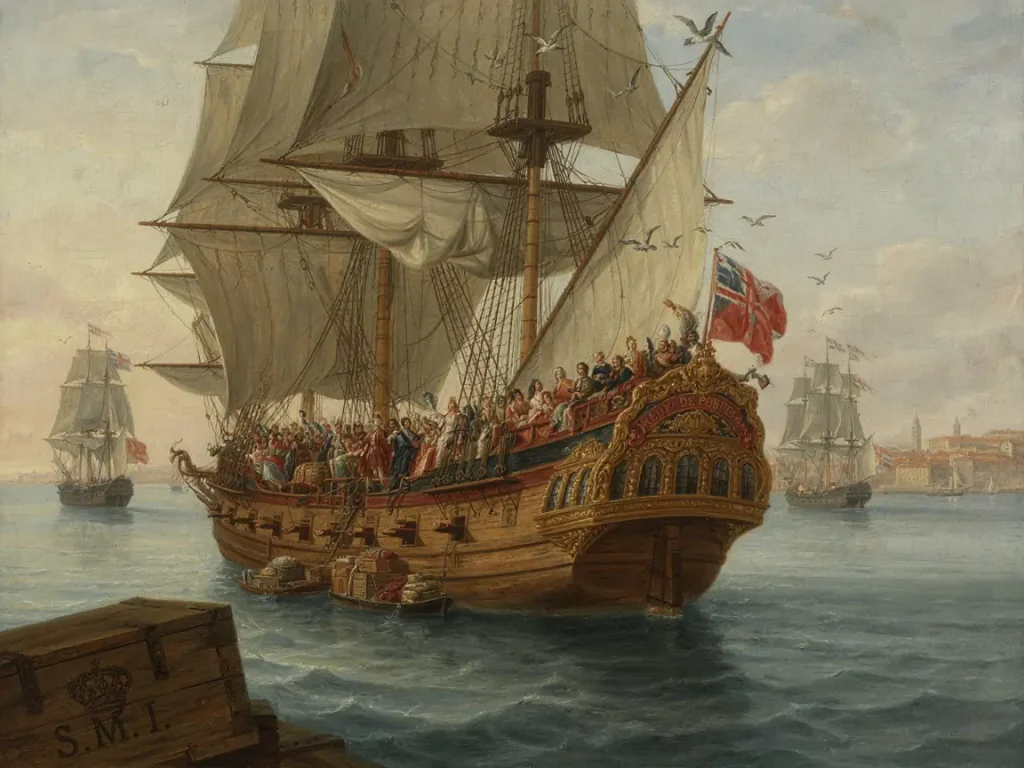
King João packed fifteen thousand court members, bank vaults, and library archives onto ships. The royal fleet sailed across the Atlantic Ocean under British military escort.
They arrived in Rio de Janeiro in 1808, transforming a colonial outpost into the official seat of the entire Portuguese Empire overnight.
Rio de Janeiro Becomes the Empire’s Crown Jewel
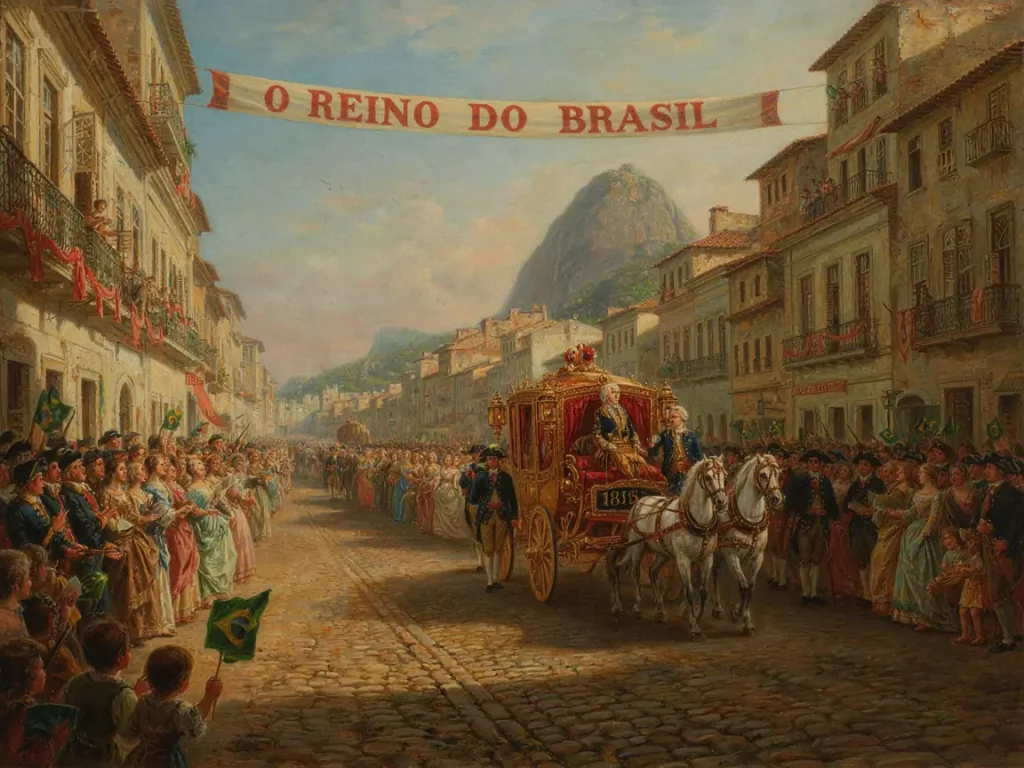
The royal arrival completely modernized Rio de Janeiro. King João opened local ports to international trade, built national banks, and established medical schools.
In 1815, King João elevated Brazil from a mere colony to a co-equal kingdom alongside Portugal. Brazilians loved their new status, but politicians back home in Lisbon grew furious.
The Crisis of 1821: Father vs. Son
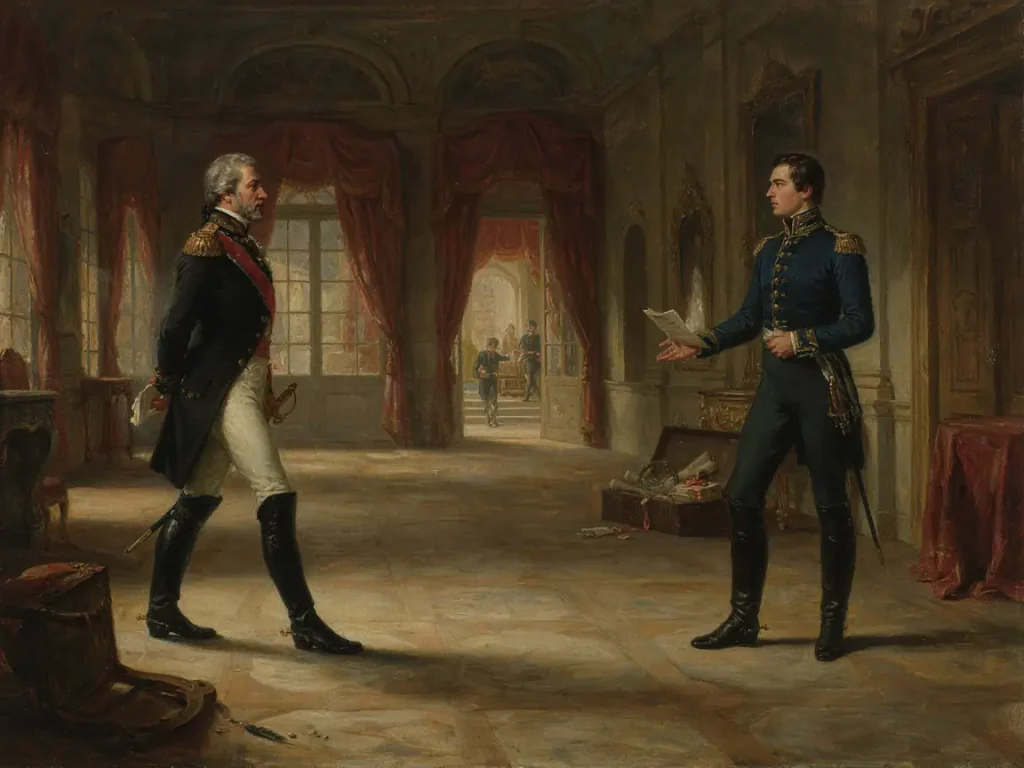
Napoleon fell from power, and European politics stabilized. Portuguese politicians in Lisbon formed a new parliament and demanded King João’s immediate return to Europe.
King João packed his bags in 1821, leaving his twenty-two-year-old son, Prince Pedro, in Rio as Prince Regent.
João gave his son a famous piece of parting advice: if Brazil decides to break away, grab the crown yourself before an adventurer takes it.
Lisbon Orders Prince Pedro Back to Europe
The parliament in Lisbon wanted to strip Brazil of its kingdom status and reduce it back to a controlled colony. They issued strict decrees ordering Pedro to return to Europe immediately.
Portuguese troop commanders in Rio tried to pressure the young prince into obeying his father’s parliament, but local Brazilian leaders rallied around Pedro.
“Dia do Fico” (The Day I Stay)
On January 9, 1822, Prince Pedro received a massive petition signed by thousands of Brazilian citizens asking him to remain in South America.
Pedro stood on a balcony in Rio and declared his decision to disobey Lisbon. “If it is for the good of all and the general happiness of the nation, tell the people that I will stay!”
Brazilians still celebrate January 9 as Dia do Fico, the moment Pedro chose Brazil over his homeland 🙂
The Cry of Ipiranga: September 7, 1822
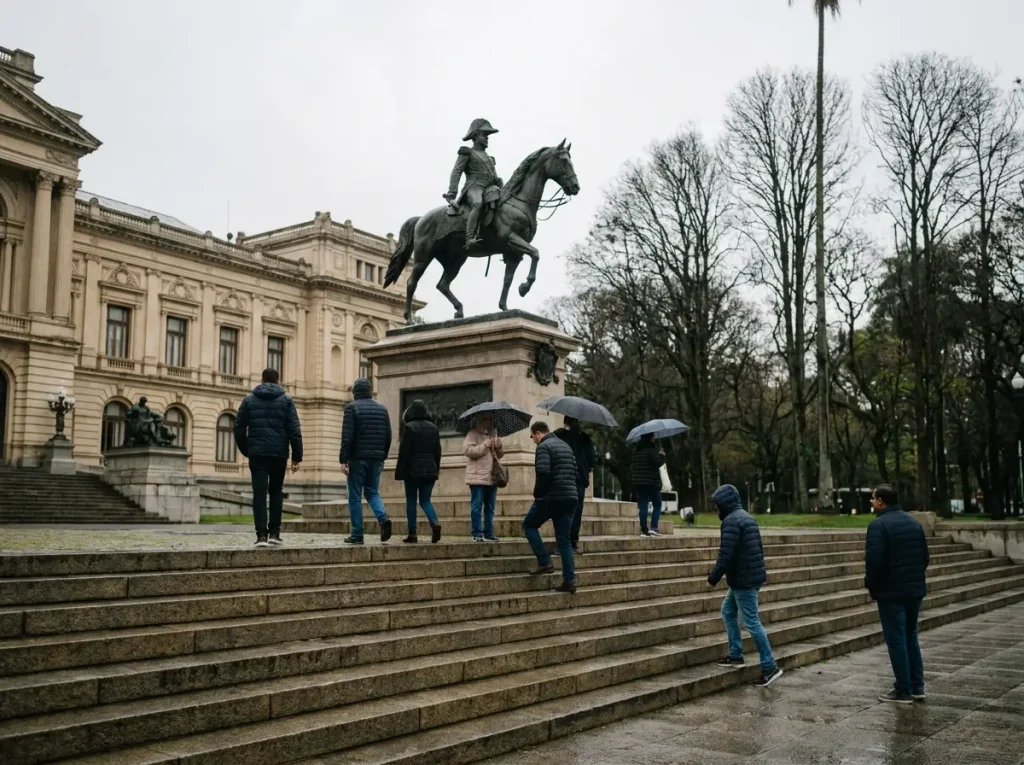
By late August 1822, Prince Pedro traveled through the province of São Paulo to gather political support among regional elites.
Back in Rio, his brilliant wife, Princess Maria Leopoldina, managed government affairs as official regent.
Fresh letters arrived from Lisbon demanding Pedro’s arrest and revoking his remaining administrative powers.
Princess Leopoldina held an emergency cabinet meeting and signed a document recommending full separation from Portugal.
Bad Indigestion and Big Decisions
A royal messenger rode hard for days to catch Prince Pedro near the Ipiranga Brook outside São Paulo on September 7, 1822.
Historical records reveal that Pedro suffered from severe stomach distress due to tainted food or water during his horseback journey.
Despite his physical discomfort, he read his wife’s urgent letters and reached his breaking point.
“Independência ou Morte!”
Pedro ripped the Portuguese blue-and-white ribbons from his military uniform and drew his sword in front of his royal guard.
He shouted the legendary words: “Independência ou Morte!” (Independence or Death!). This dramatic moment stands in history as the Cry of Ipiranga (Grito do Ipiranga).
IMO, Princess Leopoldina deserves way more historical credit for organizing the political paperwork while her husband rode around on a mule.
- December 1, 1822: Pedro received his crown as Dom Pedro I, First Emperor of Brazil.
- 1824: The new Empire published its first constitution.
- 1825: Portugal officially recognized Brazilian independence after Britain mediated a financial agreement.
How Brazil’s Independence Compares to America’s Fourth of July
Why do historians love comparing Brazilian and American independence stories? Both nations broke away from European superpowers, yet their methods created vastly different political systems.
| Feature | American Independence (1776) | Brazilian Independence (1822) |
| Primary Trigger | Taxation without representation | Resistance to recolonization |
| First System | Democratic Republic | Imperial Monarchy |
| Initial Leader | George Washington (President) | Dom Pedro I (Emperor) |
| Casualties | High (8-year Revolutionary War) | Low (Localized skirmishes in Bahia & Pará) |
| Foreign Dynasty | Repudiated British Royalty | Retained Portuguese Royal Bloodline |
How Brazilians Celebrate Sete de Setembro Today
How do modern Brazilians mark this historic turning point? Every year on September 7, towns and major cities across the country burst into patriotic color.
Public schools, government offices, and local businesses close down so families can enjoy the national public holiday together.
Military Parades and Patriotic Air Shows
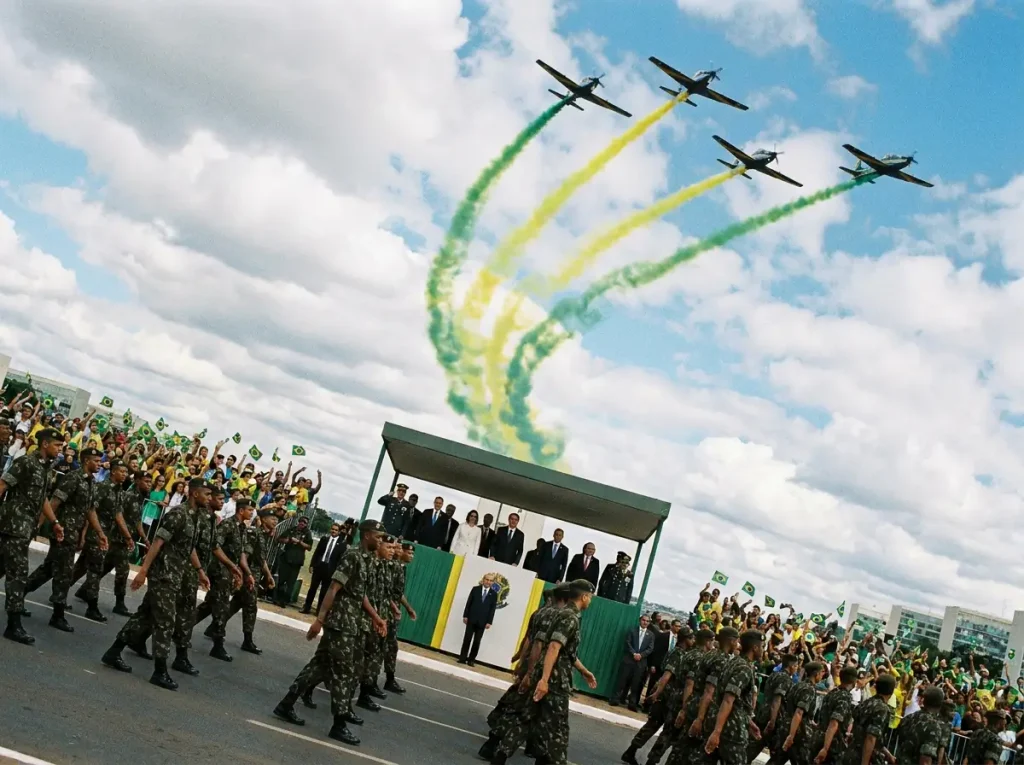
The national government hosts the largest official parade along the Eixo Monumental in the capital city of Brasília.
The President reviews armed forces units, naval divisions, and military academy cadets. The Brazilian Air Force flight team (Esquadrilha da Fumaça) paints the sky green and yellow with smoke trails.
Street Parties, Beaches, and Feijoada
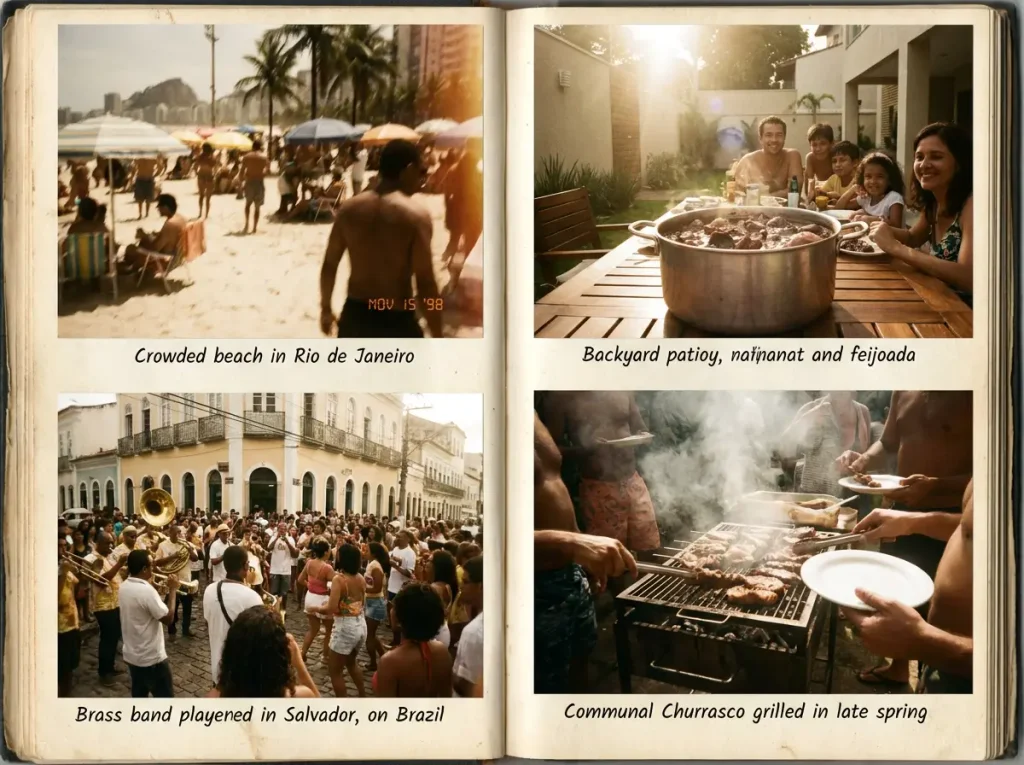
Outside official government events, everyday citizens use the day off to relax with family and friends.
- Coastal Gatherings: Beaches in Rio de Janeiro, Salvador, and Recife fill up with sunbathers enjoying spring weather.
- Barbecue and Feijoada: Families gather in backyards to share slow-cooked black bean stew (feijoada) or grilled meats (churrasco).
- Music in the Streets: Local samba bands and brass ensembles perform in city squares from morning until night.
Wrapping It All Up
Brazil’s path to freedom proves that history often beats fiction when it comes to sheer political drama.
A displaced Portuguese prince listened to his brilliant wife, ignored his father’s parliament, and created an empire on the banks of a muddy stream.
Next time September 7 rolls around, grab a cool drink, toast to Princess Leopoldina’s sharp political mind, and appreciate one of the most unusual independence stories in global history.
Frequently Asked Questions
Why does Brazil celebrate independence on September 7 instead of July 2?
September 7 marks Prince Pedro’s dramatic proclamation at the Ipiranga Brook in 1822. However, the state of Bahia celebrates July 2 because local forces defeated the last remaining Portuguese troops in Salvador on July 2, 1823.
Is Brazil Independence Day a national public holiday?
Yes, September 7 is an official federal holiday across all twenty-six states and the Federal District. Banks, government buildings, and schools close for the entire day.
Did Brazil fight a long war against Portugal?
Brazil did not experience a full-scale continental war like the American Revolution. However, naval battles and military clashes occurred in northeastern provinces like Bahia, Maranhão, and Pará until Portuguese garrisons surrendered in late 1823.
What happened to Emperor Pedro I after declaring independence?
Pedro ruled Brazil for nine tumultuous years. Political pressure and economic trouble forced him to abdicate the throne in 1831 in favor of his five-year-old son, Dom Pedro II. Pedro then returned to Europe to secure his daughter’s royal rights in Portugal.