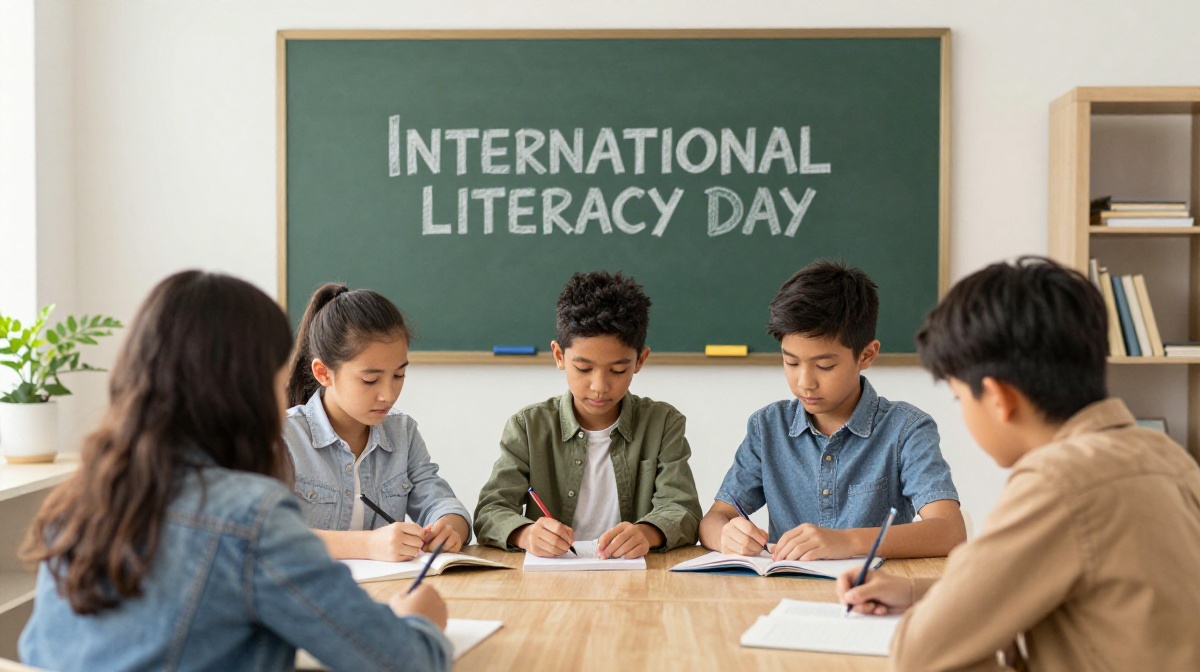
I still remember sitting on my bedroom floor at seven years old, staring at a thick paperback book. The black text on the page looked like complete gibberish to my tired eyes.
Suddenly, those strange squiggles clicked, and my mind unlocked a realm of dragons, stubborn knights, and endless adventure. You probably remember your own lightbulb moment when reading finally made sense.
That single breakthrough changed how you navigate the entire world, from reading simple text messages to understanding employment contracts. Yet, millions of adults across our planet still wait for that exact spark.
That stark reality brings us to the core of International Literacy Day meaning and importance. We celebrate this special day every September 8th, but it offers far more than a simple calendar marker.
It forces us to confront educational gaps, celebrate human progress, and fight for equal learning opportunities. Let us talk about why this annual movement deserves your attention, your energy, and your passion.
What Is International Literacy Day?
The UNESCO Roots of September 8
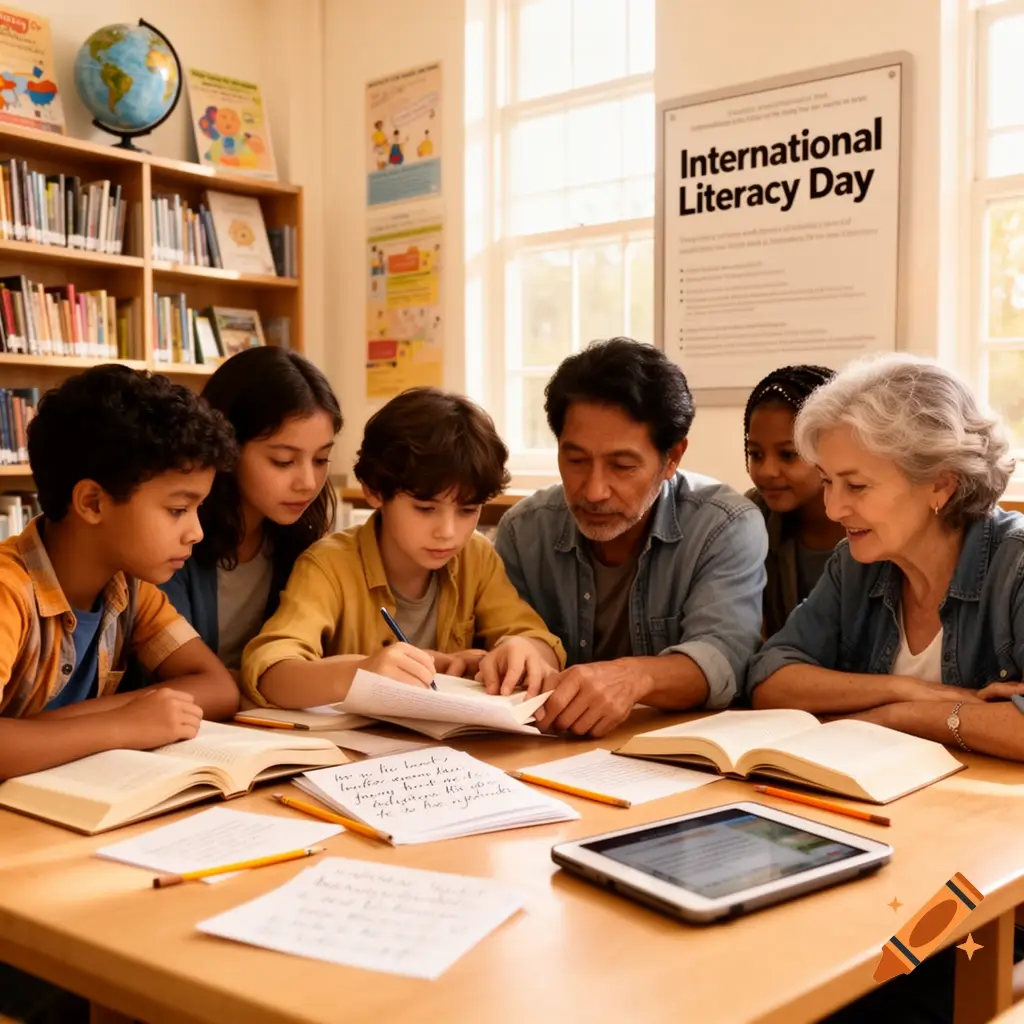
UNESCO officially proclaimed International Literacy Day back in 1966 during a landmark conference in Tehran. The global leaders gathered there recognized a fundamental truth about human development.
They realized that society cannot eradicate poverty or build lasting peace without universal education. The global community celebrated the very first International Literacy Day on September 8, 1967.
Ever since that historic morning, governments, grassroots groups, and passionate individuals have used this date to take action.
They track reading progress, lobby for better school funding, and launch community literacy campaigns.

Redefining What It Means to Be Literate
Many people mistakenly limit literacy to basic decoding skills. They assume a person is literate if they can sign a form or sound out a newspaper headline. I strongly reject that narrow view, and modern educators agree with me.
True literacy means understanding, analyzing, creating, and communicating effectively in an information-packed world.
It enables a father to read dosage instructions on his child’s medicine bottle safely. It empowers a worker to negotiate fair wages and spot contract traps.
When you give someone the power of literacy, you hand them the ultimate toolkit for personal independence. Literacy turns vulnerable individuals into active, confident leaders within their local communities.
The Shift from Basic Decoding to Functional Literacy
Fifty years ago, writing your own name passed for basic literacy in official censuses. Modern society demands much more than minimal spelling skills.
We now measure functional literacy, which assesses your ability to navigate daily life effectively.
Can you read a bus schedule, fill out a job application, or follow a recipe without assistance?
Try assembling flat-pack furniture without reading the manual; you usually end up with extra screws and mild panic! Functional literacy prevents those everyday disasters and keeps society running smoothly.
Why International Literacy Day Matters More Than Ever
Hard Truths: The Global Literacy Crisis in Numbers
Let us look at the raw data together for a moment. You might think that nearly everyone can read in our tech-obsessed era. Sadly, global statistics tell a much harsher story.
Take a look at these eye-opening figures from international educational organizations:
- Over 750 million adults worldwide lack basic literacy skills, leaving them vulnerable to economic exploitation.
- Women comprise two-thirds of the illiterate adult population across the globe, highlighting a severe gender inequality gap.
- More than 250 million children fail to acquire foundational reading skills, even while attending primary school programs.
- Developing regions in Sub-Saharan Africa and Southern Asia bear the highest burden of global illiteracy rates.
These figures do not represent mere numbers on a spreadsheet; they represent real human beings missing out on life-changing opportunities.
IMO, we cannot claim that we live in an advanced civilization while leaving millions in the dark.
The Gender Gap: Why Women Suffer Most
Why do women make up the vast majority of non-reading adults? Systemic barriers, early marriages, and cultural biases still push young girls out of classrooms in many countries.
When a society denies education to young girls, everyone suffers the consequences. Educated mothers invest more money in their children’s health, prioritize schooling, and boost household financial security.
Closing the literacy gender gap benefits entire economies, not just individual families.
The Domino Effect of Illiteracy on Society
Why should you care about reading rates in a country thousands of miles away? You should care because illiteracy creates a destructive domino effect that hits every corner of global society.
When people cannot read, public health outcomes plummet dramatically. Unlettered individuals struggle to understand disease prevention guidelines, medical prescriptions, and basic nutritional advice.
Consequently, preventable illnesses spread faster, and child mortality rates climb higher. Furthermore, illiteracy fuels political vulnerability and social instability.
Corrupt figures easily manipulate citizens who cannot read news reports or double-check political claims independently.
Unless you prefer living in a world run on cheap propaganda, supporting global literacy remains your best defense.
Literacy as an Economic Game-Changer
Conversely, investing in literacy yields massive financial and social returns for whole nations.
Higher literacy rates directly boost household incomes, fuel local business innovation, and shrink government spending on social welfare programs.
- Boosts National GDP: Countries with high literacy rates attract top-tier global companies and foster vibrant tech sectors.
- Shrinks Gender Inequality: Educating young girls reduces child marriage rates and increases female workforce participation dramatically.
- Promotes Crime Reduction: Quality basic education provides young adults with legitimate career paths, keeping them away from criminal enterprise.
- Drives Environmental Awareness: Literate communities grasp complex ecological warnings faster and adopt sustainable practices far more readily.
Literacy acts as the ultimate multiplier for positive social change. When you fix reading levels, you solve dozens of other societal problems simultaneously.
The Evolution of Literacy: Paper Books vs. Screen Bytes
Navigating the Digital Literacy Shift
The definition of reading changes radically with every passing decade. Fifty years ago, reading a morning print paper represented the gold standard of an informed citizen.
Today, we face a relentless tide of emails, social media feeds, online forums, and AI summaries. Modern life demands robust digital literacy alongside traditional reading skills.
Can you spot a clickbait headline from a mile away? Can you verify whether a viral blog post cites reliable research or total nonsense? If you can separate digital noise from genuine facts, you possess modern media literacy.
Literacy in the Age of AI and Algorithmic Feeds
Artificial intelligence tools generate mountains of text in seconds, changing how we consume information. Some folks argue that AI removes the need for deep reading skills altogether.
I argue the exact opposite! AI tools make literacy more critical than ever before. You need sharp reading skills to evaluate AI outputs, spot hallucinated facts, and write precise digital instructions.
Without strong foundational literacy, you become a passive consumer of algorithmic feeds. Strong literacy keeps you in the driver’s seat of your own mind.
My Personal Experiment: Paper Pages vs. Glowing Pixels
I ran an informal experiment on myself last year to test how digital formats affect reading comprehension. I decided to read non-fiction books exclusively on an e-reader and smartphone for three straight months.
While I loved carrying hundreds of titles in my backpack, my attention span disintegrated. I found myself skimming paragraphs, checking push notifications, and losing my train of thought every ten minutes.
When I switched back to physical paper books, my brain instantly settled down. I retained complex arguments better, felt less eye strain, and remembered specific details weeks later.
FYI, scientific studies confirm my exact experience, tactile physical pages trigger deeper brain engagement than flat glowing screens!
Print Literacy vs. Digital Literacy Side-by-Side
| Literacy Type | Primary Focus | Core Cognitive Benefit | Biggest Modern Vulnerability |
|---|---|---|---|
| Print Literacy | Deep focus, linear narratives, detailed textual analysis | Strengthens long-term memory and deep emotional empathy | Slow information retrieval speed |
| Digital Literacy | Rapid source evaluation, cross-referencing, multi-modal synthesis | Enables fast research and global collaborative working | High susceptibility to digital distractions and fake news |
We cannot afford to pick one format over the other. Every modern citizen needs strong print literacy for deep thinking and sharp digital literacy for swift information management.
Actionable Ways You Can Celebrate International Literacy Day
Five Simple Steps to Make an Impact Today
You do not need a massive bank account or an official government title to advance the cause of literacy. You can drive real change right inside your local neighborhood.
Here are five actionable, high-impact steps you can take today:
- Donate books to local community centers: Clear off your crowded shelves and gift your gently used novels to neighborhood clinics, shelters, or public schools.
- Volunteer as an adult literacy tutor: Spend one hour a week helping a neighbor practice basic reading or language skills at your local library.
- Support global literacy non-profits: Send financial support to reputable organizations that build libraries and train teachers in low-income regions.
- Buy a book for a young reader: Gift a thrilling storybook to a child in your family or community to ignite their love for reading early.
- Start a community book swap: Organize a casual book exchange with coworkers or friends to encourage reading discussions and resource sharing.
Which step will you take first? Pick one action item, mark your calendar, and make it happen!
Final Thoughts: Let’s Turn the Page Together
At the end of the day, literacy builds bridges across deep cultural divides, dismantles systemic poverty, and turns quiet human potential into active power.
We should never take our own ability to read these words on a screen for granted.
Take a moment today to honor your personal reading journey, gift a story to someone else, or support a local literacy drive.
Together, we can ensure that every single person on Earth experiences that magical moment when squiggles on a page turn into pure, empowering knowledge. 🙂
Frequently Asked Questions About International Literacy Day
When do people celebrate International Literacy Day?
People celebrate International Literacy Day globally every year on September 8th. UNESCO established the annual tradition back in 1966 to unite international literacy efforts.
What main message does International Literacy Day convey?
The day highlights literacy as an essential human right and a matter of personal dignity. It reminds world leaders and ordinary citizens that quality education underpins all sustainable development goals.
Why does literacy matter in a world dominated by video apps and voice assistants?
Video apps and voice tools actually demand higher literacy skills, not lower ones. You need strong literacy to evaluate online information critically, write effective digital search prompts, and spot malicious online scams.
How does literacy affect poverty rates globally?
Literacy breaks the intergenerational cycle of poverty by unlocking higher-paying jobs and entrepreneurial paths. Literate workers earn higher incomes, manage personal finances better, and invest more money back into their children’s education.