Let’s be honest: most of us see the late-May long weekend and immediately think of charred burgers, cold drinks, and the official kickoff of “white pants season.”
What does Memorial Day truly mean for your family; and how can you honor it in ways that teach, comfort, and connect across generations?
Understanding Memorial Day significance matters because many families reduced its meaning to barbeques and sales, missing the chance to remember sacrifice with intention.
This article closes that gap by giving clear, practical ways to observe the day that balance remembrance with family-friendly rituals.
You’ll find step-by-step plans for meaningful ceremonies, easy conversation prompts to help children grasp history and grief, activity examples (from memorial crafts to service projects), and expert-backed tips for blending tradition with modern life.
Read on for simple scripts, timing guides, and respectful ways to include veterans and stories – so your family’s Memorial Day becomes both heartfelt and memorable.
Why We Actually Observe Memorial Day
So, what’s the deal with the history? It didn’t just start as a reason to take Monday off. Originally known as Decoration Day, it cropped up after the Civil War.
People wanted a dedicated time to decorate the graves of fallen soldiers with flowers. Imagine a country trying to heal from its deadliest conflict.
They needed a way to process that collective grief. By the late 1860s, various towns started holding springtime tributes.
Eventually, the name shifted, and it became a federal holiday in 1971, moving to the last Monday in May. Ever wondered why it’s specifically in May? It wasn’t just for the nice weather.
May was chosen because flowers are in full bloom across the country, making it easy to find natural decorations for those headstones. Nature basically provided the tribute supplies for free.
The Distinction Between Holidays
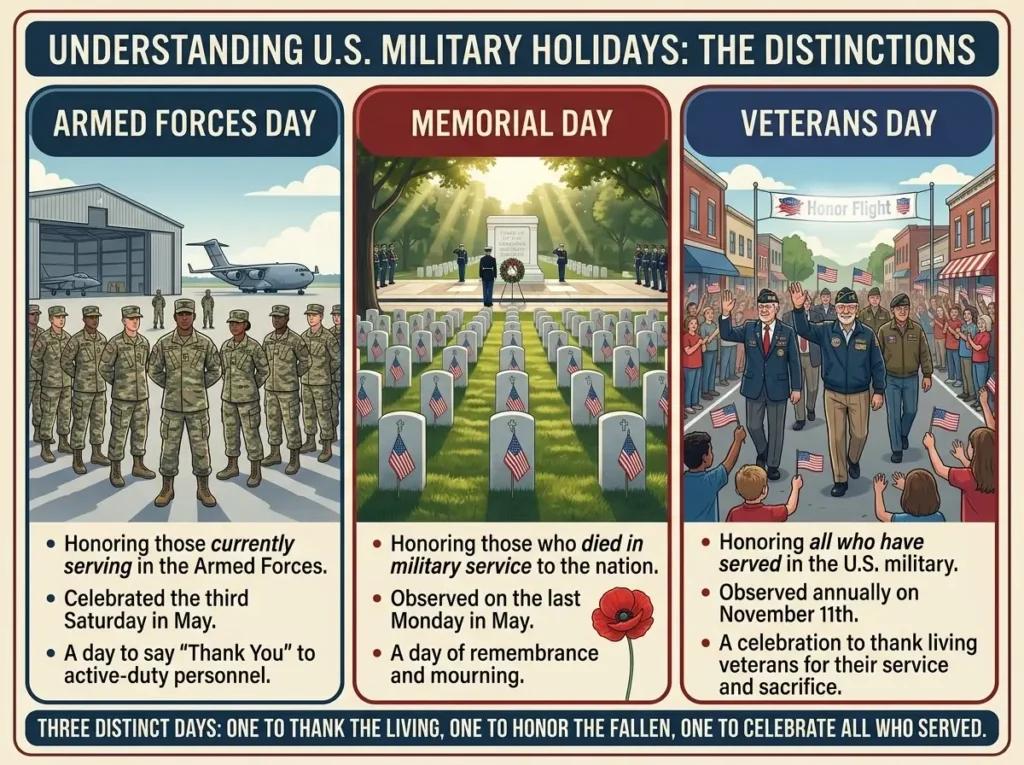
I see people get this confused all the time, and IMO, it’s worth a quick refresher. Memorial Day is not Veterans Day. It’s also not Armed Forces Day.
If you thank a living veteran on Memorial Day, they’ll appreciate the sentiment, but technically, that’s not what this day is for. 🙂
- Memorial Day: Honors those who died while serving in the military.
- Veterans Day: Honors everyone who has served in the military, living or deceased.
- Armed Forces Day: Honors those currently serving on active duty.
Basically, Memorial Day is the one day where the “thank you for your service” takes a more somber, reflective turn. It’s about the people who never got to hang up their uniform and return to civilian life.
Traditional Ways to Honor the Fallen
If you’re looking to add some substance to your weekend, you don’t have to do anything grand or expensive. Sometimes the simplest gestures hit the hardest.
My family started a tradition of visiting a local veteran’s cemetery, and let me tell you, seeing thousands of small flags waving in the breeze is a total reality check.
Visiting Cemeteries and Memorials
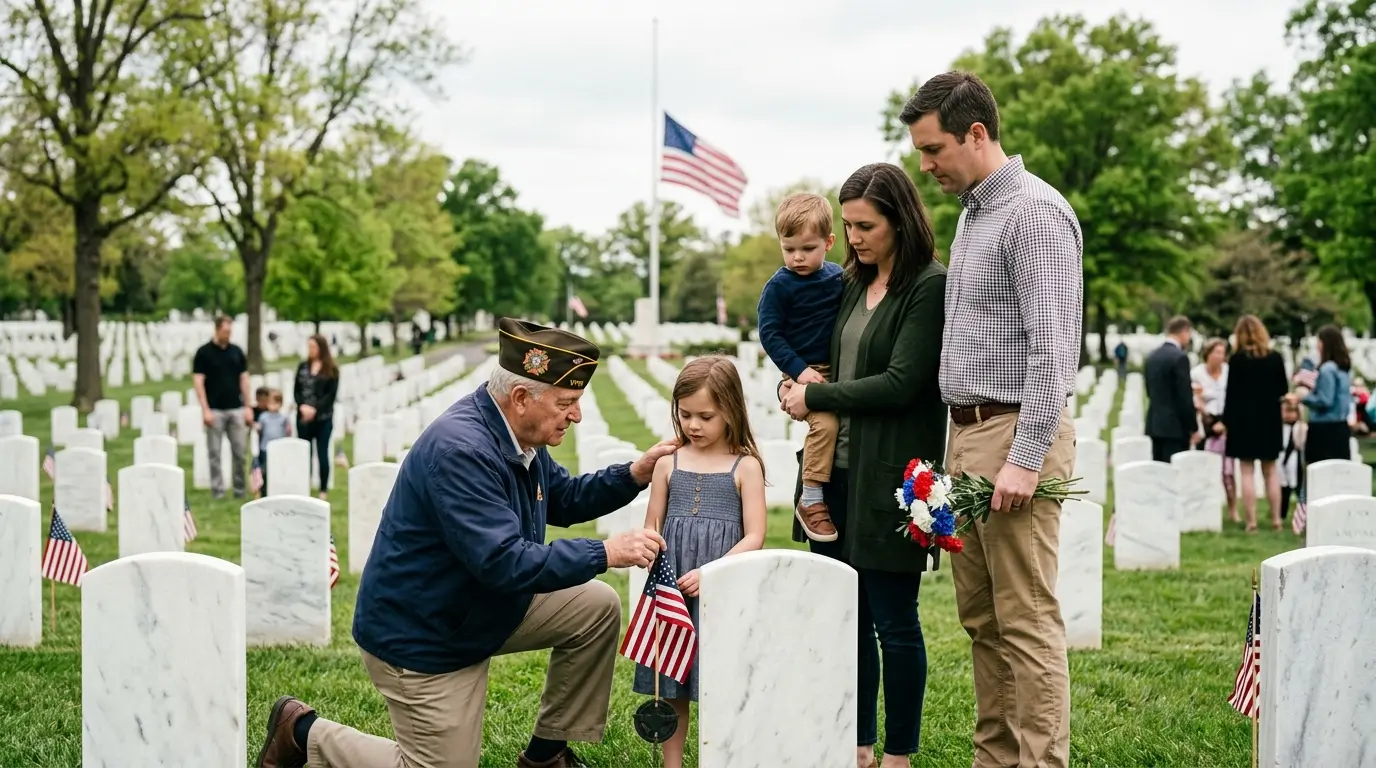
This is the “OG” tradition. Many families head to national or local cemeteries to place flags or flowers on graves. It’s a quiet, powerful way to show that these individuals aren’t forgotten.
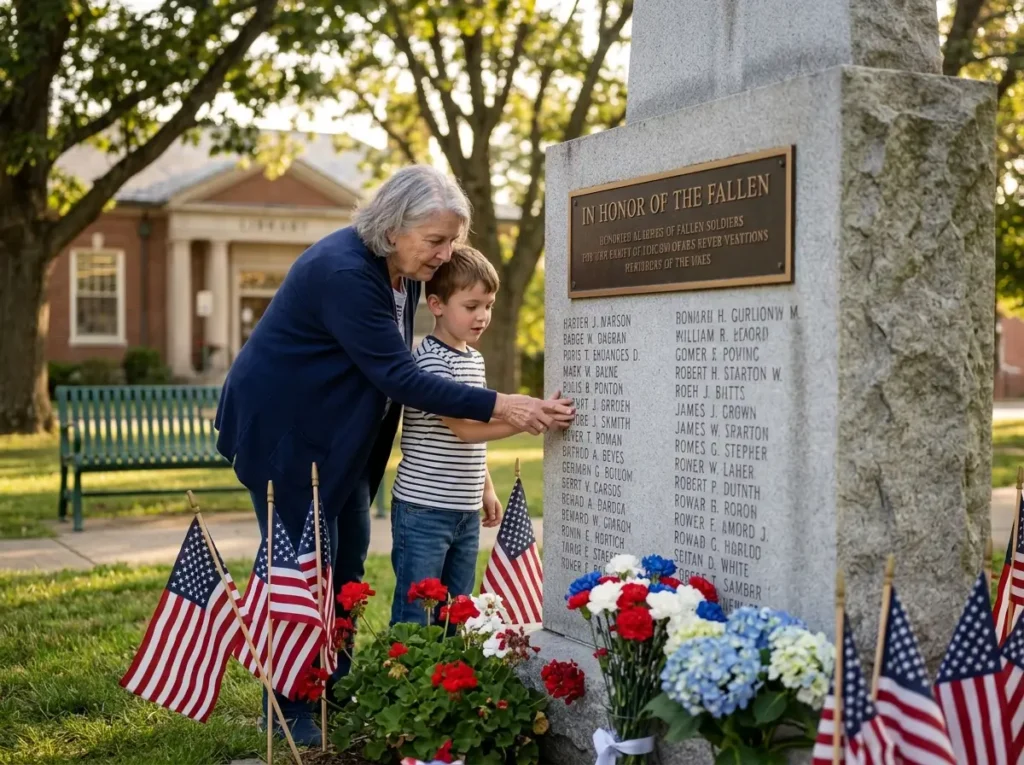
If you don’t live near a military cemetery, look for a local war memorial in your town square. You’ve probably driven past it a thousand times without looking at the names.
Taking five minutes to actually read those names changes your perspective on your local history.
The National Moment of Remembrance
Did you know there is an official “pause” button for the entire country? In 2000, Congress passed legislation establishing the National Moment of Remembrance. It happens at 3:00 PM local time.
What are you supposed to do? Just stop. For one minute, stay silent and reflect on the meaning of the day. It’s a tiny sacrifice of time compared to what the day represents.
I usually set a phone alarm because, let’s be real, I’m usually elbow-deep in a bag of chips by 3:00 PM.
Meaningful Traditions for Kids
How do you explain the concept of “ultimate sacrifice” to a five-year-old without ruining their day?
It’s a delicate balance. You want them to understand the significance of Memorial Day without making it feel like a history lecture they’ll sleep through.
Flag Etiquette 101
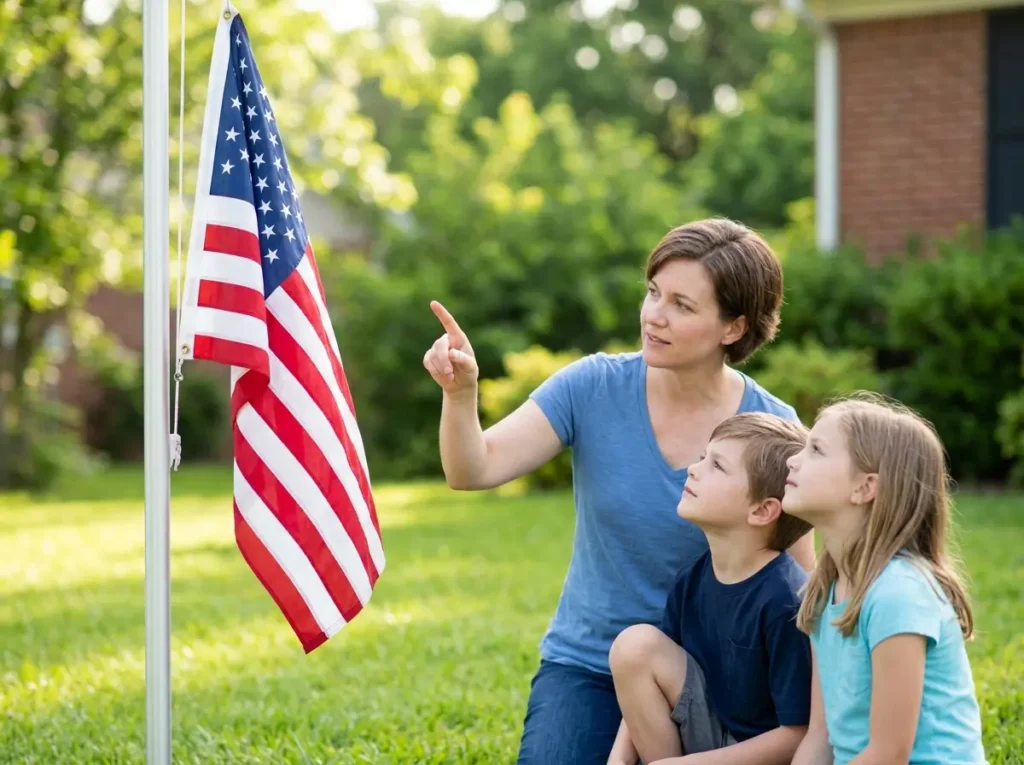
Kids love flags. It’s a great entry point into the holiday. Use the morning to teach them how to handle the American flag with respect.
On Memorial Day, the flag should fly at half-staff until noon, then be raised to the top of the staff.
This transition symbolizes honoring the dead in the morning and the nation living on through their sacrifice in the afternoon. It’s a cool bit of symbolism that usually sticks with kids.
Crafting for a Cause
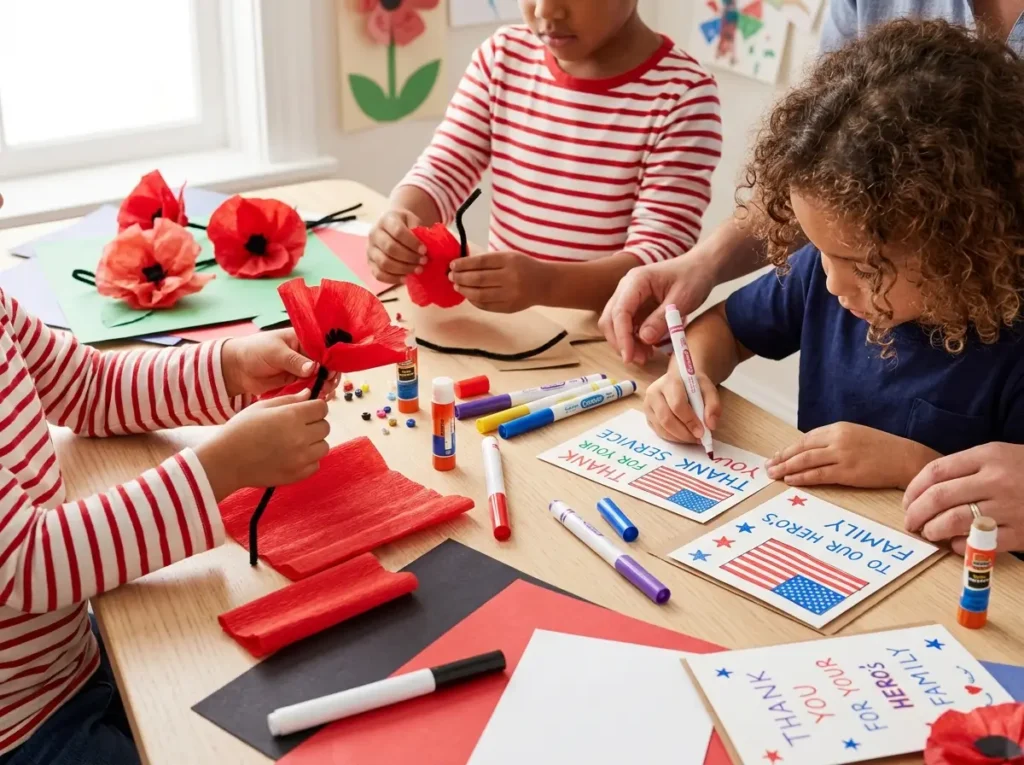
If your kids are the “can’t sit still” type, get them involved in a project. They can make poppy-themed crafts or write “thank you” cards for gold star families (families who have lost a loved one in service).
- Red Poppies: The red poppy is the official flower of remembrance.
- Care Packages: While this is more of a Veterans Day thing, putting together boxes for active duty troops is a great way to foster a spirit of service.
- Storytelling: Read a children’s book about the holiday to give them a narrative they can grasp.
Hosting a Respectful Backyard Gathering
I’m not saying you shouldn’t have a BBQ. In fact, enjoying freedom and family is exactly what those soldiers fought for.
However, you can tweak your party to make it a bit more intentional and respectful.
The “Missing Man” Table
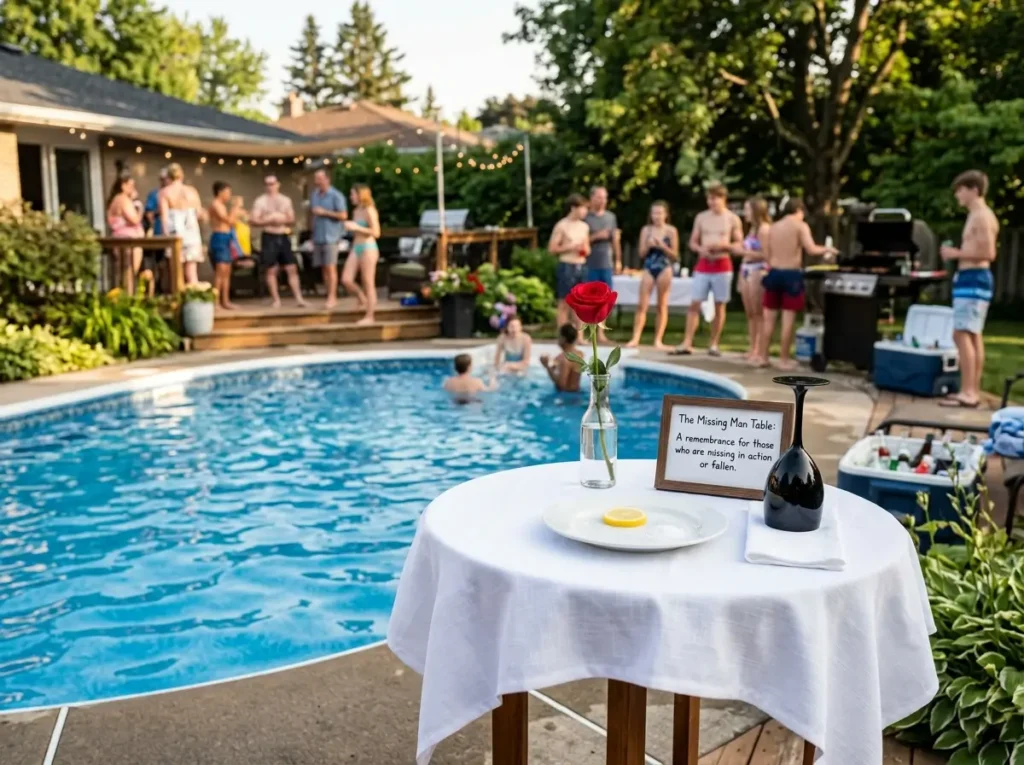
Some families set a small, empty table with a white cloth, a single rose, and a lemon slice. It’s a visual reminder of those who are missing in action or fallen. It’s a conversation starter for guests who might not know the history.
Is it a bit somber for a pool party? Maybe. But it’s a powerful way to ground the festivities in reality. Plus, it’s a great way to explain the day’s meaning to your friends who just showed up for the free beer.
Sharing Family Stories
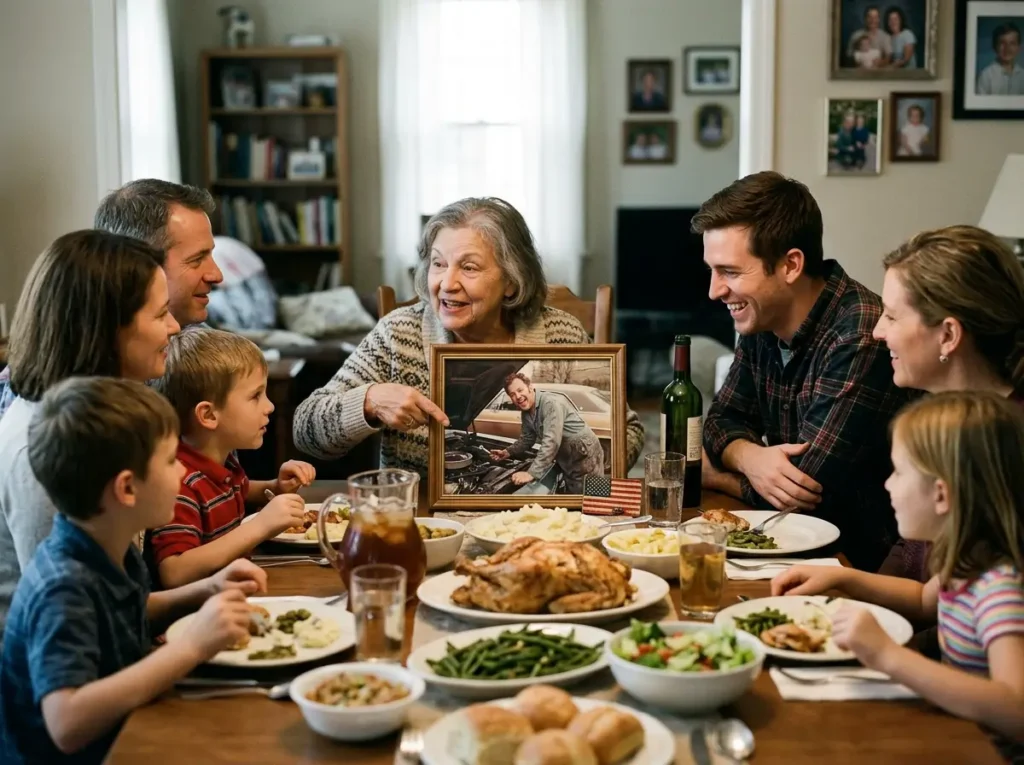
If you have a family member who served and passed away, use the mealtime to share a story about them. My Uncle Joe wasn’t a war hero in the movie sense, but he was a great mechanic who loved terrible jokes.
Sharing those human details keeps their memory alive. It turns a “soldier” into a “person” for the younger generation.
After all, isn’t the whole point of the holiday to keep their names from fading into history books?
Traveling and Community Events
Many towns host parades or concerts. These are usually high-energy, but they often include a “Roll of Honor” where names of local fallen heroes are read.
It’s a community-wide “thank you” that feels much bigger than just your own backyard.
Attending a Parade
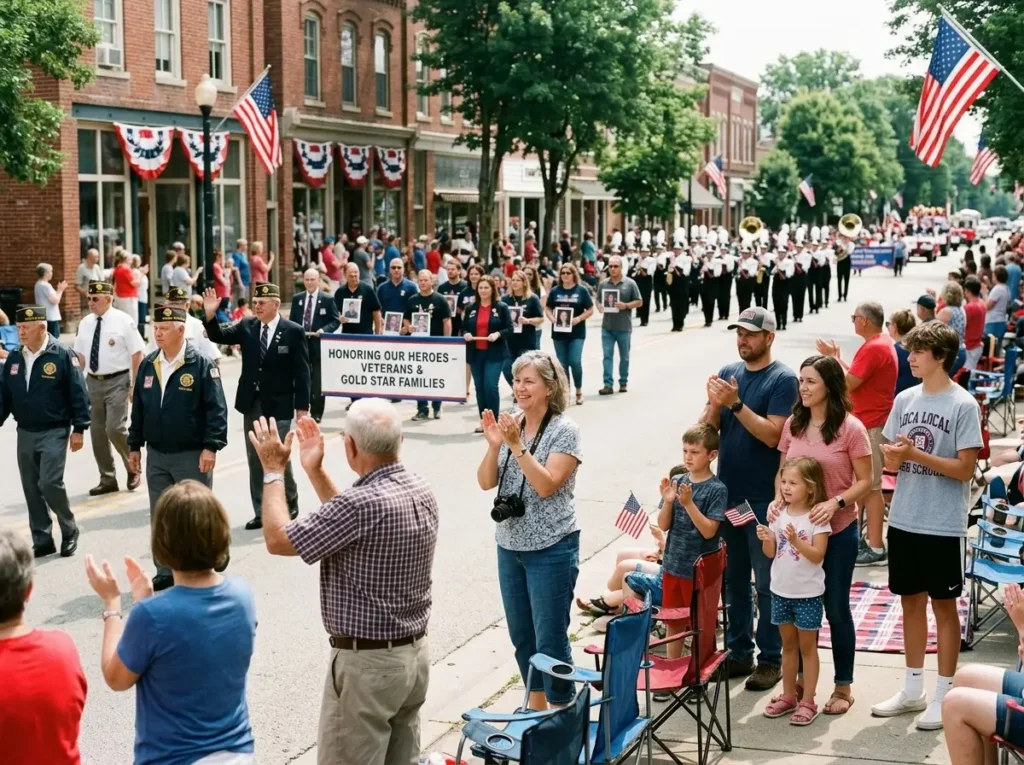
Parades are great, but don’t just go for the candy. Watch for the Gold Star families or the veteran groups marching. Give them a standing ovation.
It costs you nothing and means the world to them. I’ve found that the smaller the town, the better the parade.
There’s something about a high school marching band playing “The Star-Spangled Banner” that hits different when you’re standing on a sidewalk with your neighbors.
Visiting National Landmarks
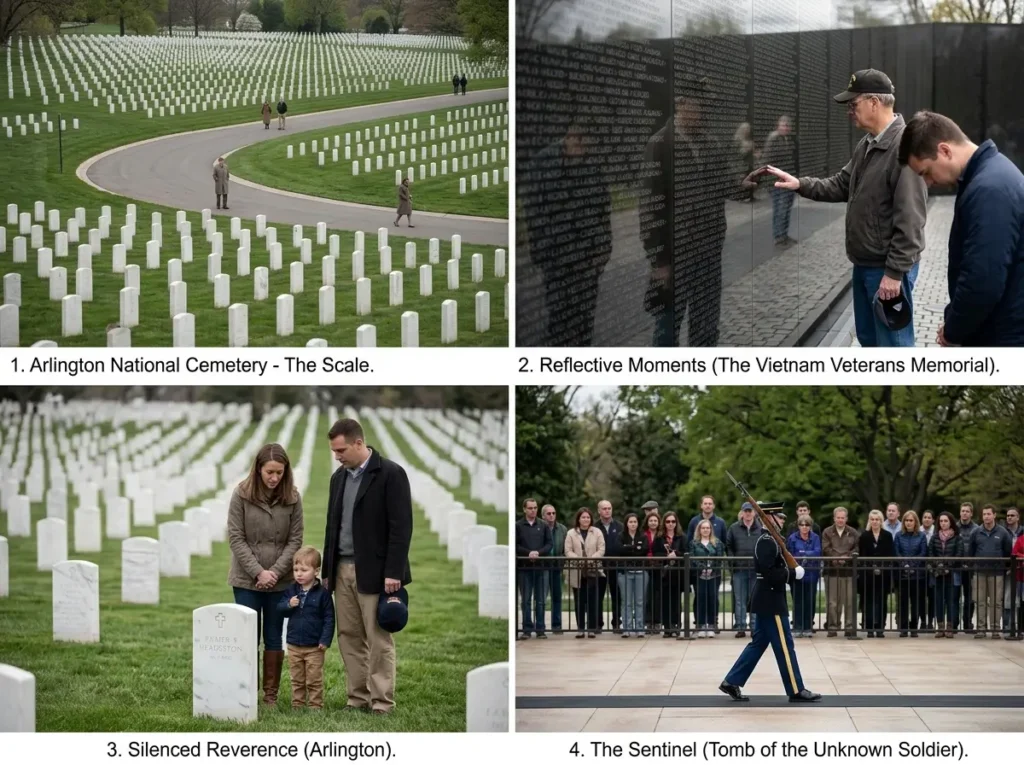
If you’re the type who likes a road trip, visiting a site like Arlington National Cemetery or the Vietnam Veterans Memorial is a bucket-list experience. It’s incredibly sobering.
Be prepared for the silence. Despite the thousands of people who visit Arlington every day, it is remarkably quiet.
It’s one of those places where you instinctively whisper. It’s a physical manifestation of the sheer scale of sacrifice.
The Symbolism of the Red Poppy
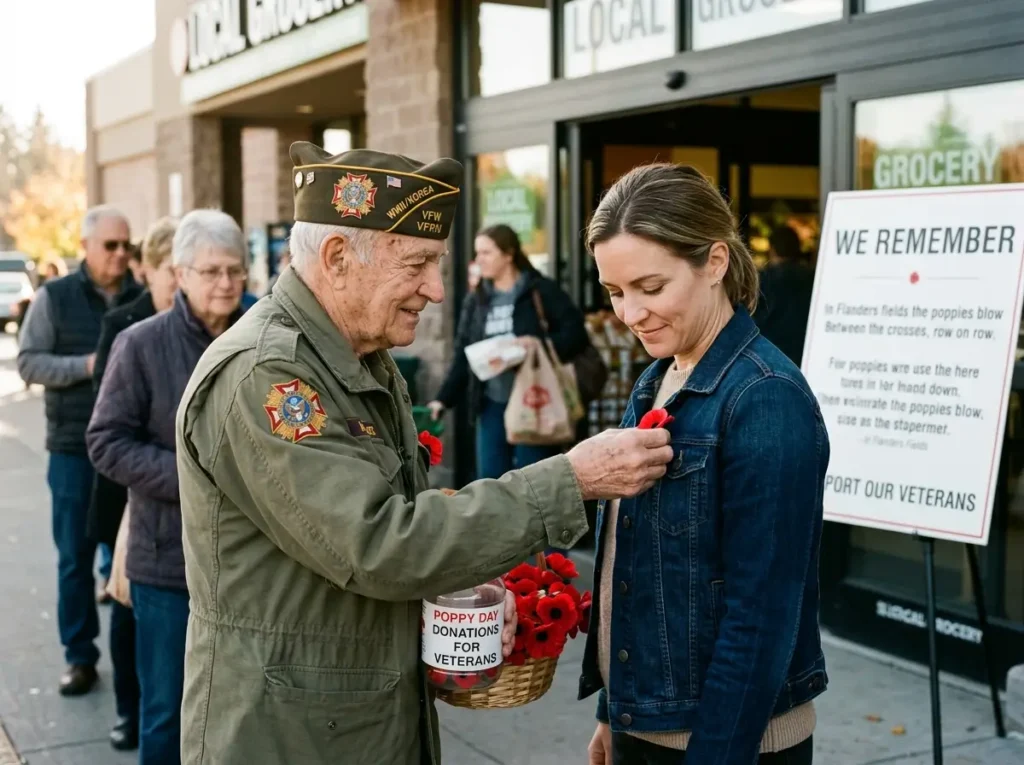
You’ve probably seen veterans outside grocery stores handing out little plastic red flowers. Ever wondered where that started? It goes back to a poem from World War I called “In Flanders Fields.”
The poem describes poppies growing among the graves of soldiers. A teacher named Moina Michael started wearing a silk poppy to honor the fallen, and the trend caught on globally.
Now, the red poppy is the universal symbol of military remembrance. If you see someone distributing them, grab one.
Wear it on your lapel. It’s a small, silent “I get it” to anyone else who knows the significance. FYI, the donations usually go toward supporting veteran rehabilitation and welfare programs, so it’s a win-win.
Memorial Day vs. Labor Day: The Bookends of Summer
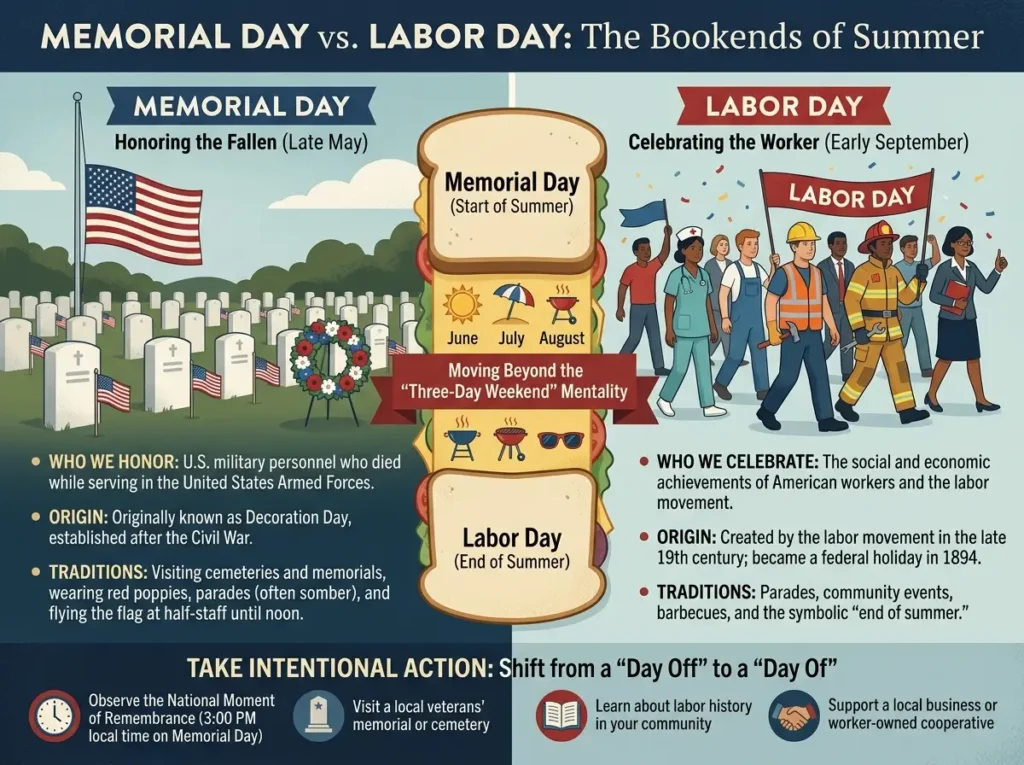
We often treat these two holidays like the bread on a summer sandwich. Memorial Day starts it; Labor Day ends it. But while Labor Day celebrates the worker, Memorial Day honors the life.
It’s easy to get caught up in the “three-day weekend” mentality. We’re all guilty of it. But if we only use the day to catch up on sleep or yard work, we’re doing a disservice to the history.
Why not commit to doing one intentional thing this year? Just one. Whether it’s the 3:00 PM silence or visiting a local monument, it shifts the day from a “day off” to a “day of.”
Common Misconceptions to Avoid
I hate to be the “actually” person at the party, but there are a few things that people consistently get wrong. Clearing these up helps keep the integrity of the holiday intact.
- It’s not a “Happy” holiday: While we’re all happy to have a day off, saying “Happy Memorial Day” can feel a bit off to those who have lost loved ones. “Have a meaningful day” or “I’m thinking of your family” usually lands better.
- It’s not for the living: Save the big celebrations for the living veterans for November 11th.
- It’s not just for World War II: We sometimes forget about the soldiers from more recent conflicts. The significance applies to every generation that has stood in the gap.
Making Memorial Day Personal
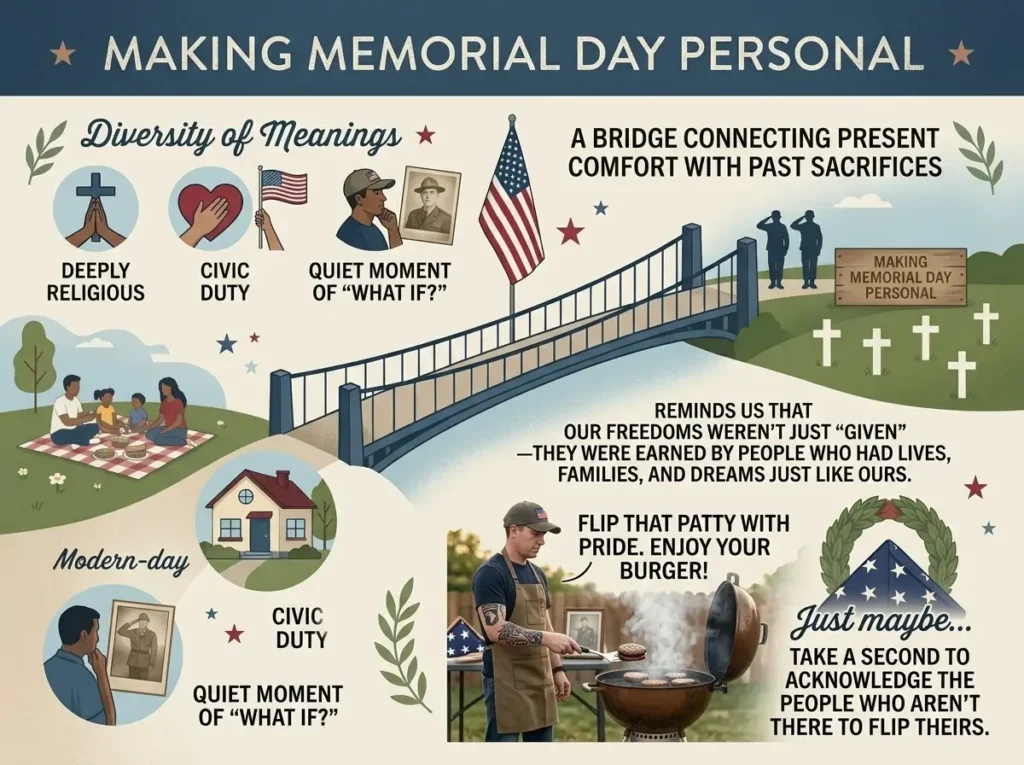
At the end of the day, the significance of Memorial Day is whatever you make of it. For some, it’s deeply religious. For others, it’s a civic duty. For many, it’s a quiet moment of “what if?”
I like to think of it as a bridge. It connects our present comfort with the past sacrifices that made that comfort possible.
It’s a reminder that our freedoms weren’t just “given” -they were earned by people who had lives, families, and dreams just like ours.
Does that mean you shouldn’t enjoy your burger? Absolutely not. Flip that patty with pride. Just maybe take a second to acknowledge the people who aren’t there to flip theirs.
Final Thoughts on Family Traditions
Building Memorial Day traditions with your family ensures that the next generation doesn’t just see this as a random Monday in May. It teaches them about gratitude, history, and the cost of the society they live in.
Whether you’re visiting a grave, wearing a poppy, or just having a moment of silence before the ribs are served, you’re doing your part. You’re keeping the flame of memory alive.
So, this year, let’s try to balance the fun with the focus. Enjoy the sunshine, enjoy the company, but don’t forget the names on the stones.
It’s the least we can do for the people who gave up all their tomorrows so we could have our today.
Enjoy your long weekend, and I hope you find a way to make it truly meaningful. Just don’t forget the sunscreen, nothing ruins a day of reflection like a Grade-A sunburn. :/
Questions & Answers:
What is the true significance of Memorial Day for modern families?
Memorial Day honors fallen U.S. military heroes, evolving from post-Civil War graveside rituals into a poignant reminder of sacrifice. For families, it weaves history with heart—sparking talks about legacy, gratitude, and resilience amid barbecues and beach days.
How did Memorial Day traditions start, and why do families still cherish them?
“Decoration Day” began in 1868 when women decorated soldiers’ graves with flowers. Families keep it alive through poppy crafts, storytelling circles, and volunteer cemetery cleanups, turning solemn history into bonding that strengthens generational ties.
What’s the difference between Memorial Day and Veterans Day for family celebrations?
Memorial Day mourns those who died serving; Veterans Day thanks all who served. Families mark Memorial with quiet reflections like reading war letters aloud, while Veterans features parades, both honor service uniquely.
Can you suggest kid-friendly Memorial Day traditions to teach significance?
Absolutely, try “memory jars” where kids draw hero portraits and share “what if” stories, or backyard flag-planting ceremonies with red-white-blue snacks. These playful rituals embed respect without overwhelming young hearts.
What are meaningful Memorial Day traditions for families to do at home?
Host a “Heroes’ Feast” with star-spangled recipes (think berry flag pies), followed by a family slideshow of service stories. End with lantern releases symbolizing eternal light—intimate, zero-cost ways to honor deeply.
How can families incorporate Memorial Day significance into picnic traditions?
Elevate picnics with a “moment of tribute”: pause for Taps on a phone, share a fallen hero’s fun fact, then play flag football. It blends joy with purpose, ensuring fun doesn’t eclipse remembrance.
Are there unique Memorial Day traditions blending culture and family history?
Yes! Italian-American families might add sfogliatelle pastries to graveside visits; African-American clans weave in Juneteenth previews. Customize by tracing your lineage’s service stories for a heritage-rich observance.
Why is Memorial Day weekend ideal for starting family history projects?
Its focus on sacrifice ignites curiosity, use it to interview elders, scan old photos, or visit local monuments. Families emerge with heirloom journals, making “significance” a living legacy.